The Networked Financier offers an explanation of the individual network behaviour of major financiers across diverse sectors and leading global financial centres. It argues that experienced financiers leverage their social capital to operate as 'networked financiers'. The few prior studies of the network behavior of individual financiers typically focus on one sector or on one financial centre. This book draws on Meyer's unique database of digitally recorded personal interviews with 167 financiers in London, Zurich, New York, Hong Kong, Singapore, Shanghai, Beijing, and Mumbai. They work in the sectors of corporate and investment banking, hedge funds, private equity, venture capital, fund management, real estate investment, insurance, and private banking. Extensive quotes are the mechanism for financiers to explain how they behave. Social network theory provides the lens for interpreting that behavior. The results demonstrate the validity of the theory for explaining financier network behavior. The book also contributes to a practical understanding of how financiers behave in networks because the interviewees explain their behaviour in their own words. By revealing the network behavior of leading financiers in major global business centres, the book provides a template about how sophisticated financiers behave.
This laboratory manual simplifies selection of the most appropriate baculovirus vector design for a given problem. It then describes each step of the implementation process - from vector construction to large-scale protein production. The book provides an understanding of how the vectors work, a biological overview of cells, viruses, plasmids, and promoters, guidelines for choosing optimum vectors, protocols for growing insect cells and recombinant viruses, methods for analysing protein products and scaling up protein production, techniques for producing proteins in insect larvae, and easy to use maps charting available expression vectors.
What is the goal of public health promotion today? If the leading causes of mortality are primarily attributable to lifestyle behaviours, is the purpose of research to develop the power to change those behaviours, in the same way that science has been able to control infectious diseases? Or is the quest for effective behaviour modification techniques antithetical to the idea of promoting well-being defined in terms of individual autonomy, dignity and integrity? An Ethic for Health Promotion explores these questions.
Mounting evidence shows that zero-tolerance policies, suspensions, and restrictive security policies fail to improve school safety and student behaviors, and are linked with increased risk of dropping out. Minority students are suspended at disproportionate rates, and over a million cases of corporal punishment are reported each year. Against this dismal backdrop, David Dupper presents a transformative new model of school discipline that is preventive, proactive, and relationship-based. Unlike traditional punitive and exclusionary practices, the model developed in this Workshop volume focuses on enhancing students' connection to school through building relationships and bolstering social skills. Drawing on the latest research about what works, and what doesn't, this highly practical guide catalogs an array of proven and promising practices designed to engage, instead of exclude, students. Rather than illustrate a one-size-fits-all approach, it guides practitioners and administrators in identifying their school's unique needs and selecting appropriate strategies for use at the universal, targeted, and remedial levels. A five-step strategic planning model helps schools transition toward a holistic, relationship-based approach to discipline.
An increasing number of psychologists who were trained in clinical psychology, health psychology, or another specialty are gravitating toward rehabilitation psychology, but many of them have little or no experience with rehabilitation populations. With the explosion of interest in traumatic brain injury (TBI), many neuropsychologists are taking jobs in rehabilitation settings that treat people with TBI but also care for persons with the array of other disabling conditions such as spinal cord injury, stroke, MS, and amputation. In Specialty Competencies in Rehabilitation Psychology, Drs. Cox, Cox, and Caplan provide a guide to the knowledge and skills required by competent rehabilitation psychologists, with an emphasis on the evidence base of the specialty. The volume will be valuable to those preparing for the Board Certification Examination in Rehabilitation Psychology and will also be valuable to newcomers to the field and to clinicians working on an outpatient basis with individuals with a wide variety of chronic conditions. Series in Specialty Competencies in Professional Psychology Series Editors Arthur M. Nezu and Christine Maguth Nezu As the field of psychology continues to grow and new specialty areas emerge and achieve recognition, it has become increasingly important to define the standards of professional specialty practice. Developed and conceived in response to this need for practical guidelines, this series presents methods, strategies, and techniques for conducting day-to-day practice in any given psychology specialty. The topical volumes address best practices across the functional and foundational competencies that characterize the various psychology specialties, including clinical psychology, cognitive and behavioral psychology, school psychology, geropsychology, forensic psychology, clinical neuropsychology, couples and family psychology, and more. Functional competencies include common practice activities like assessment and intervention, while foundational competencies represent core knowledge areas such as ethical and legal issues, cultural diversity, and professional identification. In addition to describing these competencies, each volume provides a definition, description, and development timeline of a particular specialty, including its essential and characteristic pattern of activities, as well as its distinctive and unique features. Written by recognized experts in their respective fields, volumes are comprehensive, up-to-date, and accessible. These volumes offer invaluable guidance to not only practicing mental health professionals, but those training for specialty practice as well.
This book is concerned with Kierkegaard's `apophaticism', i.e. with those elements of Kierkegaard's thought which emphasize the incapacity of human reason and the hiddenness of God. Apophaticism is an important underlying strand in Kierkegaard's thought and colours many of his key concepts. Despite its importance, however, it has until now been largely ignored by Kierkegaardian scholarship. The book argues that apophatic elements can be detected in every aspect of Kierkegaard's thought and that, despite proceeding from different presuppositions, he can therefore be regarded as a negative theologian. Indeed, the book concludes by arguing that Kierkegaard's refusal to make the transition from the via negativa to the via mystica means that he is more apophatic than the negative theologians themselves.
"Analytic Element Method" (AEM) assembles a broad range of mathematical and computational approaches to solve important problems in engineering and science. As the subtitle "Complex Interactions of Boundaries and Interfaces" suggests, problems are partitioned into sets of elements and methods are formulated to solve conditions along their boundaries and interfaces. Presentation will place an element within its landscape, formulate its interactions with other elements using linear series of influence functions, and then solve for its coefficients to match its boundary and interface conditions. Computational methods enable boundary and interface conditions of closely interacting elements to be matched with nearly exact precision, commonly to within 8-12 significant digits. Comprehensive solutions provide elements that collectively interact and shape the environment within which they exist. This work is grounded in a wide range of foundational studies, using exact solutions for important boundary value problems. However, the computational capacity of their times limited solutions to idealized problems, commonly involving a single isolated element within a uniform regional background. With the advent of modern computers, such mathematically based methods were passed over by many, in the pursuit of discretized domain solutions using finite element and finite difference methods. Yet, the elegance of the mathematical foundational studies remains, and the rationale for the Analytic Element Method was inspired by the realization that computational advances could also lead to advances in the mathematical methods that were unforeseeable in the past.
The Psychology of Criminal Behaviour is a thrilling and comprehensive introduction to the psychological theories of criminality and violence. It examines how psychology and biology both play a role in understanding what may lead individuals to commit crime. Theoretical in approach, The Psychology of Criminal Behaviour ensures that material is presented in a way that meets the needs of both psychology and criminology students. The text includes exciting case studies and research boxes, chapter introductions and summaries, a marginal glossary, and thoughtful review questions to enhance student understanding and engagement. From genetic influences to developmental theories, serial killers to stalkers, the text applies relevant research and real-world examples, creating an exciting and inclusive introduction to the field.
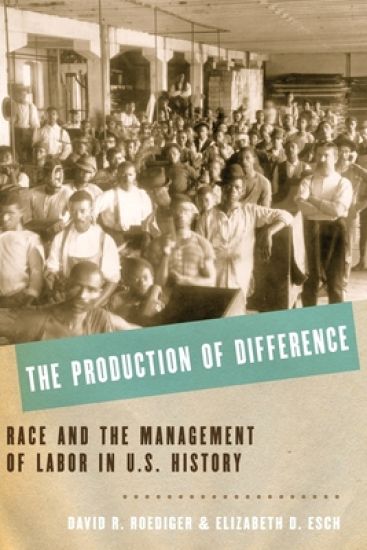
In 1907, pioneering labor historian and economist John Commons argued that U.S. management had shown just one "symptom of originality," namely "playing one race against the other." In this eye-opening book, David Roediger and Elizabeth Esch offer a radically new way of understanding the history of management in the United States, placing race, migration, and empire at the center of what has sometimes been narrowly seen as a search for efficiency and economy. Ranging from the antebellum period to the coming of the Great Depression, the book examines the extensive literature slave masters produced on how to manage and "develop" slaves; explores what was perhaps the greatest managerial feat in U.S. history, the building of the transcontinental railroad, which pitted Chinese and Irish work gangs against each other; and concludes by looking at how these strategies survive today in the management of hard, low-paying, dangerous jobs in agriculture, military support, and meatpacking. Roediger and Esch convey what slaves, immigrants, and all working people were up against as the objects of managerial control. Managers explicitly ranked racial groups, both in terms of which labor they were best suited for and their relative value compared to others. The authors show how whites relied on such alleged racial knowledge to manage and believed that the "lesser races" could only benefit from their tutelage. These views wove together managerial strategies and white supremacy not only ideologically but practically, every day at workplaces. Even in factories governed by scientific management, the impulse to play races against each other, and to slot workers into jobs categorized by race, constituted powerful management tools used to enforce discipline, lower wages, keep workers on dangerous jobs, and undermine solidarity. Painstakingly researched and brilliantly argued, The Production of Difference will revolutionize the history of labor race in the United States.
Radical Parliamentarians and the English Civil War charts the way the English civil war of the 1640s mutated into a revolution, in turn paving the way for the later execution of King Charles I and the abolition of the monarchy. Focusing on parliament's most militant supporters, David Como reconstructs the origins and nature of the most radical forms of political and religious agitation that erupted during the war, tracing the process by which these forms gradually spread and gained broader acceptance. Drawing on a wide range of manuscript and print sources, the study situates these developments within a revised narrative of the period, revealing the emergence of new practices and structures for the conduct of politics. In the process, the book illuminates the eruption of many of the period's strikingly novel intellectual currents, including assumptions and practices we today associate with western representative democracy; notions of retained natural rights, religious toleration, freedom of the press, and freedom from arbitrary imprisonment. The study also chronicles the way that civil war shattered English protestantism - leaving behind myriad competing groupings, including congregationalists, baptists, antinomians, and others - while examining the relationship between this religious fragmentation and political change. It traces the gradual appearance of openly anti-monarchical, republican sentiment among parliament's supporters. Radical Parliamentarians and the English Civil War provides a new history of the English civil war, enhancing our understanding of the dramatic events of the 1640s, and shedding light on the long-term political and religious consequences of the conflict.
The orthodox doctrine of the incarnation affirms that Christ is both truly divine and truly human. This, however, raises the question of how these two natures can co-exist in the one, united person of Christ without undermining the integrity of either nature. Kenotic theologians address this problem by arguing that Christ 'emptied' himself of his divine attributes or prerogatives in order to become a human being. David R. Law contends that a type of kenotic Christology is present in Kierkegaard's works, developed independently of the Christologies of contemporary kenotic theologians. Like many of the classic kenotic theologians of the 19th century, Kierkegaard argues that Christ underwent limitation on becoming a human being. Where he differs from his contemporaries is in emphasizing the radical nature of this limitation and in bringing out its existential consequences. The aim of Kierkegaard's Christology is not to provide a rationally satisfying theory of the incarnation, but to highlight the existential challenge with which Christ confronts each human being. Kierkegaard advances 'existential kenoticism', a form of kenotic Christology which extends the notion of the kenosis of Christ to the Christian believer, who is called upon to live a life of kenotic discipleship in which the believer follows Christ's example of lowly, humble, and suffering service. Kierkegaard thus shifts the problem of kenosis from the intellectual problem of working out how divinity and humanity can be united in Christ's Person to the existential problem of discipleship.
In 1907, pioneering labor historian and economist John Commons argued that US management had shown just one "symptom of originality," namely "playing one race against the other." In this eye-opening book, David Roediger and Elizabeth Esch offer a radically new way of understanding the history of management in the United States, placing race, migration, and empire at the center of what has sometimes been narrowly seen as a search for efficiency and economy. Ranging from the antebellum period to the coming of the Great Depression, the book examines the extensive literature slave masters produced on how to manage and "develop" slaves; explores what was perhaps the greatest managerial feat in U.S. history, the building of the transcontinental railroad, which pitted Chinese and Irish work gangs against each other; and concludes by looking at how these strategies survive today in the management of hard, low-paying, dangerous jobs in agriculture, military support, and meatpacking. Roediger and Esch let us see afresh what slaves, immigrants, and all working people were up against as the objects of managerial control. Managers explicitly ranked racial groups, both in terms of which labor they were best suited for and their relative value compared to others. The authors show how whites relied on such alleged racial knowledge to manage and believed that the "lesser races" could only benefit from their tutelage. These views wove together managerial strategies and white supremacy not only ideologically but practically, every day at workplaces. Even in factories governed by scientific management, the impulse to play races against each other, and to slot workers into jobs categorized by race, constituted powerful management tools used to enforce discipline, lower wages, keep workers on dangerous jobs, and undermine solidarity. Painstakingly researched and brilliantly argued, The Production of Difference will revolutionize the history of labor and race in the United States.
Bullying is one of the most prevalent and insidious forms of school violence today, impacting the learning environment of schools in profound ways. Victims of chronic bullying have poorer grades, increased rates of truancy, increased rates of dropping out, loss of self-esteem, feelings of isolation, depression, and increased risk of suicide attempts. This Workshop volume is unique in utilizing a larger cultural context and international perspective that broadens the traditional conceptualization of bullying and that promotes creative approaches to a seemingly intractable and complex problem. In addition, senior researcher and practitioner David Dupper investigates several "under the radar" forms of bullying (e.g., religious bullying, bullying by teachers and other adults in schools), as well as the unique challenges in assessing these largely unacknowledged forms of bullying in today's U.S. public schools. Viewing bullying as a systematic abuse of power, this book examines all the ways in which power is misused in schools. Dupper also dispels important myths about bullies and focuses on the increasingly important role that peer witnesses play in exacerbating as well as combating bullying in schools. Consistent with an ecological systems perspective, this book utilizes a whole school approach as a framework for developing and implementing comprehensive evidence-based interventions to combat bullying in schools. The result is a must-have resource for both undergraduate and graduate students in social work courses, school psychology courses, and education courses, as well as student service workers in secondary schools.
The Highlands Controversy is a rich and perceptive account of the third and last major dispute in nineteenth-century geology stemming from the work of Sir Roderick Murchison. The earlier Devonian and Cambrian-Silurian controversies centered on whether the strata of Devon and Wales should be classified by lithological or paleontological criteria, but the Highlands dispute arose from the difficulties the Scottish Highlands presented to geologists who were just learning to decipher the very complex processes of mountain building and metamorphism. David Oldroyd follows this controversy into the last years of the nineteenth century, as geology was transformed by increasing professionalization and by the development of new field and laboratory techniques. In telling this story, Oldroyd's aim is to analyze how scientific knowledge is constructed within a competitive scientific community—how theory, empirical findings, and social factors interact in the formation of knowledge. Oldroyd uses archival material and his own extensive reconstruction of the nineteenth-century fieldwork in a case study showing how detailed maps and sections made it possible to understand the exceptionally complex geological structure of the Highlands An invaluable addition to the history of geology, The Highlands Controversy also makes important contributions to our understanding of the social and conceptual processes of scientific work, especially in times of heated dispute.
Why do we share so much about our lives on social media when we often have little idea who might be reading or viewing? David R. Brake examines the causes and consequences of moving towards a radically open society.
Why do we share so much about our lives on social media when we often have little idea who might be reading or viewing? David R. Brake examines the causes and consequences of moving towards a radically open society.
This third annual volume from the Organization of American Historians, containing the best American history articles published between the summers of 2006 and 2007, provides a quick and comprehensive overview of the top work and the current intellectual trends in the field of American history. With contributions from a diverse group of historians, this collection appeals both to scholars and to lovers of history alike.
When is military force an acceptable tool of foreign policy? Why do democracies use force against each other? David R. Mares argues that the key factors influencing political leaders in all types of polities are the costs to their constituencies of using force and whether the leader can survive their displeasure if the costs exceed what they are willing to pay. Violent Peace proposes a conceptual scheme for analyzing militarized conflict and supports this framework with evidence from the history of Latin America. His model has greater explanatory power when applied to this conflict-ridden region than a model emphasizing U.S. power, levels of democracy, or the balance of power. Mares takes conflict as a given in international relations but does not believe that large-scale violence must inevitably result, arguing that it is the management of conflict, and not necessarily its resolution, that should be the focus of students, scholars, and practitioners of international relations. Mares argues that deterrence represents the key to conflict management by directly affecting the costs of using force. Conflicts escalate to violence when leaders ignore the requisites for credible and ongoing deterrence. Successful deterrence, he suggests, lies in a strategy that combines diplomatic and military incentives, allowing competition among heterogenous states to be managed in a way that minimizes conflict and maximizes cooperation.
When is military force an acceptable tool of foreign policy? Why do democracies use force against each other? David R. Mares argues that the key factors influencing political leaders in all types of polities are the costs to their constituencies of using force and whether the leader can survive their displeasure if the costs exceed what they are willing to pay. Violent Peace proposes a conceptual scheme for analyzing militarized conflict and supports this framework with evidence from the history of Latin America. His model has greater explanatory power when applied to this conflict-ridden region than a model emphasizing U.S. power, levels of democracy, or the balance of power. Mares takes conflict as a given in international relations but does not believe that large-scale violence must inevitably result, arguing that it is the management of conflict, and not necessarily its resolution, that should be the focus of students, scholars, and practitioners of international relations. Mares argues that deterrence represents the key to conflict management by directly affecting the costs of using force. Conflicts escalate to violence when leaders ignore the requisites for credible and ongoing deterrence. Successful deterrence, he suggests, lies in a strategy that combines diplomatic and military incentives, allowing competition among heterogenous states to be managed in a way that minimizes conflict and maximizes cooperation.
Spirituality often plays a critical role in health and wellness, yet few have explored in detail the process through which practitioners can identify and use clients' spiritual strengths to their mutual advantage. To address this gap, this practice-oriented text equips helping professionals with the tools they need to administer spiritual assessments ethically and professionally. David R. Hodge outlines a number of assessment approaches, including an implicit method for evaluating "secular" forms of spirituality. Case examples illustrate the implementation of these strategies in different clinical settings and with groups from diverse racial, geographic, and socioeconomic backgrounds.