Kirjojen hintavertailu. Mukana 11 627 624 kirjaa ja 12 kauppaa.

Kirjahaku

Etsi kirjoja tekijän nimen, kirjan nimen tai ISBN:n perusteella.

1000 tulosta hakusanalla David T. Scheffman; Elie Appelbaum

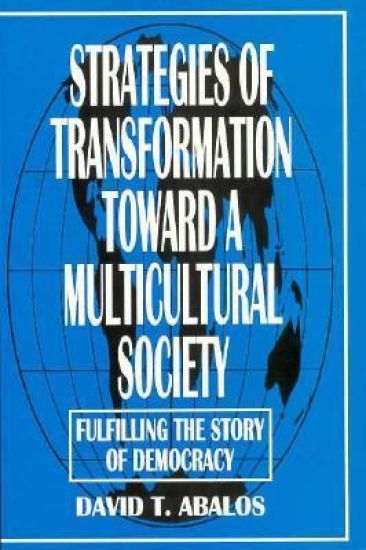
Strategies of Transformation Toward a Multicultural Society
How can the culturally diverse communities of America live justly and fruitfully together? Not by assimilation into the dominant culture — nor by fighting for the freedom to pursue our own self-interest at the cost of our repressing both the wounds and the promising potential of our own cultural roots. This book offers a theory and practice of transformation that shows, especially through literature, education, and politics, how we can create a multicultural society that liberates our being as a fulfillment of the story of democracy. Perhaps for the first time in American history we are seeing the personal, political, historical, and sacred faces of women, people of color, and all ethnic groups as they tell their stories. It is this emerging scholarship that constitutes the new multicultural and feminine face of the story of democracy.
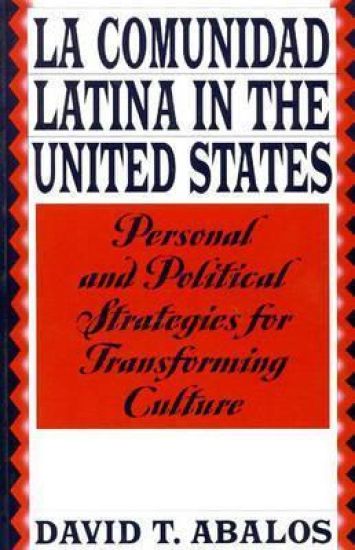
La Comunidad Latina in the United States

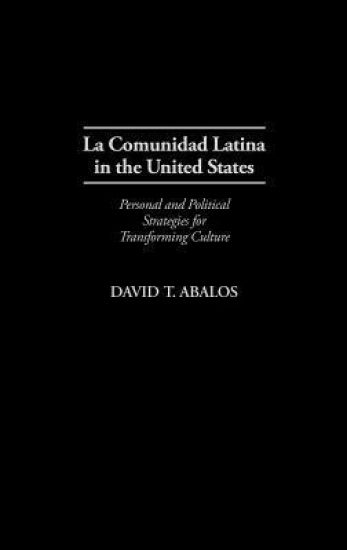
La Comunidad Latina in the United States

David T. Abalos

Praeger Publishers Inc
1998
sidottu
La comunidad Latina, the fastest growing ethnic group in the United States, has long been told that assimilation is the only way to succeed in American society. This book challenges that generally accepted view and concludes instead that transformation as a way of life is the only viable option for the Latino community as a whole, regardless of racial, class, regional, or religious differences. It highlights how in the everyday life of la comunidad Latina the members of the community can recognize the underlying ways of life, the stories, and the patterns of relationships that cripple them, and how to break with these ways of life, stories, and relationships to create fundamentally more loving and compassionate alternatives.Along with all men and women, Latinos and Latinas face four choices: retaining a blind loyalty to a romanticized past, assimilating, violating each other, or transforming their ethnic and racial group for the better. This examination of the underlying sacred meaning of the stories of the Latino culture attempts to determine whether these stories are destructive or creative. Now coming of age, la comunidad Latina, previously wounded by assimilation, continues to tell its story in art, literature, history, and religion so that the world may, perhaps for the first time, see its personal, political, historical, and sacred faces. The most important story now being lived is that of Latina women and Latino men who are making choices that will determine the ultimate meaning of a new Latino culture in this nation.
La Comunidad Latina in the United States

La Comunidad Latina in the United States

David T. Abalos

Praeger Publishers Inc
1998
nidottu
La comunidad Latina, the fastest growing ethnic group in the United States, has long been told that assimilation is the only way to succeed in American society. This book challenges that generally accepted view and concludes instead that transformation as a way of life is the only viable option for the Latino community as a whole, regardless of racial, class, regional, or religious differences. It highlights how in the everyday life of la comunidad Latina the members of the community can recognize the underlying ways of life, the stories, and the patterns of relationships that cripple them, and how to break with these ways of life, stories, and relationships to create fundamentally more loving and compassionate alternatives.Along with all men and women, Latinos and Latinas face four choices: retaining a blind loyalty to a romanticized past, assimilating, violating each other, or transforming their ethnic and racial group for the better. This examination of the underlying sacred meaning of the stories of the Latino culture attempts to determine whether these stories are destructive or creative. Now coming of age, la comunidad Latina, previously wounded by assimilation, continues to tell its story in art, literature, history, and religion so that the world may, perhaps for the first time, see its personal, political, historical, and sacred faces. The most important story now being lived is that of Latina women and Latino men who are making choices that will determine the ultimate meaning of a new Latino culture in this nation.
Redefining Security

Redefining Security

David T. Graham; Nana Poku

Praeger Publishers Inc
1998
sidottu
International migration has become a major domestic political issue in many countries and a major topic of international debate. Thus far, most of the attention has centered on the plight of refugees or on ways to curb the flow of illegal immigrants. As more and more migrants cross interstate boundaries, however, governments are realizing that immigration and asylum problems cannot be separated from broader socio-economic and political issues; nor can they be resolved by countries acting unilaterally. Even with this understanding, attempts to develop multilateral strategies to ease international tensions arising from uncontrolled migration will be complicated by economic disparities, regional political tensions, and mounting population and ecological pressures.Internal migration, particularly in terms of forced resettlement and urbanization, also gives rise to a myriad of problems relating to aspects of security. The increase in other major population movements, such as tourism and business travel, also has implications for security. Until recently, the question what is security? was rarely asked in the context of these developments. This was because there was a perceived consensus on what the nature of security was. The nature of security was held to mean national, political, and military security. Thus security was virtually synonymous with defense. The theoretical claim of this volume is that these developments are necessitating a redefinition of security. This volume provides major theoretical analyses of these trends as well as in-depth case studies that explore specific developments of major concern to scholars and other researchers involved with international relations, migration, and development issues.
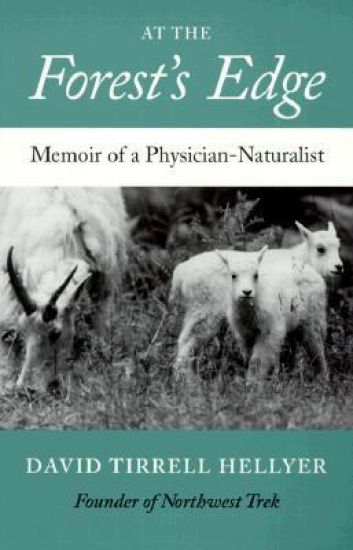
At the Forest's Edge

At the Forest's Edge

David T. Hellyer

University of Washington Press
2000
pokkari
Pediatrician David Hellyer (b. 1913) records his family history and the life experiences that led to his founding of the 600-acre Northwest Trek Wildlife Park, a wildlife sanctuary in Eatonville, Washington.
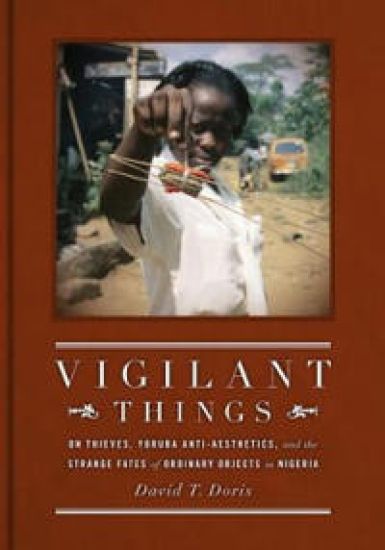
Vigilant Things

Vigilant Things

David T Doris

University of Washington Press
2011
sidottu
Winner of the 2012 Melville J. Herskovits award (African Studies Association)Throughout southwestern Nigeria, Yoruba men and women create objects called aale to protect their properties—farms, gardens, market goods, firewood—from the ravages of thieves. Aale are objects of such unassuming appearance that a non-Yoruba viewer might not register their important presence in the Yoruba visual landscape: a dried seedpod tied with palm fronds to the trunk of a fruit tree, a burnt corncob suspended on a wire, an old shoe tied with a rag to a worn-out broom and broken comb, a ripe red pepper pierced with a single broom straw and set atop a pile of eggs. Consequently, aale have rarely been discussed in print, and then only as peripheral elements in studies devoted to other issues. Yet aale are in no way peripheral to Yoruba culture or aesthetics.In Vigilant Things, David T. Doris argues that aale are keys to understanding how images function in Yoruba social and cultural life. The humble, often degraded objects that comprise aale reveal as eloquently as any canonical artwork the channels of power that underlie the surfaces of the visible. Aale are warnings, intended to trigger the work of conscience. Aale objects symbolically threaten suffering as the consequence of transgression—the suffering of disease, loss, barrenness, paralysis, accident, madness, fruitless labor, or death—and as such are often the useless residues of things that were once positively valued: empty snail shells, shards of pottery, fragments of rusted iron, and the like. If these objects share "suffering" and "uselessness" as constitutive elements, it is because they already have been made to suffer and become useless. Aale offer would-be thieves an opportunity to recognize themselves in advance of their actions and to avoid the thievery that would make the "useless" people.
At the Forest's Edge

At the Forest's Edge

David T. Hellyer

University of Washington Press
2016
sidottu
Pediatrician David Hellyer (b. 1913) records his family history and the life experiences that led to his founding of the 600-acre Northwest Trek Wildlife Park, a wildlife sanctuary in Eatonville, Washington.
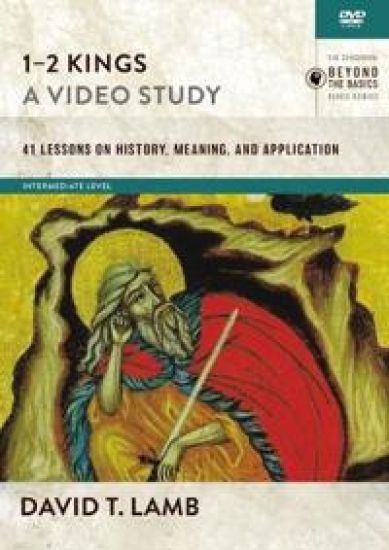
1–2 Kings

1–2 Kings

David T. Lamb

Zondervan
2022
sidottu
A new commentary for today's world, The Story of God Bible Commentary explains and illuminates each passage of Scripture in light of the Bible's grand story.The first commentary series to do so, SGBC offers a clear and compelling exposition of biblical texts, guiding everyday readers in how to creatively and faithfully live out the Bible in their own contexts. Its story-centric approach is ideal for pastors, students, Sunday school teachers, and laypeople alike.Each volume employs three main, easy-to-use sections designed to help readers live out God's story:LISTEN to the Story: Includes complete NIV text with references to other texts at work in each passage, encouraging the reader to hear it within the Bible's grand story.EXPLAIN the Story: Explores and illuminates each text as embedded in its canonical and historical setting.LIVE the Story: Reflects on how each text can be lived today and includes contemporary stories and illustrations to aid preachers, teachers, and students.—1 & 2 Kings—While the book of Kings is interested in history, it is more concerned with theology. It narrates the story of God's relationship with his people over the course of the monarchy—how he judges his own people, even sending them into exile. Lessons from these narratives continue to challenge today's readers to obedience and exclusive worship of God.Edited by Scot McKnight and Tremper Longman III, and written by a number of top-notch theologians, The Story of God Bible Commentary series will bring relevant, balanced, and clear-minded theological insight to any biblical education or ministry.
Prostitutes and Polygamists

Prostitutes and Polygamists

David T. Lamb

Zondervan
2015
nidottu
Jacob and Solomon were polygamists. Tamar and Rahab were prostitutes. What are polygamists and prostitutes doing on the pages of Holy Scripture? And God told the prophet Hosea to marry a prostitute. What about Cain—did he really marry his sister? Abraham did, and he was also a polygamist. Lot offered his daughters up for rape, David committed adultery (or rape?) and the Bible calls both men righteous. Love, Old Testament style, was bizarre.As readers of the Old Testament encounter these weird, confusing, and horrific “love” stories they ask, “What’s up with sex in the Old Testament?” The church often ignores the R-rated bits of the Bible, so it’s hard for people to find answers to their disturbing questions about sex in Scripture, which can lead people to give up on God and God’s word.However, these stories were included in the Bible for a reason, to reveal an even more shocking “love” story. When humans behave badly, God behaves graciously. God not only forgives people with sexual baggage, but also redeems their lives and includes them in his mission. God’s word records their story to benefit us. Just as sex was not often ideal in the Old Testament, it’s often not ideal today. Instead of ignoring these stories, Prostitutes and Polygamists engages, discusses, and learns from them.
The American Church in Crisis

The American Church in Crisis

David T. Olson; Craig Groeschel

Zondervan
2017
nidottu
Groundbreaking research based on a national database of over 200,000 churches shows that the overall United States population is growing faster than the church. The director of the American Church Research Project, Dave Olson, has worked to analyze church attendance, showing that it is virtually unchanged from fifteen years ago while our population has grown by fifty-two million people. What does this mean for you, your church, and the future of Christianity in North America? The American Church in Crisis offers unprecedented access to data that helps you understand the state of the church today. "We live in a world that is post-Christian, postmodern, and multiethnic, whether we realize it or not," says the author. This book not only gives a realistic picture that confirms hunches and explodes myths, but it provides insight into how the church must change to reach a new and changed world with the hope of the gospel. Readers will find a richly textured mosaic with optimistic and challenging stories. Charts, diagrams, and worksheets provide church leaders and motivated church members with a stimulating read that will provoke much discussion. Questions for discussion accompany the chapters.
Beyond Glasnost

Beyond Glasnost

David T. Twining

Praeger Publishers Inc
1992
sidottu
Colonel David T. Twining and his colleagues look at the impact of glasnost and the collapse of the Soviet system on the military. The case study approach used allows for in-depth examination of a number of key issues. Within the former USSR, the remarkable record of sacrifice and valor by women in wartime has not been matched by equal opportunity during peacetime, where they are effectively excluded from meaningful military careers. The KGB, the world's largest security and intelligence organization, proved to be among the most resistant to reform, and this, the book contends, appears to have hastened its doom. The adoption of the rule of law was widely resisted in the Soviet armed forces, and reforms in military service have come from demands by parents and relatives that the military change its lethal ways. Soviet foreign military affairs have also been affected by glasnost. The volume looks at the influence of the war in Afghanistan in the reversal of Moscow's Middle East policy. Equally important, but unheralded, has been the re-establishment of ties with China.Together, the essays in this collection illustrate the impact of a stressed political system struggling to adapt to changing circumstances, caught between the exigencies of reform and revolt. Students and scholars involved in Soviet studies as well as contemporary military studies will find much to ponder.
Guide to the Republics of the Former Soviet Union
This unique compilation on the Eurasian states of the former Soviet Union introduces the little-known, yet strategic heartland of the world. Some of the information included has never before been published; none has been assembled in such a manner in which interrelationships of culture, history, diplomacy, economics, and defense are so clear and understandable.Following an overview of the Soviet Union and its recent history, the guide examines each region and each state. Information is provided on the political structure and policies, the military, and the economy. The remnants of the Soviet Union, such as the military-space complex, are described, as are the key emerging leaders. The volume concludes with a bibliography and general subject index. It is a useful reference for students and scholars alike, and for all who need to understand the contours of the new Eurasia.
The Unheard Voice of Law in Bartolomé de Las Casas’s Brevísima Relación de la Destruición de las Indias
The Unheard Voice of Law in Bartolomé de las Casas’s Brevísima relación de la destruición de las Indias reinterprets Las Casas’s controversial treatise as a legal document, whose legal character is linked to civil and ecclesial genres of the Early Modern and late Renaissance juridical tradition. Bartolomé de las Casas proclaimed: "I have labored to inquire about, study, and discern the law; I have plumbed the depths and have reached the headwaters." The Unheard Voice also plumbs the depths of Las Casas’s voice of law in his widely read and highly controversial Brevísima relación—a legal document published and debated since the 16th century. This original reinterpretation of his Very Brief Account uncovers the juridical approach voiced in his defense of the Indigenous peoples of the Americas. The Unheard Voice innovatively asserts that the Brevísima relación’s legal character is intimately linked to civil and ecclesial genres of the late Renaissance juridical tradition. This paradigm-shifting book contextualizes the formation of Las Casas’s juridical voice in canon law and theology—initially as a secular cleric, subsequently as a Dominican friar, and finally as a diocesan bishop—and demonstrates how his experienced juridical voice fought for justice in trans-Atlantic debates about Indigenous peoples’ level of humanity, religious freedom, enslavement, and conquest. Reaching the headwaters of Las Casas’s hitherto unheard juridical voice of law in the Brevísima relación provides readers with a previously unheard interpretation—an appealing voice for readers and students of this powerful Early Modern text that still resonates today.The Unheard Voice of Law is a valuable companion text for many in the disciplines of literature, history, theology, law, and philosophy who read Bartolomé de las Casas’s Very Brief Account and study his life, labor, and legacy.
The Unheard Voice of Law in Bartolomé de Las Casas’s Brevísima Relación de la Destruición de las Indias
The Unheard Voice of Law in Bartolomé de las Casas’s Brevísima relación de la destruición de las Indias reinterprets Las Casas’s controversial treatise as a legal document, whose legal character is linked to civil and ecclesial genres of the Early Modern and late Renaissance juridical tradition. Bartolomé de las Casas proclaimed: "I have labored to inquire about, study, and discern the law; I have plumbed the depths and have reached the headwaters." The Unheard Voice also plumbs the depths of Las Casas’s voice of law in his widely read and highly controversial Brevísima relación—a legal document published and debated since the 16th century. This original reinterpretation of his Very Brief Account uncovers the juridical approach voiced in his defense of the Indigenous peoples of the Americas. The Unheard Voice innovatively asserts that the Brevísima relación’s legal character is intimately linked to civil and ecclesial genres of the late Renaissance juridical tradition. This paradigm-shifting book contextualizes the formation of Las Casas’s juridical voice in canon law and theology—initially as a secular cleric, subsequently as a Dominican friar, and finally as a diocesan bishop—and demonstrates how his experienced juridical voice fought for justice in trans-Atlantic debates about Indigenous peoples’ level of humanity, religious freedom, enslavement, and conquest. Reaching the headwaters of Las Casas’s hitherto unheard juridical voice of law in the Brevísima relación provides readers with a previously unheard interpretation—an appealing voice for readers and students of this powerful Early Modern text that still resonates today.The Unheard Voice of Law is a valuable companion text for many in the disciplines of literature, history, theology, law, and philosophy who read Bartolomé de las Casas’s Very Brief Account and study his life, labor, and legacy.
The Internet in Indonesia's New Democracy

The Internet in Indonesia's New Democracy

David T. Hill; Krishna Sen

Routledge
2005
sidottu
The Internet in Indonesia’s New Democracy is a detailed study of legal, economic, political and cultural practices surrounding the provision and consumption of the Internet in Indonesia at the turn of the twenty-first century. Hill and Sen detail the emergence of the Internet into Indonesia in the mid-1990s, and cover its growth through the dramatic economic and political crises of 1997 and the subsequent transition to democracy.Conceptually the Internet is seen as a global phenomenon, with global implications, however this book develops a way of thinking about the Internet within the limits of geo-political categories of nations and provinces. The political turmoil in Indonesia provides a unique context in which to understand the specific local and national consequences of a global, universal technology.
The German 1918 Offensives

The German 1918 Offensives

David T. Zabecki

Routledge
2006
sidottu
This is the first study of the Ludendorff Offensives of 1918 based extensively on key German records presumed to be lost forever after Potsdam was bombed in 1944. In 1997, David T. Zabecki discovered translated copies of these files in a collection of old instructional material at the U.S. Army Command and General Staff College at Fort Leavenworth, Kansas. He presents his findings here for the first time, with a thorough review of the surviving original operational plans and orders, to offer a wealth of fresh insights to the German Offensives of 1918. David T. Zabecki clearly demonstrates how the German failure to exploit the vulnerabilities in the BEF’s rail system led to the failure of the first two offensives, and how inadequacies in the German rail system determined the outcome of the last three offensives. This is a window into the mind of the German General Staff of World War I, with thorough analysis of the German planning and decision making processes during the execution of battles. This is also the first study in English or in German to analyze the specifics of the aborted Operation HAGEN plan. This is also the first study of the 1918 Offensives to focus on the ‘operational level of war’ and on the body of military activity known as ‘the operational art’, rather than on the conventional tactical or strategic levels.This book will be of great interest to all students of World War I, the German Army and of strategic studies and military theory in general.