Kirjojen hintavertailu. Mukana 12 390 323 kirjaa ja 12 kauppaa.

Kirjahaku

Etsi kirjoja tekijän nimen, kirjan nimen tai ISBN:n perusteella.

1000 tulosta hakusanalla David Thomas

The Genius of the Gospel

The Genius of the Gospel

David Thomas

Hansebooks
2017
pokkari
The Genius of the Gospel - A Homiletical Commentary on the Gospel of St. Matthew is an unchanged, high-quality reprint of the original edition of 1873. Hansebooks is editor of the literature on different topic areas such as research and science, travel and expeditions, cooking and nutrition, medicine, and other genres. As a publisher we focus on the preservation of historical literature. Many works of historical writers and scientists are available today as antiques only. Hansebooks newly publishes these books and contributes to the preservation of literature which has become rare and historical knowledge for the future.
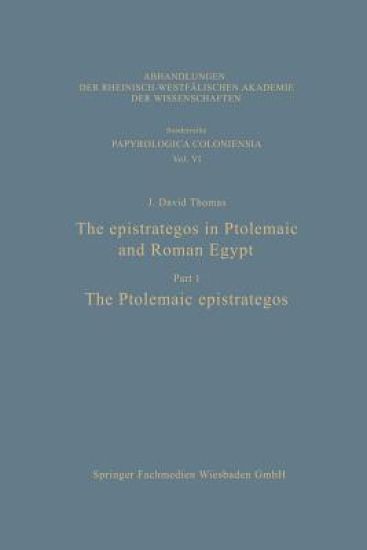
The epistrategos in Ptolemaic and Roman Egypt
It is over sixty years since the office of epistrategos in Roman Egypt was subjected to a detailed examination and in the interverring years a great deal of new papyrological and epigraphic material has come to light. It was my original intention to write a study of the office in this period with, by way of introduction, a brief sketch of the epistrategos in Ptolemaic Egypt. It soon became apparent, however, that a much more fundamental study of the Ptolemaic epistrategos was desirable, which would attempt to answer, or at least to clarify, the various problems connected with the office in this period. In this book I have tried to present a comprehensive up-to-date picture of our knowledge of the Ptolemaic epistrategos. I am far from claiming to have successfully answered all the questions raised -in particular the fundamental problern of the nature of the office remains an enigm- but I hope that I have at any rate provided a basis on which others can build. As the Ptolemaic and Roman epistrategoi did not have a great deal in common apart from their titles, an examination of the office falls naturally into two parts. It therefore seemed not inappropriate to publish separately the first half of this work dealing with the Ptolemaic epistrategos, without waiting for the completion of the second part which will deal with the Roman epistrategos. It is hoped that this second part will follow without undue delay.
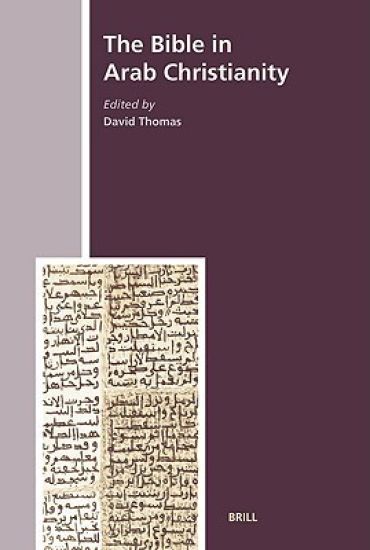
The Bible in Arab Christianity
The contributions to this volume, which come from the Fifth Mingana Symposium, survey the use of the Bible and attitudes towards it in the early and classical Islamic periods. The authors explore such themes as early Christian translations of the Bible into Arabic, the use of verses from it to defend the truth of Christianity, to interpret the significance of Islam and to prove its error, Muslim accusations of corruption of the Bible, and the influences that affected production of Bibles in Muslims lands. The volume illustrates the centrality of the Bible to Arab Christians as a source of authority and information about their experiences under Islam, and the importance of upholding its authenticity in the face of Muslim criticisms.Contributors include: Samir Arbache, Mark Beaumont, Emmanouela Grypeou, Lucy-Anne Hunt, Juan Pedro Monferrer Sala, Said Gabriel Reynolds, Barbara Roggema, Harald Suermann and Mark Swanson.
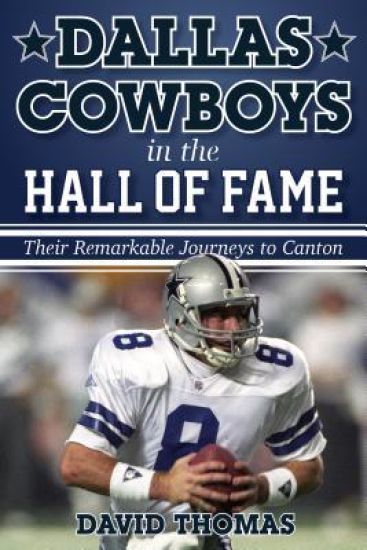
Dallas Cowboys in the Hall of Fame

Dallas Cowboys in the Hall of Fame

David Thomas

Rowman Littlefield
2016
sidottu
Troy Aikman. Emmitt Smith. Michael Irvin. Tom Landry. The names are easily recognizable as Dallas Cowboys, and their legacies are on display in one location: the Pro Football Hall of Fame in Canton, Ohio. Twenty-two members of the Hall of Fame were a part of the Dallas franchise; only eight NFL teams can boast more, and seven of those teams have been in existence much longer than the Cowboys. In Dallas Cowboys in the Hall of Fame: Their Remarkable Journeys to Canton, David Thomas shares the stories of these incredible players and the ups and downs they all experienced on their way to pro football’s most exclusive club. Each player’s life story is told in such a way to reveal what led him to become a hall of famer, including childhood memories, influential coaches, the teammates who brought the best out in them, and more. Cowboy fans will discover such details as the fact that Troy Aikman was the largest player on his high school football team—bigger even than the linemen—and that it was Michael Irvin’s fancy last-minute talking with the Green Bay Packers on draft day that got him to Dallas and away from a cold-weather team. In addition, each entry includes career statistics, a player bio, and his top five Cowboy moments, describing his greatest games and on-field accomplishments. Cowboy fans have become accustomed to watching high-caliber players on the field every season, and Dallas Cowboys in the Hall of Fame brings them the inside information on their favorite stars of the past. All football fans will enjoy the chance learn more about the iconic players profiled in this book—legends who have helped shape the Dallas franchise and the NFL.
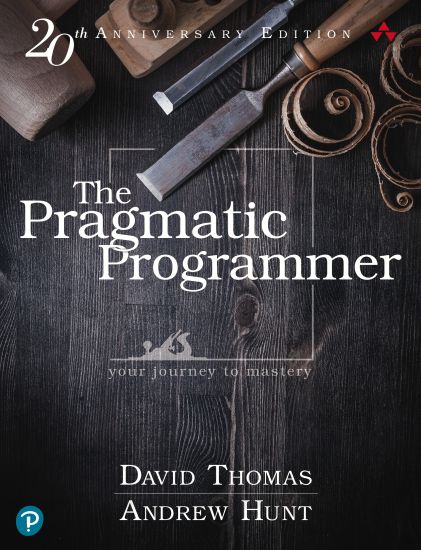
Pragmatic Programmer, The

Pragmatic Programmer, The

David Thomas; Andrew Hunt

Addison Wesley
2019
sidottu
The Pragmatic Programmer is one of those rare tech books you'll read, re-read, and read again over the years. Whether you're new to the field or an experienced practitioner, you'll come away with fresh insights each and every time. Dave Thomas and Andy Hunt wrote the first edition of this influential book in 1999 to help their clients create better software and rediscover the joy of coding. These lessons have helped a generation of programmers examine the very essence of software development, independent of any particular language, framework, or methodology, and the Pragmatic philosophy has spawned hundreds of books, screencasts, and audio books, as well as thousands of careers and success stories. Now, twenty years later, this new edition re-examines what it means to be a modern programmer. Topics range from personal responsibility and career development to architectural techniques for keeping your code flexible and easy to adapt and reuse. Read this book, and you'll learn how to: Fight software rotLearn continuouslyAvoid the trap of duplicating knowledgeWrite flexible, dynamic, and adaptable codeHarness the power of basic toolsAvoid programming by coincidenceLearn real requirementsSolve the underlying problems of concurrent codeGuard against security vulnerabilitiesBuild teams of Pragmatic ProgrammersTake responsibility for your work and careerTest ruthlessly and effectively, including property-based testingImplement the Pragmatic Starter KitDelight your users Written as a series of self-contained sections and filled with classic and fresh anecdotes, thoughtful examples, and interesting analogies, The Pragmatic Programmer illustrates the best approaches and major pitfalls of many different aspects of software development. Whether you're a new coder, an experienced programmer, or a manager responsible for software projects, use these lessons daily, and you'll quickly see improvements in personal productivity, accuracy, and job satisfaction. You'll learn skills and develop habits and attitudes that form the foundation for long-term success in your career. You'll become a Pragmatic Programmer. "One of the most significant books in my life."--Obie Fernandez, Author, The Rails Way "Twenty years ago, the first edition of The Pragmatic Programmer completely changed the trajectory of my career. This new edition could do the same for yours."--Mike Cohn, Author of Succeeding with Agile, Agile Estimating and Planning, and User Stories Applied ". . . filled with practical advice, both technical and professional, that will serve you and your projects well for years to come."--Andrea Goulet, CEO, Corgibytes, Founder, LegacyCode.Rocks ". . . lightning does strike twice, and this book is proof." --VM (Vicky) Brasseur, Director of Open Source Strategy, Juniper Networks Register your book for convenient access to downloads, updates, and/or corrections as they become available. See inside book for details.
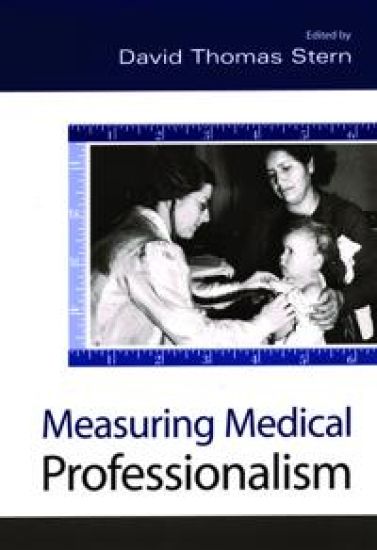
Measuring Medical Professionalism

Measuring Medical Professionalism

David Thomas Stern

Oxford University Press Inc
2006
sidottu
Patients who are confident of physicians' intellectual and technical abilities are sometimes not convinced of their professional behaviour. Systemic and anecdotal cases of physician misconduct, conflict of interest, and self-interest abound. Many have even come to mistrust physicians as patient advocates. How can patients trust the intellectual and technical aspects of medical care, but not the professional? In order to enhance and promote professionalism in medicine, one should expect it, encourage it, and evaluate it. By measuring their own professional behaviour, physicians can provide the kind of transparency with which they can regain the trust of patients and society. Not only patients, but also institutions which accredit organizations have demanded accountability of physicians in their professional behaviour. While there has been much lament and a few strong proposals for improving professionalism, no single reliable and valid measure of the success of these proposals exists. This book is a theory-to-practice text focused on ways to evaluate professional behaviour written by leaders in the field of medical education and assessment.
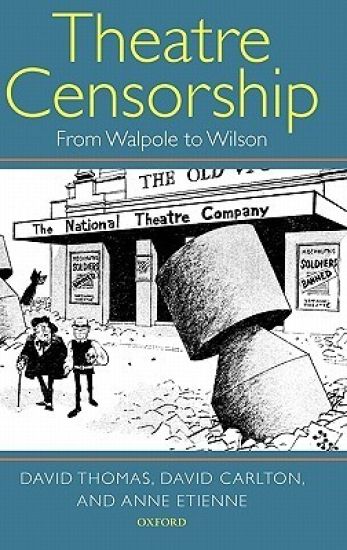
Theatre Censorship

Theatre Censorship

David Thomas; David Carlton; Anne Etienne

Oxford University Press
2007
sidottu
Using previously unpublished material from the National Archives, David Thomas, David Carlton, and Anne Etienne provide a new perspective on British cultural history. Statutory censorship was first introduced in Britain by Sir Robert Walpole with his Licensing Act of 1737. Previously theatre censorship was exercised under the Royal Prerogative. By giving the Lord Chamberlain statutory powers of theatre censorship, Walpole ensured that confusion over the relationship between the Royal Prerogative and statute law would prevent any serious challenge to theatre censorship in Parliament until the twentieth century. The authors place theatre censorship legislation and its attempted reform in their wider political context. Sections outlining the political history of key periods explain why theatre censorship legislation was introduced in 1737, why attempts to reform the legislation failed in 1832, 1909, and 1949, and finally succeeded in 1968. Opposition from Edward VII helped to prevent the abolition of theatre censorship in 1909. In 1968, theatre censorship was abolished despite opposition from Elizabeth II, Lord Cobbold (her Lord Chamberlain) and Harold Wilson (her Prime Minister). There was strong support for theatre censorship on the part of commercial theatre managers who saw censorship as offering protection from vexatious prosecution. A policy of inertia and deliberate obfuscation on the part of Home Office officials helped to prevent the abolition of theatre censorship legislation until 1968. It was only when playwrights, directors, critics, audiences, and politicians (notably Roy Jenkins) applied combined pressure that theatre censorship was finally abolished. The volume concludes by exploring whether new forms of covert censorship have replaced the statutory theatre censorship abolished with the 1968 Theatres Act.
Introduct Technology Bk1 Int Edn

Introduct Technology Bk1 Int Edn

David Thomas; Lynne Anne Asker

Macmillan Education
1993
nidottu
This first of three book aims to provide a basis for further vocational training and technical literacy for day-to-day life. It has been developed to meet the growing need for a broad-based technological education in Junior Secondary schools. A broad range of both natural and synthetic materials are covered, including woods, metals, plastics and ceramics. The various tools, machines, energy systems and processes are also covered in detail, including the relevant step-by-step procedures for undertaking the various technological tasks. This course of three books should also be of interest to pupils involved in industrial arts or craft, design and technology subjects, and related courses. The approach has been to present the subject simply, and to illustrate applications through a range of examples and practical investigations, without having to use expensive equipment.
Introduct Technology Bk 2 Int Edn

Introduct Technology Bk 2 Int Edn

David Thomas; Lynne Anne Asker

Macmillan Education
1993
nidottu
This second of three book aims to provide a basis for further vocational training and technical literacy for day-to-day life. It has been developed to meet the growing need for a broad-based technological education in Junior Secondary schools. A broad range of both natural and synthetic materials are covered, including woods, metals, plastics and ceramics. The various tools, machines, energy systems and processes are also covered in detail, including the relevant step-by-step procedures for undertaking the various technological tasks. This course of three books should also be of interest to pupils involved in industrial arts or craft, design and technology subjects, and related courses. The approach has been to present the subject simply, and to illustrate applications through a range of examples and practical investigations, without having to use expensive equipment.