This workbook was designed for use in Bible classes, family study, or personal study. The class book material is suitable for teens and adults. Questions in the lessons contain minimal human commentary, but instead guide students to study to understand Scripture.Enough questions are included for teachers to assign as many questions as they want for each study session. The course assignments may proceed at whatever speed and depth will best accomplish the needs of the students. #Bible #BibleStudy #BibleLessons
Paul's letters to Timothy and Titus are well-known for their encouragement to these two young leaders. Many people are familiar with passages such as "...a workman that needs not to be ashamed..." "All Scripture is given by inspiration of God..." "For the love of money is the root of all evil..."For many years these letters have been the source for instructions to churches and church leaders. Paul's writings, however, go beyond elders and deacons. There are specific directions for husbands, wives, old men, and young women. Through these letters we read about working together in our homes, at church, and in the workplace. "Ready to Receive, Ready to Share" presents a unique "3-D" approach to studying Paul's letters known as I Timothy, II Timothy, and Titus. Four main themes that are found in each letter are studied in parallel. Rather than starting with the first verse of I Timothy and working to the last verse in Titus, this study identifies these common themes and examines all three letters at the same time.This Bible study guide includes 13 lessons for individuals or small groups. The questions and study material are intended for participants who are high school age through adults.
In turbulent times, King David united a nation--and his hard-earned wisdom can bring us together today. This new 30 Days With book offers a month of readings plus ideas for small-group discussion. David ranks among the world's greatest heroes for defeating Goliath and best-selling authors for writing Psalms. He is honored by Jews, Christians and Muslims. In this book, pastor, educator and leadership coach Larry Buxton shows us how David embodies 14 crucial values shared by effective leaders to this day.Just as the first volume in this series invites readers to spend 30 Days With Abraham Lincoln, one of the greatest unifying figures in American history, Buxton's book is a call for all of us to remember values that unite us. Buxton dedicates "this book to everyone who believes that the character of any leader is of critical importance to our nation, our institutions, our congregations and our homes; and to all those who seek to let God shape their character as more virtuous human beings, that their influence may spread to heal our world."Answering that call in the opening pages are two nationally known political leaders--one a Democrat and one a Republican, who came together in these pages to urge all of us to read these 30 short stories drawn from David's often tragically learned lessons about life.In his Foreword, U.S. Sen. Tim Kaine writes: "From the blockbuster arc of David's life, Larry Buxton assembles 30 short chapters on key leadership traits--patience, vision, humility, integrity, openness, tenderness, forgiveness, courage, gratitude, self-control, surrender, perseverance, calmness, justice. Buxton helps us see how David either exhibited these values or catastrophically failed to achieve them. The chapters are probing and conversational--with references from the worlds of literature, sports, politics and entertainment to illustrate how to apply these lessons to our everyday challenges." In his Preface, Andrew H. Card, who served in Washington D.C. during two Bush administrations, writes: "No matter what your faith or tradition of worship--and, no matter your role in business, management, philanthropy, sports, politics, government or family--you will find the adventures in these 30 daily readings extremely relevant and highly motivating. We need to meet David again through Larry Buxton's wise retelling of these stories--so that we all can lift up the best values in leadership in our institutions, our nation and our world."
In turbulent times, King David united a nation--and his hard-earned wisdom can bring us together today. This new 30 Days With book offers a month of readings plus ideas for small-group discussion. David ranks among the world's greatest heroes for defeating Goliath and best-selling authors for writing Psalms. He is honored by Jews, Christians and Muslims. In this book, pastor, educator and leadership coach Larry Buxton shows us how David embodies 14 crucial values shared by effective leaders to this day.Just as the first volume in this series invites readers to spend 30 Days With Abraham Lincoln, one of the greatest unifying figures in American history, Buxton's book is a call for all of us to remember values that unite us. Buxton dedicates "this book to everyone who believes that the character of any leader is of critical importance to our nation, our institutions, our congregations and our homes; and to all those who seek to let God shape their character as more virtuous human beings, that their influence may spread to heal our world."Answering that call in the opening pages are two nationally known political leaders--one a Democrat and one a Republican, who came together in these pages to urge all of us to read these 30 short stories drawn from David's often tragically learned lessons about life.In his Foreword, U.S. Sen. Tim Kaine writes: "From the blockbuster arc of David's life, Larry Buxton assembles 30 short chapters on key leadership traits--patience, vision, humility, integrity, openness, tenderness, forgiveness, courage, gratitude, self-control, surrender, perseverance, calmness, justice. Buxton helps us see how David either exhibited these values or catastrophically failed to achieve them. The chapters are probing and conversational--with references from the worlds of literature, sports, politics and entertainment to illustrate how to apply these lessons to our everyday challenges." In his Preface, Andrew H. Card, who served in Washington D.C. during two Bush administrations, writes: "No matter what your faith or tradition of worship--and, no matter your role in business, management, philanthropy, sports, politics, government or family--you will find the adventures in these 30 daily readings extremely relevant and highly motivating. We need to meet David again through Larry Buxton's wise retelling of these stories--so that we all can lift up the best values in leadership in our institutions, our nation and our world."
Little House On The Fairway: Short Story Series in the Life Of David O'TooleVolume 1: Who is the winner?By: Timothy KilerThe first book of the Life of David O'Toole series, Little House on the Fairway tells about the challenges of a struggling, family run country club in 1984 Ireland. As David O'Toole attempts to keep their beloved club afloat, he must deal with the swanky, rival club next door, the ornery farmer O'Grady, and all the other challenges and misadventures that come with running a golf course.About the AuthorTimothy Kiler was born in Wilmington, Delaware. Before retiring, Kiler had an extensive career in the automotive industry as well as working at various golf courses. He and his wife reside in West Palm Beach, Florida, where Kiler spends his time golfing, writing, and running 5Ks.
Bible study notes and commentary on the New Testament books of 1 and 2 Thessalonians, 1 and 2 Timothy. Emphasizes understanding the text with practical applications. Intended to be helpful to all Christians, including teachers and preachers, while avoiding an emphasis on technical issues. Written from the conservative viewpoint of faith in the Bible as the absolute, inerrant, verbally inspired word of God. Comments include discussion of these topics: * Encouragement of new converts * Facing persecution and opposition for Christ * Second coming of Jesus * The Man of Sin and the Falling Away * Discipline of erring members * Work and qualifications of elders and deacons * Inspired Scripture as our only source of authority * Danger of love of money and desire to be rich
This thesis builds upon existing contemporary theories that attempt to explain the outcomes of asymmetric conflict. Specifically, this thesis uses Ivan Arregu n-Toft's Strategic Interaction Theory as a baseline to identify theoretical gaps that can not only help further explain asymmetric conflict outcomes, but also provide insight into developing the proper strategy for strong actors.Arregu n-Toft contends that when the strong actor employs the correct strategy then it will win over 75 percent of conflicts against a materially weaker adversary. This leads to a fundamental question: if the strong actor uses the correct strategy against a weaker opponent, then why do strong actors still lose nearly 25 percent of the time? In an effort to identify other key variables that help explain non-conventional war outcomes, this thesis evaluates case studies where the strong actor both won and lost an asymmetric conflict after choosing the correct strategy. This study finds two other factors that are important to achieving victory in an asymmetric conflict. First, the strong actor must have a viable indigenous political authority to work by, with and through. This concept has little to do with political legitimacy. Instead, it focuses on the capacity of the host nation, with strong actor assistance, to synchronize its military and political effort to defeat the insurgency. Second, the strong actor must not only use restraint in applying direct military power, but it must also use the correct force: a cadre that is trained in conducting irregular warfare. As such, this thesis' conclusions are aligned with the belief that it is the host nation's war to win or lose-adhering to this principle provides the strong actor with the best chance of "defeating David" before losing its political will.
Based on primary research into the public lectures of management gurus, this fascinating new volume analyzes how such gurus disseminate their ideas, values and visions on the international management lecture circuit. Adopting a novel conceptual/theoretical perspective, it brings together insights from the fields of management, sociology, media studies, communications and social psychology. Written by leading figures in the field, this topical book covers such broad ranging areas as the live presentation of management ideas, using rhetoric, legitimating ideas, values and visions, the grammar of persuasion and charisma and oratory and is a valuable resource for students academics and researchers in the fields of management, sociology, and communications.
Based on primary research into the public lectures of management gurus, this fascinating new volume analyzes how such gurus disseminate their ideas, values and visions on the international management lecture circuit. Adopting a novel conceptual/theoretical perspective, it brings together insights from the fields of management, sociology, media studies, communications and social psychology. Written by leading figures in the field, this topical book covers such broad ranging areas as the live presentation of management ideas, using rhetoric, legitimating ideas, values and visions, the grammar of persuasion and charisma and oratory and is a valuable resource for students academics and researchers in the fields of management, sociology, and communications.
In a robust and engaging manner, David Bohr offers us a thorough review and timely reanalysis of the Catholic diocesan priesthood. Biblical, historical, and sacramental voices dialogue with the relevant documents of the Second Vatican Council, other papal pronouncements, and the perspectives of some of the major commentators on the state of the Catholic priesthood today. Clergy and laity alike will find in BohrG??s models of priestly ministry and the topics of consecration, mission, and celibacy a flash point reigniting the discussion of the past, present, and future of the Catholic diocesan priesthood.
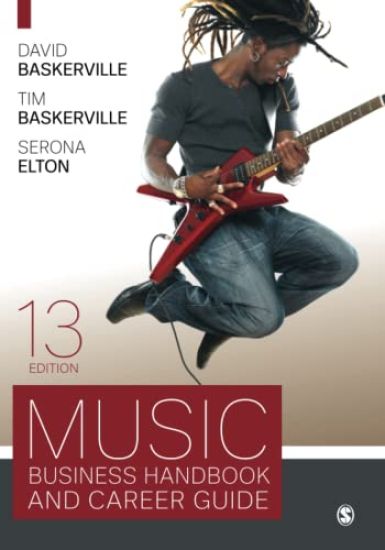
The Thirteenth Edition of this powerhouse best-selling text maintains its tradition as the most comprehensive, up-to-date guide to the music industry in all of its diversity. Readers new to the music business and seasoned professionals alike will find David Baskerville, Tim Baskerville, and Serona Elton's handbook the go-to source, regardless of their specialty within the music field. Music Business Handbook and Career Guide is ideal for introductory courses such as Introduction to the Music Business, Music and Media, and other survey courses as well as more specialized courses such as the Record Industry, Music Careers, Artist Management, and more. The fully updated Thirteenth Edition includes a comprehensive discussion of the streaming revolution, where this predominant form of music consumption stands today and is heading in the future. Rapid changes in music licensingare addressed and how they impact creators, musical work performance licensing, compulsory and negotiated mechanicals, and sound recording licenses. The new edition also analyzes the changing picture of music video and shows how music video has been upended by on-demand streaming. Lastly, there is all-new coverage of COVID-19and how the concert industry has been impacted as well as digital advances that have been made.
A series of workbooks offering integrated content and language support for specific subjects. Breakthrough to CLIL for Physics, Age 14+ helps ESL/EAL students get the most out of their studies when learning subjects through the medium of English. The workbook contains exercises set within the context of core topics to consolidate understanding, embedding practice in aspects of language central to the subject in question. It is designed to support any Physics curriculum for students aged 14–16, including UK GCSE, Cambridge IGCSE and IB MYP. The book should be used alongside a core textbook as well as classroom instruction, and may be used within the classroom or as a self-study or homework resource.
Skills focused series for examination from 2023; inspired by teachers, for teachers. This English language skills workbook with digital access helps learners develop their language skills in the context of the Cambridge IGCSE™ Physics syllabus. Each chapter contains exercises that combine the science content with relevant language skills. Exercises provide opportunities for students to practise using key language in different ways, such as using sentence stems in their writing; speaking and listening with peers, or group work. Activities range from practising using comparative adjectives in the context of measuring density, to writing a set of instructions using the imperative for an experiment investigating frequency and pitch.Answers can be found online at www.cambridge.org/go
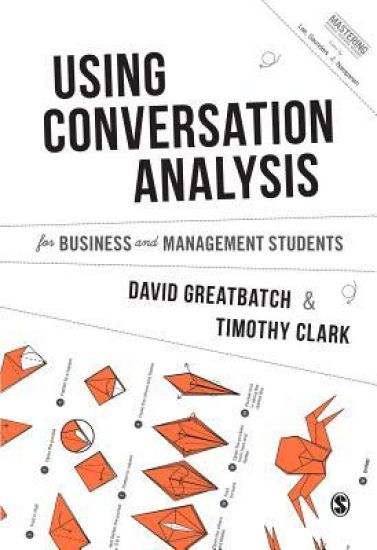
In Using Conversation Analysis, David Greatbatch and Timothy Clark introduce the key elements of conversation analysis, an increasingly prominent form of business research analysis, which involves analysing audio and visual recordings of naturally occurring talk-in-interaction such as television speeches and interview exchanges, to see how meanings are constructed. Ideal for Business and Management students reading for a Master’s degree, each book in the series may also serve as reference books for doctoral students and faculty members interested in the method. Part of SAGE’s Mastering Business Research Methods Series, conceived and edited by Bill Lee, Mark N. K. Saunders and Vadake K. Narayanan and designed to support researchers by providing in-depth and practical guidance on using a chosen method of data collection or analysis.
In Using Conversation Analysis, David Greatbatch and Timothy Clark introduce the key elements of conversation analysis, an increasingly prominent form of business research analysis, which involves analysing audio and visual recordings of naturally occurring talk-in-interaction such as television speeches and interview exchanges, to see how meanings are constructed. Ideal for Business and Management students reading for a Master’s degree, each book in the series may also serve as reference books for doctoral students and faculty members interested in the method. Part of SAGE’s Mastering Business Research Methods Series, conceived and edited by Bill Lee, Mark N. K. Saunders and Vadake K. Narayanan and designed to support researchers by providing in-depth and practical guidance on using a chosen method of data collection or analysis.
From multiple New York Times best-selling author David Weber and #1 New York Times best-selling author Timothy Zahn. A NEW ENTRY IN A BEST-SELLING SERIES. Book #2 in the Manticore Ascendant series, set in David Weber's Honorverse. This year we celebrate the 25th anniversary of Honor Harrington.
After the disastrous attack on the Manticoran home system by forces unknown, the Royal Manticoran Navy stands on the brink of collapse. A shadowy enemy with the resources to hurl warships across hundreds of light years seeks to conquer the Star Kingdom for reasons unknown, while forces from within Manticore’s own government seek to discredit and weaken the Navy for reasons very much known: their own political gain. It’s up to officers like Travis Long and Lisa Donnelly to defend the Star Kingdom and the Royal Manticoran Navy from these threats, but the challenge is greater than any they have faced before. Weakened but not defeated, the mercenary forces and their mysterious employer could return at any time, and the anti-Navy faction within Parliament is growing. The situation becomes even more dire when fresh tragedy strikes the Star Kingdom. While the House of Winton faces their enemies at home, Travis, Lisa, and the other officers of the Royal Manticoran Navy must reunite with old friends and join new allies to hunt down and eliminate the forces arrayed against them in a galaxy-spanning conspiracy. Manticore has learned that the universe is not a safe place, but the Star Kingdom’s enemies are about to learn it's dangerous to mess with the Manticore!