Kirjojen hintavertailu. Mukana 11 244 527 kirjaa ja 12 kauppaa.

Kirjahaku

Etsi kirjoja tekijän nimen, kirjan nimen tai ISBN:n perusteella.

1000 tulosta hakusanalla David W Erickson

Here Be Dragons

Here Be Dragons

David W. Koerner; Simon LeVay

Oxford University Press Inc
2002
nidottu
The discovery of life on other planets would be perhaps the most momentous revelation in human history, more disorienting and more profound than either the Copernican or Darwinian revolutions, which knocked the earth from the centre of the universe and humankind from its position of lofty self-regard. In Here Be Dragons, astronomer David Koerner and neurobiologist Simon LeVay offer a scientifically compelling and colourful account of the search for life beyond Earth. The authors survey the work of biologists, cosmologists, computer theorists, NASA engineers, SETI researchers, roboticists, and UFO enthusiasts and debunkers as they attempt to answer the greatest remaining question facing humankind: Are we alone? From their 'safe haven of scepticism' the authors venture into the 'rough seas of speculation', where theory and evidence run the gamut from hard science to hocus pocus. Arguing that the universe is spectacularly suited for the evolution of living creatures, Koerner and LeVay give us ringside seats at the great debates of Big Science. The contentious arguments about what really happens in evolution, the acrimonious UFO controversy, and the debate over intelligence versus artificial intelligence shed new light on the wildly divergent claims about the universe and life's place in it. The authors argue that while no direct evidence of extraterrestrial life yet exists, habitats and chemical building blocks for life abound in the universe. A wealth of new astonomical techniques and space missions may provide this evidence early in the next century. Lucidly written and scientifically rigorous, Here Be Dragons presents everything we know thus far about the emergence of intelligent life here on Earth, and perhaps, beyond.
Lost Knowledge

Lost Knowledge

David W. DeLong

Oxford University Press Inc
2004
sidottu
Executives today recognize that their firms face a wave of retirements over the next decade as the baby boomers hit retirement age. At the other end of the talent pipeline, the younger workforce is developing a different set of values and expectations, which creates new recruiting and employee retention issues. The evolution from an older, traditional, highly-experienced workforce to a younger, more mobile, employee base poses significant challenges, particularly when considered in the context of the long-term orientation towards downsizing and cost cutting. This is a solution-oriented book to address one of the most pressing management problems of the coming years: How do organizations transfer the critical expertise and experience of their employees before that knowledge walks out the door? It begins by outlining the broad issues and providing tools for developing a knowledge-retention strategy and function. It then goes on to outline best practices for retaining knowledge, including knowledge transfer practices, using technology to enable knowledge retention, retaining older workers and retirees, and outsourcing lost capabilities.
The Nature of Design

The Nature of Design

David W. Orr

Oxford University Press Inc
2004
nidottu
The environmental movement has often been accused of being overly negative--trying to stop "progress." The Nature of Design, on the other hand, is about starting things, specifically an ecological design revolution that changes how we provide food, shelter, energy, materials, and livelihood, and how we deal with waste. Ecological design is an emerging field that aims to recalibrate what humans do in the world according to how the world works as a biophysical system. Design in this sense is a large concept having to do as much with politics and ethics as with buildings and technology. The book begins by describing the scope of design, comparing it to the Enlightenment of the 18th century. Subsequent chapters describe barriers to a design revolution inherent in our misuse of language, the clockspeed of technological society, and shortsighted politics. Orr goes on to describe the critical role educational institutions might play in fostering design intelligence and what he calls "a higher order of heroism." Appropriately, the book ends on themes of charity, wilderness, and the rights of children. Astute yet broadly appealing, The Nature of Design combines theory, practicality, and a call to action.
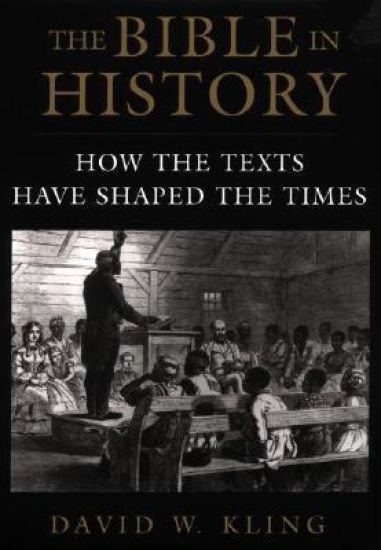
The Bible in History

The Bible in History

David W. Kling

Oxford University Press Inc
2006
nidottu
No one can doubt that the Bible has exerted a tremendous influence on Western civilization since the dawn of Christianity. But few of us have considered the precise nature of that influence in particular historical contexts. In this book, David Kling traces the fascinating story of how specific biblical texts have at different times emerged to be the inspiration of movements that have changed the course of history. By examining eight such pivotal texts, Kling elucidates the ways in which sacred texts continue to shape our lives as well as our history. Among the passages he discusses are: * "Upon this rock I will build my church" (Matthew 16:18), which inspired the formation of the papacy and has served as its foundation for centuries * "The righteous will live by faith" (Romans 1:17), which caught the imagination of Martin Luther and sparked the Protestant Reformation * "Go to Pharaoh and say to him, 'Thus says the Lord: Let my people go, so that they may worship me'" (Exodus 8:1), which has played an important and diverse role in African American history from early slave spirituals through the modern civil rights movement and beyond * "There is no longer Jew or Greek, there is no longer slave or free, there is no longer male and female; for all of you are one in Christ Jesus" (Galatians 3:28), which has been adopted by feminists as a rallying cry in the battle for women's ordination. Each of the historical episodes he explores--from the beginning of Christian monasticism to the emergence of Pentecostalism--is evidence of the dynamic interplay between Scripture and the social and cultural context in which it is interpreted. Kling's innovative study of this process shows how sacred texts can give life to social movements, and how powerful social forces can give new meaning to Scripture.
God at Work

God at Work

David W. Miller

Oxford University Press Inc
2007
sidottu
In the 1980s, Miller shows, a complex set of independent developments gave rise to what is known as the Faith At Work movement (FAW). Drawing on insights of theological ethics as well as the sociology of religion, Miller analyzes the history of the movement, examines membership profiles and modes of expression, and constructs and proposes a new framework for discussing the movement.
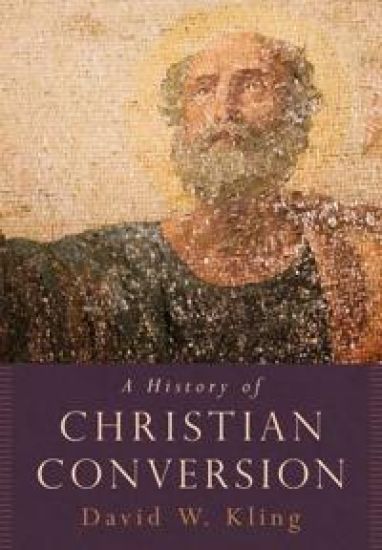
A History of Christian Conversion

A History of Christian Conversion

David W. Kling

Oxford University Press Inc
2020
sidottu
Conversion has played a central role in the history of Christianity. In this first in-depth and wide-ranging narrative history, David Kling examines the dynamic of turning to the Christian faith by individuals, families, and people groups. Global in reach, the narrative progresses from early Christian beginnings in the Roman world to Christianity's expansion into Europe, the Americas, China, India, and Africa. Conversion is often associated with a particular strand of modern Christianity (evangelical) and a particular type of experience (sudden, overwhelming). However, when examined over two millennia, it emerges as a phenomenon far more complex than any one-dimensional profile would suggest. No single, unitary paradigm defines conversion and no easily explicable process accounts for why people convert to Christianity. Rather, a multiplicity of factors-historical, personal, social, geographical, theological, psychological, and cultural-shape the converting process. A History of Christian Conversion not only narrates the conversions of select individuals and peoples, it also engages current theories and models to explain conversion, and examines recurring themes in the conversion process: divine presence, gender and the body, agency and motivation, testimony and memory, group- and self-identity, "authentic" and "nominal" conversion, and modes of communication. Accessible to scholars, students, and those with a general interest in conversion, Kling's book is the most satisfying and comprehensive account of conversion in Christian history to date; this major work will become a standard must-read in conversion studies.
Changing Worlds

Changing Worlds

David W.P. Elliott

Oxford University Press Inc
2012
sidottu
For the most of the twentieth century, the country of Vietnam has served as a symbol of the bipolar system of rival ideological blocs that characterized the Cold War. As the conflict over communism waned in the 1980s, Vietnam faced the tough task of remaking itself as nation in the eyes of its people and of the world. In Changing Worlds, David W.P. Elliot, a participant in the Aspen Institute's U.S.-Vietnam Dialogue who has spent the past forty years working closely with the people and government of Vietnam, chronicles the evolution of the Vietnamese state as we know it today. With the collapse of communist regimes in Europe, Vietnam witnessed the dissolution of the cornerstone of its policies toward the outside world. Fearing that a full commitment to deep integration in a globalizing world would lead to the collapse of their own current political system, the Vietnamese political elite made slow, cautious steps to involvement with the larger international community. By the year 2000, however, Vietnam had "taken the plunge" and opted for greater participation in the global economic system, leading to its membership in the World Trade Organization in 2006. Elliott illustrates that the politicians who took a limited approach to international involvement ultimately had condemned Vietnam to a permanent state of underdevelopment. It is only at the turn of the 21st century when the Vietnamese state began to relax its policies toward the international community that the nation began to experience a period of revitalization. Remarkably, these changes have happened without Vietnam losing its unique political identity as many had expected. It remains an authoritarian state, but offers far more breathing space to its citizens than in pre-reform era. Far from leading the nation to be absorbed into a Western-inspired development model, globalization has led to a complex domestic diversification and localization that has reinforced Vietnam's distinctive identity rather than obliterating it. The culmination of decades of research and cultural exchange, Changing Worlds documents the unique story of the birth of a nation amidst the challenges of the post-Cold War era.
The Bible in History

The Bible in History

David W. Kling

OXFORD UNIVERSITY PRESS INC
2022
sidottu
Over 15 years after its original publication The Bible in History remains an essential examination of the symbiotic relationship between Scripture and the social and cultural contexts shaping its interpretation. David W. Kling traces the fascinating story of how specific biblical texts-sometimes a single verse, other times a selection of verses or chapters, even books-have at various times emerged to be the inspiration of movements that have changed the course of history. Episodes range from Anthony's call to the desert and a life of monasticism after hearing Jesus's directive to the "rich young rule" to give up his possessions, to the Anabaptists non-violent ethic in following Jesus' teaching in the Sermon on the Mount, to the varied applications of the exodus motif in African American history. This revised and expanded second edition adds two new chapters. The first examines the text in Matthew 28:18-20 and considers the multitudinous interpretations before, during, and after the text emerged as the iconic "Great Commission" of missionary motivation in the modern period. The second assesses those biblical texts that encompass the divisive and ongoing issue of male homosexuality. Both chapters engage the question of, "how the texts have shaped the times," but, as Kling argues, the "times" have also exerted an enormous impact on shaping the interpretation of the texts, and hence, on the continuing disputes over the meaning of those texts.
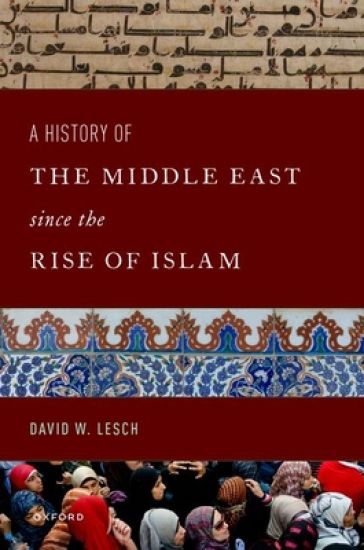
A History of the Middle East Since the Rise of Islam

A History of the Middle East Since the Rise of Islam

David W. Lesch

OXFORD UNIVERSITY PRESS INC
2023
nidottu
As David Lesch writes in his Preface, "Historians are a kind of secular priesthood, seemingly endowed with the power and means to select what is and what is not important for the rest of us." In A History of the Middle East Since the Rise of Islam, Lesch focuses on the longue durée. Choosing the rise of Islam as the general beginning point of his one-volume history of the Middle East, Lesch argues that there is an indelible link between the rise of Islam and the overall environment that exists today in the region. The continuum of this chain of events is the primary focus of his book. Combining a comprehensive approach and an appealing, informal tone, Lesch offers the reader enough specifics to digest the flavor of particular periods, dynasties, movements, cultural markers, and ideological developments, yet general enough so that the totality of this history can be compared and contrasted. The result is a brilliant tour de force.
The Bible in History

The Bible in History

David W. Kling

OXFORD UNIVERSITY PRESS INC
2023
nidottu
Over 15 years after its original publication The Bible in History remains an essential examination of the symbiotic relationship between Scripture and the social and cultural contexts shaping its interpretation. David W. Kling traces the fascinating story of how specific biblical texts-sometimes a single verse, other times a selection of verses or chapters, even books-have at various times emerged to be the inspiration of movements that have changed the course of history. Episodes range from Anthony's call to the desert and a life of monasticism after hearing Jesus's directive to the "rich young rule" to give up his possessions, to the Anabaptists non-violent ethic in following Jesus' teaching in the Sermon on the Mount, to the varied applications of the exodus motif in African American history. This revised and expanded second edition adds two new chapters. The first examines the text in Matthew 28:18-20 and considers the multitudinous interpretations before, during, and after the text emerged as the iconic "Great Commission" of missionary motivation in the modern period. The second assesses those biblical texts that encompass the divisive and ongoing issue of male homosexuality. Both chapters engage the question of, "how the texts have shaped the times," but, as Kling argues, the "times" have also exerted an enormous impact on shaping the interpretation of the texts, and hence, on the continuing disputes over the meaning of those texts.
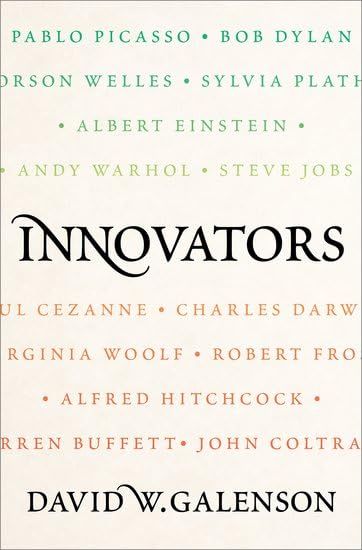
Innovators

Innovators

David W. Galenson

OXFORD UNIVERSITY PRESS INC
2025
sidottu
When in their lives are innovators most creative, and why? This book summarizes more than two decades of research prompted by this question. The result is an authoritative statement of a new unified theory of creativity, that overturns both popular and scholarly beliefs about the sources of human inventiveness. David Galenson shows that there are two distinctly different kinds of creativity in virtually every discipline. They result from very different goals and methods, and each produces a specific pattern of discovery over the life cycle. Conceptual innovators make bold leaps to formulate new ideas. The most radical conceptual innovations are made by brash young geniuses, who often lose their creativity thereafter. Great conceptual innovators analyzed in this book include Pablo Picasso, Albert Einstein, Orson Welles, Sylvia Plath, Andy Warhol, Bob Dylan, and Steve Jobs. Experimental innovators make discoveries gradually and unobtrusively, through careful observation and generalization. They gain knowledge over time, and make their greatest contributions late in their lives. Great experimental innovators considered in this book include Paul Cezanne, Charles Darwin, Virginia Woolf, Robert Frost, Alfed Hitchcock, John Coltrane, and Warren Buffett. From analysis of the careers of scores of artists, scholars, and entrepreneurs, this book provides a new understanding of the creative processes of great innovators, and reveals the systematic patterns that underlie the two life cycles of creativity. It will be of interest to anyone who seeks a deeper understanding of the sources of human creativity.
Syntactic Change in Welsh

Syntactic Change in Welsh

David W. E. Willis

Clarendon Press
1998
sidottu
Welsh is often cited as an exemplary case of verb-initial language. While this is generally true of the language today, earlier written texts show widespread use of subject-initial, object-initial, and other word orders. David Willis challenges the conventional view that these orders were restricted to an artificial literary register, claiming instead that they were alive in spoken Welsh up until the Early Modern period. He looks at Middle Welsh word order within a Principles and Parameters framework, showing extensive parallelisms between Middle Welsh and verb-second systems in Germanic and Romance languages. He also provides rich documentation of syntactic change in Welsh, showing for the first time how the transition from the verb-second rule of Middle Welsh to the verb-initial system of Contemporary Welsh took place. He examines a case study of a verb-second system outside of the Germanic languages, investigates how such systems have come to be lost over time, and raises questions about the fundamental mechanisms of language change.
Changing Worlds

Changing Worlds

David W.P. Elliott

Oxford University Press Inc
2014
nidottu
Throughout the entire Cold War era, Vietnam served as a grim symbol of the ideological polarity that permeated international politics. But when the Cold War ended in 1989, Vietnam faced the difficult task of adjusting to a new world without the benefactors it had come to rely on. In Changing Worlds, David W. P. Elliott, who has spent the past half century studying modern Vietnam, chronicles the evolution of the Vietnamese state from the end of the Cold War to the present. When the communist regimes of Eastern Europe collapsed, so did Vietnam's model for analyzing and engaging with the outside world. Fearing that committing fully to globalization would lead to the collapse of its own system, the Vietnamese political elite at first resisted extensive engagement with the larger international community. Over the next decade, though, China's rapid economic growth and the success of the Asian "tiger economies," along with a complex realignment of regional and global international relations reshaped Vietnamese leaders' views. In 1995 Vietnam joined the Association of Southeast Asian Nations (ASEAN), its former adversary, and completed the normalization of relations with the United States. By 2000, Vietnam had "taken the plunge " and opted for greater participation in the global economic system. Vietnam finally joined the World Trade Organization in 2006. Elliott contends that Vietnam's political elite ultimately concluded that if the conservatives who opposed opening up to the outside world had triumphed, Vietnam would have been condemned to a permanent state of underdevelopment. Partial reform starting in the mid-1980s produced some success, but eventually the reformers' argument that Vietnam's economic potential could not be fully exploited in a highly competitive world unless it opted for deep integration into the rapidly globalizing world economy prevailed. Remarkably, deep integration occurred without Vietnam losing its unique political identity. It remains an authoritarian state, but offers far more breathing space to its citizens than in the pre-reform era. Far from being absorbed into a Western-inspired development model, globalization has reinforced Vietnam's distinctive identity rather than eradicating it. The market economy led to a revival of localism and familism which has challenged the capacity of the state to impose its preferences and maintain the wartime narrative of monolithic unity. Although it would be premature to talk of a genuine civil society, today's Vietnam is an increasingly pluralistic community. Drawing from a vast body of Vietnamese language sources, Changing Worlds is the definitive account of how this highly vulnerable Communist state remade itself amidst the challenges of the post-Cold War era.
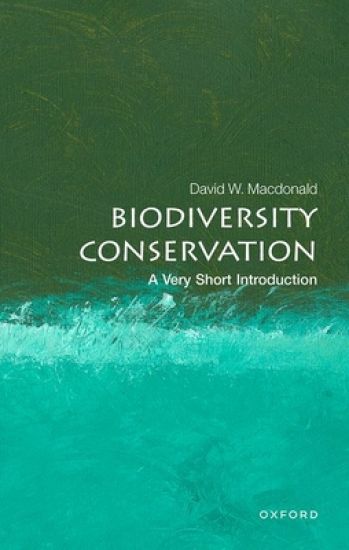
Biodiversity Conservation

Biodiversity Conservation

David W. Macdonald

Oxford University Press
2023
nidottu
Very Short Introductions: Brilliant, Sharp, Inspiring Extinction is a natural process. In geological time there have been several periods of mass extinction. One of these periods is unfolding right now but all the evidence suggests that current extinction rates are between a hundred and a thousand times greater than the background rate. To put this in to context, a quarter of all known mammalian species is at risk. The current extinction crisis is unique, because it is caused by the impact of one species, humans, on all others. This acceleration of species loss, and the much more widespread reductions in the populations of many species, is not merely a tragedy in aesthetics, it is also a threat to the quality of human life, indeed to the entire human enterprise. Biodiversity, the diversity of life, is not only fascinating and beautiful, it is the engine of all the world's natural cycles, and the source of many of the resources on which humanity depends. Concern about biodiversity conservation is, therefore, not merely the preoccupation of a few enthusiastic naturalists - it is the lifeline business of everybody. In this Very Short Introduction, David Macdonald introduces the concept of biodiversity and the basic biological processes that it involves - evolutionary, ecological, and behavioral. He considers the various threats to biodiversity, their impacts, and some of the solutions to the problems; concluding by considering the future of biodiversity conservation. ABOUT THE SERIES: The Very Short Introductions series from Oxford University Press contains hundreds of titles in almost every subject area. These pocket-sized books are the perfect way to get ahead in a new subject quickly. Our expert authors combine facts, analysis, perspective, new ideas, and enthusiasm to make interesting and challenging topics highly readable.
Ristau's International Judicial Assistance

Ristau's International Judicial Assistance

David W. Bowker; David P. Stewart

Oxford University Press Inc
2022
sidottu
Legal practitioners of today are dealing with cross-border disputes in civil and commercial matters in an increasingly complex transnational legal environment. This edition of Bruno Ristau's multi-volume work International Judicial Assistance brings these complexities to the fore. The revised and updated material offers background, explanations, and practical advice on how to deal with the most important challenges and recent developments in the field of transnational litigation, including issues related to the choice of forum, choice of law, service of process, proof of foreign law, discovery of evidence, and enforcement of judgments. Written by Stewart and Bowker, experts in public and private international law, this book offers insightful and comprehensive information on cross-border litigation by addressing issues in sequence as they are likely to be encountered in practice. A major focus is the mechanisms for international judicial cooperation and assistance, in particular those provided by regional and international arrangements such as the Hague Conventions on Service, Evidence and Apostilles, choice of court agreements, and the enforcement of judgments, as well as regional arrangements within the OAS and the EU. This book is a necessary addition for litigators in the U.S. and other common law jurisdictions who are involved in cross border disputes.
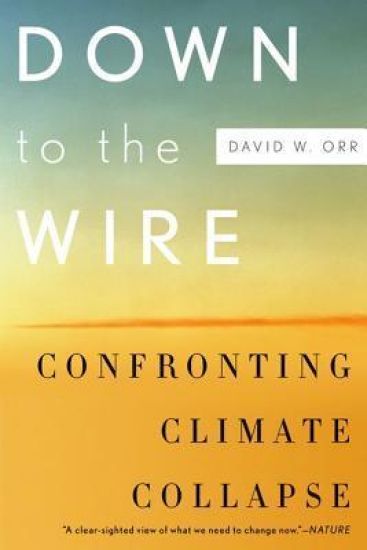
Down to the Wire

Down to the Wire

David W. Orr

Oxford University Press Inc
2012
nidottu
Singled out as "one of the country's leading environmental thinkers" by Bill McKibben in the New York Review of Books, David W. Orr offers an exacting analysis of where we are in terms of climate change, how we got here, and what we must now do. Orr shows how political negligence, an economy based on the insatiable consumption of trivial goods, and a disdain for the well-being of future generations have brought us to the tipping point. We now face a long emergency of rising temperatures, rising sea-levels, and a host of other related problems that will increasingly undermine human civilization. Down to the Wire is a major wake-up call. But this is not a doomsday book. Orr offers a wide range of pragmatic, far-reaching proposals--some of which have already been adopted by the Obama administration--for how we might reconnect public policy with rigorous science, bring our economy into alignment with ecological realities, and begin to regard ourselves as planetary trustees for future generations.
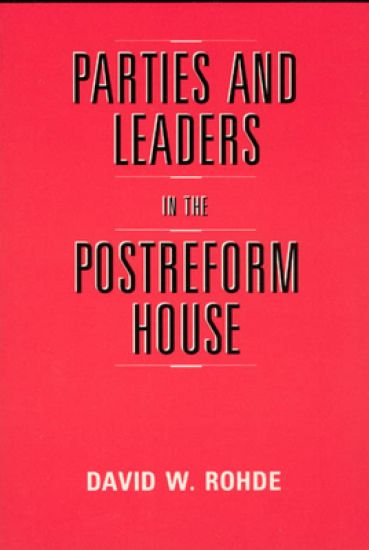
Parties and Leaders in the Postreform House

Parties and Leaders in the Postreform House

David W. Rohde

University of Chicago Press
1991
sidottu
Since the Second World War, congressional parties have been characterized as declining in strength and influence. Research has generally attributed this decline to policy conflicts within parties, to growing electoral independence of members, and to the impact of the congressional reforms of the 1970s. Yet the 1980s witnessed a strong resurgence of parties and party leadership—especially in the House of Representatives. Offering a concise and compelling explanation of the causes of this resurgence, David W. Rohde argues that a realignment of electoral forces led to a reduction of sectional divisions within the parties—particularly between the northern and southern Democrats—and to increased divergence between the parties on many important issues. He challenges previous findings by asserting that congressional reform contributed to, rather than restrained, the increase of partisanship. Among the Democrats, reforms siphoned power away from conservative and autocratic committee chairs and put control of those committees in the hands of Democratic committee caucuses, strengthening party leaders and making both party and committee leaders responsible to rank-and-file Democrats. Electoral changes increased the homogeneity of House Democrats while institutional reforms reduced the influence of dissident members on a consensus in the majority party. Rohde's accessible analysis provides a detailed discussion of the goals of the congressional reformers, the increased consensus among Democrats and its reinforcement by their caucus, the Democratic leadership's use of expanded powers to shape the legislative agenda, and the responses of House Republicans. He also addresses the changes in the relationship between the House majority and the president during the Carter and Reagan administrations and analyzes the legislative consequences of the partisan resurgence. A readable, systematic synthesis of the many complex factors that fueled the recent resurgence of partisanship, Parties and Leaders in the Postreform House is ideal for course use.
Parties and Leaders in the Postreform House

Parties and Leaders in the Postreform House

David W. Rohde

University of Chicago Press
1991
nidottu
Since the Second World War, congressional parties have been characterized as declining in strength and influence. Research has generally attributed this decline to policy conflicts within parties, to growing electoral independence of members, and to the impact of the congressional reforms of the 1970s. Yet the 1980s witnessed a strong resurgence of parties and party leadership—especially in the House of Representatives. Offering a concise and compelling explanation of the causes of this resurgence, David W. Rohde argues that a realignment of electoral forces led to a reduction of sectional divisions within the parties—particularly between the northern and southern Democrats—and to increased divergence between the parties on many important issues. He challenges previous findings by asserting that congressional reform contributed to, rather than restrained, the increase of partisanship. Among the Democrats, reforms siphoned power away from conservative and autocratic committee chairs and put control of those committees in the hands of Democratic committee caucuses, strengthening party leaders and making both party and committee leaders responsible to rank-and-file Democrats. Electoral changes increased the homogeneity of House Democrats while institutional reforms reduced the influence of dissident members on a consensus in the majority party. Rohde's accessible analysis provides a detailed discussion of the goals of the congressional reformers, the increased consensus among Democrats and its reinforcement by their caucus, the Democratic leadership's use of expanded powers to shape the legislative agenda, and the responses of House Republicans. He also addresses the changes in the relationship between the House majority and the president during the Carter and Reagan administrations and analyzes the legislative consequences of the partisan resurgence. A readable, systematic synthesis of the many complex factors that fueled the recent resurgence of partisanship, Parties and Leaders in the Postreform House is ideal for course use.
Extinction and Biogeography of Tropical Pacific Birds

Extinction and Biogeography of Tropical Pacific Birds

David W. Steadman

University of Chicago Press
2006
sidottu
Sprinkled across the tropical Pacific, the innumerable islands of Oceania are home to some of the most unique bird communities on the planet, and they sustain species found nowhere else on earth. Many of the birds that live in this region are endangered, however; many more have become extinct as a result of human activity, in both recent and prehistoric times. Reconstructing the avian world in the same way archeologists re-create ancient human societies, David W. Steadman - a leading authority on tropical Pacific avian paleontology - has spent the past two decades in the field, digging through layers of soil in search of the bones that serve as clues to the ancient past of island bird communities. His years of indefatigable research and analysis are the foundation for "Extinction and Biogeography of Tropical Pacific Birds," a monumental study of the landbirds of tropical Pacific islands - especially those from Fiji eastward to Easter Island - and an intricate history of the patterns and processes of island biology over time. Using information gleaned from prehistoric specimens, Steadman reconstructs the birdlife of tropical Pacific islands as it existed before the arrival of humans and in so doing corrects the assumption that small, remote islands were unable to support rich assemblages of plants and animals. Easter Island, for example, though devoid of wildlife today, was the world's richest seabird habitat before Polynesians arrived more than a millennium ago. Grounded in geology, paleontology, and archeology, but biological at its core, "Extinction and Biogeography of Tropical Pacific Birds" is an exceptional work of unparalleled scholarship that will stimulate creative discussions of terrestrial life on oceanic islands for years to come.
Extinction and Biogeography of Tropical Pacific Birds

Extinction and Biogeography of Tropical Pacific Birds

David W. Steadman

University of Chicago Press
2006
nidottu
Sprinkled across the tropical Pacific, the innumerable islands of Oceania are home to some of the most unique bird communities on the planet, and they sustain species found nowhere else on earth. Many of the birds that live in this region are endangered, however; many more have become extinct as a result of human activity, in both recent and prehistoric times. Reconstructing the avian world in the same way archeologists re-create ancient human societies, David W. Steadman - a leading authority on tropical Pacific avian paleontology - has spent the past two decades in the field, digging through layers of soil in search of the bones that serve as clues to the ancient past of island bird communities. His years of indefatigable research and analysis are the foundation for "Extinction and Biogeography of Tropical Pacific Birds," a monumental study of the landbirds of tropical Pacific islands - especially those from Fiji eastward to Easter Island - and an intricate history of the patterns and processes of island biology over time. Using information gleaned from prehistoric specimens, Steadman reconstructs the birdlife of tropical Pacific islands as it existed before the arrival of humans and in so doing corrects the assumption that small, remote islands were unable to support rich assemblages of plants and animals. Easter Island, for example, though devoid of wildlife today, was the world's richest seabird habitat before Polynesians arrived more than a millennium ago. Grounded in geology, paleontology, and archeology, but biological at its core, "Extinction and Biogeography of Tropical Pacific Birds" is an exceptional work of unparalleled scholarship that will stimulate creative discussions of terrestrial life on oceanic islands for years to come.