Kirjojen hintavertailu. Mukana 12 390 323 kirjaa ja 12 kauppaa.

Kirjahaku

Etsi kirjoja tekijän nimen, kirjan nimen tai ISBN:n perusteella.

1000 tulosta hakusanalla David Williams

The Philosophy of Japanese Wartime Resistance
The transcripts of the three Kyoto School roundtable discussions of the theme of ‘the standpoint of world history and Japan’ may now be judged to form the key source text of responsible Pacific War revisionism. Published in the pages of Chuo Koron, the influential magazine of enlightened elite Japanese opinion during the twelve months after Pearl Harbor, these subversive discussions involved four of the finest minds of the second generation of the Kyoto School of philosophy. Tainted by controversy and shrouded in conspiratorial mystery, these transcripts were never republished in Japan after the war, and they have never been translated into English except in selective and often highly biased form. David Williams has now produced the first objective, balanced and close interpretative reading of these three discussions in their entirety since 1943. This version of the wartime Kyoto School transcripts is neither a translation nor a paraphrase but a fuller rendering in reader-friendly English that is convincingly faithful to the spirit of the original texts. The result is a masterpiece of interpretation and inter-cultural understanding between the Confucian East and the liberal West. Seventy years after Tojo came to power, these documents of the Japanese resistance to his wartime government and policies exercise a unique claim on students of Japanese history and thought today because of their unrivalled revelatory potential within the vast literature on the Pacific War. The Philosophy of Japanese Wartime Resistance may therefore stand as the most trenchant analysis of the political, philosophic and legal foundations of the place of the Pacific War in modern Japanese history yet to appear in any language.
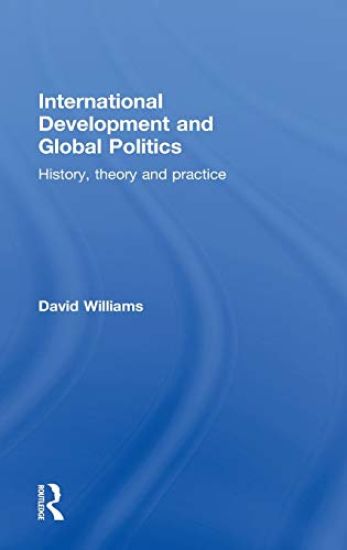
International Development and Global Politics
This textbook provides a historical survey of economic and political development theory and practice from 1945. Against the background of changes in global politics, it explores how the project of international development has been shaped in a series of wider contexts. Divided into two historical parts: the Sovereign Order, post 1945 to the early-1980s, and the Liberal post-Cold War Era from the 1980s to the present day, it examines:the evolution of ideas of international development: how the problem of development was conceived and is understood in relation to development economics and political development. It also addresses the impact of neo-liberal ‘counterrevolution’ in development theory, the rise of good governance, participation and ownership, as well as the impact of the ‘war on terror’ and the ‘securitisation of development’institutions in international development: from the emergence of development agencies, their policies and the provision of different types of aid to changing aid flows and the growth of a more integrated ‘development community’ with implications for developing countries. Finally, it looks at the how the ‘war on terror’ and the ‘securitisation of development’ have shaped what these agencies dothe practices of international development: these chapters examine a number of countries and their relations with development agencies; the kinds of projects and programmes these agencies supported; and the outcomes of these projects and programmes. This valuable and important teaching tool will be of interest to students of development, international relations, politics and economics.
International Development and Global Politics
This textbook provides a historical survey of economic and political development theory and practice from 1945. Against the background of changes in global politics, it explores how the project of international development has been shaped in a series of wider contexts. Divided into two historical parts: the Sovereign Order, post 1945 to the early-1980s, and the Liberal post-Cold War Era from the 1980s to the present day, it examines:the evolution of ideas of international development: how the problem of development was conceived and is understood in relation to development economics and political development. It also addresses the impact of neo-liberal ‘counterrevolution’ in development theory, the rise of good governance, participation and ownership, as well as the impact of the ‘war on terror’ and the ‘securitisation of development’institutions in international development: from the emergence of development agencies, their policies and the provision of different types of aid to changing aid flows and the growth of a more integrated ‘development community’ with implications for developing countries. Finally, it looks at the how the ‘war on terror’ and the ‘securitisation of development’ have shaped what these agencies dothe practices of international development: these chapters examine a number of countries and their relations with development agencies; the kinds of projects and programmes these agencies supported; and the outcomes of these projects and programmes. This valuable and important teaching tool will be of interest to students of development, international relations, politics and economics.
The World Bank and Social Transformation in International Politics
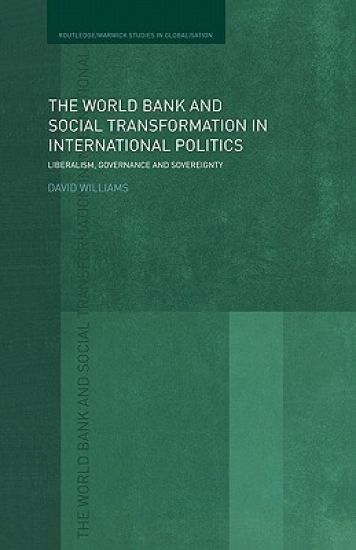
In the 1990s the World Bank changed its policy to take the position that the problems of poverty and governance are inextricably linked, and improving the governance of its borrower countries became increasingly accepted as a legitimate and important part of the World Bank’s development activities. This book examines why the World Bank came to see good governance as important and evaluate what the World Bank is doing to improve the governance of its borrower countries. David Williams examines changing World Bank policy since the late 1970s to show how a concern with good governance grew out of the problems the World Bank was experiencing with structural adjustment lending, particularly in Sub-Saharan Africa. The book provides an account of the early years of the World Bank and traces the increasing acceptance of the idea of good governance within the Bank through the 1990s, while systematically relating the policies of good governance to liberalism. The author provides a detailed case study of World Bank lending to Ghana to demonstrate what the attempt to improve ‘governance’ looks like in practice. Williams assesses whether the World Bank has been successful in its attempts to improve governance, and draws out some of the implications of the argument for how we should think about sovereignty, for how we should understand the connections between liberalism and international politics.This book will be of interest to students and scholars of international relations, politics, economics, development and African studies.
The Philosophy of Japanese Wartime Resistance
The transcripts of the three Kyoto School roundtable discussions of the theme of ‘the standpoint of world history and Japan’ may now be judged to form the key source text of responsible Pacific War revisionism. Published in the pages of Chuo Koron, the influential magazine of enlightened elite Japanese opinion during the twelve months after Pearl Harbor, these subversive discussions involved four of the finest minds of the second generation of the Kyoto School of philosophy. Tainted by controversy and shrouded in conspiratorial mystery, these transcripts were never republished in Japan after the war, and they have never been translated into English except in selective and often highly biased form. David Williams has now produced the first objective, balanced and close interpretative reading of these three discussions in their entirety since 1943. This version of the wartime Kyoto School transcripts is neither a translation nor a paraphrase but a fuller rendering in reader-friendly English that is convincingly faithful to the spirit of the original texts. The result is a masterpiece of interpretation and inter-cultural understanding between the Confucian East and the liberal West. Seventy years after Tojo came to power, these documents of the Japanese resistance to his wartime government and policies exercise a unique claim on students of Japanese history and thought today because of their unrivalled revelatory potential within the vast literature on the Pacific War. The Philosophy of Japanese Wartime Resistance may therefore stand as the most trenchant analysis of the political, philosophic and legal foundations of the place of the Pacific War in modern Japanese history yet to appear in any language.

Weighing the Odds

Weighing the Odds

David Williams

Cambridge University Press
2001
pokkari
Statistics do not lie, nor is probability paradoxical. You just have to have the right intuition. In this lively look at both subjects, David Williams convinces mathematics students of the intrinsic interest of statistics and probability, and statistics students that the language of mathematics can bring real insight and clarity to their subject. He helps students build the intuition needed, in a presentation enriched with examples drawn from all manner of applications, e.g., genetics, filtering, the Black–Scholes option-pricing formula, quantum probability and computing, and classical and modern statistical models. Statistics chapters present both the Frequentist and Bayesian approaches, emphasising Confidence Intervals rather than Hypothesis Test, and include Gibbs-sampling techniques for the practical implementation of Bayesian methods. A central chapter gives the theory of Linear Regression and ANOVA, and explains how MCMC methods allow greater flexibility in modelling. C or WinBUGS code is provided for computational examples and simulations. Many exercises are included; hints or solutions are often provided.
Condorcet and Modernity

Condorcet and Modernity

David Williams

Cambridge University Press
2007
pokkari
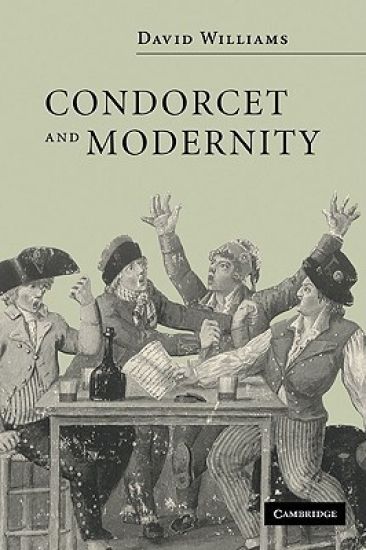
The Marquis de Condorcet was one of the few Enlightenment ideologists to witness the French Revolution and participate as an elected politician at the centre of events during France's transition from monarchy to republic. Condorcet and Modernity explores the interaction between Condorcet's political theory, legislative pragmatism, public policy proposals and the management of change. David Williams examines key topics including rights, the civil order, the Church, the slave trade, women's civil rights, judicial reform, voting and representation, economics, monarchy, power and revolution. He explores the complex links between Condorcet as the visionary ideologist and Condorcet as the pragmatic legislator, and between Condorcet's concept of modernity - the application of 'social arithmetic' to government policies. Based on an extensive array of both printed and manuscript sources, this major contribution to enlightenment studies is a full treatment of Condorcet's politics.
Probability with Martingales

Probability with Martingales

David Williams

Cambridge University Press
1991
pokkari
Probability theory is nowadays applied in a huge variety of fields including physics, engineering, biology, economics and the social sciences. This book is a modern, lively and rigorous account which has Doob’s theory of martingales in discrete time as its main theme. It proves important results such as Kolmogorov’s Strong Law of Large Numbers and the Three-Series Theorem by martingale techniques, and the Central Limit Theorem via the use of characteristic functions. A distinguishing feature is its determination to keep the probability flowing at a nice tempo. It achieves this by being selective rather than encyclopaedic, presenting only what is essential to understand the fundamentals; and it assumes certain key results from measure theory in the main text. These measure-theoretic results are proved in full in appendices, so that the book is completely self-contained. The book is written for students, not for researchers, and has evolved through several years of class testing. Exercises play a vital rôle. Interesting and challenging problems, some with hints, consolidate what has already been learnt, and provide motivation to discover more of the subject than can be covered in a single introduction.
Weighing the Odds

Weighing the Odds

David Williams

Cambridge University Press
2001
sidottu
Statistics do not lie, nor is probability paradoxical. You just have to have the right intuition. In this lively look at both subjects, David Williams convinces mathematics students of the intrinsic interest of statistics and probability, and statistics students that the language of mathematics can bring real insight and clarity to their subject. He helps students build the intuition needed, in a presentation enriched with examples drawn from all manner of applications, e.g., genetics, filtering, the Black–Scholes option-pricing formula, quantum probability and computing, and classical and modern statistical models. Statistics chapters present both the Frequentist and Bayesian approaches, emphasising Confidence Intervals rather than Hypothesis Test, and include Gibbs-sampling techniques for the practical implementation of Bayesian methods. A central chapter gives the theory of Linear Regression and ANOVA, and explains how MCMC methods allow greater flexibility in modelling. C or WinBUGS code is provided for computational examples and simulations. Many exercises are included; hints or solutions are often provided.
Condorcet and Modernity

Condorcet and Modernity

David Williams

Cambridge University Press
2004
sidottu
The Marquis de Condorcet was one of the few Enlightenment ideologists to witness the French Revolution and participate as an elected politician at the centre of events during France’s transition from monarchy to republic. Condorcet and Modernity explores the interaction between Condorcet’s political theory, legislative pragmatism, public policy proposals and the management of change. David Williams examines key topics including rights, the civil order, the church, the slave trade, women’s civil rights, judicial reform, voting and representation, economics, monarchy, power and revolution. He explores the complex links between Condorcet as the visionary ideologist and Condorcet as the pragmatic legislator, and between Condorcet’s concept of modernity - the application of ‘social arithmetic’ to government policies. Based on an extensive array of both printed and manuscript sources, this major contribution to enlightenment studies is the first full treatment of Condorcet’s politics to appear in English for a generation.
Essential Biomaterials Science

Essential Biomaterials Science

David Williams

Cambridge University Press
2014
sidottu
This groundbreaking single-authored textbook equips students with everything they need to know to truly understand the hugely topical field of biomaterials science, including essential background on the clinical necessity of biomaterials, relevant concepts in biology and materials science, comprehensive and up-to-date coverage of all existing clinical and experimental biomaterials, and the fundamental principles of biocompatibility. It features extensive case studies interweaved with theory, from a wide range of clinical disciplines, equipping students with a practical understanding of the phenomena and mechanisms of biomaterials performance; a whole chapter dedicated to the biomaterials industry itself, including guidance on regulations, standards and guidelines, litigation, and ethical issues to prepare students for industry; informative glossaries of key terms, engaging end-of-chapter exercises and up-to-date lists of recommended reading. Drawing on the author's forty years' experience in biomaterials, this is an indispensable resource for students studying these lifesaving technological advances.
The Rebecca Riots

The Rebecca Riots

David Williams

University of Wales Press
2011
nidottu
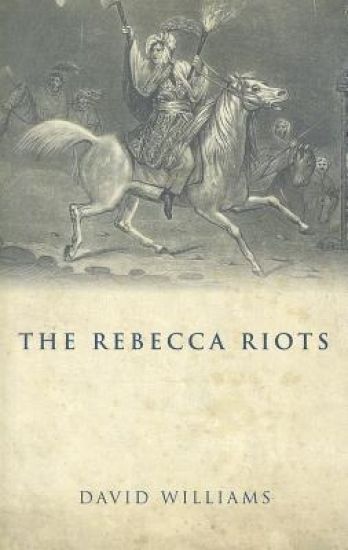
The Rebecca Riots in west Wales began in the summer of 1839. They ceased as suddenly as they had started, and for three and a half years the countryside was undisturbed. Then, in the winter of 1842, they broke out again with greater violence. By day the countryside seemed quiet, but at night fantastically disguised horsemen, many dressed as women, careered along highways and through narrow lanes on their mysterious errands. The movement has been unusually been represented as the uprising of an oppressed peasantry, particularly against the burden of the toll-gates. Its causes, however, were far more deep-seated than that.
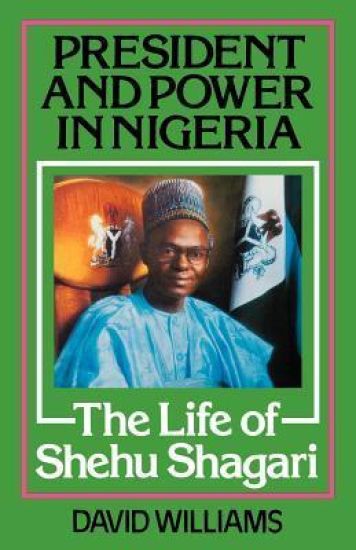
President and Power in Nigeria

President and Power in Nigeria

David Williams

Routledge
1982
sidottu
First published in 1982. This is the biography of Alhaji Shehu Shagari of Nigeria, Africa's most populous state and the world's third biggest democracy. He was elected in 1979, against four opponents, in the election which signified the peaceful end of thirteen and a half years of military rule. Alhaji Shehu was the first boy from Shagari, founded in what is now Sokoto State by his ancestors 170 years ago, to go to secondary school. Education has remained one of his main interests throughout a political career which included many ministerial posts. Thoughtful, scholarly and conciliatory he is now a world figure. The book presents the man and his policies against the lively political, social and economic background of a country of eighty million people, which is among the world's six most important oil exporters.
The Trickster Brain

The Trickster Brain

David Williams

Lexington Books
2012
sidottu
Until recently, scientific and literary cultures have existed side-by-side but most often in parallel universes, without connection. The Trickster Brain: Neuroscience, Evolution, and Nature by David Williams addresses the premise that humans are a biological species stemming from the long process of evolution, and that we do exhibit a universal human nature, given to us through our genes. From this perspective, literature is shown to be a product of our biological selves. By exploring central ideas in neuroscience, evolutionary biology, linguistics, music, philosophy, ethics, religion, and history, Williams shows that it is the circuitry of the brain’s hard-wired dispositions that continually create similar tales around the world: “archetypal” stories reflecting ancient tensions that arose from our evolutionary past and the very construction of our brains. The book asserts that to truly understand literature, one must look at the biological creature creating it. By using the lens of science to examine literature, we can see how stories reveal universal aspects of the biological mind. The Trickster character is particularly instructive as an archetypal character who embodies a raft of human traits and concerns, for Trickster is often god, devil, musical, sexual, silver tongued, animal, and human at once, treading upon the moral dictates of culture. Williams brings together science and the humanities, demonstrating a critical way of approaching literature that incorporates scientific thought.
The Trickster Brain

The Trickster Brain

David Williams

Lexington Books
2013
nidottu
Until recently, scientific and literary cultures have existed side-by-side but most often in parallel universes, without connection. The Trickster Brain: Neuroscience, Evolution, and Nature by David Williams addresses the premise that humans are a biological species stemming from the long process of evolution, and that we do exhibit a universal human nature, given to us through our genes. From this perspective, literature is shown to be a product of our biological selves. By exploring central ideas in neuroscience, evolutionary biology, linguistics, music, philosophy, ethics, religion, and history, Williams shows that it is the circuitry of the brain’s hard-wired dispositions that continually create similar tales around the world: “archetypal” stories reflecting ancient tensions that arose from our evolutionary past and the very construction of our brains. The book asserts that to truly understand literature, one must look at the biological creature creating it. By using the lens of science to examine literature, we can see how stories reveal universal aspects of the biological mind. The Trickster character is particularly instructive as an archetypal character who embodies a raft of human traits and concerns, for Trickster is often god, devil, musical, sexual, silver tongued, animal, and human at once, treading upon the moral dictates of culture. Williams brings together science and the humanities, demonstrating a critical way of approaching literature that incorporates scientific thought.
The Birmingham Gun Trade

The Birmingham Gun Trade

David Williams

The History Press Ltd
2009
nidottu
Birmingham has been a key innovator in the gun trade since the seventeenth century and the Birmingham Gun Barrel Proof house operates to this day. Between 1855 and 1861 six million arms were testing and proofed here - many of them destined for the USA. Those who worked in the Birmingham Gun Quarter were at the forefront of this incredible industry. This book tells the story of the technology and history of gun making. Covering the period 1720 to 1950, it sees the mechanical engineering technology of the 'lock, stock and barrel' firearm change significantly. David Williams, an engineer and academic, has studied the battle between the manual processes of manufacturing using the dexterity of many pople and the clumsy but tireless machine, and here examines this complex relationship in gunmaking, paying particular attention to interchangeable military firearms manufacture and the growth and decline of the Birmingham military and sporting gun trade.Accompanied by over 130 illustrations, The Birmingham Gun Trade is more than a narrative of gunmaking in Birmingham through the years: it is a thoughtful comment on craft skills, the use of machines and, most significant of all, the effect of having changing technologies on people's jobs, livelihoods and locations.
Imagined Nations

Imagined Nations

David Williams

McGill-Queen's University Press
2003
sidottu
An in-depth look at the effects of change in modes of communication on imagined forms of political community through an examination of a series of Canadian novels and film adaptations.
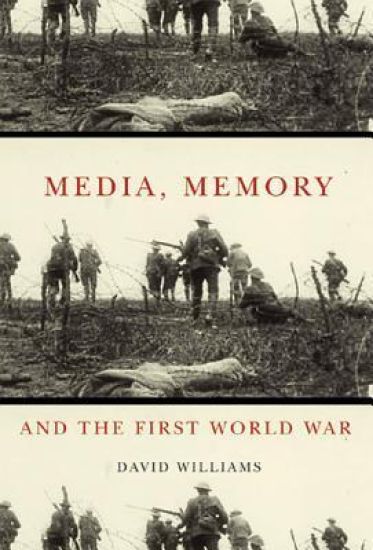
Media, Memory, and the First World War

Media, Memory, and the First World War

David Williams

McGill-Queen's University Press
2009
sidottu
Of interest to historians, classicists, media and digital theorists, literary scholars, museologists, and archivists, Media, Memory, and the First World War is a comparative study that shows how the dominant mode of communication in a popular culture - from oral traditions to digital media - shapes the structure of memory within that culture.
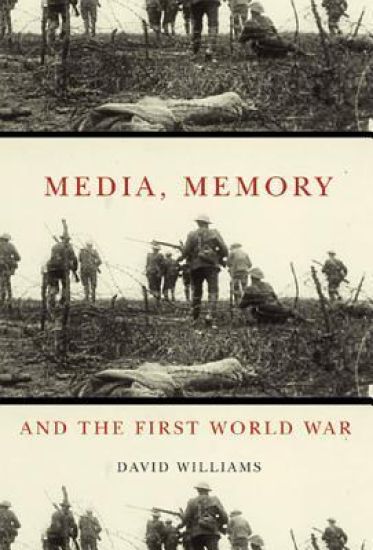
Media, Memory, and the First World War

Media, Memory, and the First World War

David Williams

McGill-Queen's University Press
2011
nidottu
Of interest to historians, classicists, media and digital theorists, literary scholars, museologists, and archivists, Media, Memory, and the First World War is a comparative study that shows how the dominant mode of communication in a popular culture - from oral traditions to digital media - shapes the structure of memory within that culture.