Kirjojen hintavertailu. Mukana 11 699 587 kirjaa ja 12 kauppaa.

Kirjahaku

Etsi kirjoja tekijän nimen, kirjan nimen tai ISBN:n perusteella.

1000 tulosta hakusanalla Dennis Patrick Murphy

Bot Diaries

Bot Diaries

Dennis Patrick Treece

Elk Press
2020
sidottu
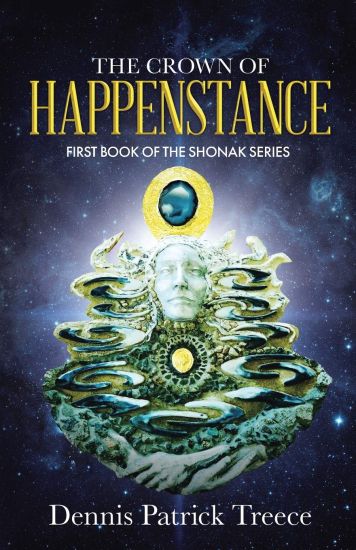
In order to fully appreciate this book you need to read the previous books in the Shonak Series. The Shonakians are a simple, placid race of people but so different from us that a great deal of background is provided in the first book, The Crown of Happenstance. The book introduces the three main protagonists in the book; Bon of Shonak, Itself the over spirit of the "Six Earths", and Atsa, a proto-Hopi and all around honest, caring, spiritual human, with profound interests. This is where you learn about Shonak, and its people, about their phase altering technology, about their thirst for intellectual and technical conquest, and about their love for Earth-watching. The next book, It's About Time, discovers a new relationship between Earth and Shonak. Itself causes an otherwise inexplicable time shift that propels Earth 3210 years into its future while there is no time-change on Shonak. Because Earth is now an advanced, technological world, Shonak introduces itself to them. They do not reveal their invasion of privacy on Earth, which has turned the planet into a virtual zoo for Shonak's voyeuristic pleasure, but they do think they owe Earth something for it. They offer their assistance in areas of crime control, better agriculture, using ocean water for crops and drinking, cleaning the oceans, etc. All the while Shonak continues to expand its surveillance of everyone and everything, everywhere, using their massive fleet of surveillance bots, some of which look like rocks or trees, while others look like beetles, birds, dogs and cats, and people, among other things. The human-looking bots are perfect in every detail and are known as humbots. There is a scandal over the humbots, once Earth discovers them, and this causes some issues between the planets. Book Three contains a series of bot-collected vignettes of Earth behavior prepared for young students in their final quarter of their forty-year education. These people live beyond 1600 years so forty years of schooling is not a significant issue, and there is much to learn before they can join adult society on their own. These vignettes are designed to prepare these young, pre-adult Shonakians for their long life of vid-watching. Every Shonakian enjoys watching the very different people of Earth go about their complex, difficult, conflicted lives and join Vid-Watch clubs that specialize in different aspects of life on Earth.

Earth Gets Even

Earth Gets Even

Dennis Patrick Treece

Elk Press
2021
pokkari
In order to fully appreciate the story this book contains, you really need to read the previous books in the Shonak Series. There you will learn about this very different race of people on an alternate Earth and their complex relationship with the people of Earth. The Shonakians are a simple, placid people but so different from us that a great deal of background is provided in the first book, The Crown of Happenstance. That book introduces Bon of Shonak, who you will read more of in the following two books. There is also Itself, the over spirit of the "Six Earths", and Atsa, a proto-Hopi and tribal chief. This is where you learn the details about Shonak, and its people, about their phase altering technology, about their thirst for intellectual and technical conquest, and about their love for Earthwatching. The next book, It's About Time, discovers a new relationship between Earth and Shonak. Itselfcauses an otherwise inexpl icable time shif t that propels Earth 3210 years into its future while there is no time-change on Shonak. Because Earth is now an advanced, technological world, Shonak openly introduce themselves. They do not reveal their extensive surveillance operation and its invasion of privacy on Earth, which has turned the planet into a virtual zoo for Shonak's voyeuristic pleasure. They do, however, think they owe Earth something for it. They offer their assistance in areas of crime control, better agriculture, using ocean water for crops and drinking, cleaning the oceans, etc. All the while Shonak continues to expand its surveillance of everyone and everything, everywhere, using their massive f leet of surveillance bots, some ofwhich look like rocks or trees, while others look like beetles, birds, dogs and cats, and people, among other things. The human-looking bots, the humbots, are perfect in every detail. There is eventually a scandal over the humbots, once Earth discovers them, and this causes Earth to sever all ties with Shonak for one hundred years. Book Three contains a series of bot-collected vignettes, or short stories of Earther behavior prepared for young Shonakian students in the final quarter of their formal, forty-year education. These people live beyond 1600 years so forty years of schooling is not a significant sacrifice and there is so much to learn before they can join adult society on their own. These vignettes are designed to prepare the young, pre-adult Shonakians for their long life of Earther vid-watching. Every Shonakian enjoys watching the very different people of Earth go about their complex, difficult, conf licted lives and join VidWatch clubs that specialize in different aspects of life on Earth they find particularly interesting.Book Four shows how Earth catches up to Shonak in terms of their most impactful technologies: compact battery packs of enormous power, phase-change, and anti-gravity f light. Earth also develops a way to detect every kind of Shonakian surveillance device, from the rock to the human, and they are amazed and unhappy to find the true extent of the integration of humbots in Earth society with millions of them in operation. They also have many more billions of static collection devices and countless animals and insects all designed to watch and record and entertain the multitude ofShonak's Vid-Watch clubs. While Earth has known that they collect video and audio of life on Earth they had no idea how large an effort this had become. This latest book discovers how Earth responds to this latest bot scandal. It's payback time
Earth Gets Even

Earth Gets Even

Dennis Patrick Treece

Elk Press
2021
sidottu
In order to fully appreciate the story this book contains, you really need to read the previous books in the Shonak Series. There you will learn about this very different race of people on an alternate Earth and their complex relationship with the people of Earth. The Shonakians are a simple, placid people but so different from us that a great deal of background is provided in the first book, The Crown of Happenstance. That book introduces Bon of Shonak, who you will read more of in the following two books. There is also Itself, the over spirit of the "Six Earths", and Atsa, a proto-Hopi and tribal chief. This is where you learn the details about Shonak, and its people, about their phase altering technology, about their thirst for intellectual and technical conquest, and about their love for Earthwatching. The next book, It's About Time, discovers a new relationship between Earth and Shonak. Itselfcauses an otherwise inexplicable time shift that propels Earth 3210 years into its future while there is no time-change on Shonak. Because Earth is now an advanced, technological world, Shonak openly introduce themselves. They do not reveal their extensive surveillance operation and its invasion of privacy on Earth, which has turned the planet into a virtual zoo for Shonak's voyeuristic pleasure. They do, however, think they owe Earth something for it. They offer their assistance in areas of crime control, better agriculture, using ocean water for crops and drinking, cleaning the oceans, etc. All the while Shonak continues to expand its surveillance of everyone and everything, everywhere, using their massive fleet of surveillance bots, some ofwhich look like rocks or trees, while others look like beetles, birds, dogs and cats, and people, among other things. The human-looking bots, the humbots, are perfect in every detail. There is eventually a scandal over the humbots, once Earth discovers them, and this causes Earth to sever all ties with Shonak for one hundred years. Book Three contains a series of bot-collected vignettes, or short stories of Earther behavior prepared for young Shonakian students in the final quarter of their formal, forty-year education. These people live beyond 1600 years so forty years of schooling is not a significant sacrifice and there is so much to learn before they can join the adult society on their own. These vignettes are designed to prepare the young, pre-adult Shonakians for their long life of Earther vid-watching. Every Shonakian enjoys watching the very different people of Earth go about their complex, difficult, conflicted lives and join VidWatch clubs that specialize in different aspects of life on Earth they find particularly interesting.Book Four shows how Earth catches up to Shonak in terms of their most impactful technologies: compact battery packs of enormous power, phase-change, and anti-gravity flight. Earth also develops a way to detect every kind of Shonakian surveillance device, from the rock to the human, and they are amazed and unhappy to find the true extent of the integration of humbots in Earth society with millions of them in operation. They also have many more billions of static collection devices and countless animals and insects all designed to watch and record and entertain the multitude ofShonak's Vid-Watch clubs. While Earth has known that they collect video and audio of life on Earth they had no idea how large an effort this had become. This latest book discovers how Earth responds to this latest bot scandal. It's payback time
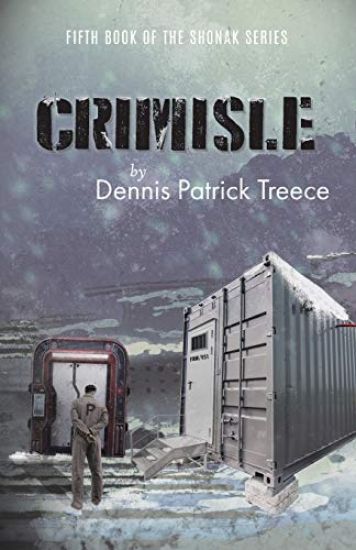
Crimisle

Crimisle

Dennis Patrick Treece

Clever Publication
2021
pokkari
Although it can stand alone, in order to fully appreciate the stories in this book, you really should read the previous books in the Shonak Series. These earlier books inform the reader about the Shonakians and their relationship with Earth. They are a very different race of people on an alternate version of our planet who have a very complex relationship with us and have had for many thousands of years. Most of that time, we knew nothing about them, but they knew everything about us. The Shonakians are a simple, placid people but so different from us that a great deal of background is provided in the first book, The Crown of Happenstance. That book introduces Bon of Shonak, who you will read more of in the following two books. There is also Itself, the over the spirit of the "Six Earths," and Atsa, a proto-Hopi and tribal chief. This is where you learn the details about Shonak and its people, about their monoculture, their boring, sexless lives, their phase-altering technology, their thirst for intellectual and technical conquest, and their love for Earth-watching. The second book in the series, It's About Time, discovers a new relationship between Earth and Shonak. Itself causes an otherwise inexplicable time shift that propels Earth 3210 years into its future while there is no time-change on Shonak. Because Earth is now an advanced, technological world, Shonak openly introduces themselves. They are willing to share much of their advanced technology with Earth but do not reveal their extensive surveillance operation on Earth with its blatant invasion of most everyone's privacy. CRIMISLE. Criminal Island. Formerly Prince Patrick Island in the Canadian Northwest Territories. It's the world's 55th largest island at more than six thousand square miles in area. It is an uninhabited polar desert often surrounded by sea ice.CRIMISLE I. The operation which used CRIMISLE to house the world's worst prisoners who were arrested andsentenced in special Purge courts. This first iteration of Criminal Island was active use from +2273 UAY to +2531UAY. It was officially still on the books after that but national prisons were adequate to house the reduced numbers ofcriminals so there was no need for it. Outstanding features: No guards, no separation of inmates by the length of sentence, level of violence during the crime, or gender. Minors of course did not go to CRIMISLE. If there was time left ontheir sentence when they turned eighteen, they were eligible, and some magistrates did send them there.CRIMISLE II. The operation which used CRIMISLE the second time around for incarcerating all the world'sprisoners with sentences of one year and a day to life. This operation was in conjunction with Purge II which began in+3036 UAY and continues to this day. Outstanding features: Inmates are separated by violent or nonviolent crime andnon-life or life sentences and live in climate-controlled huts of up to fifty inmates each. There are copbots, medbots, andhumbots among the inmate population to assist with law enforcement and emergency medical care as well as earlywarning intelligence and video production for Shonak's infotainment network.
Crimisle

Crimisle

Dennis Patrick Treece

Clever Publication
2021
sidottu
Although it can stand alone, in order to fully appreciate the stories in this book, you really should read the previous books in the Shonak Series. These earlier books inform the reader about the Shonakians and their relationship with Earth. They are a very different race of people on an alternate version of our planet who have a very complex relationship with us and have had for many thousands of years. Most of that time, we knew nothing about them, but they knew everything about us. The Shonakians are a simple, placid people but so different from us that a great deal of background is provided in the first book, The Crown of Happenstance. That book introduces Bon of Shonak, who you will read more of in the following two books. There is also Itself, the over the spirit of the "Six Earths," and Atsa, a proto-Hopi and tribal chief. This is where you learn the details about Shonak and its people, about their monoculture, their boring, sexless lives, their phase-altering technology, their thirst for intellectual and technical conquest, and their love for Earth-watching. The second book in the series, It's About Time, discovers a new relationship between Earth and Shonak. Itself causes an otherwise inexplicable time shift that propels Earth 3210 years into its future while there is no time-change on Shonak. Because Earth is now an advanced, technological world, Shonak openly introduces themselves. They are willing to share much of their advanced technology with Earth but do not reveal their extensive surveillance operation on Earth with its blatant invasion of most everyone's privacy. CRIMISLE. Criminal Island. Formerly Prince Patrick Island in the Canadian Northwest Territories. It's the world's 55th largest island at more than six thousand square miles in area. It is an uninhabited polar desert often surrounded by sea ice.CRIMISLE I. The operation which used CRIMISLE to house the world's worst prisoners who were arrested and sentenced in special Purge courts. This first iteration of Criminal Island was active use from +2273 UAY to +2531UAY. It was officially still on the books after that but national prisons were adequate to house the reduced numbers ofcriminals so there was no need for it. Outstanding features: No guards, no separation of inmates by the length of sentence, level of violence during the crime, or gender. Minors of course did not go to CRIMISLE. If there was time left ontheir sentence when they turned eighteen, they were eligible, and some magistrates did send them there.CRIMISLE II. The operation which used CRIMISLE the second time around for incarcerating all the world'sprisoners with sentences of one year and a day to life. This operation was in conjunction with Purge II which began in+3036 UAY and continues to this day. Outstanding features: Inmates are separated by violent or nonviolent crime andnon-life or life sentences and live in climate-controlled huts of up to fifty inmates each.
Government’s Role in Innovation

Government’s Role in Innovation

Dennis Patrick Leyden; Albert N. Link

Springer
2013
nidottu
Inadequate investment in innovation is particularly costly in today's globally competitive environment where continued technological advancements are critical to sustaining economic prosperity. The government has a critical role in ensuring that society's general interest in innovation, and the public good associated with innovation, is represented in private-sector decision making. This can be accomplished through a variety of programs and initiatives that reward innovation at all levels. The various activities that make this possible fall into two general categories: (1) the creation and maintenance of a legal environment that encourages private sector investment in innovation (patents and the relaxation of antitrust); and (2) the provision of incentives to overcome the natural inclination of private parties to consider only their private benefits when choosing the level of innovation in which to invest (governmental grants and contracts to targeted tax incentives). The role of government, more specifically, can be found in three key areas: (1) funding of research and development performed in the private sector; (2) funding of Federal laboratory research activities and the effective transfer of that knowledge to the private sector; and (3) encouraging the industry-university collaboration in research and development. It is these three areas of research that generate technologies fundamental to increasing the rate of technological development in the private sector, and it is these areas that are the focus of this book.
Group Coaching

Group Coaching

Janet S Steinwedel; Dennis Patrick Slattery

Chiron Publications
2019
pokkari
Janet Steinwedel's work with groups aims for a net increase in consciousness in the organization or community in which she is working. This is the third book in the Steinwedel Red Book Series--a series focused on the integration of Jungian psychology and executive coaching. In this book she explains her collaboration with organizations to choose a handful of leaders who will benefit from a focus on enhancing their leadership. Janet has focused on balancing the goals side of the coaching process with aspiration and inspiration in an effort to support clients on their path to individuation and wholeness. She has worked with many leaders that have been nudged out of alignment with their values and lose their passion for their work and her process is designed to bring that alignment back.In her writing she has focused on the experience of opposites including woundedness and healer, student and teacher in an effort to both deepen her personal growth and support others in their growth and development--in the movement toward wholeness. She creates safety in the group for colleagues to try new behaviors--to experiment with being in relationship. While collaboration is paramount today this relationship work is not only about the relationship with workmates, but the relationship one has with one's self.We have become a nation of strivers with a one-sided focus on greatness, she says. From one lens this is a wonderful thing, when it is out of balance it can create very dangerous leadership and consequences. The capability of observing oneself in order to be self-aware is a challenge. As soon as we try to observe our self we are no longer our self, but the self, or more correctly, the persona, we wish to be seen as. We are too often socialized to look only at our strengths and capabilities. But this is not the totality. It is not reality. It is disjointed and grandiose. And everyone suffers. Leaders who can effectively serve, guide, collaborate and be directive know their strengths and their weaknesses. They know how to build a team that supports both, providing the right balance of curiosity, experimentation and knowledge for the goals and needs of the moment. This requires, to use Jung's words, a knowledge of the times as well as a knowledge of the depths. Steinwedel sets the stage for leaders to develop by more accurately knowing their true selves through challenge to themselves and one another. They work at having empathy and compassion as well as a necessary toughness. This "emotional intelligence," popularized at the turn of the new millennium, is important to the framework of Insight Group Coaching and a natural aspect of Jungian psychology. Steinwedel presents numerous ways for leaders to develop their EQ and their engagement--modeling an approach they can take with their own employees.In his discussions about first half of life and second half of life, Jung queries, "is there perhaps a college for forty-year olds which prepares them for their coming life and its demands as the ordinary colleges introduce our young people to the knowledge of the world?" Steinwedel believes group work can be a source for that kind of development, we invite you to read this book carefully and see if you agree.
Group Coaching

Group Coaching

Janet S Steinwedel; Dennis Patrick Slattery

Chiron Publications
2019
sidottu
Janet Steinwedel's work with groups aims for a net increase in consciousness in the organization or community in which she is working. This is the third book in the Steinwedel Red Book Series--a series focused on the integration of Jungian psychology and executive coaching. In this book she explains her collaboration with organizations to choose a handful of leaders who will benefit from a focus on enhancing their leadership. Janet has focused on balancing the goals side of the coaching process with aspiration and inspiration in an effort to support clients on their path to individuation and wholeness. She has worked with many leaders that have been nudged out of alignment with their values and lose their passion for their work and her process is designed to bring that alignment back.In her writing she has focused on the experience of opposites including woundedness and healer, student and teacher in an effort to both deepen her personal growth and support others in their growth and development--in the movement toward wholeness. She creates safety in the group for colleagues to try new behaviors--to experiment with being in relationship. While collaboration is paramount today this relationship work is not only about the relationship with workmates, but the relationship one has with one's self.We have become a nation of strivers with a one-sided focus on greatness, she says. From one lens this is a wonderful thing, when it is out of balance it can create very dangerous leadership and consequences. The capability of observing oneself in order to be self-aware is a challenge. As soon as we try to observe our self we are no longer our self, but the self, or more correctly, the persona, we wish to be seen as. We are too often socialized to look only at our strengths and capabilities. But this is not the totality. It is not reality. It is disjointed and grandiose. And everyone suffers. Leaders who can effectively serve, guide, collaborate and be directive know their strengths and their weaknesses. They know how to build a team that supports both, providing the right balance of curiosity, experimentation and knowledge for the goals and needs of the moment. This requires, to use Jung's words, a knowledge of the times as well as a knowledge of the depths. Steinwedel sets the stage for leaders to develop by more accurately knowing their true selves through challenge to themselves and one another. They work at having empathy and compassion as well as a necessary toughness. This "emotional intelligence," popularized at the turn of the new millennium, is important to the framework of Insight Group Coaching and a natural aspect of Jungian psychology. Steinwedel presents numerous ways for leaders to develop their EQ and their engagement--modeling an approach they can take with their own employees.In his discussions about first half of life and second half of life, Jung queries, "is there perhaps a college for forty-year olds which prepares them for their coming life and its demands as the ordinary colleges introduce our young people to the knowledge of the world?" Steinwedel believes group work can be a source for that kind of development, we invite you to read this book carefully and see if you agree.
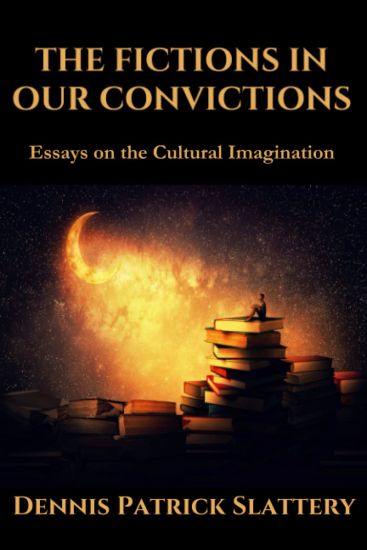
The Fictions in Our Convictions

The Fictions in Our Convictions

Roger C Barnes; Dennis Patrick Slattery

Mandorla Books
2023
pokkari
FROM THE INTRODUCTION, BY DENNIS PATRICK SLATTERY "In all the articles, books, talks, courses, and interviews I have created, each expected something from me. My own growing awareness of the universal stories clinging to my partial, sometimes tattered plot, has dismantled barriers between myself and others. Reading and writing become generous acts of liberation from my own narrow-gauged desires and needs. In such liberation we are put in touch with a story's meaning for us now, yet always susceptible to editing to deepen an initial insight." FROM THE FOREWORD, BY ROGER C. BARNES "Still, I know Dennis, and I've learned from him. The reader of this volume will come to know and learn from him as well. What you will learn is the mystery of exploration, the exploration of an interior world of the human spirit. One will learn this world through stories and myth. Dennis is the master storyteller, and it is through stories that the myths that shape and guide us are revealed."
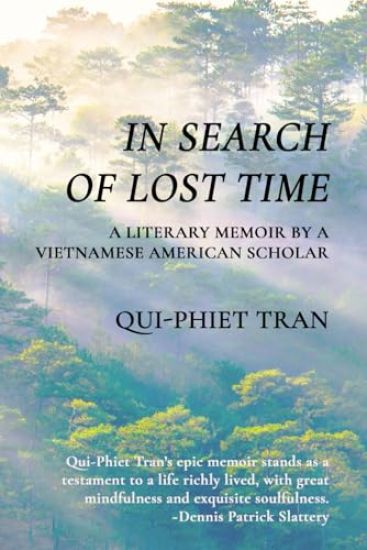
In Search of Lost Time

In Search of Lost Time

Qui-Phiet Tran; Dennis Patrick Slattery

Mandorla Books
2024
pokkari
Can the past truly be recovered, or is our search for it inherently flawed?How do memory and imagination shape our understanding of history and self?What role does place play in the formation and recollection of memory?Qui-Phiet Tran's semi-autobiographical sequel to Marcel Proust's Le temps retrouv explores themes Proust left unfinished. Structured on two planes, the book presents two ways of capturing the past: a physical journey through the author's native Vietnam and an introspective search for lost time. Tran embarks on a real and imagined journey through different periods of his life and the mythical history of Vietnam, blending violent historical events with fantastical elements. Simultaneously, a circular, labyrinthine inner quest leads him into the depths of his soul, unearthing forgotten memories. As these paths converge, they weave a complex tapestry of a new past, rich in color, scent, and meaning.The theme of memory and time reaches its climax when the middle-aged protagonist revisits a beloved childhood pine forest. Exhausted halfway up the hill, like Proust's hero, he gives up his quest for lost time. Unlike Proust, however, Tran is content with his findings. He accepts the impossibility of fully recovering the past but preserves its memory through recollection and writing, choosing to bring this newfound understanding back to his life in the United States in exile.
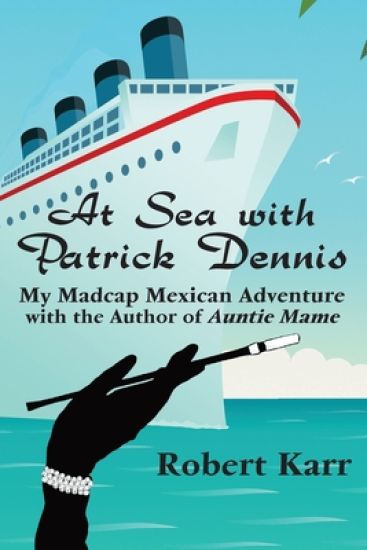
At Sea with Patrick Dennis

At Sea with Patrick Dennis

Robert Karr; James Magruder

Rattling Good Yarns Press, LLC
2023
pokkari
Prepare to Feast on LIfe Robert (Raub) Karr and his best friend, Walter, planned a relaxing cruise from Seattle to Mexico. Little did they know that their vacation would be upended when they met the author and creator of Auntie Mame, Patrick Dennis, on board the ship. Dennis was traveling under an assumed name. And much like his character Mame, Patrick Dennis brought a whirlwind of mayhem, fun, and chaos into the lives of those onboard the ship.Raub, Walter, and Patrick became fast friends, with Patrick attracting a collection of eccentrics and oddball characters wherever he went. What was supposed to be a simple cruise turns into a full-blown adventure when Patrick and Walter jump ship and disappear into Mexico. Later, Raub comes to their rescue. Wealthy widows, art connoisseurs, masked midget wrestlers, ladies of the night, and hunting rats are just part of the trio's comical escapades.The story behind At Sea with Patrick Dennis: My Madcap Mexican Adventure with the Author of Auntie Mame is as fascinating as the memoir itself. When Raub Karr passed away in 2017, his memoir languished unpublished and was doomed to be lost forever. Fortunately, theatrical hair designer, Bernie Ardia, rescued the manuscript from obscurity. Ardia instinctively knew this story needed to be shared with the world.So, don your best jewelry, fix yourself a cocktail, and prepare to laugh as you come on a madcap Mexican adventure with Patrick Dennis, Raub, and Walter. To quote Patrick Dennis's most famous character, Mame, "Life is a banquet and most poor suckers are starving."Patrick Dennis, Raub, and Walter pile their plates high and feast from the banquet of life.