
Kirjahaku
Etsi kirjoja tekijän nimen, kirjan nimen tai ISBN:n perusteella.
1000 tulosta hakusanalla Dimitri Eisenmeier
Joncieres, V: Dimitri
Antigonos Verlag
2025
sidottu

Back from the Shadows: 4 Discographies Willem Mengelberg, Dimitri Mitropoulos, Hermann Abendroth, Eduard Van Beinum
John Hunt
Hunt (John)
1997
pokkari

This commentary is at once simple, spiritually rich and Scripture-based. Helpful to anyone who sets upon the path of holiness and is engulfed by the moral ambiguities of a secularized society. Includes index.

Useful as a reference for engineers in industry and as an advanced level text for graduate engineering students, Multiphase Flow and Fluidization takes the reader beyond the theoretical to demonstrate how multiphase flow equations can be used to provide applied, practical, predictive solutions to industrial fluidization problems. Written to help advance progress in the emerging science of multiphase flow, this book begins with the development of the conservation laws and moves on through kinetic theory, clarifying many physical concepts (such as particulate viscosity and solids pressure) and introducing the new dependent variable--the volume fraction of the dispersed phase. Exercises at the end of each chapterare provided for further study and lead into applications not covered in the text itself.
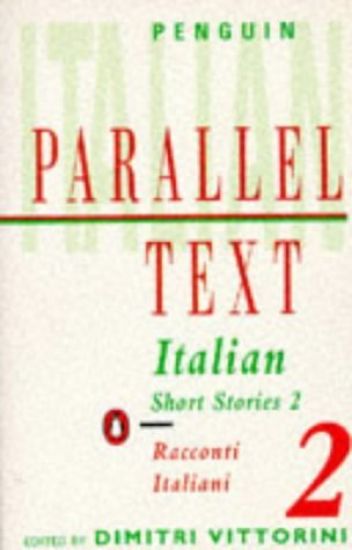
Intends to exemplify the variety of Italian writing of the twentieth century. This volume includes discussions of the words and dialect expressions in the Italian text.

The World Bank's Lawyers provides an original socio-legal account of the evolving institutional life of international law. Informed by oral archives, months of participant observation, interviews, legal memoranda, and documents obtained through freedom-of-information requests, it tells a previously untold story of the World Bank's legal department between 1983 and 2016. This is a story of people and the beliefs they have, the influence they seek, and the tools they employ. It is an account of the practices they cling to and how these practices gain traction, or how they fail to do so, in an international bureaucracy. Inspired by actor-network theory, relational sociologies of association, and performativity theory, this ethnographic exploration multiplies the matters of concern in our study of international law (and lawyering): the human and non-human, material and semantic, visible and evasive actants that tie together the fragile fabric of legality. In tracing these threads, this book signals important changes in the conceptual repertoire and materiality of international legal practice, as liberal ideals were gradually displaced by managerial modes of evaluation. It reveals a world teeming with life—a space where professional postures and prototypes, aesthetic styles, and technical routines are woven together in law's shifting mode of existence. This history of international law as a contingent cultural technique enriches our understanding of the discipline's disenchantment and the displacement of its traditional tropes by unexpected and unruly actors. It thereby inspires new ways of critical thinking about international law's political pathways, promises, and pathologies, as its language is inscribed in ever-evolving rationalities of rule.

Byzantium and the Turks in the Thirteenth Century
Dimitri Korobeinikov
Oxford University Press
2014
sidottu
At the beginning of the thirteenth century Byzantium was still one of the most influential states in the eastern Mediterranean, possessing two-thirds of the Balkans and almost half of Asia Minor. After the capture of Constantinople in 1204 during the Fourth Crusade, the most prominent and successful of the Greek rump states was the Empire of Nicaea, which managed to re-capture the city in 1261 and restore Byzantium. The Nicaean Empire, like Byzantium of the Komnenoi and Angeloi of the twelfth century, went on to gain dominant influence over the Seljukid Sultanate of Rum in the 1250s. However, the decline of the Seljuk power, the continuing migration of Turks from the east, and what effectively amounted to a lack of Mongol interest in western Anatolia, allowed the creation of powerful Turkish nomadic confederations in the frontier regions facing Byzantium. By 1304, the nomadic Turks had broken Byzantium's eastern defences; the Empire lost its Asian territories forever, and Constantinople became the most eastern outpost of Byzantium. At the beginning of the fourteenth century the Empire was a tiny, second-ranking Balkan state, whose lands were often disputed between the Bulgarians, the Serbs, and the Franks. Using Greek, Arabic, Persian, and Ottoman sources, Byzantium and the Turks in the Thirteenth Century presents a new interpretation of the Nicaean Empire and highlights the evidence for its wealth and power. It explains the importance of the relations between the Byzantines and the Seljuks and the Mongols, revealing how the Byzantines adapted to the new and complex situation that emerged in the second half of the thirteenth century. Finally, it turns to the Empire's Anatolian frontiers and the emergence of the Turkish confederations, the biggest challenge that the Byzantines faced in the thirteenth century.
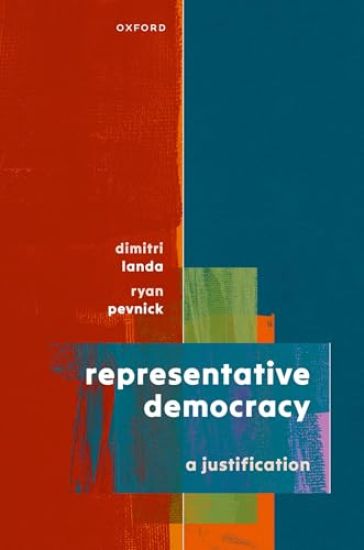
Despite the not-so-distant invocations of the “end of history,” representative democracy is, today, under siege even from corners where one once might have expected strong sympathy and support. Indeed, confidence in representative democracy has, in recent years, been shaken by the economic and political performance of many such regimes. Representative Democracy explains why the definitive institutional features of representative democracy - the electoral selection of policymaking officials who are independent in the interim between elections - are attractive relative to salient alternatives (including direct democracy, lottery-based systems, and meritocratic alternatives) and, relatedly, why it is a distinctively attractive institutional arrangement, rather than - as it is often perceived to be - a pale stand-in for more robust and genuine forms of democratic government. Building on novel arguments that connect the distinctive institutional features of representative democracy to important epistemic and stability-based benefits, the book provides a normative account of a well-functioning system of representative democracy against which proposed reforms can be evaluated.
Despite the not-so-distant invocations of the “end of history,” representative democracy is, today, under siege even from corners where one once might have expected strong sympathy and support. Indeed, confidence in representative democracy has, in recent years, been shaken by the economic and political performance of many such regimes. Representative Democracy explains why the definitive institutional features of representative democracy - the electoral selection of policymaking officials who are independent in the interim between elections - are attractive relative to salient alternatives (including direct democracy, lottery-based systems, and meritocratic alternatives) and, relatedly, why it is a distinctively attractive institutional arrangement, rather than - as it is often perceived to be - a pale stand-in for more robust and genuine forms of democratic government. Building on novel arguments that connect the distinctive institutional features of representative democracy to important epistemic and stability-based benefits, the book provides a normative account of a well-functioning system of representative democracy against which proposed reforms can be evaluated.
Comprehensive and clinically focused, Refractive Surgery, 3rd Edition, brings you the knowledge and expertise of leading ophthalmology experts and refractive surgeons from around the world. Together they provide practical coverage of the latest advances in this fast-changing field, including improved optics and biomechanics, improved diagnostics, new surgical techniques, and more. Hundreds of high-quality photographs guide you from patient selection to mastery of surgical techniques. Offers step-by-step guidance on a wide range of common refractive procedures. Covers new topics such as management of LASIK complications; SMILE and management of SMILE complications; collagen cross-linking, including instrumentation and applications in keratoconus and ectasia; intracorneal lenses; and multifocal and accommodating IOLs. Contains a new chapter on Preoperative Evaluation of Keratoconus and Ectasia. Uses high-quality surgical video clips to demonstrate a variety of surgical techniques. Addresses initial as well as ongoing management of patients. Includes tables of indications, preferences, hot tips, and management of complications throughout, making guidance quick and easy to access. Enhanced eBook version included with purchase. Your enhanced eBook allows you to access all of the text, figures, and references from the book on a variety of devices.

The harder you force it, the more the cracks show. I would like to welcome you to (all or nothing vol 2 where the love go). Take a second and think about all your pass relationship..... Ok you done thinking. Now what is one thing they all have in common? Take another second to think about that. Now think about the relationship you are in now and see do you see the difference in yourself and the person you dating. Because ever thing happens for a reason ever relationship you been in taught you and showed you something different do you agree. I name part 2 of the book where the love go because it relates to alot of people. Vol 1 was the romantic love story that's the pass relationship. How some people and I was feeling part 2 where the love go is what most people think about after a break up how we feel after it. And part 3 will be the final love story. And that will cover everything. How we been in all different types of relationship and they all ended than we have one last shot at love and it ends perfect.
a bunch of things put together into another thing. it's great, you'll love it.
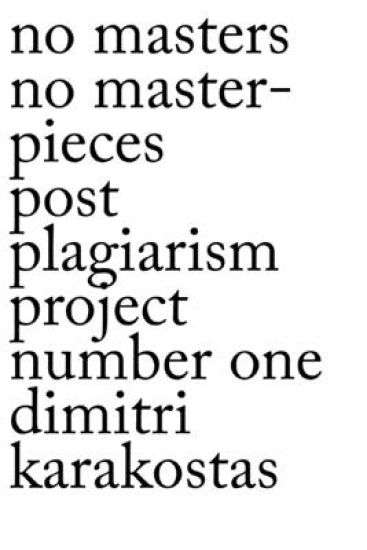
post-plagiarism project number two dimitri karakostas write about pretty much nothing for 160something pages
once again dimitri writes about nothing, but you seem to like it i guess.
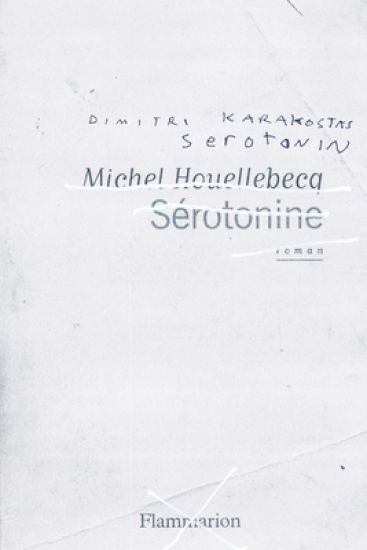
i beat the english translation of this book, but made it into a poem somehow.

i write your horoscope but it's poetry, it's poetry what i'm doing here.

writing done automatically, writing from the internetso, i'm working on - the writing - uh the writing that doesn't really get read (?)or read outside of it's initial purpose(maybe david markson with wifi)yeah, that's what i'm interested inkeyword stuffing, seo cheatingauto-reply bots, dummy textspeech-recognition-appsai-assisted copy formulasinaccurate predictive textemails from foreign princesuh, i 'trained' docker to write from my search historybut it's all writing that existed to be readit's only job was to existto be textthis is pretty good i think, yeahpeople like this one

wow another amazing poetry collection by this fucking nutcase.
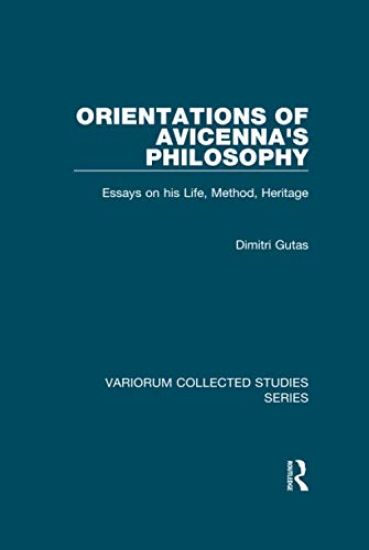
The volume brings together seventeen studies on Avicenna by Dimitri Gutas, written over the past twenty-five years. They aim to establish Avicenna’s historical and philosophical context as a means to determining his philosophical project and the orientations of his thought. They deal with his life and works, his method, his epistemology, and his later reception in the Islamic world, ending with a programmatic essay on the state of the field of Avicennan studies and future agenda. Occasioned by issues raised in Gutas’s monograph on Avicenna and the Aristotelian Tradition (whose second edition has just appeared), they form a substantive complement to it. For this reprint, a number of the essays have been reset and accordingly revised and updated. Provided with exhaustive indexes of names, places, subjects, and technical terms, the volume constitutes a new and major research tool for the study of Avicenna and his heritage. (CS1050).