Kirjojen hintavertailu. Mukana 11 244 527 kirjaa ja 12 kauppaa.

Kirjahaku

Etsi kirjoja tekijän nimen, kirjan nimen tai ISBN:n perusteella.

1000 tulosta hakusanalla Dimitris Chassapakis

Structural Design in Building Conservation

Structural Design in Building Conservation

Dimitris Theodossopoulos

Routledge
2012
sidottu
No building is properly conserved if it is not structurally sound. Consequently architects, engineers and conservation officers need an adequate grounding in the technology, the materials and the historic origins of the building in order to complete a conservation project successfully.Structural Design in Building Conservation deals with design issues and technical choices, showing how they are integrated with the planning and architectural outcomes in a conservation project. It brings together theory with current conservation technology, discussing the possibilities of structural details and strategies in architectural expression. Case studies are central to this, and these are organised around such themes as the addition of roofs, requalification of space, strengthening and re-use of fabric, repristination, additions, completions, stiffness adjustments, and the correction of past mistakes. The reader is encouraged to examine the technical details of these real projects, and explore the possible solutions.The philosophy of structural interventions is introduced in the context of conservation theories and practices in various European countries. The main types of strengthening, repairs and interventions are explained using different building types, and the structural nature of the main elements to be strengthened (linear structures, frames, plates and shells) is explored in detail.Case studies included cover a very wide range of historic types and conversions, not only monumental masonry structures like neoclassical buildings, major temples, churches, public buildings and museums, but also more utilitarian structures like historic mills, early reinforced concrete structures and vaulting types.This is essential reading for all students of architectural conservation, and practicing architects and engineers who are involved in conservation projects.

Structural Design in Building Conservation

Structural Design in Building Conservation

Dimitris Theodossopoulos

Routledge
2012
nidottu
No building is properly conserved if it is not structurally sound. Consequently architects, engineers and conservation officers need an adequate grounding in the technology, the materials and the historic origins of the building in order to complete a conservation project successfully.Structural Design in Building Conservation deals with design issues and technical choices, showing how they are integrated with the planning and architectural outcomes in a conservation project. It brings together theory with current conservation technology, discussing the possibilities of structural details and strategies in architectural expression. Case studies are central to this, and these are organised around such themes as the addition of roofs, requalification of space, strengthening and re-use of fabric, repristination, additions, completions, stiffness adjustments, and the correction of past mistakes. The reader is encouraged to examine the technical details of these real projects, and explore the possible solutions.The philosophy of structural interventions is introduced in the context of conservation theories and practices in various European countries. The main types of strengthening, repairs and interventions are explained using different building types, and the structural nature of the main elements to be strengthened (linear structures, frames, plates and shells) is explored in detail.Case studies included cover a very wide range of historic types and conversions, not only monumental masonry structures like neoclassical buildings, major temples, churches, public buildings and museums, but also more utilitarian structures like historic mills, early reinforced concrete structures and vaulting types.This is essential reading for all students of architectural conservation, and practicing architects and engineers who are involved in conservation projects.

Romania and The European Union

Romania and The European Union

Dimitris Papadimitriou; David Phinnemore

Routledge
2011
nidottu
This book explores the dynamics behind Romania’s relationship with the European Union from the collapse of the Ceaucescu regime in 1989, to its recent accession to the EU in 2007. As a completely up-to-date and detailed study, it identifies key developments in EU-Romania relations, as well as the challenges Romania faced in its efforts move from the margins of the European integration to EU membership. In so doing, the analysis contributes to wider debates about the dynamics underpinning EU enlargement. Moreover, the book reveals the consequences and limits of Europeanization.Romania and the European Union analyses: the impact of integration on the consolidation of democracy in Romania; the country’s economic development, in accordance with the EU’s Copenhagen criterion - the need for acceding states to possess a ‘functioning market economy’; the process of macroeconomic reform; the reform of its public administration; the country’s efforts in implementing the EU’s acquis in the areas of justice and home affairs –a focal point in the accession negotiations given Romania’s geographical location, and its vulnerability as a major transit point for illegal migration and trafficking into the EU – and securing its external borders; the EU’s role in promoting reform as well as the limits of EU influence the obstacles Romania has had to overcome in meeting the demanding pre-requisites of accession to the EU. This book identifies the EU’s role in promoting reform, but equally the limits of EU influence. It reveals the obstacles Romania has had to overcome in meeting the demanding pre-requisites of accession to the EU.
The Positive Obligations of the State under the European Convention of Human Rights
The system of the European Convention of Human Rights imposes positive obligations on the state to guarantee human rights in circumstances where state agents dot not directly interfere. In addition to the traditional/liberal negative obligation of non-interference, the state must actively protect the human rights of individuals residing within its jurisdiction. The liability of the state in terms of positive obligations induces a freestanding imperative of human rights that changes fundamentally the perception of the role of the state and the participatory ability of the individual, who can now assert their human rights in all circumstances in which they are relevant. In that regard, positive obligations herald the most advanced review of the state’s business ever attempted in international law.The book undertakes a comprehensive study of positive obligations: from establishing the legitimacy of positive obligations within the system of the Convention to their practical implementation at the national level. Analysing in depth legal principles that pervade the whole system of the Convention, a coherent methodological framework of critical stages and parameters is provided to determine the content of positive obligations in a consistent, predictable and realistic manner. This study of the Convention explains and critically analyses the state’s positive obligations, as imposed by the European Court of Human Rights, and sets out original proposals for their future development. The book will be of interest to those who study, research or practice public law, civil rights and liberties or international/European human rights law.
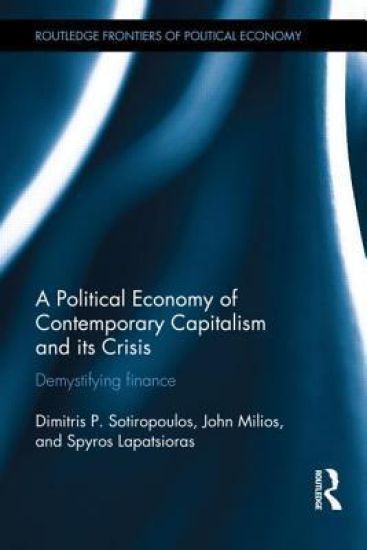
A Political Economy of Contemporary Capitalism and its Crisis

A Political Economy of Contemporary Capitalism and its Crisis

Dimitris Sotiropoulos; John Milios; Spyros Lapatsioras

Routledge
2013
sidottu
The recent financial meltdown and the resulting global recession have rekindled debates regarding the nature of contemporary capitalism. This book analyses the ongoing financialization of the economy as a development within capitalism, and explores the ways in which it has changed the organization of capitalist power. The authors offer an interpretation of the role of the financial sphere which displays a striking contrast to the majority of contemporary heterodox approaches. Their interpretation stresses the crucial role of financial derivatives in the contemporary organization of capitalist power relations, arguing that the process of financialization is in fact entirely unthinkable in the absence of derivatives.The book also uses Marx’s concepts and some of the arguments developed in the framework of the historic Marxist controversies on economic crises in order to gain an insight into the modern neoliberal form of capitalism and the recent financial crisis. Employing a series of international case studies, this book will be essential reading for all those with an interest in the financial crisis, and all those seeking to comprehend the workings of capitalism.
The European Union and Occupied Palestinian Territories
This book analyses the present European Union (EU) approach to state-building, both in policy and operation. It offers a review of the literature on peace-building, EU state-building and conflict resolution, before examining in detail the EU’s role as a state-builder in the case of the Occupied Palestinian Territories following the 1993 Oslo Accords.Drawing on extensive fieldwork and over 140 interviews carried out in Brussels, London, Jerusalem and Ramallah with EU, Palestinian and Israeli officials as well as academics, members of NGOs and civil society, the author evaluates the present approach of state-building and offers a framework to test the effectiveness of the EU as a state-builder. Examining security sector reform, judiciary sector reform and the rule of law, the book brings the ‘voices from the field’ to the forefront and measures the contribution of the EU to state-building against a backdrop of on-going conflict and a polarised social setting.This book will be of interest to students and scholars of international relations, EU politics, Middle Eastern politics, conflict resolution and state-building.
The Positive Obligations of the State under the European Convention of Human Rights
The system of the European Convention of Human Rights imposes positive obligations on the state to guarantee human rights in circumstances where state agents dot not directly interfere. In addition to the traditional/liberal negative obligation of non-interference, the state must actively protect the human rights of individuals residing within its jurisdiction. The liability of the state in terms of positive obligations induces a freestanding imperative of human rights that changes fundamentally the perception of the role of the state and the participatory ability of the individual, who can now assert their human rights in all circumstances in which they are relevant. In that regard, positive obligations herald the most advanced review of the state’s business ever attempted in international law.The book undertakes a comprehensive study of positive obligations: from establishing the legitimacy of positive obligations within the system of the Convention to their practical implementation at the national level. Analysing in depth legal principles that pervade the whole system of the Convention, a coherent methodological framework of critical stages and parameters is provided to determine the content of positive obligations in a consistent, predictable and realistic manner. This study of the Convention explains and critically analyses the state’s positive obligations, as imposed by the European Court of Human Rights, and sets out original proposals for their future development. The book will be of interest to those who study, research or practice public law, civil rights and liberties or international/European human rights law.
Applied Digital Signal Processing

Applied Digital Signal Processing

Dimitris G. Manolakis; Vinay K. Ingle

Cambridge University Press
2011
sidottu
Master the basic concepts and methodologies of digital signal processing with this systematic introduction, without the need for an extensive mathematical background. The authors lead the reader through the fundamental mathematical principles underlying the operation of key signal processing techniques, providing simple arguments and cases rather than detailed general proofs. Coverage of practical implementation, discussion of the limitations of particular methods and plentiful MATLAB illustrations allow readers to better connect theory and practice. A focus on algorithms that are of theoretical importance or useful in real-world applications ensures that students cover material relevant to engineering practice, and equips students and practitioners alike with the basic principles necessary to apply DSP techniques to a variety of applications. Chapters include worked examples, problems and computer experiments, helping students to absorb the material they have just read. Lecture slides for all figures and solutions to the numerous problems are available to instructors.
Globalization's Limits

Globalization's Limits

Dimitris N. Chorafas

Gower Publishing Ltd
2009
sidottu
So far there has been only praise for globalization. However, the export wave of China’s manufacturing machine and, more recently, the Global financial crisis show that globalization has limits. Globalization, the internationalization of trade, and financial integration are having enormous implications for businesses as well as for the whole economies of countries or blocks of countries. In this book Dr Chorafas argues that research is now producing evidence that there are limits to such globalization and amalgamation and that these need to be better defined and understood if some of the problems now being identified are to be prevented from applying the brakes, or worse, putting the process into reverse gear. The author examines the impact on countries such as the United States and European Union of occurrences like China's emergence as a massive manufacturing platform and the distortions of trade that result, affecting countries' GDP and creating problems such as uncontrollable current account deficits. He also considers the effect of Sovereign Wealth Funds as new entrants on the scene. These, he argues, are seen by some as 'the Trojan horses of state capitalism', particularly in what he defines as the 'absence of a global sheriff'. Globalization’s Limits looks at the EU and the Euroland as a test of globalization. The conclusions Chorafas draws about the effect on member states of pan-European banking, and the Euro as common currency, have implications for Britain and for the rest of the world. Issues relating to missed opportunities and leadership beg questions such as 'Who, if anybody, is or should be in charge of global monetary policy?
The Business of Europe is Politics

The Business of Europe is Politics

Dimitris N. Chorafas

Gower Publishing Ltd
2010
sidottu
It is no secret that Europe is currently undergoing a major economic and social crisis, so it is essential says Dimitris Chorafas that leaders of industry and finance within the EU, or doing business with the EU, know what is going on. What is it that threatens competitiveness and produces obstacles to providing a vibrant business landscape in the European Union? This book offers insight into the particular nature of the European cocktail of business and politics, explaining how that bears on trade and relations between, for example, continental Europe and the UK, across the Atlantic with the US, with Russia and with Asia. Dr Chorafas explains and critiques Europe's conflicting aims and what he describes as its wanting business plan. Case studies to illustrate the consequences for business of the deficiencies identified are included. With its mix of rigorously researched background and forthright argument, this timely book will satisfy those academics with an interest in the issues addressed and will also serve as a planning tool for business leaders and government executives trying to determine what they can do at enterprise level. The challenge is to survive and prosper in an environment where 'business is politics'.
Education and Employment in the European Union

Education and Employment in the European Union

Dimitris N. Chorafas

Gower Publishing Ltd
2011
sidottu
Education, employment policy, and pensions are inextricably linked and critical to any sort of business or economic revival, let alone success, and all three are addressed in Education and Employment in the European Union. In the first part of this meticulously researched and highly informative book, Dimitris Chorafas argues that European educational standards, from primary schools through to universities, leave much to be desired. The author then turns to employment. Already affected by problems with education, employment is fettered by structural issues, ranging from inflexible labour laws to heavy social costs. Here, the author suggests what might be done to get employment moving again in difficult economic times. Employment and pensions work in synergy. In the final part, Chorafas examines the implications of and future for pension provision, taking a polyvalent approach which embraces state pensions, company pensions and the workings of pension funds - as well as healthcare issues and the longevity risk. The evidenced analysis of the three interlinked policy areas in this book identifies the issues and the relationships between them. The findings and suggestions will be important to business practitioners, business educators, government authorities, policy makers, consultancies and others either within or wishing to learn lessons from the European Union.
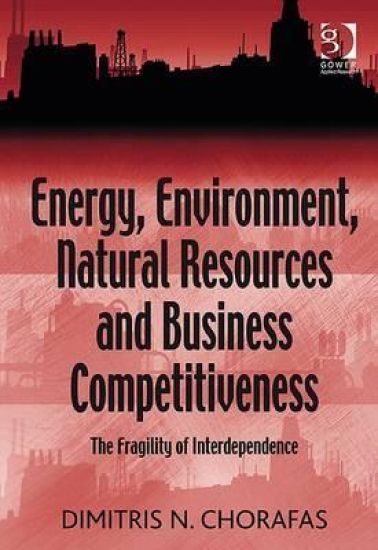
Energy, Environment, Natural Resources and Business Competitiveness

Energy, Environment, Natural Resources and Business Competitiveness

Dimitris N. Chorafas

Ashgate Publishing Limited
2011
sidottu
Every generation leaves both assets and liabilities to the next. Alert people can see we are going to leave our children and grandchildren with a nearly unsolvable test of energy supplies; waste polluting the air and water; and the appalling problem of a huge and uncontrollable explosion in world population. Energy, Environment, Natural Resources and Business Competitiveness addresses itself to those having a professional, academic or general interest in these issues: - Energy sources, their nature and contribution, - Environmental problems associated to power production and usage, - Financing and control of energy-related projects and processes, - Future direction of agriculture produce now used as energy, - Complex social and technical issues resulting from lack of family planning - and, therefore, of demands for energy, - Impact of energy and an exploding population on pollution, - Truth and hype about the most talked about environmental subjects. In this fourth book for Gower, Dimitris Chorafas reviews Europe, America and Asia's energy needs in the coming decade, pointing out that current policies are inadequate at best, and more likely disastrous for the economy. Governments persist in having their own agenda and priorities as well as plenty of constraints and taboos, yet when he critically examines the challenges Dr Chorafas concludes that no government can solve all current energy problems by acting alone. The book confronts current thinking, and its after-effect on policies and practices. Readers accustomed to mainstream books and articles which blame fossil fuels for a deteriorating world environment will find this a contrary opinion.
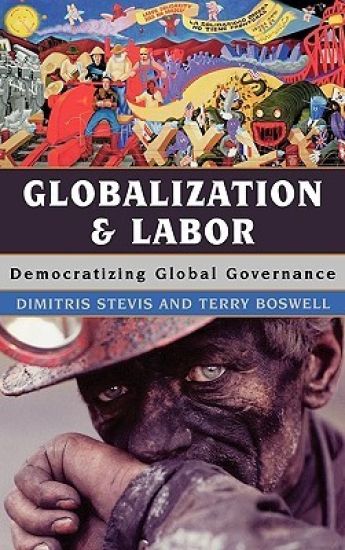
Globalization and Labor

Globalization and Labor

Dimitris Stevis; Terry Boswell

Rowman Littlefield Publishers
2007
sidottu
Unions have long been a central force in the democratization of national and global governance, and this timely book examines the role of labor in fighting for a more democratic and equitable world. In a clear and compelling narrative, Dimitris Stevis and Terry Boswell explore the past accomplishments and the formidable challenges still facing global union politics. Outlining the contradictions of globalization and global governance, they assess the implications for global union politics since its inception in the nineteenth century. The authors place this key social movement in a political economy framework as they argue that social movements can be fruitfully compared based on their emphases on egalitarianism and internationalism. Applying these concepts to global union politics across time, the authors consider whether global union politics has become more active and more influential or has failed to rise to the challenge of global capitalism. All readers interested in global organizations, governance, and social movements will find this deeply informed work an essential resource.
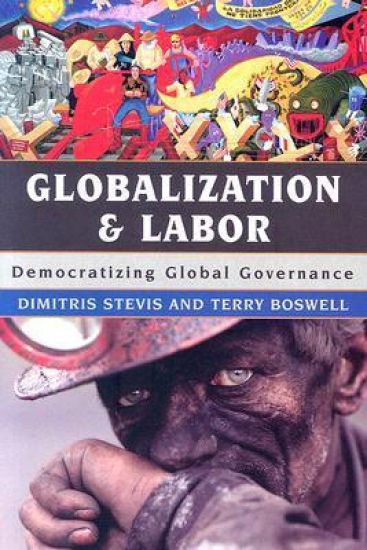
Globalization and Labor

Globalization and Labor

Dimitris Stevis; Terry Boswell

Rowman Littlefield Publishers
2007
nidottu
Unions have long been a central force in the democratization of national and global governance, and this timely book examines the role of labor in fighting for a more democratic and equitable world. In a clear and compelling narrative, Dimitris Stevis and Terry Boswell explore the past accomplishments and the formidable challenges still facing global union politics. Outlining the contradictions of globalization and global governance, they assess the implications for global union politics since its inception in the nineteenth century. The authors place this key social movement in a political economy framework as they argue that social movements can be fruitfully compared based on their emphases on egalitarianism and internationalism. Applying these concepts to global union politics across time, the authors consider whether global union politics has become more active and more influential or has failed to rise to the challenge of global capitalism. All readers interested in global organizations, governance, and social movements will find this deeply informed work an essential resource.
Escape Routes

Escape Routes

Dimitris Papadopoulos; Niamh Stephenson; Vassilis Tsianos

Pluto Press
2008
pokkari
Illegal migrants who evade detection, creators of value in insecure and precarious working conditions and those who refuse the constraints of sexual and biomedical classifications: these are the people who manage to subvert power and to craft unexpected sociabilities and experiences. Escape Routes shows how people can escape control and create social change by becoming imperceptible to the political system of Global North Atlantic societies. 'A profound and brilliant examination of the power of exodus to create radical interventions in perhaps the three most important and contested fields of society today: life, migration and precarious labour. It is in these fields that the present and future of multitude is at stake. Escape Routes is a toolbox in the hands of multitude.' Antonio Negri, author of Insurgencies and co-author of Empire and Multitude
Cinematic Journeys

Cinematic Journeys

Dimitris Eleftheriotis

Edinburgh University Press
2010
sidottu
Cinematic Journeys explores the interconnected histories, theories and aesthetics of mobile vision and cinematic movement. It traces the links between certain types of movement of/in the frame and broader cultural trends that have historically informed Western sensibilities. It contextualises that genealogy with detailed analysis of contemporary and recent 'travel films' as well as older works. The book investigates how movements of exploration, discovery and revelation are activated in specific cinematic narratives of travelling and displacement. Such narratives are analysed with attention to the mass population movements and displacements that form their referential background. Cinematic Journeys also examines the ways in which travelling affects film itself. Case studies focus on films as travelling commodities (with the popularity of Indian films in Greece in the 1950s and 60s as case study); and, through a study of subtitles, on the category of the 'foreign spectator' (who in the encounter with 'foreign' films moves across cultural borders). Films considered in the book include Sunrise, Slow Motion, Hukkle, Death in Venice, Voyage to Italy, The Motorcycle Diaries, Koktebel, Japon, Blackboards, Ulysses' Gaze, and the work of directors Tony Gatliff and Fatih Akin.
Cinematic Journeys

Cinematic Journeys

Dimitris Eleftheriotis

Edinburgh University Press
2012
nidottu
Cinematic Journeys explores the interconnected histories, theories and aesthetics of mobile vision and cinematic movement. It traces the links between certain types of movement of/in the frame and broader cultural trends that have historically informed Western sensibilities. It contextualises that genealogy with detailed analysis of contemporary and recent 'travel films' as well as older works. The book investigates how movements of exploration, discovery and revelation are activated in specific cinematic narratives of travelling and displacement. Such narratives are analysed with attention to the mass population movements and displacements that form their referential background. Cinematic Journeys also examines the ways in which travelling affects film itself. Case studies focus on films as travelling commodities (with the popularity of Indian films in Greece in the 1950s and 60s as case study); and, through a study of subtitles, on the category of the 'foreign spectator' (who in the encounter with 'foreign' films moves across cultural borders). Films considered in the book include Sunrise, Slow Motion, Hukkle, Death in Venice, Voyage to Italy, The Motorcycle Diaries, Koktebel, Japon, Blackboards, Ulysses' Gaze, and the work of directors Tony Gatliff and Fatih Akin.
Wealth Management

Wealth Management

Dimitris N. Chorafas

Butterworth-Heinemann Ltd
2005
sidottu
Wealth Management has two themes: Private Banking and investment decisions regarding Structural Financial Products. Dr. Dimitris Chorafas examines in a rigorous way whether structured financial products are advisable investments for retail and institutional investors and, if yes, which risks they entail. As our society becomes increasingly affluent, and state-supported pension schemes find it difficult to survive, a growing number of high net-worth individuals, and families, have become retail investors – looking for ways and means to optimize wealth management, and Private Banking deals with these sorts of clients. Private banking also deals with clients that are institutional investors, such as pension funds, mutual funds, and insurance companies, as well as not-for-profits, foundations and companies explicitly set up for wealth management. Both institutional and retail investors are being offered by the banks they work with structured products. Typically, these are securities that provide them with a redemption amount, with may be either with full or partial capital protection, and some type of return. The book examines structured financial products, their polyvalent nature, and the results which could be expected from them. Return on structural instruments, which are essentially derivatives, is paid in function of a specific investment strategy on selected underlying asset(s). This essentially means on the performance of the underlyings, obtained by asset managers, which may be banks or hedge funds, through purchase or sale of embedded options. But there are risks. Both risk and return from structured products are related to three main issues: the volatility of future value of an underlying, the uncertainty of future events, and the exposure of the product. Every type of investment is subject to market forces, and the more leveraged a portfolio is, the greater will probably be both the assumed risk and the expected reward. The fact that structured financial products appeal, or at least are being marketed, to both retail investors and institutional investors makes the dual approach deliberately chosen in this book most advisable. This book addresses all these issues in a practical manner with numerous case studies and real-world examples drawn from the author’s intensive research.
IFRS, Fair Value and Corporate Governance

IFRS, Fair Value and Corporate Governance

Dimitris N. Chorafas

Butterworth-Heinemann Ltd
2006
nidottu
Written for managers and professionals in business and industry, this book helps the reader in: * Understanding what is and is not IFRS * Learning the complexities of IFRS implementation * Appreciating the contribution of IFRS to corporate governance The changeover from the mosaic of different heterogeneous national accounting standards to the International Financial Reporting Standards has not been easy. For many companies IFRS, and most particularly the concept of fair value in IAS 39, has amounted to a phase shift – which is prerequisite to achieving compliant financial reporting. The research conducted by Dr. Chorafas for this book, documented that the process of meeting IFRS requirements presents opportunities and challenges to all enterprises. As many companies have found out, abandoning the classical accruals accounting for marking-to-market their transactions and portfolio positions, has not been easy. The conversion process has affected several functions within the organization including balance sheets, P&L statements, auditing, risk control, information systems, and management accounting. This book is in made up of four parts: * Part One focuses on business competition, standards boards, corporate accounting, and IAS 39 * The theme of Part Two, is the implementation of IFRS, exemplified through case studies on task forces and practical applications * Part Three brings together IFRS and management accounting requirements, with emphasis on fair value. * Part Four addresses itself to the contribution IFRS can make to better corporate governance, and to rebuilding the balance sheet The book has many case studies based on actual experiences. These range from the implementation of IFRS directives such as hedge accounting, to developing practices of real-time balance sheets; the help provided by sophisticated accounting solutions help in stress testing; and a comprehensive definition of the role of the audit committee.