Kirjahaku
Etsi kirjoja tekijän nimen, kirjan nimen tai ISBN:n perusteella.
1000 tulosta hakusanalla Donald B Wright
The presidential election of 1828 is one of the most compelling stories in American history: Andrew Jackson, hero of the Battle of New Orleans and man of the people, bounced back from his controversial loss four years earlier to unseat John Quincy Adams in a campaign notorious for its mudslinging. With his victory, the torch was effectively passed from the founding fathers to the people. This study of Jackson's election separates myth from reality to explain why it had such an impact on present-day American politics. Featuring parades and public participation to a greater degree than had previously been seen, the campaign itself first centered on two key policy issues: tariffs and republicanism. But as Donald Cole shows, the major theme turned out to be what Adams scornfully called 'electioneering': the rise of mass political parties and the origins of a two-party system, built from the top down, whose leaders were willing to spend unprecedented time and money to achieve victory. Cole's innovative study examines the election at the local and state, as well as the national, levels, focusing on New Hampshire, New York, Pennsylvania, Ohio, Kentucky, and Virginia to provide a social, economic, and political cross section of 1828 America. He describes how the Jacksonians were better organized, paid more attention to detail, and recruited a broader range of workers - especially state-level party leaders and newspaper editors who were invaluable for raising funds, publicizing party dogma, and smearing the opposition. The Jacksonians also outdid the Adams supporters in zealotry, violence of language, and the overwhelming force of their campaigning and succeeded in painting their opponents as aristocratic, class conscious, and undemocratic. Tracing interpretations of this election from James Parton's classic 1860 biography of Jackson to recent revisionist accounts attacking Old Hickory for his undemocratic treatment of blacks, Indians, and women, Cole argues that this famous election did not really bring democracy to America as touted - because it was democracy that enabled Jackson to win. By offering a more charismatic candidate, a more vigorous campaign, a more acceptable recipe for preserving the past, and a more forthright acceptance of a new political system, Jackson's Democrats dominated an election in which campaigning outweighed issues and presaged the presidential election of 2008.

The Traditional Chinese Iron Industry and Its Modern Fate
Donald B. Wagner
RoutledgeCurzon
1997
nidottu
This book explores the economic history of the traditional Chinese iron industry in the nineteenth and twentieth centuries, with particular emphasis on the interactions among technological, economic and geographic factors. The traditional technology of iron production is described together with the ways in which it changed and developed in response to upheavals wrought by foreign competition, war and revolution and by the growth in China of a modern iron industry. Many of the book's findings are counter-intuitive, and will provide food for thought in the study of Third World industrial development. The author has written widely on the history of science and technology in China, and is currently engaged in writing the volume on ferrous metallurgy for Joseph Needham's Science and Civilisation in China.
Designed as an advanced/intermediate level textbook for students, this book will meet the needs of those making the transition between 'textbook texts' to 'real texts'. Dr Wagner's many years' experience of teaching classical Chinese are brought to bear on one of the most difficult aspects of learning the language - making the progression from introductory textbooks on classical Chinese, which do not present serious philological problems, to real historical texts, in which such problems abound. The text used is the biography of Huo Guang in the Han Shu together with the commentaries compiled by Yan Shigu.
Tells the dramatic story of the rescue of the Apollo 13 astronauts. Written in graphic-novel format.
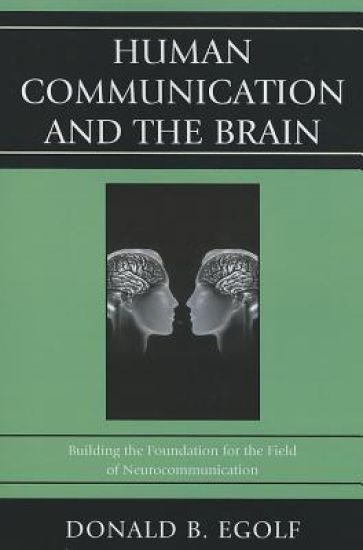
Human Communication and the Brain: Building the Foundation for the Field of Neurocommunications, by Donald B. Egolf, provides an introduction to the latest neuroscience research and expands its applications to the study of communication. Egolf explores both methodological and ethical issues that are surfacing as a result of the newest findings, revealing important new questions about the nature of communication and the brain, including: is there a way to communicate directly with the brain? What outside powers should be permitted to access that method of information dissemination? Egolf’s text has implications for a number of communication subsets, including intrapersonal, interpersonal, political, marketing, and deception, and this new research undoubtedly will provoke debate amongst communication and neuroscience scholars for years to come.
The Intersection of Race, Class, and Gender in Multicultural Counseling
Donald B. Pope-Davis; Hardin L. K. Coleman
SAGE Publications Inc
2001
sidottu
Featuring an outstanding group of the leading theorists and researchers from the fields of multicultural psychology and counseling, this book begins with chapters on how the interplay of such variables of class, gender, and race interact in the development of an individual in a pluralistic society. It then presents theories on how to integrate issues of class, gender and race into counseling theory.
Handbook of Multicultural Competencies in Counseling and Psychology
Donald B. Pope-Davis; Hardin L. K. Coleman; William Ming Liu; Rebecca L. Toporek
SAGE Publications Inc
2003
sidottu
Cultural differences affect the way people think, feel, and act. In an increasingly diverse society, multicultural competency in research and counseling is not merely a matter of political correctness. It is a matter of scientific and professional responsibility. Handbook of Multicultural Competencies in Counseling and Psychology is the first book to offer the theoretical background, practical knowledge, and training strategies needed to achieve multicultural competence. Focusing on a wide range of professional settings, editors Donald B. Pope-Davis, Hardin L.K. Coleman, William Ming Liu, and Rebecca L. Toporek provide a compendium of the latest research related to multicultural competency and the hands-on framework to develop specialized multicultural practices. Promoting an appreciation of cultural differences, this innovative text includes A review of major measures of multicultural competencyAn analysis of popular empirically supported treatments within the schema of multicultural competencyInformation on multicultural competencies and accreditationAn overview of ethical implicationsTeaching strategies to achieve multicultural competency Handbook of Multicultural Competencies in Counseling and Psychology provides a comprehensive foundation for understanding and integrating multiculturalism in all areas of professional practice. Offering directions for growth and development, the editors and a distinguished group of contributors explore emerging issues within the field. An indispensable resource for psychologists, social workers, school counselors, and teachers, this handbook is also an ideal supplementary text for students in counseling and clinical practice courses.
In an insightful new study, Donald Freeman examines the development and significance of urban agriculture in Nairobi, Kenya, overturning a number of common assumptions about the inhabitants and economy of African cities. He addresses the ways in which urban agriculture fits into a broader picture of Kenyan social and economic development and discusses the implications of his findings for development theory in general. Freeman begins by exploring the context of urban agriculture, tracing its development in the colonial and post-colonial city. He then provides a detailed description of urban farmers, their land use practices, and their crops. Freeman gathered this rich body of information through on-site surveys of 618 small-scale cultivators in ten different parts of Nairobi. He concludes by considering the implications of the burgeoning practice of urban agriculture for the cultivators themselves, for the city, and for the developing economy of Kenya. Although the empirical work is focused on Nairobi and its informal sector, the scope and implications of the study are broader and the conclusions relevant to other parts of the Third World. "Urban" productive activities in the Third World, Freeman suggests, need redefining to take account of basic food production in the city and its interrelationships with other informal and formal sectors. A City of Farmers will interest not only economic geographers and students and scholars of development studies and African history but anyone concerned with economic and social conditions in the Third World.
An exploration of the present and past significance of one of the world's busiest yet most hazardous shipping channels.
How Peary Reached the Pole
Donald B. MacMillan; Susan A. Kaplan; Genevieve M. LeMoine
McGill-Queen's University Press
2008
nidottu
A fascinating account of life on Robert E. Peary's 1908-09 North Pole Expedition
77 Fairly Safe Science Activities for Illustrating Bible Lessons
Donald B. DeYoung
Baker Books, a division of Baker Publishing Group
2013
nidottu
Nothing captures the attention of young people (and adults) like a creative object lesson. This hands-on book gives pastors, teachers, speakers, and homeschoolers 77 exciting science activities that reveal the order and grandeur of creation and encourage an appreciation of all God has made. These easy experiments illustrate the laws of nature, teach Bible principles, and affirm God's power as Creator. With catchy or unexpected results, the demonstrations make Bible truth unforgettable. The clearly explained experiments use common household objects, require little setup, and are illustrated with pictures and diagrams.
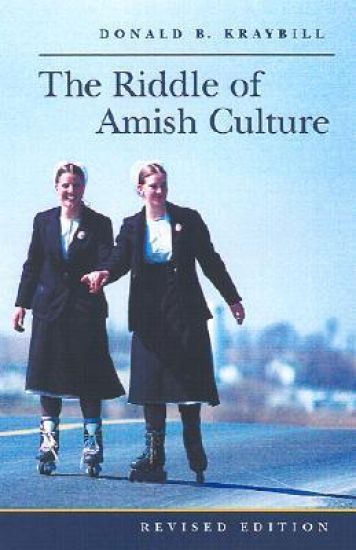
Since its publication in 1989, The Riddle of Amish Culture has become recognized as a classic work on one of America's most distinctive religious communities. But many changes have occurred within Amish society over the past decade, from westward migrations and a greater familiarity with technology to the dramatic shift away from farming into small business which is transforming Amish culture. For this revised edition, Donald B. Kraybill has taken these recent changes into account, incorporating new demographic research and new interviews he has conducted among the Amish. In addition, he includes a new chapter describing Amish recreation and social gatherings, and he applies the concept of "social capital" to his sensitive and penetrating interpretation of how the Amish have preserved their social networks and the solidarity of their community.
On the Backroad to Heaven
Donald B. Kraybill; Carl F. Bowman
Johns Hopkins University Press
2002
pokkari
On the Backroad to Heaven is a unique guidebook to the world of Old Order Anabaptist groups. Focusing on four Old Order communities-the Hutterites, Mennonites, Amish, and Brethren-Donald B. Kraybill and Carl Desportes Bowman provide a fascinating overview of their culture, growth, and distinctive way of life. Following a general introduction to Old Order culture, they show how each group uses a different strategy to create and sustain its identity. The Hutterites, for example, keep themselves geographically segregated from the larger society, whereas the Brethren interact more freely with it. The Amish and Mennonites are more alike in how they engage the outside world, adopting a complex but flexible strategy of compromise that produces an evolving canon of social and religious rules. This first comparative study sketches the differences as well as the common threads that bind these groups together.
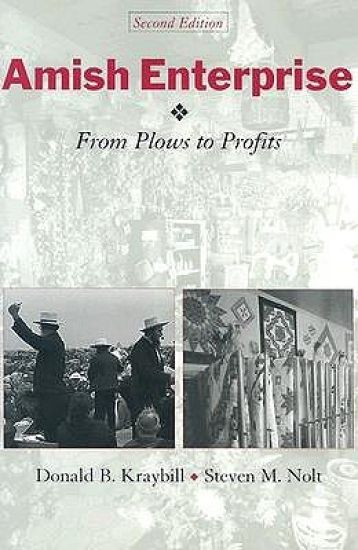
Amish culture has been rooted in the soil since its beginnings in 1693. But what happens when members of America's oldest Amish community enter non-farm work in one generation? How will hundreds of cottage industries and micro-enterprises reshape the heart of Amish life? Will traditional eighth grade education still prove adequate? What about gender roles, child-rearing practices, leisure activities, and growing ties with outsiders? Amish Enterprise was the first book to discuss these dramatic changes that are transforming Amish communities across North America. Based on interviews with more than 150 Amish entrepreneurs, the authors trace the rise and impact of businesses in Lancaster's Amish settlement in recent decades. In this new edition, the authors update demographic and technological changes, and also describe Amish enterprises outside of Pennsylvania in a new chapter.
In From Slave to Pharaoh, noted Egyptologist Donald B. Redford examines over two millennia of complex social and cultural interactions between Egypt and the Nubian and Sudanese civilizations that lay to the south of Egypt. These interactions resulted in the expulsion of the black Kushite pharaohs of the Twenty-fifth Dynasty in 671 B.C. by an invading Assyrian army. Redford traces the development of Egyptian perceptions of race as their dominance over the darker-skinned peoples of Nubia and the Sudan grew, exploring the cultural construction of spatial and spiritual boundaries between Egypt and other African peoples. Redford focuses on the role of racial identity in the formulation of imperial power in Egypt and the legitimization of its sphere of influence, and he highlights the dichotomy between the Egyptians' treatment of the black Africans it deemed enemies and of those living within Egyptian society. He also describes the range of responses-from resistance to assimilation-of subjugated Nubians and Sudanese to their loss of self-determination. Indeed, by the time of the Twenty-fifth Dynasty, the culture of the Kushite kings who conquered Egypt in the late eighth century B.C. was thoroughly Egyptian itself. Moving beyond recent debates between Afrocentrists and their critics over the racial characteristics of Egyptian civilization, From Slave to Pharaoh reveals the true complexity of race, identity, and power in Egypt as documented through surviving texts and artifacts, while at the same time providing a compelling account of war, conquest, and culture in the ancient world.
Concise Encyclopedia of Amish, Brethren, Hutterites, and Mennonites
Donald B. Kraybill
Johns Hopkins University Press
2010
sidottu
Donald B. Kraybill has spent his career among Anabaptist groups, gaining an unparalleled understanding of these traditionally private people. Kraybill shares that deep knowledge in this succinct overview of the beliefs and cultural practices of Amish, Brethren, Hutterites, and Mennonites in North America. Found throughout Canada, Central America, Mexico, and the United States, these religious communities include more than 200 different groups with 800,000 members in 17 countries. Through 340 short entries, Kraybill offers readers information on a wide range of topics related to religious views and social practices. With thoughtful consideration of how these diverse communities are related, this compact reference provides a brief and accurate synopsis of these groups in the twenty-first century. No other single volume provides such a broad overview of Amish, Brethren, Hutterites, and Mennonites in North America. Organized for ease of searching-with a list of entries, a topic finder, an index of names, and ample cross-references-the volume also includes abundant resources for accessing additional information. Wide in scope, succinct in content, and with directional markers along the way, the Concise Encyclopedia of Amish, Brethren, Hutterites, and Mennonites is a must-have reference for anyone interested in Anabaptist groups.
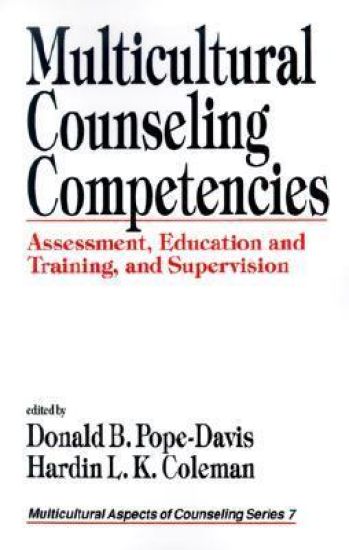
Multicultural Counseling Competencies
Donald B. Pope-Davis; Hardin L. K. Coleman
SAGE Publications Inc
1997
nidottu
Multicultural Counseling Competence represents the next giant step toward implementing multicultural standards into the counseling profession. Logically organized and with a list of impressive contributors, . . . this book not only is well grounded in theory and research but is a practical guide to how graduate schools of counseling, clinical psychology, social work, and other helping professions might infuse multicultural competence into their faculty and students, curriculum, field work, and supervision. . . . The editors have made a major substantive contribution to the counseling profession with this text. They have accepted the challenge of cultural diversity and are serving the roles of pioneers in seeking both individual and institutional multicultural competence. --from the Foreword by Derald Wing Sue Professional associations such as the American Psychological Association and the American Counseling Association are beginning to mandate cultural counseling competencies in their ethical guidelines. That is, counselors who work with ethnically, linguistically, and culturally diverse clients must be multiculturally competent. How can multicultural competency be assessed in counselors? How can these competencies be acquired? In this volume, a cast of leading researchers and educators in multicultural counseling and psychology addresses the issues of what makes a counselor multiculturally competent and how to create more culturally competent counselors. Multicultural Counseling Competence considers ways to evaluate counselors for their awareness, knowledge, and skills in working with a broad spectrum of populations. Chapters also examine at length the pedagogical implications of establishing competencies, including training philosophies and models as well as course and curriculum development. Likewise, a group of contributors consider the impact that multiculturalism has on supervision and the theories and strategies that supervisors can use to ensure a culturally competent clinical environment. A cornerstone volume, Multicultural Counseling Competence pulls together the essence of issues facing the establishment of competencies. Counseling educators and supervisors especially will want to use this book to ensure that their programs help counselors become more culturally aware and serve all clients with efficiency and respect.
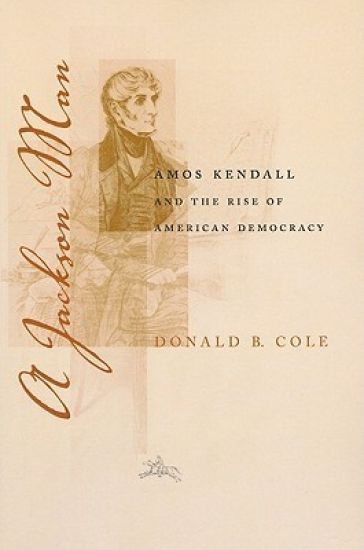
Well researched... and well written, this work gives us Kendall, warts and all. We see the avarice, the ambition, and the contradictions of his subject.... This is biography at its best."" - Journal of American HistoryA rare, fascinating personality emerges in Donald B. Cole's biography of Amos Kendall (1789-1869), the reputed intellectual engine behind Andrew Jackson's administration and an influential figure in the transformation of young America from an agrarian republic to a capitalist democracy. Born on a small Massachusetts farm and educated at Dartmouth, Kendall moved to Kentucky as a young man to seek his fortune and eventually became one of the few nationally prominent antebellum politicians who successfully combined northern origins and southern experience. Kendall's role in democratizing American politics is shown in a compelling narrative of his evolution from a republican idealist to a democratic individualist who contributed greatly to the rise of the Democratic Party. The first biography of Kendall, this superbly written and researched volume charts the progression of American democracy and the culture that created it. ""Donald B. Cole's splendid book is carefully researched, detailed yet boldly interpretive, and gracefully written."" - Civil War History ""[T]his biography is both enjoyable and an indispensable read for those interested in understanding the development of Jacksonian democracy."" - Journal of the Early Republic