

Kirjahaku
Etsi kirjoja tekijän nimen, kirjan nimen tai ISBN:n perusteella.
1000 tulosta hakusanalla Donald C. Hellmann

French East India Companies is a comprehensive and readable account of France's import trade with the Far East during the 17th and 18th centuries. France's Eastern trade was monopolized by two companies, La Compagnie des Indes Orientales (1664-1719) and La Compagnie des Indes (1719-1763), which operated on the basis of rights granted by the French Crown. Prior to 1664 and after 1763 a freer trade existed with India. This work is not only a succinct historical narrative of the two companies and trade between France and the Far East but an economic statistical analysis of this trade. The text is supplemented with an appendix that includes a detailed glossary of textile terms and 77 pages of statistical data from primary source material drawn from French archives and not previously collected nor published. The appendix makes French East India Companies an indispensable historical and economic resource.

Religion and the American Experience: A Social and Cultural History, 1765-1996
Donald C. Swift
Routledge
1997
sidottu
Religion in the USA manifests itself in many forms and this book examines them, from religion in the early republic, to early African American religion, reform, nativism movements, and fundamentalism, up to the contemporary culture wars, in a study that spans almost 250 years.
Religion and the American Experience: A Social and Cultural History, 1765-1996
Donald C. Swift
Routledge
1997
nidottu
Religion in the USA manifests itself in many forms and this book examines them, from religion in the early republic, to early African American religion, reform, nativism movements, and fundamentalism, up to the contemporary culture wars, in a study that spans almost 250 years.

During the American Civil War and the years immediately following, thousands of Confederate sympathizers and former soldiers left the southern United States to seek exile in other lands. Evidence suggests that more Confederate soldiers went to British Honduras, presently known as Belize, than any other single site. This work is an in-depth look at the settlements established by former Confederates--what lured the Confederates there, what the trip from New Orleans was like, what life was like for immigrants in Belize City, the settlements at Toledo, New Richmond, northern British Honduras, Manattee and other settlements, and what Belize City was like at the height of the immigrant influx. Also included are lists of arrivals at the hotels and passenger lists from the ships; both were important in identifying prominent Confederates who sought refuge in British Honduras.
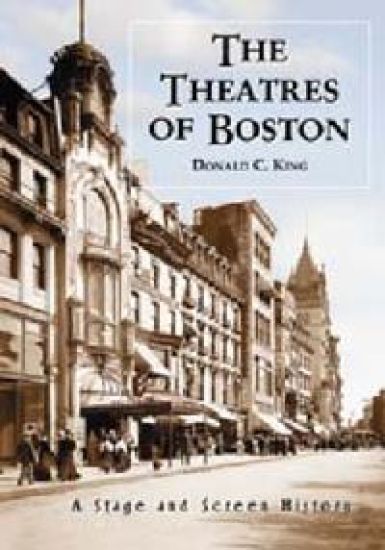
The theatre had a difficult time establishing itself in Massachusetts. Colonial authorities in Boston were adamantly opposed to theatrical amusements of any kind. In the mid-eighteenth century, even theatricals performed in the homes of private citizens aroused the indignant ire of puritanically minded authorities. In 1750 the General Court of Massachusetts passed an act prohibiting stage plays or any other theatrical entertainment. In 1762, the New Hampshire House of Representatives refused a theatre troupe admission to the town of Portsmouth on the ground that plays had a "peculiar influence on the minds of young people and greatly endangered their morals by giving them a taste for intriguing amusement and pleasure." The first public dramatic performance in Boston was produced at a coffeehouse on State Street by two English actors and some local volunteers. In 1775 General John Burgoyne, himself an actor and playwright, converted Boston's Faneuil Hall into a theatre, where he presented, among other pieces, The Blockade of Boston. After the Revolutionary War, in February 1794, the dramatic history of Boston may be said to have begun with the opening of the Boston Theatre. The history of Boston theatres from the eighteenth century through the present is covered in this well illustrated work. Although the theatre had a somewhat rocky beginning, by 1841 more than 15 theatre houses--including the Boston Theatre, Concert Hall, Merchants Hall, Boylston Hall, the Washington Gardens Amphitheatre, the Tremont Theatre, the Washington Theatre, the American Amphitheatre, the Federal Street Theatre, Mr. Saubert's Theatre, the Lion Theatre, the National Theatre (which boasted gas lighting), and the Howard Athenaeum--were all established. After these first theatres paved the way and puritanical restraint had been overcome, the public's enthusiasm for varied entertainment prevailed and theatres proliferated in the city. This book details the long and storied history of Boston theatre construction, alteration, restoration, and, in many cases, destruction. Information is also provided about building architecture, types of performances, ticket prices and other interesting data about each theatre's history.

The 6th United States Cavalry in the Civil War
Donald C. Caughey; Jimmy J. Jones
McFarland Co Inc
2013
pokkari
This is the first scholarly history of the only regular army cavalry regiment raised during the Civil War. Unlike volunteer regiments raised by individual states, the regular regiments drew soldiers from across the country. By war's end 2,130 men and at least one woman from 29 states and 14 countries served in the 6th U.S. Cavalry. The regiment's initial cast of officers included two grandsons of a former president, a cousin of Confederate President Jefferson Davis, two cousins of the governor of Pennsylvania, the son of a Radical Republican senator who opposed President Lincoln, and a number of enlisted soldiers promoted from the ranks. The book relies heavily upon primary sources to tell the regiment's story in the words of the participants. These include diaries and letters of officers and enlisted soldiers alike, several of which are previously unpublished. Official reports are excerpted when appropriate to provide the commander's view of the regiment's performance.

Thomas Jefferson and the Rocky Mountains
Donald C. Jackson; James P. Ronda
University of Oklahoma Press
2002
nidottu
Recounts Thomas Jefferson's role in advocating and shaping the exploration, settlement and development of the trans-Mississippi West. Jackson argues that although he did not travel farther inland than the slopes of the Appalachians, Jefferson must take his place alongside the pioneers.

Most water control projects in the American West depend on huge gravity dams, whose stability lies in massive quantities of concrete and earth or rock fill. In the early twentieth century, John S. Eastwood designed novel dams that minimized the concrete necessary for construction.Eastwood's multiple-arch designs proved less expensive than comparable gravity dams. Yet he faced the opposition of a powerful cadre of engineers, financiers, and politicians who believed the distinctive appearance of multiple-arch dams did not inspire public confidence. Donald C. Jackson offers compelling insight into the world of America's dam-building elite and describes how proponents of ""bigger is better"" dams won out over Eastwood's competing idea that ""bulk does not mean strength.""

The Man Who Dammed Hetch Hetchy Volume 8
Donald C. Jackson
UNIVERSITY OF OKLAHOMA PRESS
2025
sidottu
The damming of Hetch Hetchy Valley in Yosemite National Park is widely seen as a watershed event in American environmental history. Passionately opposed by naturalist John Muir and his ardent supporters, the massive undertaking succeeded largely through the efforts of John R. Freeman, one of the most important, influential, and politically adroit engineers of the Progressive Era. In The Man Who Dammed Hetch Hetchy, Donald C. Jackson focuses on Freeman to offer a nuanced account of how the City of San Francisco won the right to transform the bucolic valley into a municipal water supply reservoir that, a century later, continues to serve millions of Bay Area residents. Central to Freeman's work for San Francisco from 1910 to 1913 was his design of a high-pressure aqueduct projected to deliver 400 million gallons of water per day to the Bay Area and generate more than 150,000 horsepower of electricity. Beyond crafting an extensively illustrated 42 -page report detailing his design, he also worked - and succeeded - as a political advocate lobbying for Congressional approval of the project. Jackson draws on a wealth of correspondence, reports, and other documents, including Congressional records, to highlight Freeman's contention that the Hetch Hetchy project would not just provide copious quantities of water and power, but would also enhance the Sierra Nevada environment and increase tourist access to the northern reaches of the national park. His self-avowed goal was not to tear down or destroy Hetch Hetchy but to utilize the valley for the greater public good and to create a system that would serve the city for decades if not centuries to come. Portraying Freeman for the first time in all his provocative complexity, The Man Who Dammed Hetch Hetchy is at once a deeply researched, richly detailed biography and social history and a compelling reinterpretation of a pivotal moment in US environmental culture.

Many books discuss in great detail what happened during Civil War battles. This is one of the few that investigate what happened to the remains of those who made the ultimate sacrifice. Where Valor Proudly Sleeps explores a battle’s immediate and long-term aftermath by focusing on Fredericksburg National Cemetery, one of the largest cemeteries created by the U.S. government after the Civil War. Pfanz shows how legislation created the National Cemetery System and describes how the Burial Corps identified, collected, and interred soldier remains as well as how veterans, their wives, and their children also came to rest in national cemeteries. By sharing the stories of the Fredericksburg National Cemetery, its workers, and those buried there, Pfanz explains how the cemetery evolved into its current form, a place of beauty and reflection.


The third volume in the author's Horror and Science Fiction Films series, covering new titles released from 1981 to 1983, as well as updating entries in the original list.

This revised second edition is an account of the rise and worldwide spread among democratic countries of the new and significant parliamentary officer known as an Ombudsman. Originated in Sweden, this position protects citizens against abuses of government by receiving, investigating, and remedying complaints made by citizens about their treatment by governmental officials. Suitable for students of political science, public administration and law. Comments on the first edition:

Diffractive Optics: Design, Fabrication, and Test
Donald C. O'Shea; Thomas J. Sulski; Alan D. Kathman; Dennis W. Prather
SPIE Press
2003
nidottu
This work is based on a series of short courses in diffractive optics which provided basic theory on diffractive optics and then allowed participants to progress through a series of exercises on the design, fabrication, and testing of diffractive optical elements (DOEs).

The Engraving Trade in Early Cincinnati examines the vibrant engraving industry that helped fuel the growth of the "Queen City" in the nineteenth century. Cincinnati's influence as the midwestern center for the print and engraving trade and its key position on the Ohio River played a crucial role in the development of print arts throughout the region. Donald C. O'Brien provides a readable and thorough account that shows how the print arts helped fashion Cincinnati in both image and economy. The book features chapters on Cincinnati's pioneering engravers; the influential Doolittle & Munson engraving firm; the thirty-five-year history of the Ladies' Repository, with original engravings by many noted American artists; and the development of bank note engraving, wood engraving, and lithography as the city grew and the printing trade changed after the Civil War. The Engraving Trade in Early Cincinnati features 132 stunning illustrations of aesthetic and historical value—some rarely seen—selected from museum holdings and private collections in Cincinnati and around the country.

Life and Legacy of Fred Newton Scott, The
Donald C. Stewart; Patricia L. Stewart
University of Pittsburgh Press
1997
nidottu
By the end of the nineteenth century, rhetoric had not yet been established as a legitimate discipline. Fred Newton Scott (1860-1931) spent his life broadening the scope of rhetoric studies through his imaginative, interdisciplinary research. Scott was both a pragmatic reformer and a visionary scholar who used empirical methods and cognitive psychology to expand this field. In this study, Donald Stewart and his wife Patricia examine Scott's essays, speeches, and books to write the first comprehensive biography of the man who became one of the most influential figures in language studies during the early twentieth century.

Biblia de estudio vida plena / Full Life Study Bible
Donald C. (CON) Stamps; J. Wesley (CON) Adams
Vida Publishers
2000
pokkari
Spanish Edition. This King James version of the Bible includes introductions to every book, extensive study notes explaining Bible verses and passages positioned on the same page for easy access and 16 pages of full-color maps. It also has an extensive concordance to help you locate a verse for which you recall a key word but not its' location, and a subject index directing you to the most important notes and articles on many key topics.

Following the Second World War, a massive land reclamation project to boost Japan’s rice production capacity led to the transformation of the shallow lagoon of Hachirogata in Akita Prefecture into a seventeen-thousand-hectare expanse of farmland. In 1964, the village of Ogata-mura was founded on the empoldered land inside the lagoon and nearly six hundred pioneers from across the country were brought to settle there. The village was to be a model of a new breed of highly mechanized, efficient rice agriculture; however, the village’s purpose was jeopardized when the demand for rice fell, and the goal of creating an egalitarian farming community was threatened as individual entrepreneurialism took root and as the settlers became divided into political factions that to this day continue to struggle for control of the village. Based on seventeen years of research, this book explores the process of Ogatamura’s development from the planning stages to the present. An intensive ethnographic study of the relationship between land reclamation, agriculture, and politics in regional Japan, it traces the internal social effects of the village’s economic transformations while addressing the implications of national policy at the municipal and regional levels.