

Kirjahaku
Etsi kirjoja tekijän nimen, kirjan nimen tai ISBN:n perusteella.
1000 tulosta hakusanalla Donald Johnson

During the years 1919 into 1925 Frank Lloyd Wright worked on four houses and a kindergarten located in metropolitan Los Angeles using concrete blocks as the main building material. The construction system has been described by Wright and others as ’uniquely molded’, ’woven like a textile fabric’ and perceived as ground breaking, truly modern, unprecedented. Many have attempted to uphold these claims while some thought the house-designs borrowed from old exotic buildings. For the first time this book brings together Wright’s declarations, the support of upholders and inferences in order to determine their accuracy and correctness, or the possibility of feigned or fictional stories. It examines technical developments of concrete blocks by Wright and others before his experiences in Los Angeles began in 1919. It also studies the manner of Wright’s design process by an examination of relevant pictorial and textual documents. A unique, in-depth and critical analysis of the houses is set within historical, biographical and theoretical contexts. Consequently, the book explains the impact upon Wright of California contemporaries, architects Irving Gill and Rudolph Schindler, and their instrumentally profound role upon the course of modernism 1907-1923. In doing so, it allows a full appreciation of Wright’s, Gill’s and Schindler’s buildings beyond their experiential qualities.

Proposal for a Multimode Joint Airspace Control Doctrine
Donald W Johnson
Biblioscholar
2012
pokkari


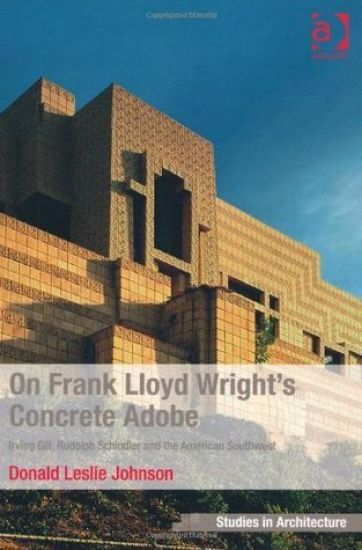
On Frank Lloyd Wright's Concrete Adobe
Donald Leslie Johnson
Ashgate Publishing Limited
2013
sidottu
During the years 1919 into 1925 Frank Lloyd Wright worked on four houses and a kindergarten located in metropolitan Los Angeles using concrete blocks as the main building material. The construction system has been described by Wright and others as ’uniquely molded’, ’woven like a textile fabric’ and perceived as ground breaking, truly modern, unprecedented. Many have attempted to uphold these claims while some thought the house-designs borrowed from old exotic buildings. For the first time this book brings together Wright’s declarations, the support of upholders and inferences in order to determine their accuracy and correctness, or the possibility of feigned or fictional stories. It examines technical developments of concrete blocks by Wright and others before his experiences in Los Angeles began in 1919. It also studies the manner of Wright’s design process by an examination of relevant pictorial and textual documents. A unique, in-depth and critical analysis of the houses is set within historical, biographical and theoretical contexts. Consequently, the book explains the impact upon Wright of California contemporaries, architects Irving Gill and Rudolph Schindler, and their instrumentally profound role upon the course of modernism 1907-1923. In doing so, it allows a full appreciation of Wright’s, Gill’s and Schindler’s buildings beyond their experiential qualities.



The Human Drama World History
Donald James Johnson; Jean Elliott Johnson
Markus Wiener Publishing Inc
2011
sidottu
The third volume in this highly acclaimed series examines world history from 1450 to the beginning of the twentieth century. It begins with an examination of the five newly forming "gunpowder empires" and develops the themes of industrialization and the formation of nation-states. The second half of the book covers Europe's growing global power and concludes on the eve of the twentieth century as Europe, the United States, and Japan develop and become fully modern nations.

The Human Drama World History
Donald James Johnson; Jean Elliott Johnson
Markus Wiener Publishing Inc
2011
nidottu
The third volume in this highly acclaimed series examines world history from 1450 to the beginning of the twentieth century. It begins with an examination of the five newly forming "gunpowder empires" and develops the themes of industrialization and the formation of nation-states. The second half of the book covers Europe's growing global power and concludes on the eve of the twentieth century as Europe, the United States, and Japan develop and become fully modern nations.

The Human Drama, Vol. IV
Donald James Johnson; Jean Elliott Johnson
Markus Wiener Publishers
2013
sidottu
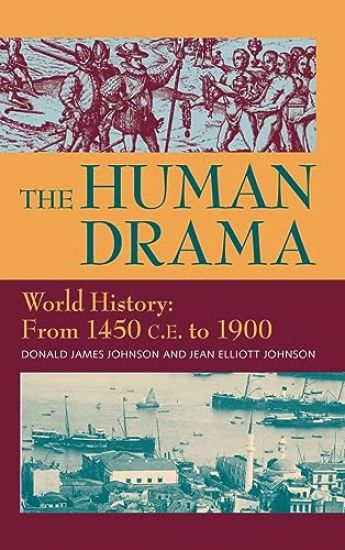
The Human Drama, Vol. III Order with a discount of 20%
Donald James Johnson; Jean Elliott Johnson
MARKUS WIENER PUBLISHERS
2011
sidottu
The third volume in this highly acclaimed series examines world history from 1450 to the beginning of the twentieth century. It begins with an examination of the five newly forming "gunpowder empires" and develops the themes of industrialization and the formation of nation-states. The second half of the book covers Europe's growing global power and concludes on the eve of the twentieth century as Europe, the United States, and Japan develop and become fully modern nations.
Makers of 20th-Century Modern Architecture
Donald Leslie Johnson; Donald Langmead
Routledge Member of the Taylor and Francis Group
1997
sidottu
Makers of 20th-Century Modern Architecture is an indispensable reference book for the scholar, student, architect or layman interested in the architects who initiated, developed, or advanced modern architecture. The book is amply illustrated and features the most prominent and influential people in 20th-century modernist architecture including Wright, Eisenman, Mies van der Rohe and Kahn. It describes the milieu in which they practiced their art and directs readers to information on the life and creative activities of these founding architects and their disciples. The profiles of individual architects include critical analysis of their major buildings and projects. Each profile is completed by a comprehensive bibliography.


Custodial Methods and Procedures Manual
Johnson Donald
Association of School Business Officials International
2003
nidottu

The Human Drama v. 2; World History from 500 C.E.to 1400 C.E.
Jean Elliott Johnson; Donald James Johnson
Markus Wiener Publishing Inc
2002
nidottu
The authors present the development of humankind across cultures and economies in a global manner, from ancient times on, as a gigantic drama played out with the cradles of civilization as the stage. The book highlights the exploits of daring traders, missionaries and warriors; poets, prophets and philosophers challenging lifestyles and beliefs; inventors and artists creating world wonders and practical tools; kings and queens founding and destroying empires; citizens and slaves building the foundations for democracies. Chronological events are supplemented by thematic ones, such as the development of cities and trade, the spread of religions and the idea of the law, the use of technology and art, migrations and invasions. The areas included in Volumes I and II are the Ancient and Medieval Middle East, Africa, Central Asia, India, China, Europe, as well as Meso-America. This introductory series to World History is already successfully used at America's highly competitive and challenging Hunter College High School in New York, as well as at other elite high schools and colleges.
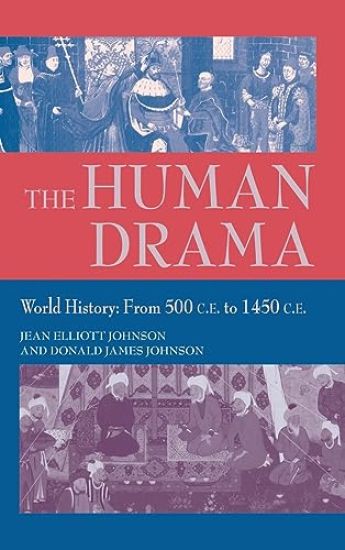
Thr Human Drama, Vol II
Jean Elliott Johnson; Donald James Johnson
MARKUS WIENER PUBLISHERS
2009
sidottu
The second volume of the series expands upon the concepts and foundations of the first, while introducing new ideas such as complex societies, the empire, and the interplay between cultures that began to take place as the world became more interconnected. The volume also continues the pattern of establishing major concepts as "Acts" and "setting the stage" for each major era of human history.
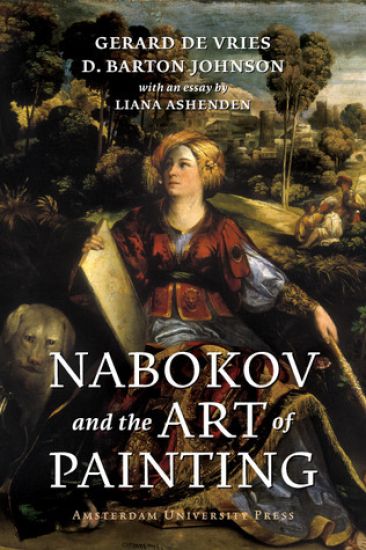
Nabokov and the Art of Painting
Gerard Vries; Donald Barton Johnson
Amsterdam University Press
2005
nidottu
Vladimir Nabokov was one of the greatest novelists of the previous century and his mastery of English and Russian prose is unequalled. Nabokov had originally trained to become a painter and shared Marc Chagall’s tutor in Paris. In Nabokov and the Art of Painting the authors demonstrate how the art of painting is interwoven with the narratives. His novels, which refer to over a hundred paintings, show a brilliance of colours and light and dark are in a permanent dialogue with each other. Following the introduction describing the many associations Nabokov made between the literary and visual arts, several of his novels are discussed in detail: Laughter in the Dark, The Real Life of Sebastian Knight, Pnin, Lolita, Pale Fire and Ada. Separate chapters are devoted to Leonardo da Vinci and Hieronymus Bosch, as Nabokov had a special appreciation for both painters. The authors show how the pictorial gave an extra depth to the great themes of love and loss in Nabokov’s work.

A linguistic analysis of the first official speeches in office of Boris Johnson and Donald Trump
Robert Cramer
GRIN Verlag
2020
nidottu

Donald Trump and the Illuminati
Titus Johnson
Createspace Independent Publishing Platform
2015
nidottu