From 19th-century trade agreements and treatments to 21st-century reparations, this volume tells the story of the federal agency that shapes and enforces U.S. policy toward Native Americans.Bureau of Indian Affairs tells the fascinating and important story of an agency that currently oversees U.S. policies affecting over 584 recognized tribes, over 326 federally reserved lands, and over 5 million Native American residents.Written by one of our foremost Native American scholars, this insider's view of the Bureau of Indian Affairs looks at the policies and the personalities that shaped its history, and by extension, nearly two centuries of government-tribal relations. Coverage includes the agency's forerunners and founding, the years of relocation and outright war, the movement to encourage Indian urbanization and assimilation, and the civil rights era surge of Indian activism. A concluding chapter looks at the modern BIA and its role in everything from land allotments and Indian boarding schools to tribal self-government, mineral rights, and the rise of the Indian gaming industry.
Distilling all of the most important content from Dr. Donald L. Resnick's highly esteemed, five-volume Diagnosis of Bone and Joint Disorders into a single, concise source, Bone and Joint Imaging, 4th Edition focuses on the specific, state-of-the-art musculoskeletal imaging and interpretation knowledge practitioners need today. This highly anticipated new edition has been fully revised from cover to cover for a remarkably thorough, yet focused and pragmatic, source of clinical guidance. Dr. Resnick’s carefully chosen editorial team, Drs. Jon A. Jacobson, Christine B. Chung, Mini N. Pathria (all former Resnick fellows) and Mark J. Kransdorf (co-author of the previous edition), are well-equipped to expertly address the many recent changes in musculoskeletal radiology since the previous edition. Authoritative, easy-to-read text and more than 3,800 exquisite images demonstrate every principle and capture the characteristic presentation of the wide range of disorders you’re most likely to encounter in everyday practice. Features a newly revised, streamlined organization with easy-to-digest sections on infection; trauma; osteoarticular, nerve, and muscle derangements; arthropathy; systemic diseases (metabolic, endocrine, hematologic, and connective tissue); tumors; interventional radiology; post-operative radiology; and pediatric imaging Provides more than 2,100 outstanding images (1,300 are new) that depict important concepts, techniques, and findings in musculoskeletal imaging Discusses the full range of diagnostic modalities, including advanced imaging methods and techniques and expanded content on MRI and ultrasound Covers key introductory material on basic science, diagnostic techniques, imaging, and interventional procedures A highly efficient review source for residency and radiology board examinations, as well as an indispensable reference for clinical practice An eBook version is included with purchase. The eBook allows you to access all of the text, figures and references, with the ability to search, customize your content, make notes and highlights, and have content read aloud
This issue of Dental Clinics of North America focuses on Evidence-based Pediatric Dentistry, and is edited by Dr. Donald Chi. Articles will include: Prenatal maternal factors, intergenerational transmission of disease, and child oral health outcomes; Evidence-based Medicaid policies and research use; Social determinants of children's oral health; Pediatric behavioral oral health interventions; Pediatric social oral health interventions; Pediatric workforce issues; Pediatric-focused interprofessional interventions; Acculturation and pediatric minority oral health interventions; Interventions focusing on children with special health care needs; Genetics and pediatric dental caries; Oral health interventions during pregnancy; Topical fluoride hesitancy, and more!
This book is a primer for debate about the fitness of the American political system as it moves toward the twenty-first century. It focuses on structural matters: the electoral process, the major institutions of the federal government and how they interact, and what we can do when they perform ineffectively or abuse their powers. Part 1 presents a
This book deals an essential aspect of crop management in identification of deficiencies of plant nutrients and their diagnostic methods. The book provides soil and tissue analysis standards critical in plant nutrition.
This book describes the positions advocated by ethicists and churches in the public debate on nuclear weapons. After tracing the development of just-war theory, the dominant moral position on war in Western thought, Dr. Davidson synthesizes the views of contemporary ethicists on the moral principles associated with the just-war tradition. He then documents the postures of Reinhold Niebuhr, Paul Ramsey, Michael Walzer, and James Turner Johnson with regard to the first use and retaliatory use of nuclear weapons, deterrence policy, the nuclear freeze proposal, the arms race, and disarmament. The positions endorsed by the Roman Catholic Church and the major Protestant and Jewish denominations in the United States on the issues of nuclear warfare are described in detail, with extensive treatment given to the development of the Catholic Bishops' 1983 pastoral letter on war and peace and the statements of churches affiliated with the National Council of Churches. The views of over 30 denominations, representing more than 110 million members, are considered. The final chapter of the book contrasts the stance of the churches with that of the Reagan Administration. Proposing guidelines for a moral defense policy in the nuclear age, Dr. Davidson's thesis is that national security requires a recognition of the need to protect and preserve values worth defending while simultaneously taking steps to prevent nuclear war.
Because of the long life of a coconut palm--sixty to eighty years--and the relatively wide spacing the plants require, every coconut grower faces the problem of how to manage the land beneath the palms. Many of the small-scale farmers who manage over 90 percent of the 6 million hectares of coconut palms in the world have learned that raising cattle or other livestock under the palms can be profitable, as well as an effective method of controlling weeds. This book reviews current knowledge on this productive farming system, drawing on research results and experiences of successful farmers. Well illustrated with photographs from producing areas, the book includes information on the management of both natural (unimproved) and improved pastures.
Whereas Freud himself viewed conscience as one of the functions of the superego, in The Still Small Voice: Psychoanalytic Reflections on Guilt and Conscience, the author argues that superego and conscience are distinct mental functions and that, therefore, a fourth mental structure, the conscience, needs to be added to the psychoanalytic structural theory of the mind. He claims that while both conscience and superego originate in the so-called pre-oedipal phase of infant and child development they are comprised of contrasting and often conflicting identifications. The primary object, still most often the mother, is inevitably experienced as, on the one hand, nurturing and soothing and, on the other, as frustrating and persecuting. Conscience is formed in identification with the nurturer; the superego in identification with the aggressor. There is a principle of reciprocity at work in the human psyche: for love received one seeks to return love; for hate, hate (the talion law).
This book is a primer for debate about the fitness of the American political system as it moves toward the twenty-first century. It focuses on structural matters: the electoral process and the major institutions of the federal government and how they interact.
This book presents information on three diagnostic methods, namely visual deficiency symptoms, soil analyses, and leaf tissue analyses, for mineral nutrient deficiencies, and their integrated use, for managing most of the important tropical and temperate crops.
This book describes the positions advocated by ethicists and churches in the public debate on nuclear weapons. It traces the development of just-war theory and synthesizes the views of contemporary ethicists on the moral principles associated with the just-war tradition. .
This book provides important insights into a form of economic development that utilizes existing natural resources to increase productivity of the land, and thereby improves incomes for the large number of people who own and manage coconut groves.
Government deficits, the spiraling imbalance of trade, inconsistencies in foreign policy, illegal immigration, unemployment, the decay of our cities, the abuse of the environment, the staggering cost of elections, and the piracy of special interest groups—these problems and a host of others have led thoughtful citizens to question whether our polit
Government deficits, the spiraling imbalance of trade, inconsistencies in foreign policy, illegal immigration, unemployment, the decay of our cities, the abuse of the environment, the staggering cost of elections, and the piracy of special interest groups—these problems and a host of others have led thoughtful citizens to question whether our polit
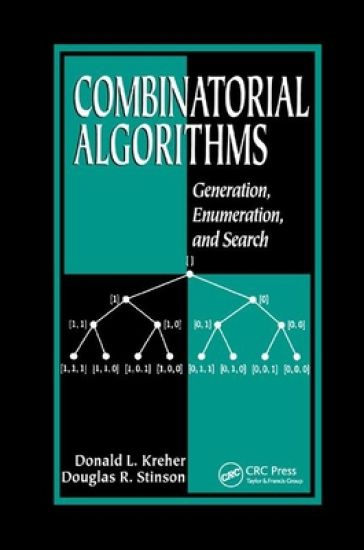
This textbook thoroughly outlines combinatorial algorithms for generation, enumeration, and search. Topics include backtracking and heuristic search methods applied to various combinatorial structures, such as:Combinations Permutations Graphs Designs Many classical areas are covered as well as new research topics not included in most existing texts, such as: Group algorithms Graph isomorphism Hill-climbing Heuristic search algorithms This work serves as an exceptional textbook for a modern course in combinatorial algorithms, providing a unified and focused collection of recent topics of interest in the area. The authors, synthesizing material that can only be found scattered through many different sources, introduce the most important combinatorial algorithmic techniques - thus creating an accessible, comprehensive text that students of mathematics, electrical engineering, and computer science can understand without needing a prior course on combinatorics.
Selected by Library Journal as one of the hundred best books in science and technology for 1985. This book is an outgrowth of a series of articles that appeared in the Philadelphia Inquirer in November 1983. For eighteen months, the authors traveled some 20,000 miles, interviewing dozens of people and assembling more than 125,000 pages of documents. These included local, state, and federal government reports, state and federal court records, corporate files, congressional hearing transcripts, scientific studies, and internal memoranda of public agencies and private businesses. The resulting newspaper series provoked a much broader reaction than we had anticipated. In response to requests for copies of the articles, more than 25,000 reprints were sent to individuals and organizations in more than forty states and several foreign countries. Many of those who wrote urged the authors to expand the newspaper series into a book. In doing so, they updated the material and added new information, including sections on military waste, foreign reprocessing, and uranium mill tailings. We were tempted to delve into other areas, such as the design and construction of reactors and the economics of nuclear power. But we focused instead on waste—the amount produced, past efforts to manage it, and the politics of its disposal.
Drawing on every theme of the modern life sciences, Donald Nathanson shows how nine basic affects—interest-excitement, enjoyment-joy, surprise-startle, fear-terror, distress-anguish, anger-rage, dissmell, disgust, and shame-humiliation—not only determine how we feel but shape our very sense of self. For too long those who explain emotional discomfort on the basis of lived experience and those who blame chemistry have been at loggerheads. As Dr. Nathanson shows, chemicals and illnesses can affect our mood just as surely as an uncomfortable memory or a stern rebuke. Linking for the first time the affect theory of the pioneering researcher Silvan S. Thomkins with the entire world of biology, medicine, psychology, psychotherapy, religion, and the social sciences, Dr. Nathanson presents a completely new understanding of all emotion.
Howard Hughes has always fascinated the public with his mixture of secrecy, dashing lifestyle, and reclusiveness. This is the book that breaks through the image to get at the man. Originally published under the title Empire: The Life, Legend, and Madness of Howard Hughes.
In all fields of science today, data are collected and theories are developed and published faster than scientists can keep up with, let alone thoroughly digest. In ecology the fact that practitioners tend to be divided between such subdisciplines as aquatic and terrestrial ecology, as well as between popula tion, community, and ecosystem ecology, makes it even harder for them to keep up with all relevant research. Ecologists specializing in one sub discipline are not always aware of progress in another subdiscipline that relates to their own. Syntheses are frequently needed that pull together large bodies of information and organize them in ways that makes them more coherent, and thus more understandable. I have tried to perform this task of integration for the subject area that encompasses the interrelationships between the dynamics of ecological food webs and the cycling of nutrients. I believe this area cuts across many of the subdisciplines of ecology and is pivotal to our progress in understanding ecosystems and in dealing with human impacts on the environment. Many current ecological problems involve human disturbances of both food webs and the nutrients that cycle through them. Little progress can be made towards elucidating the complex feedback relations inherent in the study of nutrient cycles in ecological systems without the tools of mathematics and computer modelling. These tools are therefore liberally used throughout the book.
The parasitic Hymenoptera are a highly successful and important group of insects comprising probably over a million species. Despite the vast amount of research that has been carried out on the group over the last 100 years or so, there are still many unexplained aspects of their biology. In recent years interest in the parasitic Hymenoptera has grown as a result of the increasing demand for biological methods for pest control and their possible use as natural enemies. Parasitic wasps are also tremendously important in research on pollution dynamics and on host-parasite interactions. In this unique volume Donald Quicke provides an up-to-date review of the biology of parasitic wasps which focuses primarily on genetics, developmental biology, physiology, anatomy and molecular biology, though many aspects of behaviour and ecology are also covered. Attention is drawn to the importance of both life history strategy an phylogeny to many features of parasitic wasp biology, and exciting new areas of research are highlighted. Parasitic Wasps provides an extensive guide to the relevant literature. The book will prove invaluable to researchers working on this group and to those with broader interests in entomology, physiology, behaviour, ecology and pest control.