Kirjojen hintavertailu. Mukana 11 627 373 kirjaa ja 12 kauppaa.

Kirjahaku

Etsi kirjoja tekijän nimen, kirjan nimen tai ISBN:n perusteella.

1000 tulosta hakusanalla Douglas A Joseph

Compassion: A Reflection on the Christian Life

Compassion: A Reflection on the Christian Life

Henri J. M. Nouwen; Donald P. McNeill; Douglas A. Morrison

Image
2006
nidottu
In this provocative essay on that least understood virtue, compassion, the authors challenge themselves and us with these questions: Where do we place compassion in our lives? Is it enough to live a life in which we hurt one another as little as possible? Is our guiding ideal a life of maximum pleasure and minimum pain? Compassion answers no. After years of study and discussion among themselves, with other religious, and with men and women at the very center of national politics, the authors look at compassion with a vigorous new perspective. They place compassion at the heart of a Christian life in a world governed far too long by principles of power and destructive control. Compassion, no longer merely an eraser of human mistakes, is a force of prayer and action -- the expression of God's love for us and our love for God and one another. Compassion is a book that says no to a compassion of guilt and failure and yes to a compassionate love that pervades our spirit and moves us to action. Henri Nouwen, Donald McNeill, and Douglas Morrison have written a moving document on what it means to be a Christian in a difficult time.
A Guide to the Wildflowers of South Carolina

A Guide to the Wildflowers of South Carolina

Patrick D. McMillan; Richard Dwight Porcher Jr.; Douglas A. Rayner; David B. White

UNIVERSITY OF SOUTH CAROLINA PRESS
2022
sidottu
From its summits to its shores, South Carolina brims with life and unparalleled beauty thanks to its abundant array of native and naturalized flora, all carefully documented in this revised and expanded edition of A Guide to the Wildflowers of South Carolina. Dramatic advances in plant taxonomy and ecology have occurred since the guide's publication 20 years ago; new species have been discovered while others struggle to survive in the face of vanishing habitats and climate change.The authors, all experienced botanists, offer essays on carnivorous plants, native orchids, Carolina bays, the roles and effects of fire and agriculture on the landscape, and detailed descriptions of the plant communities throughout the state's major natural regions. This expanded edition catalogs nearly 1,000 species organized by habitat, with descriptions, color photographs, range maps, and comments on pharmacological uses, suitability for garden cultivation, origin of common and scientific names, and conservation status.
A Guide to the Wildflowers of South Carolina

A Guide to the Wildflowers of South Carolina

Patrick D. McMillan; Richard Dwight Porcher Jr.; Douglas A. Rayner; David B. White

UNIVERSITY OF SOUTH CAROLINA PRESS
2022
pokkari
From its summits to its shores, South Carolina brims with life and unparalleled beauty thanks to its abundant array of native and naturalized flora, all carefully documented in this revised and expanded edition of A Guide to the Wildflowers of South Carolina. Dramatic advances in plant taxonomy and ecology have occurred since the guide's publication 20 years ago; new species have been discovered while others struggle to survive in the face of vanishing habitats and climate change.The authors, all experienced botanists, offer essays on carnivorous plants, native orchids, Carolina bays, the roles and effects of fire and agriculture on the landscape, and detailed descriptions of the plant communities throughout the state's major natural regions. This expanded edition catalogs nearly 1,000 species organized by habitat, with descriptions, color photographs, range maps, and comments on pharmacological uses, suitability for garden cultivation, origin of common and scientific names, and conservation status.
The Meaning of the Bible

The Meaning of the Bible

Douglas A. Knight

HarperOne
2012
nidottu
The finest introduction to the Hebrew Scriptures available anywhere is at your fingertips in "The Meaning of the Bible." Preeminent biblical scholars Douglas A. Knight and Amy-Jill Levine deliver the fullest introduction to the Old Testament--also known as the Tanakh or Hebrew Bible--ever, offering a wealth of highly readable historical background and social context, plus an examination of the meaning and aesthetic value of the sacred literature at the heart of Judaism and Christianity. John Shelby Spong, author of "Re-Claiming the Bible for a Non-Religious World "writes, "Amy-Jill Levine and Douglas A. Knight have combined to write a book on the Bible that is as academically brilliant as it is marvelously entertaining. By placing our scriptures into their original Jewish context they have opened up startling and profound new insights. This is a terrific book."
Edwards the Exegete

Edwards the Exegete

Douglas A. Sweeney

Oxford University Press Inc
2018
nidottu
Scholars have long recognized that Jonathan Edwards loved the Bible, but preoccupation with his roles in Western "public" life and letters has eclipsed the significance of his biblical exegesis. In Edwards the Exegete, Douglas A. Sweeney fills this lacuna, exploring Edwards' exegesis and its significance for Christian thought and intellectual history. As Sweeney shows, throughout Edwards' life the lion's share of his time was spent wrestling with the words of holy writ. After reconstructing Edwards' lost exegetical world and describing his place within it, Sweeney summarizes his four main approaches to the Bible-canonical, Christological, redemptive-historical, and pedagogical-and analyzes his work on selected biblical themes that illustrate these four approaches, focusing on material emblematic of Edwards' larger interests as a scholar. Sweeney compares Edwards' work to that of his most frequent interlocutors and places it in the context of the history of exegesis, challenging commonly held notions about the state of Christianity in the age of the Enlightenment. Edwards the Exegete offers a novel guide to the theologian's exegetical work, clearing a path that other specialists are sure to follow. Sweeney's significant reassessment of Edwards' place in the Enlightenment makes a major contribution to Edwards studies, eighteenth-century studies, the history of exegesis, the theological interpretation of Scripture, and homiletics.
Nathaniel Taylor, New Haven Theology, and the Legacy of Jonathan Edwards
Nathaniel Taylor was arguably the most influential and the most frequently misrepresented American theologian of his generation. While he claimed to be an Edwardsian Calvinist, very few people believed him. This book attempts to understand how Taylor and his associates could have counted themselves Edwardsians. In the process, it explores what it meant to be an Edwardsian minister and intellectual in the 19th century.
With God on All Sides

With God on All Sides

Douglas A. Hicks

Oxford University Press Inc
2010
nidottu
Perhaps no other nation is or has ever been as religiously diverse as the United States. For elected officials, school principals, corporate leaders, and many others, this diversity poses unique challenges. Leaders bring their own faiths to public life, and they daily encounter followers of similar and different faiths. Good leadership must draw together people from varied backgrounds in order to achieve something in common. This is no simple task. How should leaders deal with menorahs and crosses, veils and turbans, prayers and holidays? How do they and their followers turn the cacophony of beliefs and practices into a kind of citizenship worthy of the American tradition of religious freedom? How can they honor the religious convictions of all Americans? In With God on All Sides, Douglas A. Hicks provides a roadmap for leaders as they traverse the post-9/11 landscape. Although the devout possess moral and spiritual resources that can enrich civic life, leaders must also be prepared to cope with nearly inevitable conflicts between people of different faiths. Yet wise leaders can find ways to transform the problem of diversity into an opportunity. Drawing on their moral and spiritual resources, Americans of all creeds have the capacity to enhance the quality of our civic debate. Their faith-based practices create occasions for mutual learning. Hicks tells the stories of how diverse Americans have transformed public controversies into cases of cooperation. The key to good leadership, Hicks writes, is to engage one another across lines of difference with a spirit of humility, build communication and trust, and offer an inclusive vision that is true to America's principles. Based on years of research and practical experience, With God on All Sides provides an invaluable and thought-provoking guide to leadership--and citizenship--in our devout and diverse nation.
Edwards the Exegete

Edwards the Exegete

Douglas A. Sweeney

Oxford University Press Inc
2015
sidottu
Scholars have long recognized that Jonathan Edwards loved the Bible. But preoccupation with his roles in Western "public" life and letters has led to a failure to see the significance of his biblical exegesis. The lion's share of his time during every week of his life was spent wrestling with the words of holy writ. In Edwards the Exegete, Douglas A. Sweeney fills this lacuna by exploring his exegesis and its significance for Christian thought and intellectual history. After reconstructing Edwards' lost exegetical world and describing his place within it, Sweeney summarizes his four main approaches to the Bible (canonical, Christological, redemptive-historical, and pedagogical) and analyzes his work on selected biblical themes that illustrate these four approaches-focusing on material that is emblematic of Edwards' larger interests as a scholar. Sweeney compares his work to that of his most frequent interlocutors and places it in the context of the history of exegesis, challenging preconceived notions about the state of Christianity in the age of the Enlightenment. In doing so, Sweeney offers others a helpful guide to Edwards' exegetical work and clears a path for later specialists to follow. This book makes a major contribution to Edwards studies, eighteenth-century studies, the history of exegesis, the theological interpretation of Scripture, and homiletics.
Clashing over Commerce

Clashing over Commerce

Douglas A. Irwin

University of Chicago Press
2017
sidottu
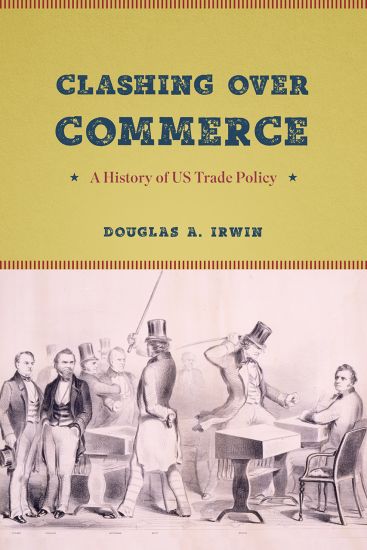
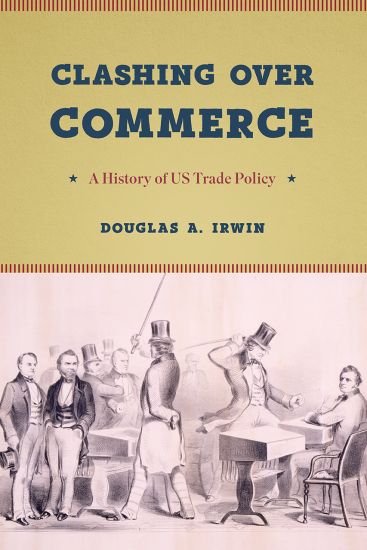
Should the United States be open to commerce with other countries, or should it protect domestic industries from foreign competition? This question has been the source of bitter political conflict throughout American history. Such conflict was inevitable, James Madison argued in The Federalist Papers, because trade policy involves clashing economic interests. The struggle between the winners and losers from trade has always been fierce because dollars and jobs are at stake: depending on what policy is chosen, some industries, farmers, and workers will prosper, while others will suffer. Douglas A. Irwin's Clashing over Commerce is the most authoritative and comprehensive history of US trade policy to date, offering a clear picture of the various economic and political forces that have shaped it. From the start, trade policy divided the nation first when Thomas Jefferson declare an embargo on all foreign trade and then when South Carolina threatened to secede from the Union over excessive taxes on imports. The Civil War saw a shift toward protectionism, which then came under constant political attack. Then, controversy over the Smoot-Hawley tariff during the Great Depression led to a policy shift toward freer trade, involving trade agreements that eventually produced the World Trade Organization. Irwin makes sense of this turbulent history by showing how different economic interests tend to be grouped geographically, meaning that every proposed policy change found ready champions and opponents in Congress. As the Trump administration considers making major changes to US trade policy, Irwin's sweeping historical perspective helps illuminate the current debate. Deeply researched and rich with insight and detail, Clashing over Commerce provides valuable and enduring insights into US trade policy past and present.
Clashing Over Commerce

Clashing Over Commerce

Douglas A. Irwin

University of Chicago Press
2019
pokkari
Should the United States be open to commerce with other countries, or should it protect domestic industries from foreign competition? This question has been the source of bitter political conflict throughout American history. Such conflict was inevitable, James Madison argued in The Federalist Papers, because trade policy involves clashing economic interests. The struggle between the winners and losers from trade has always been fierce because dollars and jobs are at stake: depending on what policy is chosen, some industries, farmers, and workers will prosper, while others will suffer. Douglas A. Irwin's Clashing over Commerce is the most authoritative and comprehensive history of US trade policy to date, offering a clear picture of the various economic and political forces that have shaped it. From the start, trade policy divided the nation--first when Thomas Jefferson declared an embargo on all foreign trade and then when South Carolina threatened to secede from the Union over excessive taxes on imports. The Civil War saw a shift toward protectionism, which then came under constant political attack. Then, controversy over the Smoot-Hawley tariff during the Great Depression led to a policy shift toward freer trade, involving trade agreements that eventually produced the World Trade Organization. Irwin makes sense of this turbulent history by showing how different economic interests tend to be grouped geographically, meaning that every proposed policy change found ready champions and opponents in Congress. As the Trump administration considers making major changes to US trade policy, Irwin's sweeping historical perspective helps illuminate the current debate. Deeply researched and rich with insight and detail, Clashing over Commerce provides valuable and enduring insights into US trade policy past and present.
Pragmatics of Democracy

Pragmatics of Democracy

Douglas A. Jones

THE UNIVERSITY OF CHICAGO PRESS
2025
sidottu
This study argues early African American literature constitutes an abiding repository of modern democratic thought that is lacking in the political philosophy we normally analyze. Douglas A. Jones’s Pragmatics of Democracy reads African American literature, from its beginnings through the mid-nineteenth century, to theorize how persons come to regard democracy as the most excellent form of political life. Jones notes that the aims of democracy, especially consent of the governed and equality under the law, can seem like tenets of governance that humans desire instinctively. But human nature does not correlate absolutely to politics. Jones argues that political selfhood is formed by “bodily events.” He proposes a typology of such experiences that dispose persons toward democratic subjectivity: ecstasy, impersonality, violence, respectability, and care. African American literature before Emancipation reveals the democratic features of these categories that conventional political philosophy ignores or obscures. Given their lives as enslaved persons or the descendants of enslaved persons, early black writers crafted narratives about achieving democratic subjectivity that were missing in other Anglo-American canons. Pragmatics of Democracy discusses the works of well-known figures such as Phillis Wheatley, Harriet E. Wilson, and Frederick Douglass as well as those of more neglected writers such as Richard Allen, Peter Paul Simmons, James McCune Smith, and Frank J. Webb.
Pragmatics of Democracy

Pragmatics of Democracy

Douglas A. Jones

THE UNIVERSITY OF CHICAGO PRESS
2025
nidottu
This study argues early African American literature constitutes an abiding repository of modern democratic thought that is lacking in the political philosophy we normally analyze. Douglas A. Jones’s Pragmatics of Democracy reads African American literature, from its beginnings through the mid-nineteenth century, to theorize how persons come to regard democracy as the most excellent form of political life. Jones notes that the aims of democracy, especially consent of the governed and equality under the law, can seem like tenets of governance that humans desire instinctively. But human nature does not correlate absolutely to politics. Jones argues that political selfhood is formed by “bodily events.” He proposes a typology of such experiences that dispose persons toward democratic subjectivity: ecstasy, impersonality, violence, respectability, and care. African American literature before Emancipation reveals the democratic features of these categories that conventional political philosophy ignores or obscures. Given their lives as enslaved persons or the descendants of enslaved persons, early black writers crafted narratives about achieving democratic subjectivity that were missing in other Anglo-American canons. Pragmatics of Democracy discusses the works of well-known figures such as Phillis Wheatley, Harriet E. Wilson, and Frederick Douglass as well as those of more neglected writers such as Richard Allen, Peter Paul Simmons, James McCune Smith, and Frank J. Webb.
An Innocent World

An Innocent World

Douglas A King

Tellwell Talent
2020
sidottu
SECOND EDITIONWhat would our world be like if Adam and Eve had NOT eaten the fruit of the Tree of the Knowledge of Good and Evil?And it all began with answering a question that has been literally staring us in the face for the past 3,000 years: Why was the Tree of Life, the Tree that gives immortal life, in the Garden of Eden, if Adam and Eve were already immortal?Using logic, Douglas A. King has envisioned a world that is so different from our own that the inhabitants don't even look like us; they look like the classic space alien, but immortal, where no one harms anyone. This is a world we should all aspire to.
An Innocent World

An Innocent World

Douglas A King

Tellwell Talent
2020
pokkari
SECOND EDITIONWhat would our world be like if Adam and Eve had NOT eaten the fruit of the Tree of the Knowledge of Good and Evil?And it all began with answering a question that has been literally staring us in the face for the past 3,000 years: Why was the Tree of Life, the Tree that gives immortal life, in the Garden of Eden, if Adam and Eve were already immortal?Using logic, Douglas A. King has envisioned a world that is so different from our own that the inhabitants don't even look like us; they look like the classic space alien, but immortal, where no one harms anyone. This is a world we should all aspire to.
Reforming Democracies

Reforming Democracies

Douglas A. Chalmers

Columbia University Press
2013
sidottu
Even well-established democracies need reform, and any successful effort to reform democracies must look beyond conventional institutions-elections, political parties, special interests, legislatures and their relations with chief executives-to do so. Expanding a traditional vision of the institutions of representative democracy, Douglas A. Chalmers examines six aspects of political practice relating to the people being represented, the structure of those who make law and policy, and the links between those structures and the people. Chalmers concludes with a discussion of where successful reform needs to take place: we must pay attention to a democratic ordering of the constant reconfiguration of decision making patterns; we must recognize the crucial role of information in deliberation; and we must incorporate noncitizens and foreigners into the political system, even when they are not the principal beneficiaries.
Reforming Democracies

Reforming Democracies

Douglas A. Chalmers

Columbia University Press
2014
pokkari
Even well-established democracies need reform, and any successful effort to reform democracies must look beyond conventional institutions-elections, political parties, special interests, legislatures and their relations with chief executives-to do so. Expanding a traditional vision of the institutions of representative democracy, Douglas A. Chalmers examines six aspects of political practice relating to the people being represented, the structure of those who make law and policy, and the links between those structures and the people. Chalmers concludes with a discussion of where successful reform needs to take place: we must pay attention to a democratic ordering of the constant reconfiguration of decision making patterns; we must recognize the crucial role of information in deliberation; and we must incorporate noncitizens and foreigners into the political system, even when they are not the principal beneficiaries.
IN Writing

IN Writing

Douglas A. Wissing; Barbara Shoup; Lee H. Hamilton; Dan Wakefield

Indiana University Press
2016
pokkari
Fueled by an insider's view of Indiana and the state's often surprising connections to the larger world, IN Writing is revelatory. It is Indiana in all its glory: sacred and profane; saints and sinners; war and peace; small towns and big cities; art, architecture, poetry and victuals. It's about Hoosier talent and Hoosier genius: the courageous farmer-soldiers who ardently try to win the hearts and minds of 21st century Afghan insurgents; the artisans whose work pulses with the aesthetics of far-away homelands; and the famous modernist poet who had to leave to make his mark. It's about places that speak to a wider world: Columbus and its remarkable architecture; New Harmony and its enduring idealism; Indianapolis and its world-renowned Crown Hill cemetery. IN Writing makes visible the unexpected bonds between Indiana and the world at large.