Kirjojen hintavertailu. Mukana 11 627 425 kirjaa ja 12 kauppaa.

Kirjahaku

Etsi kirjoja tekijän nimen, kirjan nimen tai ISBN:n perusteella.

1000 tulosta hakusanalla Douglas Robinson

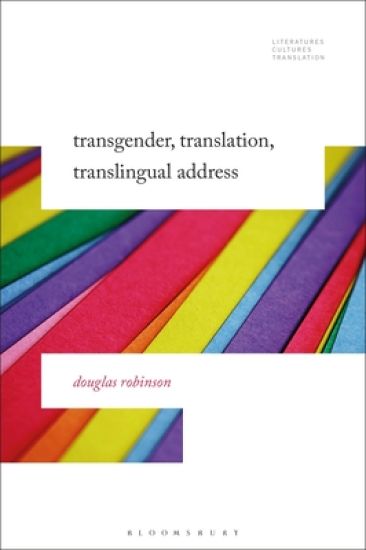
Transgender, Translation, Translingual Address

Transgender, Translation, Translingual Address

Douglas Robinson

Bloomsbury Academic USA
2020
nidottu
Finalist for the 2020 Prose Awards (Language and Linguistics Category)The emergence of transgender communities into the public eye over the past few decades has brought some new understanding, but also renewed outbreaks of violent backlash. In Transgender, Translation, Translingual Address Douglas Robinson seeks to understand the “translational” or “translingual” dialogues between cisgendered and transgendered people. Drawing on a wide range of LGBT scholars, philosophers, sociologists, sexologists, and literary voices, Robinson sets up cis-trans dialogues on such issues as “being born in the wrong body,” binary vs. anti-binary sex/gender identities, and the nature of transition and transformation. Prominent voices in the book include Kate Bornstein, C. Jacob Hale, and Sassafras Lowrey.The theory of translation mobilized in the book is not the traditional equivalence-based one, but Callon and Latour’s sociology of translation as “speaking for someone else,” which grounds the study of translation in social pressures to conform to group norms. In addition, however, Robinson translates a series of passages from Finnish trans novels into English, and explores the “translingual address” that emerges when those English translations are put into dialogue with cis and trans scholars.
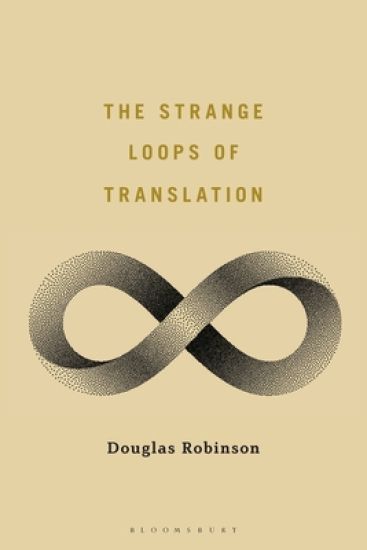
The Strange Loops of Translation

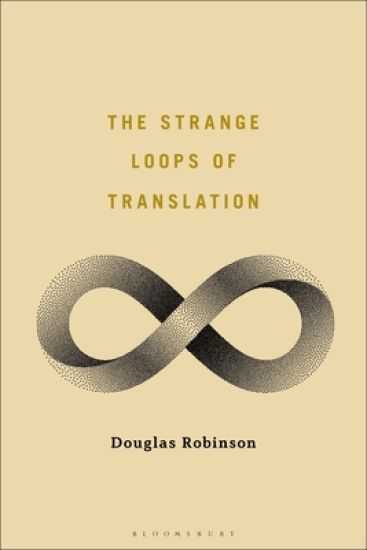
The Strange Loops of Translation

Douglas Robinson

Bloomsbury Academic USA
2022
sidottu
One of the most exciting theories to emerge from cognitive science research over the past few decades has been Douglas Hofstadter’s notion of “strange loops,” from Gödel, Escher, Bach (1979). Hofstadter is also an active literary translator who has written about translation, perhaps most notably in his 1997 book Le Ton Beau de Marot, where he draws on his cognitive science research. And yet he has never considered the possibility that translation might itself be a strange loop.In this book Douglas Robinson puts Hofstadter’s strange-loops theory into dialogue with a series of definitive theories of translation, in the process showing just how cognitively and affectively complex an activity translation actually is.
The Strange Loops of Translation

The Strange Loops of Translation

Douglas Robinson

BLOOMSBURY PUBLISHING PLC
2023
nidottu
One of the most exciting theories to emerge from cognitive science research over the past few decades has been Douglas Hofstadter’s notion of “strange loops,” from Gödel, Escher, Bach (1979). Hofstadter is also an active literary translator who has written about translation, perhaps most notably in his 1997 book Le Ton Beau de Marot, where he draws on his cognitive science research. And yet he has never considered the possibility that translation might itself be a strange loop.In this book Douglas Robinson puts Hofstadter’s strange-loops theory into dialogue with a series of definitive theories of translation, in the process showing just how cognitively and affectively complex an activity translation actually is.
Rites of Passage

Rites of Passage

Douglas Robinson

Silently Publishing
2013
nidottu
Thomas, exposed once to Majken's blood during her fight with John to save his life, is becoming vampyric. Soon the symptoms are so bad he is unable to deny he is changing. As his na ve but brilliant sister Kimberly unearths what happened to him in Trenton, Jeanine, a young vampyric girl across the country, flees with the seven-year-old daughter of a blood cult leader to save her life; Nolan wishes to sacrifice his own daughter. Yet dangers abide in the darkness where Thomas is unaware. Once Thomas is entrapped with Jeanine and Alecia, Majken must pursue him into darkness itself to save him from the deadly blood cult leader.
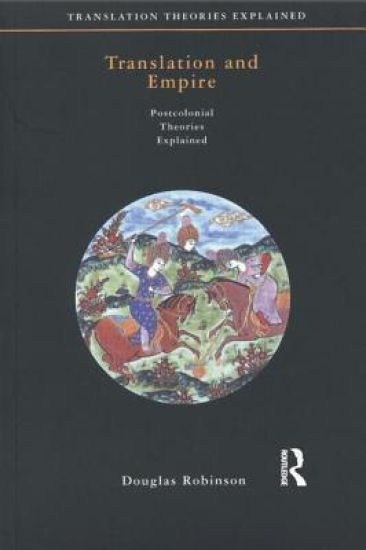
Translation and Empire

Translation and Empire

Douglas Robinson

St Jerome Publishing
1997
nidottu
Arising from cultural anthropology in the late 1980s and early 1990s, postcolonial translation theory is based on the observation that translation has often served as an important channel of empire. Douglas Robinson begins with a general presentation of postcolonial theory, examines current theories of the power differentials that control what gets translated and how, and traces the historical development of postcolonial thought about translation. He also explores the negative and positive impact of translation in the postcolonial context, reviewing various critiques of postcolonial translation theory and providing a glossary of key words. The result is a clear and useful guide to some of the most complex and critical issues in contemporary translation studies.
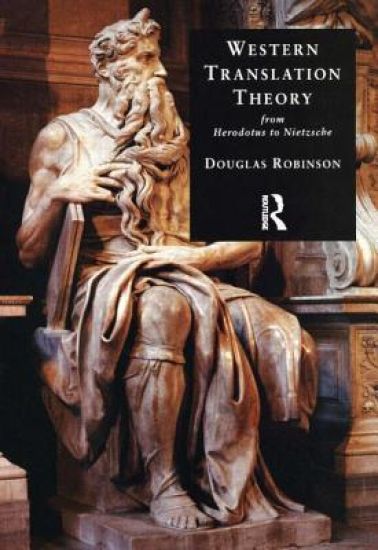
Western Translation Theory from Herodotus to Nietzsche

Western Translation Theory from Herodotus to Nietzsche

Douglas Robinson

St Jerome Publishing
2002
nidottu
Douglas Robinson offers the most comprehensive collection of translation theory readings available to date, from the Histories of Herodotus in the mid-fifth century before our era to the end of the nineteenth century. The result is a startling panoply of thinking about translation across the centuries, covering such topics as the best type of translator, problems of translating sacred texts, translation and language teaching, translation as rhetoric, translation and empire, and translation and gender.This pioneering anthology contains 124 texts by 90 authors, 9 of them women. Sixteen texts by 4 authors appear here for the first time in English translation; 17 texts by 9 authors appear in completely new translations. Every entry is provided with a bibliographical headnote and footnotes.Intended for classroom use in History of Translation Theory, History of Rhetoric or History of Western Thought courses, this anthology will also prove useful to scholars of translation and those interested in the intellectual history of the West.
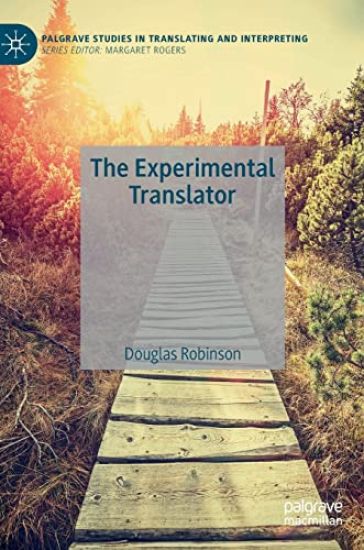
The Experimental Translator

The Experimental Translator

Douglas Robinson

Springer International Publishing AG
2023
sidottu
This book celebrates experimental translation, taking a series of exploratory looks at the hypercyborg translator, the collage translator, the smuggler translator, and the heteronymous translator. The idea isn’t to legislate traditional translations out of existence, or to “win” some kind of literary competition with the source text, but an exuberant participation in literary creativity. Turns out there are other things you can do with a great written work, and there is considerable pleasure to be had from both the doing and the reading of such things. This book will be of interest to literary translation studies researchers, as well as scholars and practitioners of experimental creative writing and avant-garde art, postgraduate translation students and professional (literary) translators.
The Experimental Translator

The Experimental Translator

Douglas Robinson

Springer International Publishing AG
2024
nidottu
This book celebrates experimental translation, taking a series of exploratory looks at the hypercyborg translator, the collage translator, the smuggler translator, and the heteronymous translator. The idea isn’t to legislate traditional translations out of existence, or to “win” some kind of literary competition with the source text, but an exuberant participation in literary creativity. Turns out there are other things you can do with a great written work, and there is considerable pleasure to be had from both the doing and the reading of such things. This book will be of interest to literary translation studies researchers, as well as scholars and practitioners of experimental creative writing and avant-garde art, postgraduate translation students and professional (literary) translators.
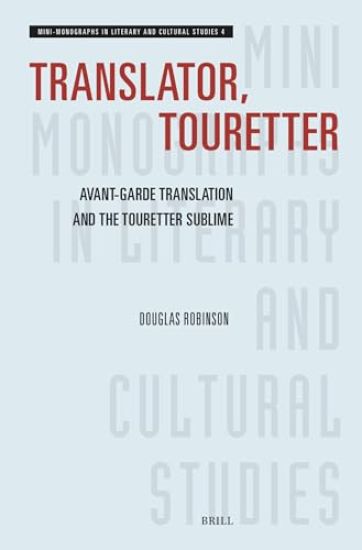
Translator, Touretter: Avant-Garde Translation and the Touretter Sublime
Experimental translation has been surging in popularity recently--with avant-garde translation at the combative forefront. But how to do it? How to read it? Translator, Touretter plays on the Italian dictum traduttore, traditore--"translator, traitor"--to mobilize the affective intensity of Tourettic tics as a practical guide to making and reading avant-garde translations. It smashes the theoretical literature on the sublime from Longinus to Kant into Motherless Brooklyn, both the 1999 novel by Jonathan Lethem and its 2019 screen adaptation by Edward Norton, in order to generate out of their collision a series of models--visual, aural/oral, and kinesthetic--for avant-garde literary translation.
Aleksis Kivi and/as World Literature
Aleksis Kivi (1834-1872) is Finland’s greatest writer. His great 1870 novel The Brothers Seven has been translated 59 times into 34 languages. Is he world literature, or not? In Aleksis Kivi and/as World Literature Douglas Robinson uses this question as a wedge for exploring the nature and nurture of world literature, and the contributions made by translators to it. Drawing on Deleuze and Guattari’s notion of major and minor literature, Robinson argues that translators have mainly “majoritized” Kivi—translated him respectfully—and so created images of literary tourism that ill suit recognition as world literature. Far better, he insists, is the impulse to minoritize—to find and celebrate the minor writer in Kivi, who “sends the major language racing.”
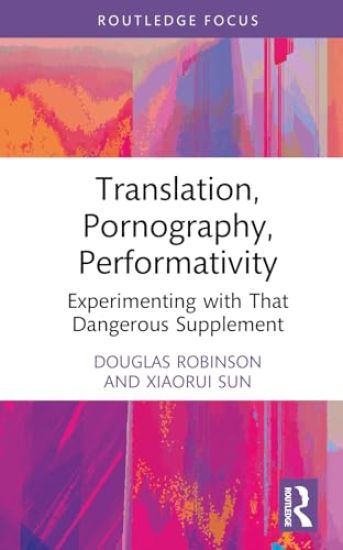
Translation, Pornography, Performativity

Translation, Pornography, Performativity

Douglas Robinson; Xiaorui Sun

TAYLOR FRANCIS LTD
2025
sidottu
Robinson and Sun’s book goes in search of the neglected metaphorics of translation in pornography using poststructuralist rethinkings and reframings of porn (and masturbation) from Jacques Derrida to Judith Butler.In his 1684 “Essay on Translated Verse,” the Earl of Roscommon attacked “want of decency” in translation metaphorically by comparing it to picking up prostitutes in the park (“raking the park for stews”) instead of hanging out with “troops of faultless nymphs.” Sex work, and the graphic representation of sex work that Nathaniel Butler was the first to call “pornography” in print in 1638, is used as a metaphor for non-normative translation, which in Robinson and Sun’s hands becomes experimental translation.En route to that goal, the authors take us through Butler on performativity and resistance, Derrida on supplementarity and iterability, and Haun Saussy’s innovative application of Derridean citationality to the use of a target-cultural “sponsor” or “bondsman” for translation. They take detours through Charles Baudelaire’s “Une charogne” and J.G. Ballard’s “The Drowned Giant.”They deal with the performativity of pornography (and translatography) in Part I, the “unnatural” iterability of masturbation (and translation) in Part II, and experimental translation in Part III.The theory-littered path this book takes through the metaphorics of translation will be of interest to scholars and students of translation studies, especially experimental translation and translation theory, but also media scholars interested in the philosophical complexities of performativity.