Sometime after being released from prison, Frank invests in stocks subsequent to the Panic of 1873, and becomes a millionaire again. He decides to move out of Philadelphia and start a new life in the West. He moves to Chicago with Aileen and his attorney is finally able to persuade Lillian to agree to a divorce. Frank decides to take over the street-railway system. He bankrupts several opponents with the help of John J. McKenty and other political allies. Meanwhile, Chicago society finds out about his past in Philadelphia and the couple are no longer invited to dinner parties; after a while, the press turns on him too.
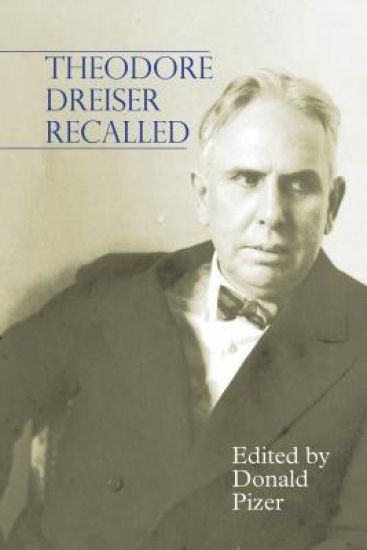
Theodore Dreiser (1871–1946) has long been recognized as a pivotal figure in twentieth-century American literary and cultural history. His fiction played (and still plays) a major role in the vigorous debate over the relationship of art to social reality and political purpose, and his complex and compelling personality has always attracted much attention. From about 1912–15 to his death he was often considered the greatest American writer of the period. Theodore Dreiser Recalled collects for the first time commentary on this literary giant by those of his own time who knew him well. The book includes seventy-six recollections by friends, lovers, and literary associates, ranging in time of publication from 1912 to 1995. Presented with both expert and general readers in mind, the book not only clarifies and extends our knowledge of many aspects of Dreiser’s life and career but also makes excellent reading. In their various ways—from H. L. Mencken’s acerbic accounts of their friendship to one of Edgar Lee Masters’s most powerful poems to Kirah Markham’s bittersweet memories of their affair and to Esther McCoy’s compelling narrative of Dreiser’s death—the recollections demonstrate Dreiser’s ability to move others to recall him not only in full detail but with panache.
This book brings together for the first time, and in one convenient volume, published and unpublished memoirs about the American novelist Theodore Dreiser. The recollections of Dreiser's contemporaries bring to the fore the writer's politics, personal life, and literary reception. Donald Pizer is one of the world's leading scholars of Dreiser and of naturalism.
Sister Carrie (1900) is a novel by Theodore Dreiser about a young country girl who moves to the big city where she starts realizing her own American Dream, first as a mistress to men that she perceives as superior, and later becoming a famous actress. It has been called the "greatest of all American urban novels". PLOT: Dissatisfied with life in her rural Wisconsin home, 18-year-old Caroline "Sister Carrie" Meeber takes the train to Chicago, where her older sister Minnie, and Minnie's husband, Sven Hanson, have agreed to take her in. On the train, Carrie meets Charles Drouet, a traveling salesman, who is attracted to her because of her simple beauty and unspoiled manner. They exchange contact information, but upon discovering the "steady round of toil" and somber atmosphere at her sister's flat, she writes to Drouet and discourages him from calling on her there. Carrie soon embarks on a quest for work to pay rent to her sister and her husband, and takes a job running a machine in a shoe factory. Before long, however, she is shocked by the coarse manners of both the male and female factory workers, and the physical demands of the job, as well as the squalid factory conditions, begin to take their toll. She also senses Minnie and Sven's disapproval of her interest in Chicago's recreational opportunities, particularly the theater. One day, after an illness that costs her her job, she encounters Drouet on a downtown street. Once again taken by her beauty, and moved by her poverty, he encourages her to dine with him, where, over sirloin and asparagus, he persuades her to leave her sister and move in with him. To press his case, he slips Carrie two ten dollar bills, opening a vista of material possibilities to her. The next day, he rebuffs her feeble attempts to return the money, taking her shopping at a Chicago department store and securing a jacket she covets and some shoes. That night, she writes a good-bye note to Minnie and moves in with Drouet. Drouet installs her in a much larger apartment, and their relationship intensifies as Minnie dreams about her sister's fall from innocence. She acquires a sophisticated wardrobe and, through his offhand comments about attractive women, sheds her provincial mannerisms, even as she struggles with the moral implications of being a kept woman. By the time Drouet introduces Carrie to George Hurstwood, the manager of Fitzgerald and Moy's - a respectable bar that Drouet describes as a "way-up, swell place" - her material appearance has improved considerably. Hurstwood, unhappy with and distant from his social-climbing wife and children, instantly becomes infatuated with Carrie's youth and beauty, and before long they start an affair, communicating and meeting secretly in the expanding, anonymous city....... Theodore Herman Albert Dreiser ( August 27, 1871 - December 28, 1945) was an American novelist and journalist of the naturalist school. His novels often featured main characters who succeeded at their objectives despite a lack of a firm moral code, and literary situations that more closely resemble studies of nature than tales of choice and agency. Dreiser's best known novels include Sister Carrie (1900) and An American Tragedy (1925). In 1930 he was nominated to the Nobel Prize in Literature.
Published in 1912, The Financier, a novel by Theodore Dreiser, is the first volume of the Trilogy of Desire, which includes The Titan (1914) and The Stoic (1947). Plot summary In Philadelphia, Frank Cowperwood, whose father is a banker, makes his first money passing by an auction sale, he successfully bids for seven cases of Castile soap, which he sells to a grocer the same day with a profit of over 70 percent. Later, he gets a job in Henry Waterman & Company, and leaves it for Tighe & Company. He also marries an affluent widow, in spite of his young age. Over the years, he starts misusing municipal funds with the aid of the City Treasurer. In 1871, the Great Chicago Fire redounds to a stock market crash, prompting him to be bankrupt and exposed. Although he attempts to browbeat his way out of being sentenced to jail by intimidating Mr Stener, politicians from the Republican Party use their influence to use him as a scapegoat for their own corrupt practices. Meanwhile, he has an affair with Aileen Butler, a young girl, subsequent to losing faith in his wife. She vows to wait for him after his jail sentence. Her father, Mr Butler dies; she grows apart from her family...... Theodore Herman Albert Dreiser ( August 27, 1871 - December 28, 1945) was an American novelist and journalist of the naturalist school. His novels often featured main characters who succeeded at their objectives despite a lack of a firm moral code, and literary situations that more closely resemble studies of nature than tales of choice and agency. Dreiser's best known novels include Sister Carrie (1900) and An American Tragedy (1925). In 1930 he was nominated to the Nobel Prize in Literature. Early life Dreiser was born in Terre Haute, Indiana, to Sarah Maria (n e Schanab) and John Paul Dreiser. John Dreiser was a German immigrant from Mayen in the Eifel region, and Sarah was from the Mennonite farming community near Dayton, Ohio. Her family disowned her for converting to Roman Catholicism in order to marry John Dreiser. Theodore was the twelfth of thirteen children (the ninth of the ten surviving). Paul Dresser (1857-1906) was one of his older brothers; Paul changed the spelling of his name as he became a popular songwriter. They were reared as Catholics. After graduating from high school in Warsaw, Indiana, Dreiser attended Indiana University in the years 1889-1890 before dropping out. Writing career Within several years, Dreiser was writing as a journalist for the Chicago Globe newspaper and then the St. Louis Globe-Democrat. He wrote several articles on writers such as Nathaniel Hawthorne, William Dean Howells, Israel Zangwill, John Burroughs, and interviewed public figures such as Andrew Carnegie, Marshall Field, Thomas Edison, and Theodore Thomas. Other interviewees included Lillian Nordica, Emilia E. Barr, Philip Armour and Alfred Stieglitz........
Hey Rub-a-Dub-Dub: A Book of the Mystery and Wonder and Terror of Life is a collection of twenty essays by Theodore Dreiser. Contents "Hey Rub-a-Dub-Dub" "Change" "Some Aspects of Our National Character" "The Dream" "The American Financier" "The Toil of the Laborer" "Personality" "A Counsel to Perfection" "Neurotic America and the Sex Impulse" "Secrecy-Its Value" "Ideals, Morals, and the Daily Newspaper" "Equation Inevitable" "Phantasmagoria" "Ashtoreth" "The Reformer" "Marriage and Divorce" "More Democracy or Less? An Inquiry" "The Essential Tragedy of Life" "Life, Art and America" "The Court of Progress" Theodore Herman Albert Dreiser ( August 27, 1871 - December 28, 1945) was an American novelist and journalist of the naturalist school. His novels often featured main characters who succeeded at their objectives despite a lack of a firm moral code, and literary situations that more closely resemble studies of nature than tales of choice and agency. Dreiser's best known novels include Sister Carrie (1900) and An American Tragedy (1925). In 1930 he was nominated to the Nobel Prize in Literature. Early life Dreiser was born in Terre Haute, Indiana, to Sarah Maria (n e Schanab) and John Paul Dreiser. John Dreiser was a German immigrant from Mayen in the Eifel region, and Sarah was from the Mennonite farming community near Dayton, Ohio. Her family disowned her for converting to Roman Catholicism in order to marry John Dreiser. Theodore was the twelfth of thirteen children (the ninth of the ten surviving). Paul Dresser (1857-1906) was one of his older brothers; Paul changed the spelling of his name as he became a popular songwriter. They were reared as Catholics. After graduating from high school in Warsaw, Indiana, Dreiser attended Indiana University in the years 1889-1890 before dropping out. Writing career Within several years, Dreiser was writing as a journalist for the Chicago Globe newspaper and then the St. Louis Globe-Democrat. He wrote several articles on writers such as Nathaniel Hawthorne, William Dean Howells, Israel Zangwill, John Burroughs, and interviewed public figures such as Andrew Carnegie, Marshall Field, Thomas Edison, and Theodore Thomas. Other interviewees included Lillian Nordica, Emilia E. Barr, Philip Armour and Alfred Stieglitz. During 1899, the Dreisers stayed with Arthur Henry and his wife, Maude Wood Henry, at the House of Four Pillars, an 1830s Greek Revival house in the Toledo, Ohio suburb of Maumee. There Dreiser began work on his first novel, Sister Carrie, published in 1900. Unknown to Maude, Henry sold a half-interest in the house to Dreiser, to finance a move to New York without her. In Sister Carrie, Dreiser portrayed a changing society, writing about a young woman who flees rural life for the city (Chicago) and struggles with poverty, complex relationships with men, and prostitution. It sold poorly and was considered controversial because of moral objections to his featuring a country girl who pursues her dreams of fame and fortune through relationships with men. The book has since acquired a considerable reputation. It has been called the "greatest of all American urban novels." It was adapted as a 1952 film by the same name, directed by William Wyler and starring Laurence Olivier and Jennifer Jones. In response to witnessing a lynching in 1893, Dreiser wrote the short story, "Nigger Jeff" (1901), which was published in Ainslee's Magazine.This period is considered the "nadir" of American race relations, with a high rate of lynchings in Southern states, which from 1890 to 1910 also disfranchised most black citizens from voting, legally-enforced white supremacy and Jim Crow, and suppressed black people in second-class status for decades...



![Plays of the Natural and the Supernatural[1916], by Theodore Dreiser](/covers/9781530999354.jpg)