Kirjojen hintavertailu. Mukana 11 627 463 kirjaa ja 12 kauppaa.

Kirjahaku

Etsi kirjoja tekijän nimen, kirjan nimen tai ISBN:n perusteella.

1000 tulosta hakusanalla Dylan Evans

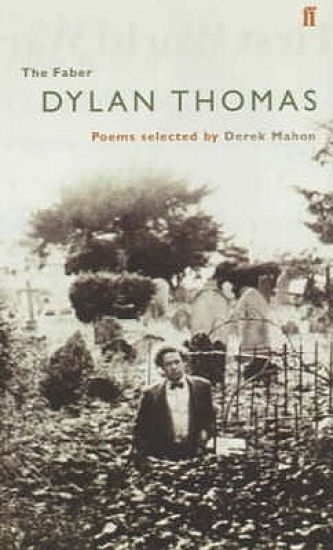
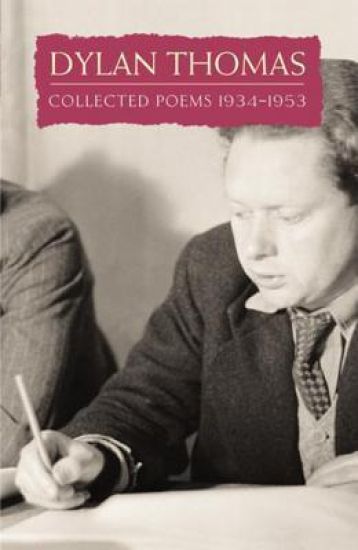
Dylan Thomas

Dylan Thomas

Dylan Thomas

Faber Faber
2004
nidottu
In this series, a contemporary poet selects and introduces a poet of the past. By their choice of poems and by the personal and critical reactions they express in their prefaces, the editors offer insights into their own work as well as providing an accessible and passionate introduction to some of the greatest poets in our literature.Dylan Thomas (1914-53) was born in Swansea and educated at Swansea Grammar School. He worked as a journalist and screenwriter in Swansea and London, contributing frequently to BBC Radio. His publications included The Map of Love (1939), Deaths and Entrances (1946) and Collected Poems (1952). Under Milk Wood, 'a play for voices', appeared posthumously.
Dylan Thomas

Dylan Thomas

Rushworth M. Kidder

Princeton University Press
2015
pokkari
Since the Bible appears so frequently in Dylan Thomas' work, some critics have decided that he must be a religious poet. Others, noting blasphemous statements and certain irreligious aspects of Thomas' personal life, contend that he was no such thing. Rushworth M. Kidder, investigating this problem, looks below the surface of the obviously religious imagery and discovers a more profound poetry. The first part of this book discusses the nature of religious poetry and the application of that term to Thomas' work; it then develops the necessary background based on his letters and prose comments to provide a foundation for the study; and finally it examines the relationship between the religious aspects of his poetry and his well-known ambiguity. The author re-defines the vocabulary for dealing with religious imagery by establishing three distinct categories of imagery: referential, allusive, and thematic. This original technique is used to examine critically Thomas' poems to show the development of his religious and poetic thought. There are numerous close, sensitive readings of individual poems to show how his poetry, like the Bible, teaches by parable, speaking deliberate ambiguity rather than simple dogma. This strategy inspired poetry that is technically complex but thematically simple, a mode of verse that became more explicitly religious in the poet's final years. Originally published in 1973. The Princeton Legacy Library uses the latest print-on-demand technology to again make available previously out-of-print books from the distinguished backlist of Princeton University Press. These editions preserve the original texts of these important books while presenting them in durable paperback and hardcover editions. The goal of the Princeton Legacy Library is to vastly increase access to the rich scholarly heritage found in the thousands of books published by Princeton University Press since its founding in 1905.
Dylan Thomas

Dylan Thomas

Rushworth M. Kidder

Princeton University Press
2016
sidottu
Since the Bible appears so frequently in Dylan Thomas' work, some critics have decided that he must be a religious poet. Others, noting blasphemous statements and certain irreligious aspects of Thomas' personal life, contend that he was no such thing. Rushworth M. Kidder, investigating this problem, looks below the surface of the obviously religious imagery and discovers a more profound poetry. The first part of this book discusses the nature of religious poetry and the application of that term to Thomas' work; it then develops the necessary background based on his letters and prose comments to provide a foundation for the study; and finally it examines the relationship between the religious aspects of his poetry and his well-known ambiguity. The author re-defines the vocabulary for dealing with religious imagery by establishing three distinct categories of imagery: referential, allusive, and thematic. This original technique is used to examine critically Thomas' poems to show the development of his religious and poetic thought. There are numerous close, sensitive readings of individual poems to show how his poetry, like the Bible, teaches by parable, speaking deliberate ambiguity rather than simple dogma. This strategy inspired poetry that is technically complex but thematically simple, a mode of verse that became more explicitly religious in the poet's final years. Originally published in 1973. The Princeton Legacy Library uses the latest print-on-demand technology to again make available previously out-of-print books from the distinguished backlist of Princeton University Press. These editions preserve the original texts of these important books while presenting them in durable paperback and hardcover editions. The goal of the Princeton Legacy Library is to vastly increase access to the rich scholarly heritage found in the thousands of books published by Princeton University Press since its founding in 1905.
Dylan at Newport, 1965: Music, Myth, and Un-Meaning

Dylan at Newport, 1965: Music, Myth, and Un-Meaning

Edward Renehan

New Street Communications, LLC
2015
nidottu
One of the most famous moments of the Sixties - and one which continues to this day to be grossly misconstrued, mistold, and loaded with undeserved meaning - is the night in July of 1965 when Bob Dylan played an electric set (or at least tried to play an electric set) at the Newport Folk Festival: an event after which, supposedly, the culture of the Sixties was never quite the same again. Even Dylan's most pre-eminent chronicler Sean Wilentz has mischaracterized this evening as the night when " Alan] Lomax along with Pete Seeger led the old guard that objected to the blasts of white-boy electricity, including Dylan's." Seeger biographer David Dunaway speaks of Dylan understanding that at Newport "the electric guitar meant a declaration of war" and that, intensely ambitious, he sought publicity by smuggling "rock into the citadel of folk music." In this narrative, battle lines were drawn, a fight waged, and a revolution begun. The over-simplification is too attractive to resist. Our tribal memory absolutely yearns for Dylan's abbreviated, 15-minute performance to be a pivot point not just from acoustic to electric, but also from traditional to commercial, from topical to cynical, and from roots to revolution. We also want Newport to be a "citadel of folk music,"and to be comfortable with any number of other safe, easy assumptions. For this symbology to work, however, we need an "old guard" to rebel against, and a youthful "new guard" to do the rising up. We also need to believe that traditional acoustic music cannot be (and was not at that time already) commercial, that electric music can never be traditional, that electric music is always commercial, that the Newport Fest (only a few years old) represented some sort of "hallowed ground" of acoustic music, and that various other straight lines apply. They don't. In this book, critically-acclaimed author Edward Renehan examines how and why.
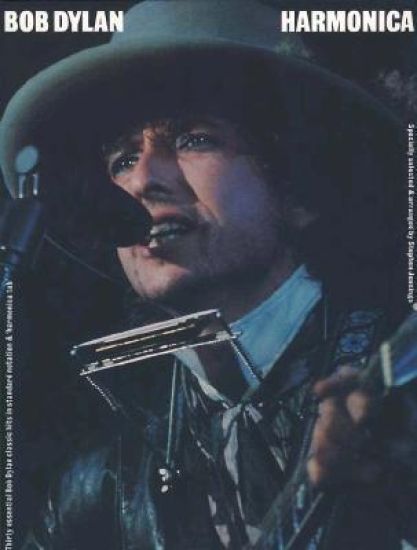
Dylan for Harmonica

Dylan for Harmonica

Bob Dylan

Music Sales Ltd
1996
nidottu
(Music Sales America). Thirty all-time great songs arranged for harmonica. The first 24 tunes are for both diatonic and chromatic harmonicas and the rest can only be played on 12-hole chromatic harmonicas. Contents: All Along the Watchtower * Blowin' in the Wind * Gotta Serve Somebody * Idiot Wind * Shelter from the Storm * Shenandoah * Shot of Love * Sad Eyed Lady of the Lowlands * I Want You * Is Your Love in Vain? * If Not for You * Something There Is About You * Stuck Inside of Mobile with the Memphis Blues Again * I Shall Be Released * Simple Twist of Fate * Brownsville Girl * Lay, Lady, Lay * Jokerman * Knockin' on Heaven's Door * Hurricane * Tangled up in Blue * Sara * Just like a Woman * Quinn the Eskimo (The Mighty Quinn) * Everything Is Broken * I'll Be Your Baby Tonight * In the Garden * Rainy Day Women No. 12 & 35 * Silvio * Under Your Spell.
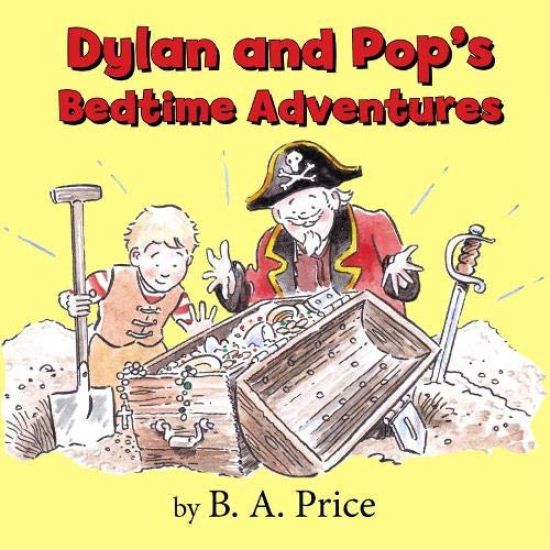
Dylan and Pop's Bedtime Stories

Dylan and Pop's Bedtime Stories

B.A. Price

Andrews UK Limited
2021
pokkari
When Dylan returns home with Teddy after a sleepover at Nana and Pop's his imagination is buzzing. No sleepover would be complete without one or two of Pop's fantastic bedtime stories. Here are some of Dylan and Pop's bedtime adventures, complete with magic and marvels, buccaneers and buried treasure, parties and pony rides.
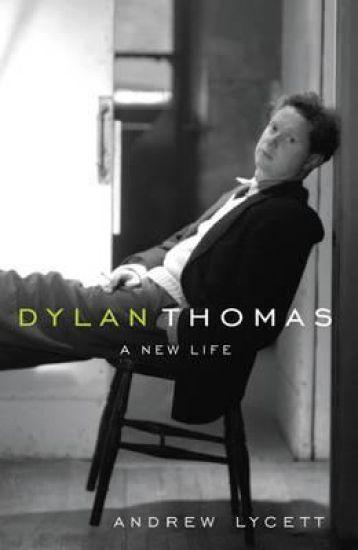
Dylan Thomas

Dylan Thomas

Andrew Lycett

Weidenfeld Nicolson
2004
pokkari
The definitive biography of the poet who was almost as notorious for his 'rock 'n' roll' lifestyle as his artistic workDylan Thomas was a romantic and controversial figure; a poet who lived to excess and died young. An inventive genius with a gift for both lyrical phrases and impish humour, he also wrote for films and radio, and was renowned for his stage performances. He became the first literary star in the age of popular culture - a favourite of both T.S. Eliot and John Lennon.As his status as a poet and entertainer increased, so did his alcoholic binges and his sexual promiscuity, threatening to destroy his marriage to his fiery Irish wife Caitlin. As this extraordinary biography reveals, he was a man of many contradictions. But out of his tempestuous life, he produced some of the most dramatic and enduring poetry in the English language.
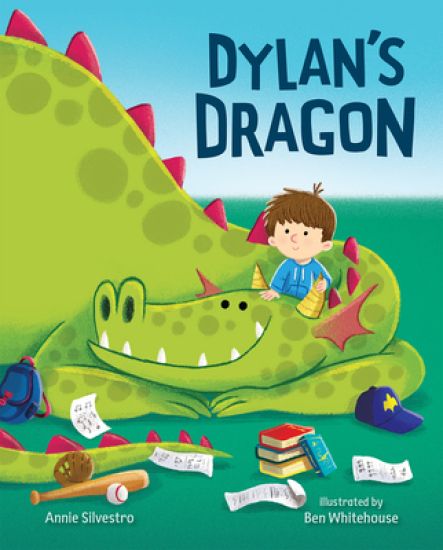
Dylan's Dragon

Dylan's Dragon

Annie Silvestro

Albert Whitman Company
2021
sidottu
Can an overscheduled kid find time to play with his dragon friend?Dylan loves playing, drawing, dreaming, and, best of all, dragons But his days and weeks are so full--with piano lessons, science club, baseball practice, karate class, and more--that when the dragon of his daydreams shows up, there's never any time to play. How can Dylan let his family know that his busy schedule needs room for dragon time?
The Poems of Dylan Thomas

The Poems of Dylan Thomas

Dylan Thomas

NEW DIRECTIONS PUBLISHING CORPORATION
2017
sidottu
The reputation of Dylan Thomas (1914-1953) as one of the greatest poets of the twentieth century has not waned in the fifty years since his death. A Welshman with a passion for the English language, Thomas's singular poetic voice has been admired and imitated, but never matched.This exciting, newly edited annotated edition offers a more complete and representative collection of Dylan Thomas's poetic works than any previous edition. Edited by leading Dylan Thomas scholar John Goodby from the University of Swansea, The Poems of Dylan Thomas contains all the poems that appeared in Collected Poems 1934-1952, edited by Dylan Thomas himself, as well as poems from the 1930-1934 notebooks and poems from letters, amatory verses, occasional poems, the verse film script for "Our Country," and poems that appear in his "radio play for voices," Under Milk Wood. Showing the broad range of Dylan Thomas's oeuvre as never before, this new edition places Thomas in the twenty-first century, with an up-to-date introduction by Goodby whose notes and annotations take a pluralistic approach.
Dylan Thomas

Dylan Thomas

Barbara Hardy

University of Georgia Press
2000
sidottu
Dylan Thomas's expressive, highly imaginative re-creation of forms and language intimately portrays his inner self and his time, earning him renown as one of the "great individualists of modern art." In this contemplative, focused study of poems, stories and other works by Thomas, including Portrait of the Artist as a Young Dog and Under Milk Wood, Barbara Hardy emphasizes his creative achievements and high intelligence, analyzing his regional identity; response to other writers, especially James Joyce; modernist style; subject matter; use of language; and themes of art and the natural world.Thomas, a Welsh writer, never a nationalist, put into his writing a subtle response to regional landscape, particular people and places, and social context, including the 1930s depression, rural poverty, and war. His poetry and prose are passionate, sensuous, and artistically self-aware. The poetry is especially congenial in its imaginative celebration of greenness—literal, metaphorical, and political. To adapt the words of Charles Lamb, the poet is in "love with this green earth."Hardy describes Thomas as a resourceful "language-changer" who, like Shakespeare, Dickens, Hopkins, and Joyce, transforms the English language. Through writing so uniquely inventive that it alters the reader's perception of language, Thomas left us with works that are as fresh and relevant to today's world as they were at their debut.
Dylan Thomas’ Early Prose

Dylan Thomas’ Early Prose

Annis Pratt

University of Pittsburgh Press
1970
nidottu
This first full-scale treatment of the early prose of Dylan Thomas demonstrates the unity of his total work. Pratt argues that the inward journey of the poetic imagination which is implicit in poetry is often explicit in prose. Her study of ThomasAE early prose alongside his early poetry helps to elucidate all of his writing. Pratt includes three appendices: a chronology, a summary of the criticsAE attitudes toward the problem of influence, and a bibliographical sketch of materials in the Parris surrealist magazine transition, which are paralleled in ThomasAE prose.
Dylan Redeemed

Dylan Redeemed

Stephen H. Webb

Continuum International Publishing Group Ltd.
2007
nidottu
Bob Dylan's earth-shattering performance at Newport in 1965 changed the face of rock and roll and the face of folk music forever. Dylan broke the musical equivalent of the sound barrier. He had to teach his audience how to hear sounds that had never before been heard. Dylan did the same for religion when he converted to Christianity in late 1978. Rock and religion have become intertwined in contemporary culture. Does rock gain its power from the decline of religious authority? Is rock a neutral medium that churches can appropriate with little or no danger to spiritual truths? Do rock and religion have the same ancient roots? Or is rock essentially at odds with Christianity? No contemporary musician presents a better test case than Bob Dylan. He played a key role in the fusion of rock and religion when he converted to Christianity. Dylan was ahead of the contemporary Christian music trend. Although he helped legitimize Christian rock in the late seventies, even his early music had deeply spiritual undertones. From the beginning of his career, Dylan talked about his music in terms of a spiritual calling. He imbued rock with something oracular and otherworldly - a supersonic rendition of the supernatural - which gave popular music enough weight to convey something of the mystery of religious ritual. Webb focuses on Dylan's religious period in this book, but convincingly shows that this religious period cannot be understood apart from a rereading of his entire career. Webb reevaluates Dylan's early career in light of Dylan's Christian period and shows that Dylan's Christian period was a natural development in his musical and spiritual journey.
Dylan and Cohen

Dylan and Cohen

David Boucher

Continuum International Publishing Group Ltd.
2004
nidottu
Bob Dylan and Leonard Cohen are widely acknowledged as the great pop poets of the 1960s, transforming the popular song into a medium for questioning the personal, social and political norms of their times. They emerge at a time when the music industry was moulding and packaging the revolutionary sound of black music into something bland, homogenous and fit for mass consumption, when populist politics had come to the fore with a serious division emerging between the values of young and old. For many disorientated and disillusioned members of this generation, Dylan and Cohen were able to articulate what they were feeling and could not express: Dylan the anti-establishment anger, Cohen the angst and despondency. Dylan and Cohen is a fascinating political, psychological and artistic profile of two iconic writers and performers. With reference to both biographical details and lyrics, David Boucher explores their similarities and differences, tracing the development of religious, political and social themes in their work and the ways in which those ideas engaged a new audience. He also looks at their poetic influences, using aesthetic ideas from Lorca, Collingwood and others to delve more deeply than previous commentators into the phases of their writing and to reveal their enduring influence on poetry and song, and the relationship between the two. A must-read for all serious fans of either Dylan or Cohen, this book will also engage anyone interested in 1960s America or more generally in the relationship between music, identity and politics.
Dylan's Visions of Sin

Dylan's Visions of Sin

Christopher Ricks

Canongate Books Ltd
2011
pokkari
'I consider myself a poet first and a musician second''It ain't the melodies that're important man, it's the words'There is no shortage of books about Bob Dylan. This one, however, is unique in its approach and the virtuosity of its execution.Ricks examines Dylan's songs through the biblical concepts of the seven deadly Sins, the four cardinal Virtues and the three Heavenly Graces. He does so with what one critic has described as 'an ultimately irresistible combination of laser-like intelligence with a fan's exuberant idolatry'.
Dylan on Dylan

Dylan on Dylan

Chicago Review Press
2018
sidottu
In a 1969 conversation with Rolling Stone editor Jann Wenner, Bob Dylan proclaimed, “I don’t give interviews.” But in truth, he has spoken at length with print publications large and small and with broadcast media around the world, given numerous press conferences, and even answered listeners’ questions on call-in radio shows. Dylan can be as evasive and abstruse as he is witty; he can also be cranky and sarcastic. But in the right moments, he offers candid, revealing commentary about his groundbreaking music and creative process. These engrossing provide glimpses into the mind of one of the most important performers and songwriters of the last hundred years. Dylan on Dylan is an authoritative, chronologically arranged anthology of interviews, speeches, and press conferences, as well as excerpts from more than eighty additional Q&As spanning Dylan’s entire career—from 1961 through 2016. The majority have not been previously anthologized and some have never before appeared in print. The material comes from renowned media outlets like Rolling Stone and TV's 60 Minutes and from obscure periodicals like Minnesota Daily, a student newspaper at Dylan’s alma mater. Interviewers include some of the top writers of our time, such as Jonathan Lethem, Douglas Brinkley, and Mikal Gilmore, as well as musicians like Pete Seeger and Happy Traum. Introductions put each piece in context and, in many cases, include the interviewer’s reminiscences about the encounter.