Kirjojen hintavertailu. Mukana 11 244 527 kirjaa ja 12 kauppaa.

Kirjahaku

Etsi kirjoja tekijän nimen, kirjan nimen tai ISBN:n perusteella.

1000 tulosta hakusanalla E. W. Simson

No Hero (1903). By: E. W. Hornung: Novel (Original Classics)

No Hero (1903). By: E. W. Hornung: Novel (Original Classics)

E. W. Hornung

Createspace Independent Publishing Platform
2017
nidottu
Ernest William Hornung (7 June 1866 - 22 March 1921) was an English author and poet known for writing the A. J. Raffles series of stories about a gentleman thief in late 19th-century London. Hornung was educated at Uppingham School; as a result of poor health he left the school in December 1883 to travel to Sydney, where he stayed for two years. He drew on his Australian experiences as a background when he began writing, initially short stories and later novels. In 1898 he wrote "In the Chains of Crime", which introduced Raffles and his sidekick, Bunny Manders; the characters were based partly on his friends Oscar Wilde and his lover, Lord Alfred Douglas, and also on the characters of Sherlock Holmes and Dr. Watson, created by his brother-in-law, Arthur Conan Doyle. The series of Raffles short stories were collected for sale in book form in 1899, and two further books of Raffles short stories followed, as well as a poorly received novel. Aside from his Raffles stories, Hornung was a prodigious writer of fiction, publishing numerous books from 1890, with A Bride from the Bush to his 1914 novel The Crime Doctor. The First World War brought an end to Hornung's fictional output. His son, Oscar, was killed at the Second Battle of Ypres in July 1915. Hornung joined the YMCA, initially in England, then in France, where he helped run a canteen and library. He published two collections of poetry during the war, and then, afterwards, one further volume of verse and an account of his time spent in France, Notes of a Camp-Follower on the Western Front. Hornung's fragile constitution was further weakened by the stress of his war work. To aid his recuperation, he and his wife visited the south of France in 1921. He fell ill from influenza on the journey, and died on 22 March 1921, aged 54. Although much of Hornung's work has fallen into obscurity, his Raffles stories continued to be popular, and have formed numerous film and television adaptations. Hornung's stories dealt with a wider range of themes than crime: he examined scientific and medical developments, guilt, class and the unequal role played by women in society. Two threads that run through a sizeable proportion of his books are Australia and cricket; the latter was also a lifelong passion.
Fathers of Men (1912). By: E. W. Hornung: Novel (World's classic's)

Fathers of Men (1912). By: E. W. Hornung: Novel (World's classic's)

E. W. Hornung

Createspace Independent Publishing Platform
2017
nidottu
Fathers of Men is a story of boarding school life by E.W. Hornung, the author best remembered for his series of short stories about Raffles, the amateur cracksman. A coming of age story, it was written in 1912, long after Hornung's fondly remembered boyhood days, and follows the trials, tribulations and cricket matches of the boys of Heriot's house. Ernest William Hornung (7 June 1866 - 22 March 1921) was an English author and poet known for writing the A. J. Raffles series of stories about a gentleman thief in late 19th-century London. Hornung was educated at Uppingham School; as a result of poor health he left the school in December 1883 to travel to Sydney, where he stayed for two years. He drew on his Australian experiences as a background when he began writing, initially short stories and later novels. In 1898 he wrote "In the Chains of Crime", which introduced Raffles and his sidekick, Bunny Manders; the characters were based partly on his friends Oscar Wilde and his lover, Lord Alfred Douglas, and also on the characters of Sherlock Holmes and Dr. Watson, created by his brother-in-law, Arthur Conan Doyle. The series of Raffles short stories were collected for sale in book form in 1899, and two further books of Raffles short stories followed, as well as a poorly received novel. Aside from his Raffles stories, Hornung was a prodigious writer of fiction, publishing numerous books from 1890, with A Bride from the Bush to his 1914 novel The Crime Doctor. The First World War brought an end to Hornung's fictional output. His son, Oscar, was killed at the Second Battle of Ypres in July 1915. Hornung joined the YMCA, initially in England, then in France, where he helped run a canteen and library. He published two collections of poetry during the war, and then, afterwards, one further volume of verse and an account of his time spent in France, Notes of a Camp-Follower on the Western Front. Hornung's fragile constitution was further weakened by the stress of his war work. To aid his recuperation, he and his wife visited the south of France in 1921. He fell ill from influenza on the journey, and died on 22 March 1921, aged 54. Although much of Hornung's work has fallen into obscurity, his Raffles stories continued to be popular, and have formed numerous film and television adaptations. Hornung's stories dealt with a wider range of themes than crime: he examined scientific and medical developments, guilt, class and the unequal role played by women in society. Two threads that run through a sizeable proportion of his books are Australia and cricket; the latter was also a lifelong passion......
Young Blood (1913). By: E. W. Hornung: Novel

Young Blood (1913). By: E. W. Hornung: Novel

E. W. Hornung

Createspace Independent Publishing Platform
2017
nidottu
Ernest William Hornung (7 June 1866 - 22 March 1921) was an English author and poet known for writing the A. J. Raffles series of stories about a gentleman thief in late 19th-century London. Hornung was educated at Uppingham School; as a result of poor health he left the school in December 1883 to travel to Sydney, where he stayed for two years. He drew on his Australian experiences as a background when he began writing, initially short stories and later novels. In 1898 he wrote "In the Chains of Crime", which introduced Raffles and his sidekick, Bunny Manders; the characters were based partly on his friends Oscar Wilde and his lover, Lord Alfred Douglas, and also on the characters of Sherlock Holmes and Dr. Watson, created by his brother-in-law, Arthur Conan Doyle. The series of Raffles short stories were collected for sale in book form in 1899, and two further books of Raffles short stories followed, as well as a poorly received novel. Aside from his Raffles stories, Hornung was a prodigious writer of fiction, publishing numerous books from 1890, with A Bride from the Bush to his 1914 novel The Crime Doctor. The First World War brought an end to Hornung's fictional output. His son, Oscar, was killed at the Second Battle of Ypres in July 1915. Hornung joined the YMCA, initially in England, then in France, where he helped run a canteen and library. He published two collections of poetry during the war, and then, afterwards, one further volume of verse and an account of his time spent in France, Notes of a Camp-Follower on the Western Front. Hornung's fragile constitution was further weakened by the stress of his war work. To aid his recuperation, he and his wife visited the south of France in 1921. He fell ill from influenza on the journey, and died on 22 March 1921, aged 54. Although much of Hornung's work has fallen into obscurity, his Raffles stories continued to be popular, and have formed numerous film and television adaptations. Hornung's stories dealt with a wider range of themes than crime: he examined scientific and medical developments, guilt, class and the unequal role played by women in society. Two threads that run through a sizeable proportion of his books are Australia and cricket; the latter was also a lifelong passion.......
A Thief in the Night (1905). By: E. W. Hornung: A Thief in the Night is the third book in the series, and the final collection of short stories.
A Thief in the Night is the third book in the series, and the final collection of short stories. In it, Raffles, a gentleman thief, commits a number of burglaries in late Victorian England. Chronicler and accomplice Bunny Manders narrates additional adventures which he had previously omitted, from various points in their criminal careers... Ernest William Hornung (7 June 1866 - 22 March 1921) was an English author and poet known for writing the A. J. Raffles series of stories about a gentleman thief in late 19th-century London. Hornung was educated at Uppingham School; as a result of poor health he left the school in December 1883 to travel to Sydney, where he stayed for two years. He drew on his Australian experiences as a background when he began writing, initially short stories and later novels. In 1898 he wrote "In the Chains of Crime", which introduced Raffles and his sidekick, Bunny Manders; the characters were based partly on his friends Oscar Wilde and his lover, Lord Alfred Douglas, and also on the characters of Sherlock Holmes and Dr. Watson, created by his brother-in-law, Arthur Conan Doyle. The series of Raffles short stories were collected for sale in book form in 1899, and two further books of Raffles short stories followed, as well as a poorly received novel. Aside from his Raffles stories, Hornung was a prodigious writer of fiction, publishing numerous books from 1890, with A Bride from the Bush to his 1914 novel The Crime Doctor. The First World War brought an end to Hornung's fictional output. His son, Oscar, was killed at the Second Battle of Ypres in July 1915. Hornung joined the YMCA, initially in England, then in France, where he helped run a canteen and library. He published two collections of poetry during the war, and then, afterwards, one further volume of verse and an account of his time spent in France, Notes of a Camp-Follower on the Western Front. Hornung's fragile constitution was further weakened by the stress of his war work. To aid his recuperation, he and his wife visited the south of France in 1921. He fell ill from influenza on the journey, and died on 22 March 1921, aged 54. Although much of Hornung's work has fallen into obscurity, his Raffles stories continued to be popular, and have formed numerous film and television adaptations. Hornung's stories dealt with a wider range of themes than crime: he examined scientific and medical developments, guilt, class and the unequal role played by women in society. Two threads that run through a sizeable proportion of his books are Australia and cricket; the latter was also a lifelong passion.
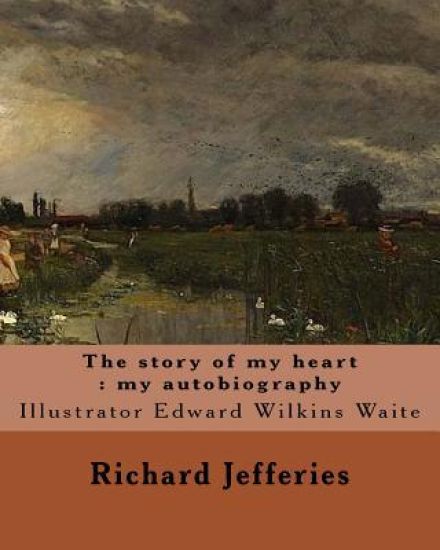
The story of my heart: my autobiography. By: Richard Jefferies, illustrated By: E. W. Waite: Edward Wilkins Waite RBA (14 April 1854 - 1924)
The Story of My Heart is a book first published in 1883 by English nature writer, essayist, and journalist Richard Jefferies. The book has been described as a "spiritual autobiography" where Jefferies idealises the English countryside as a sort of utopia. The book and its themes have been compared to the transcendentalist movement. 1] The scholar Roger Ebbatson considers that the book's "speculative" spiritualism is emblematic of the decline of Christian belief in the more empirical Victorian era. 2] Critical reaction to the book was mixed. A new edition of The Story of My Heart published in 2014 notes that the American conservationist Rachel Carson had two copies of the book at her bedside, but others found the work "barely comprehensible". Edward Wilkins Waite RBA (14 April 1854 - 1924) was a prolific English landscape painter. Waite was born in Leatherhead, Surrey, the son of the Rev. Edward Waite, MA, and his wife Cleopha Julia (n e Dukes) - there were six sons and two daughters in total. His grandfather William Watkin Waite was a miniaturist, his father an amateur watercolourist, and three of his brothers - Charles, Harold and Arthur - also became artists. He was educated at the Mansion House Grammar School in Leatherhead. In 1874 he travelled to Ontario, Canada, to work as a lumberjack. On his return he took up painting as a profession, exhibiting often at the Royal Academy, London, from 1878 to 1919. He also exhibited at many other major galleries, in London and the regions, and became a member of the Royal Society of British Artists (RBA) in 1893. In 1891, Waite married Barbara Isabella Tait (1862-1950). They had one son and two daughters. They lived at Peaslake and Abinger Hammer, in Surrey, before moving to Woolhampton in Berkshire in 1910. They moved back to Surrey and then East Sussex in 1915. Waite died in Fittleworth, Sussex, in 1924. Waite was a landscape painter and worked in oils. Much of his output depicts rural scenes in his native Surrey....... John Richard Jefferies (6 November 1848 - 14 August 1887) was an English nature writer, noted for his depiction of English rural life in essays, books of natural history, and novels. His childhood on a small Wiltshire farm had a great influence on him and provides the background to all his major works of fiction. Jefferies's corpus of writings includes a diversity of genres and topics, including Bevis (1882), a classic children's book, and After London (1885), an early work of science fiction. For much of his adult life, he suffered from tuberculosis, and his struggles with the illness and with poverty also play a role in his writing. Jefferies valued and cultivated an intensity of feeling in his experience of the world around him, a cultivation that he describes in detail in The Story of My Heart (1883). This work, an introspective depiction of his thoughts and feelings on the world, gained him the reputation of a nature mystic at the time. But it is his success in conveying his awareness of nature and people within it, both in his fiction and in essay collections such as The Amateur Poacher (1879) and Round About a Great Estate (1880), that has drawn most admirers. Walter Besant wrote of his reaction on first reading Jefferies: "Why, we must have been blind all our lives; here were the most wonderful things possible going on under our very noses, but we saw them not.".............
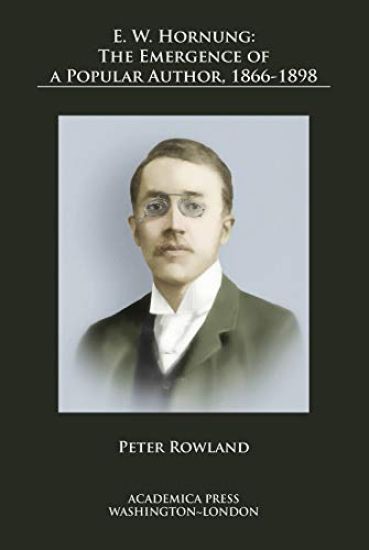
E. W. Hornung

E. W. Hornung

Peter Rowland

ACADEMICA PRESS
2019
sidottu
As this dynamic biography reveals, the writer Ernest William Hornung (1866-1921) became a household name in the 1890s. Peter Rowland's superb literary biography traces Hornung's rise to fame and fortune, as the writer deftly turned his hand to comedy, romance, and drama.
Folks from Dixie (1898). By: Paul Laurence Dunbar, Illustrated By: E. W. Kemble: Edward Windsor Kemble (January 18, 1861 - September 19, 1933), usu
Edward Windsor Kemble (January 18, 1861 - September 19, 1933), usually cited as E. W. Kemble, was an American illustrator. He is known best for illustrating the first edition of Adventures of Huckleberry Finn and for his cartoons of African Americans.......... Paul Laurence Dunbar (June 27, 1872 - February 9, 1906) was an American poet, novelist, and playwright of the late 19th and early 20th centuries. Born in Dayton, Ohio, to parents who had been enslaved in Kentucky before the American Civil War, Dunbar began to write stories and verse when still a child; he was president of his high school's literary society. He published his first poems at the age of 16 in a Dayton newspaper. Much of Dunbar's more popular work in his lifetime was written in the Negro dialect associated with the antebellum South, though he also used the Midwestern regional dialect of James Whitcomb Riley. Dunbar's work was praised by William Dean Howells, a leading editor associated with the Harper's Weekly, and Dunbar was one of the first African-American writers to establish an international reputation. He wrote the lyrics for the musical comedy In Dahomey (1903), the first all-African-American musical produced on Broadway in New York. The musical later toured in the United States and the United Kingdom. Dunbar also wrote in conventional English in other poetry and novels. Since the late 20th century, scholars have become more interested in these other works. Suffering from tuberculosis, which then had no cure, Dunbar died in Dayton at the age of 33. Early life: Paul Laurence Dunbar was born at 311 Howard Street in Dayton, Ohio, on June 27, 1872, to parents who had been enslaved in Kentucky before the American Civil War. After being emancipated, his mother Matilda had moved to Dayton with other family members, including her two sons Robert and William from her first marriage. Dunbar's father Joshua had escaped from slavery in Kentucky before the war ended. He traveled to Massachusetts and volunteered for the 55th Massachusetts Infantry Regiment, one of the first two black units to serve in the war. The senior Dunbar also served in the 5th Massachusetts Cavalry Regiment. Paul Dunbar was born six months after Joshua and Matilda married on Christmas Eve, 1871. The marriage of Dunbar's parents was troubled and Dunbar's mother left Joshua soon after having their second child, a daughter.Joshua died on August 16, 1885; Paul was then 12 years old. Dunbar wrote his first poem at the age of six and gave his first public recital at the age of nine. His mother assisted him in his schooling, having learned to read expressly for that purpose. She often read the Bible with him, and thought he might become a minister in the African Methodist Episcopal Church. It was the first independent black denomination in America, founded in Philadelphia in the early 19th century. Dunbar was the only African-American student during his years at Central High School in Dayton; Orville Wright was a classmate and friend. Well-accepted, he was elected as president of the school's literary society, and became the editor of the school newspaper and a member of the debate club........
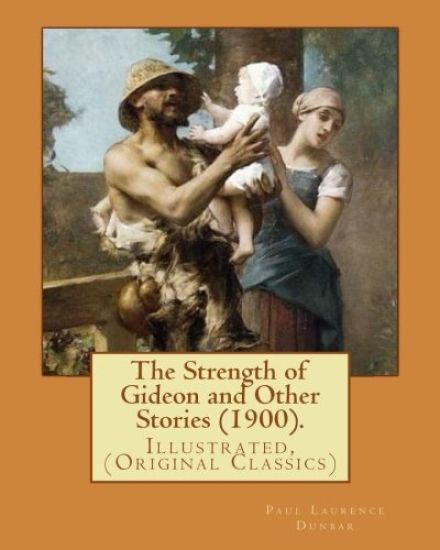
The Strength of Gideon and Other Stories (1900). By: Paul Laurence Dunbar, Illustrated By: E. W. Kemble (January 18, 1861 - September 19, 1933): Illus
Edward Windsor Kemble (January 18, 1861 - September 19, 1933), usually cited as E. W. Kemble, was an American illustrator. He is known best for illustrating the first edition of Adventures of Huckleberry Finn and for his cartoons of African Americans... Paul Laurence Dunbar (June 27, 1872 - February 9, 1906) was an American poet, novelist, and playwright of the late 19th and early 20th centuries. Born in Dayton, Ohio, to parents who had been enslaved in Kentucky before the American Civil War, Dunbar began to write stories and verse when still a child; he was president of his high school's literary society. He published his first poems at the age of 16 in a Dayton newspaper. Much of Dunbar's more popular work in his lifetime was written in the Negro dialect associated with the antebellum South, though he also used the Midwestern regional dialect of James Whitcomb Riley. Dunbar's work was praised by William Dean Howells, a leading editor associated with the Harper's Weekly, and Dunbar was one of the first African-American writers to establish an international reputation. He wrote the lyrics for the musical comedy In Dahomey (1903), the first all-African-American musical produced on Broadway in New York. The musical later toured in the United States and the United Kingdom. Dunbar also wrote in conventional English in other poetry and novels. Since the late 20th century, scholars have become more interested in these other works. Suffering from tuberculosis, which then had no cure, Dunbar died in Dayton at the age of 33. Early life: Paul Laurence Dunbar was born at 311 Howard Street in Dayton, Ohio, on June 27, 1872, to parents who had been enslaved in Kentucky before the American Civil War. After being emancipated, his mother Matilda had moved to Dayton with other family members, including her two sons Robert and William from her first marriage. Dunbar's father Joshua had escaped from slavery in Kentucky before the war ended. He traveled to Massachusetts and volunteered for the 55th Massachusetts Infantry Regiment, one of the first two black units to serve in the war. The senior Dunbar also served in the 5th Massachusetts Cavalry Regiment. Paul Dunbar was born six months after Joshua and Matilda married on Christmas Eve, 1871. The marriage of Dunbar's parents was troubled and Dunbar's mother left Joshua soon after having their second child, a daughter.Joshua died on August 16, 1885; Paul was then 12 years old. Dunbar wrote his first poem at the age of six and gave his first public recital at the age of nine. His mother assisted him in his schooling, having learned to read expressly for that purpose. She often read the Bible with him, and thought he might become a minister in the African Methodist Episcopal Church. It was the first independent black denomination in America, founded in Philadelphia in the early 19th century. Dunbar was the only African-American student during his years at Central High School in Dayton; Orville Wright was a classmate and friend. Well-accepted, he was elected as president of the school's literary society, and became the editor of the school newspaper and a member of the debate club...............
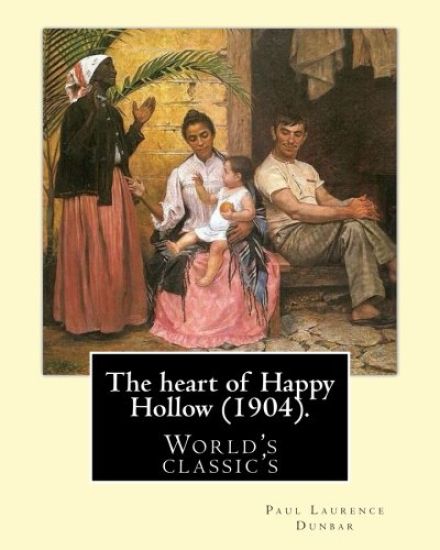
The heart of Happy Hollow (1904). By: Paul Laurence Dunbar, illustrated By: E. W. Kemble: Paul Laurence Dunbar (June 27, 1872 - February 9, 1906) was
Edward Windsor Kemble (January 18, 1861 - September 19, 1933), usually cited as E. W. Kemble, was an American illustrator. He is known best for illustrating the first edition of Adventures of Huckleberry Finn and for his cartoons of African Americans.... Paul Laurence Dunbar (June 27, 1872 - February 9, 1906) was an American poet, novelist, and playwright of the late 19th and early 20th centuries. Born in Dayton, Ohio, to parents who had been enslaved in Kentucky before the American Civil War, Dunbar began to write stories and verse when still a child; he was president of his high school's literary society. He published his first poems at the age of 16 in a Dayton newspaper. Much of Dunbar's more popular work in his lifetime was written in the Negro dialect associated with the antebellum South, though he also used the Midwestern regional dialect of James Whitcomb Riley. Dunbar's work was praised by William Dean Howells, a leading editor associated with the Harper's Weekly, and Dunbar was one of the first African-American writers to establish an international reputation. He wrote the lyrics for the musical comedy In Dahomey (1903), the first all-African-American musical produced on Broadway in New York. The musical later toured in the United States and the United Kingdom. Dunbar also wrote in conventional English in other poetry and novels. Since the late 20th century, scholars have become more interested in these other works. Suffering from tuberculosis, which then had no cure, Dunbar died in Dayton at the age of 33. Early life: Paul Laurence Dunbar was born at 311 Howard Street in Dayton, Ohio, on June 27, 1872, to parents who had been enslaved in Kentucky before the American Civil War. After being emancipated, his mother Matilda had moved to Dayton with other family members, including her two sons Robert and William from her first marriage. Dunbar's father Joshua had escaped from slavery in Kentucky before the war ended. He traveled to Massachusetts and volunteered for the 55th Massachusetts Infantry Regiment, one of the first two black units to serve in the war. The senior Dunbar also served in the 5th Massachusetts Cavalry Regiment. Paul Dunbar was born six months after Joshua and Matilda married on Christmas Eve, 1871. The marriage of Dunbar's parents was troubled and Dunbar's mother left Joshua soon after having their second child, a daughter.Joshua died on August 16, 1885; Paul was then 12 years old. Dunbar wrote his first poem at the age of six and gave his first public recital at the age of nine. His mother assisted him in his schooling, having learned to read expressly for that purpose. She often read the Bible with him, and thought he might become a minister in the African Methodist Episcopal Church. It was the first independent black denomination in America, founded in Philadelphia in the early 19th century. Dunbar was the only African-American student during his years at Central High School in Dayton; Orville Wright was a classmate and friend. Well-accepted, he was elected as president of the school's literary society, and became the editor of the school newspaper and a member of the debate club.,,
E. W. Nay (German Edition)

E. W. Nay (German Edition)

Magdalene Claesges

Hatje Cantz
2018
sidottu
The three-volume catalogue raisonné of the works on paper by E. W. Nay (1902–1968) will provide art historians, art dealers, and every art lover a long-awaited chance to survey Nay’s oeuvre and gain an understanding of his art.With more than six thousand watercolors, gouaches, and drawings, Nay’s works on paper far outnumber his oil paintings. He was an indefatigable artist who persistently put down his ideas of form and color on paper. The sheets embody - so to speak - his work journal and allow the reader to draw conclusions about his methods of artistic approach. Whereas on one hand they document the processes behind his artistic research and activities, the works on paper at the same time are autonomous creations. They impressively elucidate the artist’s ambition and development.
Collected Poems of Frances E. W. Harper

Collected Poems of Frances E. W. Harper

Frances E. W. Harper

Oxford University Press Inc
1988
sidottu
Frances Harper was renowned in her lifetime not only as an activist who rallied on behalf of blacks, women, and the poor, but as a pioneer of the tradition of 'protest' literature, whose immense popularity did much to develop an audience for poetry in America. This collection of her poems is drawn from ten volumes published between 1854 and 1901. Their main issues are oppression, Christianity, and social and moral reform. Consolidating the oral tradition and the ballad form, and merging dramatic details and imagery with a strong political and racial awareness, Harper's poetry represented a distinctly Afro-American discourse that was to inspire generations of black writers.