

Kirjahaku
Etsi kirjoja tekijän nimen, kirjan nimen tai ISBN:n perusteella.
1000 tulosta hakusanalla E.B. Tracy

Historian, sociologist, novelist, editor, and political activist, William Edward Burghardt Du Bois was the most gifted and influential black intellectual of his time. This Library of America volume presents his essential writings, covering the full span of a restless life dedicated to the struggle for racial justice.The Suppression of the African Slave-Trade to the United States 1638–1870 (1896), his first book, renders a dispassionate account of how, despite ethical and political opposition, Americans tolerated the traffic in human beings until a bloody civil war taught them the disastrous consequences of moral cowardice.The Souls of Black Folk (1903), a collection of beautifully written essays, narrates the cruelties of racism and celebrates the strength and pride of black America. By turns lyrical, historical, and autobiographical, Du Bois pays tribute to black music and religion, explores the remarkable history of the Reconstruction Freedman’s Bureau, assesses the career of Booker T. Washington, and remembers the death of his infant son.Dusk of Dawn (1940) was described by Du Bois as an attempt to elucidate the “race problem” in terms of his own experience. It describes his boyhood in western Massachusetts, his years at Fisk and Harvard universities, his study and travel abroad, his role in founding the NAACP and his long association with it, and his emerging Pan-African consciousness. He called this autobiography his response to an “environing world” that “guided, embittered, illuminated and enshrouded my life.”Du Bois’s influential essays and speeches span the period from 1890 to 1958. They record his evolving positions on the issues that dominated his long, active life: education in a segregated society; black history, art, literature, and culture; the controversial career of Marcus Garvey; the fate of black soldiers in the First World War; the appeal of communism to frustrated black Americans; his trial and acquittal during the McCarthy era; and the elusive promise of an African homeland.The editorials and articles from The Crisis (1910–1934) belong to the period of Du Bois’s greatest influence. During his editorship of the NAACP magazine that he founded, Du Bois wrote pieces on virtually every aspect of American political, cultural, and economic life. Witty and sardonic, angry and satiric, proud and mournful, these writings show Du Bois at his freshest and most trenchant.LIBRARY OF AMERICA is an independent nonprofit cultural organization founded in 1979 to preserve our nation’s literary heritage by publishing, and keeping permanently in print, America’s best and most significant writing. The Library of America series includes more than 300 volumes to date, authoritative editions that average 1,000 pages in length, feature cloth covers, sewn bindings, and ribbon markers, and are printed on premium acid-free paper that will last for centuries.
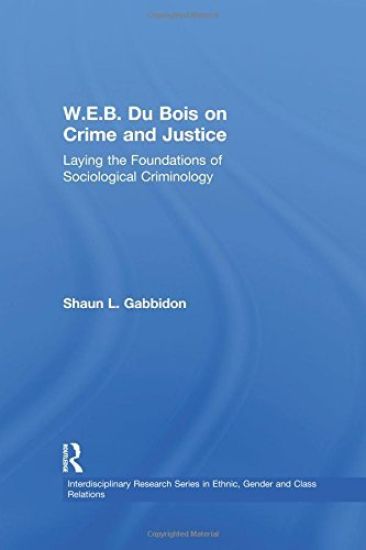
This is the first book to discern the contribution of Du Bois' work to criminology and criminal justice through a comprehensive review of his papers, articles and books. Beginning with reflections from his childhood, the author traces Du Bois' ideas on crime and justice throughout his life. This includes a unique analysis of Du Bois' experience as an object of the criminal justice system, a review of his FBI file, his 1951 trial and his pioneering social scientific research program at Atlanta University. The book illustrates the depth of Du Bois' interest in the field and reveals how he was a pioneer in key areas of criminology and criminal justice. The book contains five appendices which include four original papers written by Du Bois as well as maps from The Philadelphia Negro.


Abraham E B Hendershot (1811-1883) Genealogy including 138 individuals.

This book provides a new interpretation of the life of W.E.B. Du Bois, one of the most important African American scholars and thinkers of the 20th century.This revealing biography captures the full life of W.E.B. Du Bois—historian, sociologist, author, editor, and a leader in the fight to bring African Americans more fully into the American landscape as well as a forceful proponent of their leaving America altogether and returning to Africa. Drawing on extensive research and including new primary documents, sidebars, and analysis, Gerald Horne and Charisse Burden-Stelly offer a portrait of this remarkable man, paying special attention to the often-overlooked radical decades at the end of Du Bois's life. The book also highlights Du Bois's relationships with and influence on civil rights activists, intellectuals, and freedom fighters, among them Booker T. Washington, Marcus Garvey, Shirley Graham Du Bois, Louise Thompson Patterson, William Alphaeus Hunton, and Martin Luther King, Jr. The biography includes a selection of primary source documents, including personal letters, speeches, poems, and newspaper articles, that provide insight into Du Bois's life based on his own words and analysis.

In T.E.B., Dr. Alan Graber examines the influence and legacy of Dr. Thomas Evans Brittingham II, a legendary physician and educator at Vanderbilt University. Brittingham embodied what it meant to be a doctor. He taught his trainees-by his example-how to care for sick people. This book demonstrates Brittingham as an exemplar of a medical era when a doctor's history and physical exam were the principal means of diagnosis. Brittingham's practice of doctoring still represents the essence of good patient care. "This is much more than a biography. T.E.B. was a master of bedside clinical medicine and left his legend to a generation of young doctors. If anyone was ever 'called' to the profession of medicine, it was T.E.B." -Clifton K. Meador, MD, Professor of Medicine, Emeritus, Vanderbilt University

W.E.B. Du Bois spent many decades fighting to ensure that African Americans could claim their place as full citizens and thereby fulfill the deeply compromised ideals of American democracy. Yet he died in Africa, having apparently given up on the United States. In this tour-de-force, Elvira Basevich examines this paradox by tracing the development of his life and thought and the relevance of his legacy to our troubled age. She adroitly analyses the main concepts that inform Du Bois’s critique of American democracy, such as the color line and double consciousness, before examining how these concepts might inform our understanding of contemporary struggles, from Black Lives Matter to the campaign for reparations for slavery. She stresses the continuity in Du Bois’s thought, from his early writings to his later embrace of self-segregation and Pan-Africanism, while not shying away from assessing the challenging implications of his later work. This wonderful book vindicates the power of Du Bois’s thought to help transform a stubbornly unjust world. It is essential reading for racial justice activists as well as students of African American philosophy and political thought.

W.E.B. Du Bois spent many decades fighting to ensure that African Americans could claim their place as full citizens and thereby fulfill the deeply compromised ideals of American democracy. Yet he died in Africa, having apparently given up on the United States. In this tour-de-force, Elvira Basevich examines this paradox by tracing the development of his life and thought and the relevance of his legacy to our troubled age. She adroitly analyses the main concepts that inform Du Bois’s critique of American democracy, such as the color line and double consciousness, before examining how these concepts might inform our understanding of contemporary struggles, from Black Lives Matter to the campaign for reparations for slavery. She stresses the continuity in Du Bois’s thought, from his early writings to his later embrace of self-segregation and Pan-Africanism, while not shying away from assessing the challenging implications of his later work. This wonderful book vindicates the power of Du Bois’s thought to help transform a stubbornly unjust world. It is essential reading for racial justice activists as well as students of African American philosophy and political thought.

J.E.B. Stuart's Ride to Gettysburg: The History of the Most Controversial Cavalry Operation of the Civil War
Charles River
Createspace Independent Publishing Platform
2015
nidottu

W.E.B. Du Bois: Black Reconstruction (LOA #350)
W.E.B. Du Bois; Eric Foner; Henry Louis Gates
The Library of America
2021
sidottu
A collector's edition of the landmark study that changed our understanding of the Civil War's aftermath and the legacy of racism in America Upon publication in 1935, W.E.B. Du Bois's Black Reconstruction offered a revelatory new assessment of Reconstruction--and of American democracy itself. One of the towering African American thinkers and activists of the twentieth century, Du Bois brought all his intellectual powers to bear on America's post-Civil War era of political reorganization, a time when African American progress was met with a white supremacist backlash and ultimately yielded to the consolidation of the unjust social order underpinning Jim Crow. Black Reconstruction is a pioneering, exemplary work of revisionist scholarship that, in the wake of censorship toward Du Bois's characterization of Reconstruction by the Encyclopaedia Britannica, was written to debunk influential historians whose racist ideas and emphases had disfigured the historical record. The chief witness in Reconstruction, the emancipated slave himself, writes Du Bois, has been almost barred from court. His written Reconstruction record has been largely destroyed and nearly always neglected. In setting the record straight Du Bois produced what Eric Foner has called an indispensable book, a magisterial work of detached scholarship that is also imbued with passionate outrage. Here presented in a handsome hardcover edition, with an illuminating editor's introduction and an authoritative text, Black Reconstruction is joined, for the first time in a single volume with important writings that trace his thinking throughout his career about Reconstruction and its centrality in understanding American democracy.

W.E.B. Du Bois and the Sociological Imagination
Baylor University Press
2009
nidottu
Introducing and presenting thirty core texts from the sociological writings of W. E. B. Du Bois, Robert Wortham's unique reader highlights Du Bois as a multifaceted researcher and thinker who, by attempting to approach African American social life from every angle, became a pioneer in American sociology. As this astute reader demonstrates, in addition to his profound contributions to our understanding of racial inequality in the United States, Du Bois made momentous advances in the areas of research methods, social problems, community studies, population studies, the sociology of religion, and crime and deviance. When sociology appeared to be heading toward a deductive methodology, Du Bois presented a strong argument for inductive methods, advocating for the use of a more interdisciplinary approach. Eventually, combining sociological perspectives with those of history and anthropology, he developed his landmark approach: methodological triangulation.In this long-overdue volume, Wortham showcases the enormous influence of Du Bois's wide-ranging sociological imagination. Organized into four major parts--""The Scientific Study of Society and Social Problems,"" ""Social Structure and Social Processes,"" ""Dimensions of Inequality,"" and ""Social Dynamics""--the reader concludes with a complete biography of Du Bois' early sociological works.

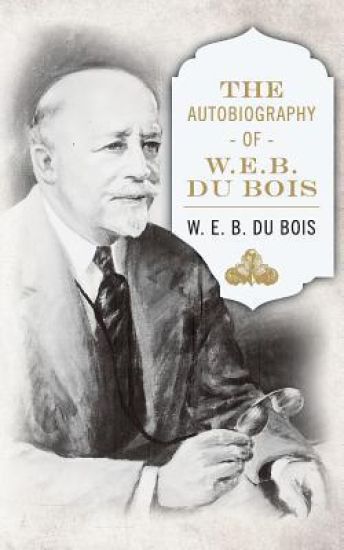
This edition of The Autobiography of W. E. B. Du Bois is the first to be arranged and dedicated in accordance with Du Bois's manuscript notes. It begins with these words: "I was born by a golden river and in the shadow of two great hills, five years after the Emancipation Proclamation which began the freeing of American Negro Slaves." Du Bois was born in the town where Berkshire Publishing Group is located. His autobiography tells the story of a little boy, the only Black boy in his school, who became the first African American PhD at Harvard, an educator, editor, and activist, and a writer of expressive, lyrical, and accessible prose. In this book, he explains why he chose to become a communist. While the communism he praised did not turn out to offer the utopia so many hoped for, the problems he identified are still with us. His reasoning will resonant with modern readers who share his frustration with the continued inequities in our society.The Autobiography is a fascinating and often horrifying look at the experience of a Black man in America. Literary critic Irving Howe called it "a classic of American narrative, . . . packed with information and opinion about the early years of Negro protest." But, like many, he found the later chapters, in which Du Bois reflects the official Communist views of the times, to read "as if they came from the very heart of a mimeograph machine." But these chapters, too, are part of US history. The short essay on Communism is especially worth reading it speaks to issues on our minds today, and puts Du Bois's communism in context. His reasoning, and emotion, will resonant with modern readers who share his frustration with the continued inequities in our society. While the Communism he praised did not turn out to offer the utopia so many hoped for, the problems he identified are still with us.And now that the chapters about his early life are in their proper place, we hope readers will note the personal and revelatory tone of the chapter "My Character." Along with an analysis of his own character, not always favorable, he discusses his sexual experience, including early ignorance, being raped as a young man by an unhappy landlady, and never convincing his wife that sexual relations were "the most beautiful of human experiences."Berkshire Publishing Group was founded in Great Barrington, the small western Massachusetts town where Du Bois was born and educated. He wrote eloquently about the town and its people, and he is remembered today as the most influential graduate of the town's schools. Berkshire is known for its focus on international issues, especially world history. We were thrilled when we learned that Du Bois had wanted to create an Encyclopedia Africana since we have specialized in similar projects. Equally relevant was hearing from Thomas Bender, a leading scholar of transnational history, that Du Bois's Harvard dissertation on the Atlantic slave trade was one of the first publications that could truly be called transnational history.
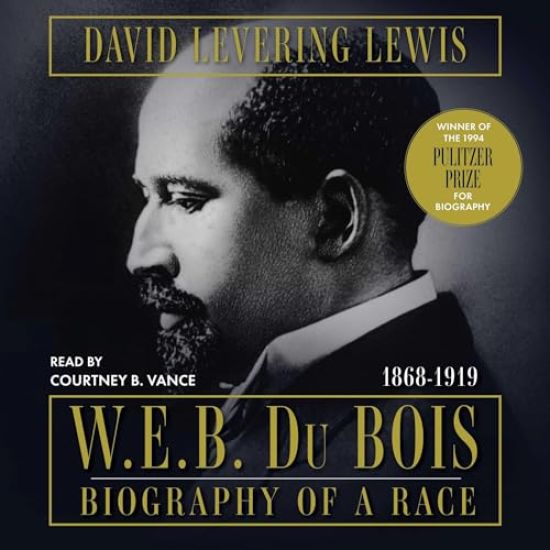
First time on audio The timeless Pulitzer Prize winner, the first in an epic two-volume biography that set the standard for historical scholarship on this era, narrated by Emmy and Tony Award winner Courtney B. Vance.This monumental biography by David Levering Lewis--eight years in the research and writing--treats the early and middle phases of a long and intense career: a crucial fifty-year period that demonstrates how W.E.B. Du Bois changed forever the way Americans think about themselves. William Edward Burghardt Du Bois?the premier architect of the civil rights movement in America?was a towering and controversial personality, a fiercely proud individual blessed with the language of the poet and the impatience of the agitator. In the first of his superlative two-volume biography, renowned scholar David Levering Lewis chronicles the first five decades of Du Bois's long and storied life, detailing in magisterial prose the momentous contributions to our national character that still echo today.

W.E.B. Du Bois, 1919-1963: The Fight for Equality and the American Century
David Levering Lewis
Simon Schuster Audio
2025
cd

R.E.B.E.L. Faith 30-Day Devotional: Real, Empowered, Bold, Encouraged, Living in the Word
Nerissa E. Grigsby
Concise Publishing
2020
nidottu

Black Lives 1900: W.E.B. Du Bois at the Paris Exposition
W E B Du Bois; David Adjaye
Distributed Art Publishers
2019
nidottu
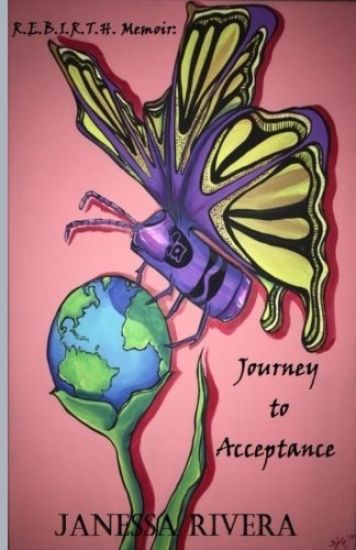
R.E.B.I.R.T.H Memoir: Journey to Acceptance
Janessa Rivera
Createspace Independent Publishing Platform
2017
nidottu
R.E.B.I.R.T.H is an acronym meaning Realizing Everyone Becomes Invincible Right Through Hurt. My work is a self-help guide that chronicles the stages of grief and healing one

E S T E B A N E S: Confesiones de Cordura Entrecortada
Efrain Perez Jr
Createspace Independent Publishing Platform
2017
nidottu
En esta novela autobiogr fica, acompa amos el ir y venir de Esteban y sus Est banes. Pasando por sus euforias hasta sus tristezas llenas de anhelos de libertad y del amor de su adorada hija. S per Steve, Esteban Diablo, Esteban Superior, Esteban Lee, Mediocr steban, Estebeinstein y otras voces lo acompa ar n en esta lucha por mantener la estabilidad de su cordura entrecortada.