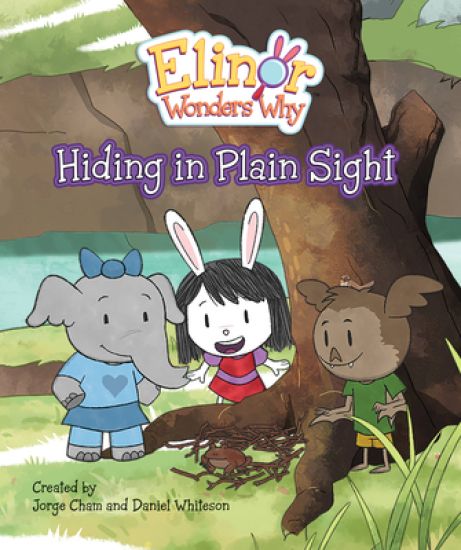
In this early reader graphic novel, part of the series based on the acclaimed PBS Kids show, Elinor the ever-inquisitive rabbit seeks to discover: what makes a good hiding spot? Elinor the rabbit is curious about everything. She loves to "follow her curiosity," make observations and test her ideas as she explores nature's mysteries. One day, Elinor's curiosity is piqued when she and her friends Olive (an elephant) and Ari (a bat) are playing hide-and-seek. Time after time, though the three friends choose what seem like perfectly good hiding spots, the goat twins Mary and Lizzie keep finding them And quickly How can they make themselves harder to find? Is the solution hiding in plain sight? Based on the Emmy-nominated PBS Kids television show Elinor Wonders Why, created by Jorge Cham and Daniel Whiteson, this unique early reader graphic novel series tells fictional stories with a science twist. It's sure to spark readers' interest in the natural world, inspire them to ask questions and teach them scientific skills. This title provides a perfect, easy-to-understand introduction to the concept of camouflage. Sidebars with science facts and key vocabulary words are interspersed throughout the story, and an activity at the end of the book teaches children how to observe the animals in their own neighborhood and identify which ones use camouflage to hide in plain sight. Highly visual, with simple text, it makes a great choice for a first graphic novel. There are excellent connections to life science lessons on animals, characteristics of living things and habitats here.
Just how tall can a tree grow? And why don't the biggest ones topple over? Elinor and her friends figure it out It's field trip day Elinor, Olive and Ari are going with their class to see some of the tallest trees in the world: giant sequoias. The friends are pretty sure the sequoias will be bigger than the trees in their neighborhood. But they never expect what they find when they walk deep into the forest and stand beside one of the largest of these giants They can't even see the top How tall is this tree? How does it grow so high and so straight? And why is its trunk so wide? The friends look for clues to solve the sequoia's mysteries --- and learn that trees and block towers have some things in common This fun early reader graphic novel is from a series based on the Emmy-nominated PBS Kids TV show Elinor Wonders Why, created by Jorge Cham and Daniel Whiteson. It encourages young children to be curious about the world around them, and to use science skills to help them figure things out. In this story, readers are introduced to physical science topics, including structures and stability, and life science topics such as plant habitats and the needs of living things. A step-by-step activity teaches a simple method for measuring the height of a tree. Sidebars throughout contain easy-to-digest science facts and key vocabulary words' meanings and pronunciations. The cheerful pages filled with brightly colored art and limited text make this a great series for introducing young readers to graphic novels.
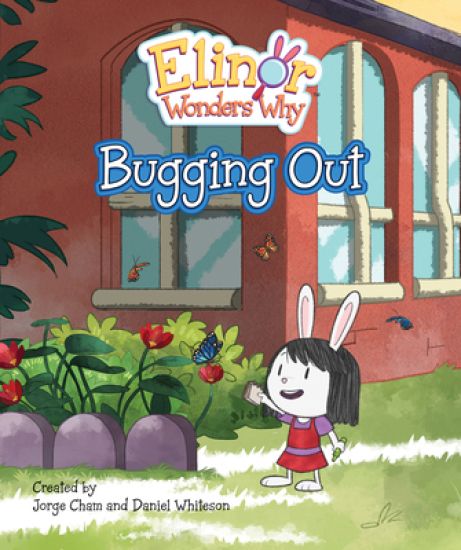
Elinor learns about butterflies as she makes the perfect costume for Insect Day Elinor knows just what type of insect she's going to be for Insect Day: a butterfly She loves butterflies' wings and all their colors. She plans how she'll make her costume, with her dad's help: cutting cardboard, painting the wings and gluing the pieces together. But there's something she needs to find out before she can get started. She knows butterflies have two antennae and four wings. But how many legs do they have? Luckily, Elinor is a pro at making observations. With her magnifying glass in hand, she goes to the garden in search of answers --- and finds some new questions along the way Part of the early reader graphic novel series from Jorge Cham and Daniel Whiteson, the creators and producers of the popular Emmy-nominated PBS KIDS television series Elinor Wonders Why, this fun STEM story will inspire curiosity in every child while teaching them scientific skills. Age-appropriate facts and key vocabulary words are interspersed throughout the pages, and an activity at the end of the book shows how to make a butterfly feeder. With its bright, colorful pages and simple text, this book is a great choice for introducing the graphic novel format to early readers. It complements life science lessons on insects, characteristics of living things and needs of living things.
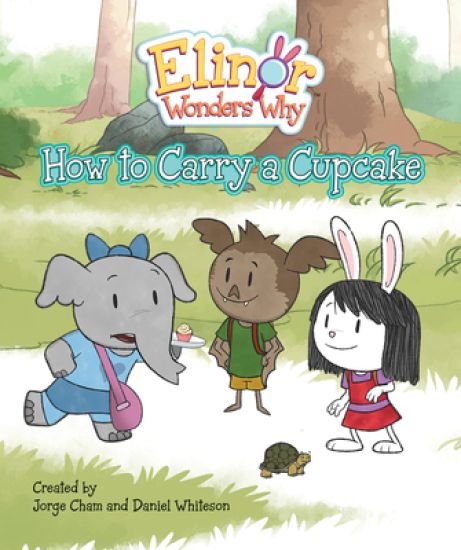
From the popular early reader graphic novel series, Elinor and her friends discover how nature provides many living things with hard outsides to keep their insides safe Elinor, Ari and Olive want to bring a cupcake to school to give to their teacher, Ms. Mole, for her birthday. But the last time Olive brought a cupcake, it got squished in her book bag. So Elinor and her friends need to figure out the best way to "stop the squish" and get the cupcake safely to school. On their walk home they notice that some animals, such as turtles and armadillos, are protected by hard shells. And coconuts are, too. Hmm, this may have given Elinor a perfect idea for transporting Ms. Mole's cupcake This early reader graphic novel is part of the popular series from Jorge Cham and Daniel Whiteson, the creators of the Emmy-nominated PBS KIDS TV series Elinor Wonders Why. It focuses on a topic that spans several science subjects, examining the characteristics and needs of both animals and plants in life science, as well as the technology of structures and even some engineering. As always in this series, science facts are presented as discoveries resulting from the characters' curiosity and their desire to solve a relatable problem. Sidebars with science facts and vocabulary words, along with their pronunciations, are interspersed throughout the story. An activity at the end of the book teaches how to test the strength of an eggshell. The engaging series, with bright visuals and simple text, encourages readers to have a curious mindset and use science to understand the world.
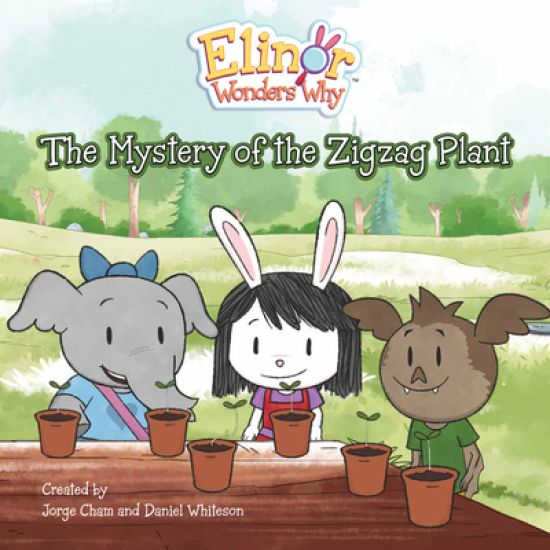
Elinor and her friends become plant detectives in this Elinor Wonders Why picture book for young children. Elinor and Olive check on their class plants before they leave school for the weekend. The plants have sprouted since they were planted as seeds. Now they're one crayon tall The friends are pleased with their progress. But when Elinor and Olive get back to school on Monday, they discover that one of the plants has grown in a zigzag - up, then to the side, then up again. Their teacher, Ms. Mole, told them most plants only grow up, toward the sun. So, what could have happened to this one? Young children will have their curiosity piqued and their science knowledge expanded in this Elinor Wonders Why picture book, based on the Daytime Emmy-nominated PBS KIDS series of the same name created by Jorge Cham and Daniel Whiteson. By asking questions, making observations and drawing conclusions, lovable characters Elinor, Olive and Ari figure out that the pot was knocked over just before the weekend, so the plant had to change direction to keep growing up - mystery solved Extra plant facts, a key vocabulary word and a simple activity in the back matter broaden the content. This entertaining read doubles as a resource for early life science explorations of growth and changes in plants, the needs of living things and the characteristics of living things.
Elinor and her friends solve a "sticky" mystery in this picture book based on the PBS KIDS series. Elinor is fascinated by the strap on Ari's cool new watch. It makes a skrrrrtch sound when he opens it, and then he can just press it closed again. "The two parts stick together like tape, but they aren't sticky " Elinor says. How does it work? She just has to figure it out With the help of Ari and Olive, Elinor decides to investigate which other things the material on the watch strap sticks to - the rug, a sweater - and which it doesn't - everything else, it seems. Then, while they're searching outside, some spiky seeds get stuck on Ari's sweater. Elinor discovers they make the same sound as the watch strap when she pulls them off. Could the seeds be a clue to unraveling the mystery? Based on the Daytime Emmy-nominated PBS KIDS series Elinor Wonders Why from creators Jorge Cham and Daniel Whiteson, this picture book is an excellent choice for wannabe inventors and curious junior scientists alike. It highlights how nature has given humans some great ideas, as the characters learn how Velcro works and how it was invented. The back matter includes fun facts about other inventions inspired by nature, a key vocabulary word and a simple activity to explore further. A thoroughly entertaining read, this book also works for lessons on structures and inventions and their connections to nature, as well as on the characteristics of living things.
Elinor and her friends investigate why they've never seen a baby butterfly, in this third picture book based on the popular TV series. On an outing to the park, Elinor, Ari and Olive can't decide whether they should watch butterflies (Ari's favorite) or caterpillars (Olive's favorite). This makes Elinor wonder: Why has she never seen a baby butterfly? They should try finding some in the park When they search, however, the butterflies they observe fluttering around the plants and flowers are all grown-ups - no babies. But then, they spot a cocoon and as they watch, something unusual happens If they pay close attention and do a bit of deducing, will they be able to solve the mystery of the missing baby butterflies? (And discover how Olive's and Ari's favorite animals are connected?) Butterflies and their metamorphosis are perennially popular topics for young children just learning how life cycles work. Beginning with the idea of a baby butterfly provides a fresh approach to the subject. As with the other titles in this series - based on the daytime Emmy-nominated PBS KIDS TV show Elinor Wonders Why created by Jorge Cham and Daniel Whiteson - Elinor and her friends follow their curiosity and work together to solve a science mystery, learning new things and having fun doing it. Material supporting the topic includes more facts about metamorphosis, a key vocabulary word, and a simple activity. This title has excellent life science curriculum connections to insects, characteristics of living things and habitats.
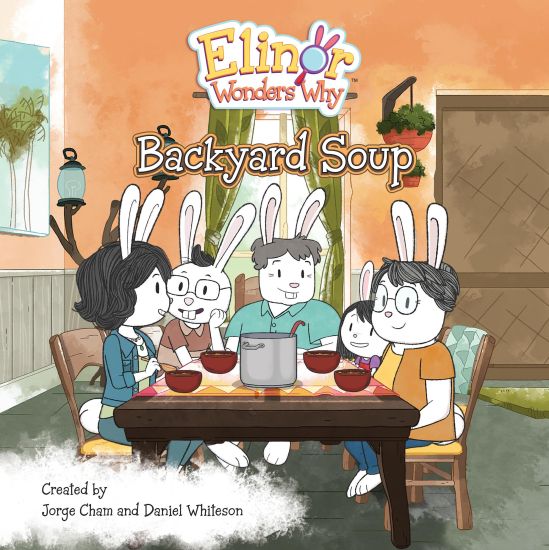
Elinor learns how plants survive in a hot and dry climate in this fourth picture book based on the popular TV series. Elinor loves making her famous backyard soup for her friends and parents. It's made with vegetables from her garden: peas, potatoes, cauliflower, carrots and radishes. Everyone loves it So when Elinor visits her grandparents in Desert Town, she decides to make backyard soup for them, too. But when she goes to collect the ingredients from her grandparents' garden, Elinor doesn't see any of the usual vegetables. Instead, she finds peppers, beans, squash and even cacti Why don't the vegetables that grow in her garden grow in Desert Town? Elinor's inquisitiveness leads her to discover how different types of plants grow in different climates. Using observation and exploration, and by making connections, Elinor learns about desert plants and their needs. This book is a perfect accompaniment to elementary lessons on plants and the many environments they grow in. Its entertaining story and endearing animal characters encourage curiosity and teach scientific skills. It's part of the picture book series based on the hit PBS KIDS TV show Elinor Wonders Why, created and produced by Jorge Cham and Daniel Whiteson and nominated for two Daytime Emmys. Back matter features science facts, a key vocabulary word and a fun activity.
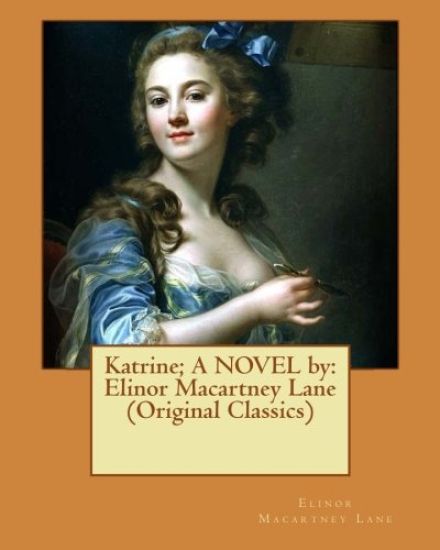
Elinor Macartney Lane (1864 - March 15, 1909) was an American novelist who was popular in the first decade of the 1900s. After publishing a number of short stories, she wrote three novels: Mills of God (1901), 2] Nancy Stair (1904), 3] and Katrine (1909)Born in Maryland, she later moved to Washington, where she attended high school and normal school, from which she graduated in 1882. She then taught in the public schools, specializing in mathematics. She married educator Francis Ransom Lane in 1891. She started writing at age 16, when she also started an occasionally published magazine called The Trifler. Her first novel Mills of God was published in 1901 Although it did not reach The Bookman 's Top 10 bestselling books list for the whole year of 1904, Nancy Stair was a best-selling book and received well by critics. It was adapted for the stage in 1905 by Paul M. Potter, who was best known for his hit play Trilby, an adaptation of the very popular 1894 novel. It played on Broadway at the Criterion Theatre for a month in 1905, though it was not a success. Lane's last novel, Katrine, was released almost coincident with her death in March 1909. It was the second-best selling novel in the United States for 190 After returning home from a trip to Europe, Lane died in Lynchburg, Virginia on March 15, 1909, while travelling to Asheville, North Carolina to recuperate from illness. Her home was at that time in Port Deposit, Maryland, where her husband was director of the Tome School.According to a report in the Book News Monthly after her death, she had been ill for some years and her death was not wholly unexpected. She reportedly had to write in an "absolutely dark room, with her head tightly bandaged, her writing managed only by a careful guiding of her pencil over the pape
Elinor Macartney Lane (1864 - March 15, 1909) was an American novelist who was popular in the first decade of the 1900s. After publishing a number of short stories, she wrote three novels: Mills of God (1901), 2] Nancy Stair (1904), 3] and Katrine (1909)Born in Maryland, she later moved to Washington, where she attended high school and normal school, from which she graduated in 1882. She then taught in the public schools, specializing in mathematics. She married educator Francis Ransom Lane in 1891. She started writing at age 16, when she also started an occasionally published magazine called The Trifler. Her first novel Mills of God was published in 1901 Although it did not reach The Bookman 's Top 10 bestselling books list for the whole year of 1904, Nancy Stair was a best-selling book and received well by critics. It was adapted for the stage in 1905 by Paul M. Potter, who was best known for his hit play Trilby, an adaptation of the very popular 1894 novel. It played on Broadway at the Criterion Theatre for a month in 1905, though it was not a success. Lane's last novel, Katrine, was released almost coincident with her death in March 1909. It was the second-best selling novel in the United States for 190 After returning home from a trip to Europe, Lane died in Lynchburg, Virginia on March 15, 1909, while travelling to Asheville, North Carolina to recuperate from illness. Her home was at that time in Port Deposit, Maryland, where her husband was director of the Tome School.According to a report in the Book News Monthly after her death, she had been ill for some years and her death was not wholly unexpected. She reportedly had to write in an "absolutely dark room, with her head tightly bandaged, her writing managed only by a careful guiding of her pencil over the pape
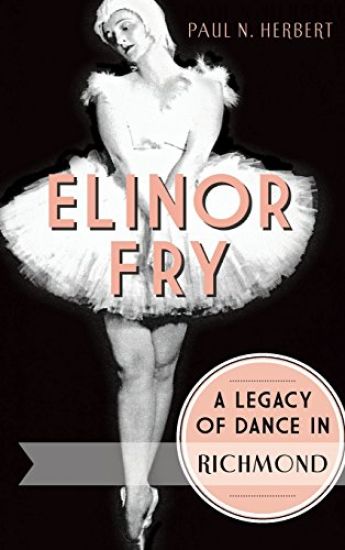
In Richmond, no other name is more synonymous with dance than Elinor Fry. Helen Keller, Bill Bojangles" Robinson and author Tom Wolfe were just some of the people with whom Fry connected in five decades of dance. From 1920 to 1970, Fry was involved, often accompanied by her beloved students, in nearly every major public event in the River City. Performing in an array of venues and photographed twice by "National Geographic," Fry was a blend of creativity and business savvy and a wonderful role model for thousands of children who learned dance in her studio. Join author and historian Paul Herbert as he celebrates Elinor Fry's spirit and exceptional achievements in the world of dance in Richmond."
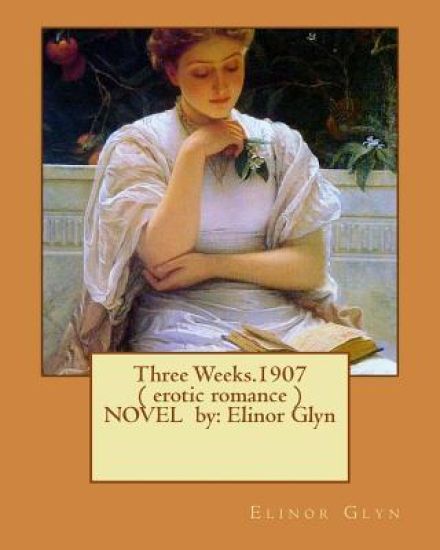
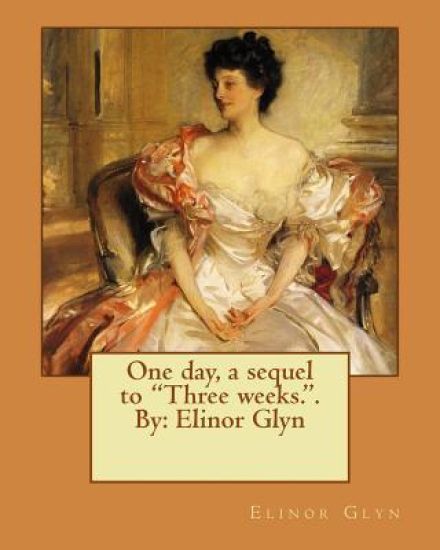
Elinor Glyn 17 October 1864 - 23 September 1943) was a British novelist and scriptwriter who specialised in romantic fiction that was considered scandalous for its time. Three Weeks is a 1907 erotic romance novel by Elinor Glyn. Paul Verdayne, wealthy English nobleman in his early twenties is caught embracing the parson's daughter. His parents decide to send him away to France and then Switzerland. In Switzerland, he sees a woman referred to only as "the Lady". The Lady is older, in her thirties. After several days of exchanging lustful glances, they actually meet. She invites him to her apartment where they share a sexual relationship for three weeks. Eventually, Paul learns that the Lady is actually the queen of a Russian dependency and that her husband, the king, is abusive towards her. She disappears after the titular three weeks and Paul is upset and returns to England. Paul later finds out that the Lady has given birth to their son. With his father's assistance, he finds out the Lady's identity; however, before they can meet again, she is murdered by her husband. Paul is upset and spends the next five years wandering around from country to country until he decides to make preparations to meet his son.