It is hoped that this book will be the beginning of a series of simple, readable accounts for Africans of some of the various objects of general interest in the world of to-day. There are many such works published for the use of English and American children. But the native African has a totally different experience of life, and much that is taken for granted by a child of a Northern civilized land needs explanation to one used to tropical uncivilized surroundings.
Cardiology to Impress is the ultimate guidebook for medical students preparing for the clinical experience. It is written in collaboration with top teaching consultants and newly qualified doctors who are familiar with the pitfalls of clinical attachments, and understand the fears and apprehensions when students are thrown into difficult exams and the hospital setting. This pocket-size handbook specifically outlines what medical students are to expect, and what is expected of them in clinics, theatres and in exam settings. It teaches how to be competent in front of senior doctors and provides useful tips on how to answer questions on ward rounds. This book does not mindlessly regurgitate facts, rather it tailors the facts to the clinical setting, thus bridging the gap between textbook knowledge and clinical practice in a way that enables the student to understand, and appreciate the clinical relevance of medical knowledge.
300 images and descriptions show highlights of the Cape Cod Museum of Art's 2,000-piece collection, The Cape Cod Museum of Art's 2,000-piece collection of the works of more than 500 artists tells a fascinating story. This book highlights over 120 of those artists and their works, which are included in this fine collection that has been built over three decades. Artists have had a rich tradition on Cape Cod, including the long-standing art colony in Provincetown that has drawn thousands of artists to this grand land. The museum celebrates over 35 years of these artists who have created pristine realism, impressionistic landscapes, insightful portraits, luminous still lifes, modernist paintings and sculptures, abstract adventures, and dramatic photographs, drawings, and prints. Along with the images, biographies of the artists, who represent the major art movements of the last 150 years, give insight into their remarkable talents and accomplishments, and a perspective on the creative culture on Cape Cod.
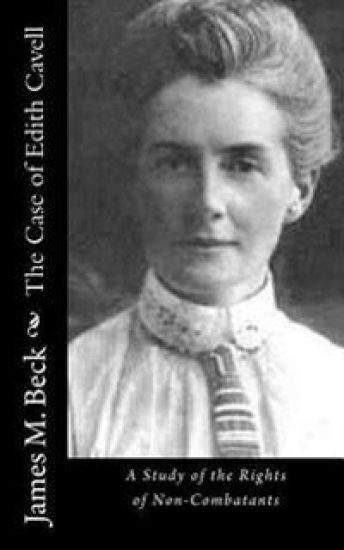
Edith Louisa Cavell; 4 December 1865 - 12 October 1915) was a British nurse. She is celebrated for saving the lives of soldiers from both sides without discrimination and in helping some 200 Allied soldiers escape from German-occupied Belgium during the First World War, for which she was arrested. She was accused of treason, found guilty by a court-martial and sentenced to death. Despite international pressure for mercy, she was shot by a German firing squad. Her execution received worldwide condemnation and extensive press coverage. She is well known for her statement that "patriotism is not enough". Her strong Anglican beliefs propelled her to help all those who needed it, both German and Allied soldiers. She was quoted as saying, "I can't stop while there are lives to be saved." 1] The Church of England commemorates her in their Calendar of Saints on 12 October. Edith Cavell, who was 49 at the time of her execution, was already notable as a pioneer of modern nursing in Belgium.
Rediscover the magic of a long-lost classic with "The Boy Who Brought Christmas" by Alice Morgan, a heartwarming tale that has been out of print for decades and is now lovingly republished by Alpha Editions. This enchanting story, restored for today s and future generations, is not just a reprint but a collector s item and a cultural treasure. Journey into a world where the spirit of Christmas is rekindled through the eyes of a young boy whose innocence and wonder bring joy to a town that has forgotten the true meaning of the season. With themes of hope, love, and the power of belief, this timeless narrative captures the essence of what makes Christmas truly special. Perfect for casual readers and collectors of classic literature alike, this beautifully restored edition invites you to experience the charm and nostalgia of a bygone era. Let "The Boy Who Brought Christmas" warm your heart and remind you of the enduring magic of the holiday season. Secure your copy today and cherish a piece of literary history that promises to inspire and delight for generations to come.
Edith Nesbit (married name Edith Bland; 15 August 1858 - 4 May 1924) was an English author and poet; she published her books for children under the name of E. Nesbit. She wrote or collaborated on more than 60 books of children's literature. She was also a political activist and co-founded the Fabian Society, a socialist organisation later affiliated to the Labour Party. Nesbit was born in 1858 at 38 Lower Kennington Lane in Kennington, Surrey (now part of Greater London), the daughter of an agricultural chemist, John Collis Nesbit, who died in March 1862, before her fourth birthday. Her sister Mary's ill health meant that the family travelled around for some years, living variously in Brighton, Buckinghamshire, France (Dieppe, Rouen, Paris, Tours, Poitiers, Angoul me, Bordeaux, Arcachon, Pau, Bagn res-de-Bigorre, and Dinan in Brittany), Spain and Germany, before settling for three years at Halstead Hall in Halstead in north-west Kent, a location which later inspired The Railway Children (this distinction has also been claimed by the Derbyshire town of New Mills). At eighteen, Nesbit met the bank clerk Hubert Bland in 1877. Seven months pregnant, she married Bland on 22 April 1880, though she did not immediately live with him, as Bland initially continued to live with his mother. Their marriage was a stormy one. Early on Nesbit discovered that another woman believed she was Hubert's fiancee and had also borne him a child. A more serious blow came later when she discovered that her good friend, Alice Hoatson, was pregnant with Hubert's child. She had previously agreed to adopt Hoatson's child and allow Hoatson to live with her as their housekeeper. After she discovered the truth, they quarrelled violently and she suggested that Hoatson and the baby should leave; her husband threatened to leave Edith if she disowned the baby and its mother. Hoatson remained with them as a housekeeper and secretary and became pregnant by Bland again 13 years later. Edith again adopted Hoatson's child. Nesbit's children were Paul Bland (1880-1940), to whom The Railway Children was dedicated; Iris Bland (1881-1950s); Fabian Bland (1885-1900); Rosamund Bland (1886-1950), to whom The Book of Dragons was dedicated; and John Bland (1898-1971) to whom The House of Arden was dedicated. Her son Fabian died aged 15 after a tonsil operation; Nesbit dedicated a number of books to him: Five Children and It and its sequels, as well as The Story of the Treasure Seekers and its sequels. Nesbit's adopted daughter Rosamund collaborated with her on the book Cat Tales.... A gentle tale of romance and art from a noted children's author . . . "He asked idle questions: she answered them with a conscientious tremulous truthfulness that showed to him as the most finished art. Betty told him nervously and in words ill-chosen everything that he asked to know, but all the while the undercurrent of questions rang strong within her -- 'When is he to teach me? Where? How' -- so that when at last there was left but the bare fifteen minutes needed to get one home in time for the midday dinner she said abruptly: 'And when shall I see you again'"
La Teor a Psicol gica Interpersonal del Suicidio (TPIS) explica el punto cr tico del paso de la ideaci n a la conducta suicida. A partir de sta se desarrollaron instrumentos que permiten identificar la presencia de variables proximales asociadas a la ideaci n y conducta suicida. Se aporta la propuesta de validaci n del Cuestionario de Necesidades Interpersonales (CNI) y Escala de Capacidad Adquirida del Suicidio (ECAS). Se us la traducci n directa, piloteo de escalas, alfa de Cronbach, test-retest, jueces expertos, an lisis factorial exploratorio (AFE), an lisis factorial confirmatorio (AFC) y prueba t relacionada. Las escalas sirven para medir el riesgo suicida y hacer prevenci n del mismo en poblaci n en riesgo.