Kirjojen hintavertailu. Mukana 11 244 527 kirjaa ja 12 kauppaa.

Kirjahaku

Etsi kirjoja tekijän nimen, kirjan nimen tai ISBN:n perusteella.

1000 tulosta hakusanalla Edith Piaf

Edith Landmann-Kalischer

Edith Landmann-Kalischer

OXFORD UNIVERSITY PRESS INC
2023
nidottu
This volume brings together essential essays by an important but neglected thinker in early twentieth-century German philosophy, Edith Landmann-Kalischer. As the first English translation of her writings, this volume represents a landmark step in the effort to restore to its rightful place her philosophy and, in particular, its methodologically unified approach to aesthetic, moral, and epistemic value. The three essays translated - “On the Cognitive Value of Aesthetic Judgments: A Comparison of Sensory Judgments and Value Judgments” (1905), “On Artistic Truth” (1906), and “Philosophy of Values” (1910) - demonstrate a philosophical mind at home with the then emerging disciplines of phenomenology and psychology during one of the most fecund eras of philosophy in German-speaking lands. Drawing on the ferment of this period and engaging with its leading thinkers (e.g., Brentano, Husserl), Landmann-Kalischer crafts a unique and powerful contribution to aesthetics, the philosophy of art, and value theory. And far from speaking simply to the concerns of her day, in these essays she tackles questions that remain as pressing for us today as they were in her time. Are beauty, goodness, and truth real or merely subjective? How do we experience these values? Does our experience of value lead to judgments that can be true or false? Can those experiences lead to knowledge? Is a science of value possible at all? In Landmann-Kalischer's essays, we find rigorously argued and compelling answers to these questions.
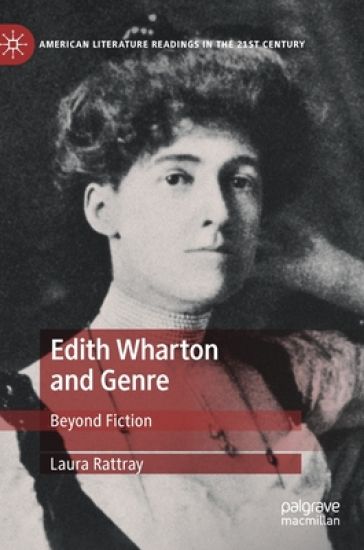
Edith Wharton and Genre

Edith Wharton and Genre

Laura Rattray

Palgrave Macmillan
2020
sidottu
Based on extensive new archival research, Edith Wharton and Genre: BeyondFiction offers the first study of Wharton’s full engagement with original writing ingenres outside those with which she has been most closely identified. So muchmore than an acclaimed novelist and short story writer, Wharton is reconsideredin this book as a controversial playwright, a gifted poet, a trailblazing travelwriter, an innovative and subversive critic, a hugely influential design writer, andan author who overturned the conventions of autobiographical form. Herversatility across genres did not represent brief sidesteps, temporary diversionsfrom what has long been read as her primary role as novelist. Each was pursuedfully and whole-heartedly, speaking to Wharton’s very sense of herself as anartist and her connected vision of artistry and art. The stories of these other EdithWhartons, born through her extraordinary dexterity across a wide range ofgenres, and their impact on our understanding of her career, are the focus of thisnew study, revealing a bolder, more diverse, subversive and radical writer thanhas long been supposed.
Edith and Winnifred Eaton

Edith and Winnifred Eaton

Dominika Ferens

University of Illinois Press
2002
sidottu
Daughters of a British father and a Chinese mother, Edith and Winnifred Eaton pursued wildly different paths. While Edith wrote stories of downtrodden Chinese immigrants under the pen name Sui Sin Far, Winnifred presented herself as Japanese American and published Japanese romance novels in English under the name Onoto Watanna. In this invigorating reappraisal of the vision and accomplishments of the Eaton sisters, Dominika Ferens departs boldly from the dichotomy that has informed most commentary on them: Edith's "authentic" representations of Chinese North Americans versus Winnifred's "phony" portrayals of Japanese characters and settings. Arguing that Edith as much as Winnifred constructed her persona along with her pen name, Ferens considers the fiction of both Eaton sisters as ethnography. Edith and Winnifred Eaton suggests that both authors wrote through the filter of contemporary ethnographic discourse on the Far East and also wrote for readers hungry for "authentic" insight into the morals, manners, and mentality of an exotic other. Ferens traces two distinct discursive traditions–-missionary and travel writing–-that shaped the meanings of "China" and "Japan" in the nineteenth century. She shows how these traditions intersected with the unconventional literary careers of the Eaton sisters, informing the sober, moralistic tone of Edith's stories as well as Winnifred's exotic narrative style, plots, settings, and characterizations. Bringing to the Eatons' writings a contemporary understanding of the racial and textual politics of ethnographic writing, this important account shows how these two very different writers claimed ethnographic authority, how they used that authority to explore ideas of difference, race, class and gender, and how their depictions of nonwhites worked to disrupt the process of whites' self-definition.
Edith Wharton's Inner Circle

Edith Wharton's Inner Circle

Susan Goodman

University of Texas Press
2011
pokkari
When Edith Wharton became friends with Henry James, she joined a group of men who became her "inner circle." This group included both well-known figures, such as James, Percy Lubbock, and Bernard Berenson, and several now forgotten, including John Hugh Smith, Walter Berry, Gaillard Lapsley, Robert Norton, and Howard Sturgis.Drawing on unpublished archival material by and about members of the circle, Susan Goodman here presents an intimate view of this American expatriate community, as well as the larger transatlantic culture it mirrored. She explores how the group, which began forming around 1904 and lasted until Wharton's death in 1937, defined itself against the society its founders had left in the United States, while simultaneously criticizing and accommodating the one it found in Europe. Tracing Wharton's individual relationships with these men and their relationships with one another, she examines literary kinships and movements in the biographical and feminist context of gender, exile, and aesthetics. She also relates the group to other literary circles, such as the Bloomsbury group and Gertrude Stein's salon.
Edith Wharton's Brave New Politics

Edith Wharton's Brave New Politics

University of Wisconsin Press
1995
sidottu
Most critics claim that Edith Wharton's creative achievement peaked with her novels ""The House of Mirth"" and ""The Age of Innocence"", dismissing her later fiction as reactionary, sensationalistic and aesthetically inferior. In ""Edith Wharton's Brave New Politics"", Dale M. Bauer overturns these traditional conclusions. She shows that Wharton's post-World War I writings are acutely engaged with the cultural debates of her day - from reproductive control, to authoritarian politics, to mass culture and its ramifications. Bauer examines the social and political critique implicit in Wharton's later works, from ""Summer"" (1917) to her last novel ""The Bucaneers"" (published posthumously in 1938). She integrates historical, political and feminist concerns to recast Wharton's antimodernism and to recover the novelist's understanding of public life and private morality. ""Edith Wharton's Brave New Politics"" illustrates how literary criticism can change the course of a literary career. In her refutation of the dominant interpretations of Wharton's literary work, Bauer challenges the prevailing conception of this genteel woman of letters, showing that to read Wharton's works in isolation from her complex politics is to misunderstand Wharton's aims and to miss entirely the exhilarating power of these later fictions.
Edith Wharton's Travel Writing

Edith Wharton's Travel Writing

Sarah Bird Wright

Palgrave Macmillan
1997
sidottu
The first book-length critical analysis of its kind, Edith Wharton's Travel Writing is an engaging study of Wharton's travel writing as the embodiment of her connoisseurship. Wright reveals how Wharton enacted a new dialectic of tourism by reconstituting what Blake Nevius calls the 'aesthetic spectra' in her travel texts. Wharton abandoned the examples set by American predecessors such as Washington Irving and Nathaniel Hawthorne, who led the 'artless travelers' of her parents' day to lakes, waterfalls, mountains, and ruins echoing sentimental legends and chose to emulate John Ruskin's precise visual observation and Bernard Berenson's scientific methods of appraisal.
Edith Wharton Abroad

Edith Wharton Abroad

Wharton Edith

St Martin's Press
1996
nidottu
Edith Wharton's seven works of travel have been called "brilliantly written and permanently interesting." For the first time, excerpts from each of these works have been made available to the general reader in a single volume. The collection spans a period of three decades: from the time of leisurely travel by chartered steam yacht, diligence, railway, and motor car during the belle epoque, through the horror and pathos of the French landscape during World War I, to the Morocco of 1917 - a country previously forbidden to most women and foreigners. Scornful of guidebooks, Edith Wharton focused instead on the "parentheses of travel" - the undiscovered by-ways of Europe, Morocco, and the Mediterranean. Among the sites she describes are the towns of Tirano, Brescia, Poitiers, and Chauvigny; the gardens of the Villa Caprarola and the Villa Aldobrandini, Frascati; Hippone and Goletta. Her account of Mount Athos in Greece (written in the recently discovered diary of her 1888 Mediterranean cruise), may be the first ever by an American. An intrepid reporter, she also depicts the front lines of Lorraine and the Vosges during World War I. She describes art, architecture, sculpture, and landscape with the eye of a knowledgeable connoisseur and the sensitivity of an observant and imaginative novelist. Open to all experiences, she is a voracious intellectual wanderer who often interprets the sights she sees in the light of the extensive historic, literary, and classical reading begun in her youth.
Edith Wharton's Social Register

Edith Wharton's Social Register

Preston C.

Palgrave USA
2000
sidottu
Edith Wharton's wide reading in the nascent disciplines of anthropology, sociology, and evolutionary theory of her day plays a role in her social fictions. She understands her world in binary terms of belonging and exile, of spatial boundaries and exclusions, and tribal behaviour. She applied that intellectual framework to the struggle to preserve the Old World from the territorial and cultural threat of the Great War. In linked thematic sections, Claire Preston considers ideas of tribal inclusion and banishment, buccaneer figures whose money-energy overcomes tribal demarcations, and expatriatism, the self-imposed mode of exile which fed Wharton's apparently chilly empiricism and was the origin of some of her most important work. She suggests that, against the claims of realism, Wharton should in fact be included in the early Modernist canon.
Edith Wharton's Prisoners of Consciousness

Edith Wharton's Prisoners of Consciousness

Evelyn E Fracasso

Praeger Publishers Inc
1994
sidottu
The metaphor of life as prison obsessed Edith Wharton, and, consequently, the theme of imprisonment appears in most of her 86 short stories. In the last several decades, critical studies of Wharton's fiction have focused on this theme of imprisonment, but invariably it is related to biographical considerations. This study, however, is not concerned with such insights and influences; rather, it concentrates on Wharton's skill as a craftsman in consciously and carefully fitting her narrative techniques to the imprisonment theme. Representative tales from Wharton's early period (1891-1904), her major phase (1905-1919), and her later years (1926-1937) have been examined and divided into four categories: individuals trapped by love and marriage, men and women imprisoned by the dictates of society, human beings victimized by the demands of art and morality, and persons paralyzed by fear of the supernatural.
Edith Wharton's Ethan Frome

Edith Wharton's Ethan Frome

Suzanne J. Fournier

Praeger Publishers Inc
2006
sidottu
A patrician who wrote most often of the fashionable 19th-century New York society she knew so well, Edith Wharton was inspired to write the novel Ethan Frome after spending summers at her home in Lenox, Massachusetts. Born during the Civil War and dying near the start of World War II, Wharton experienced the transformation of American society from a rural republic to an industrial power. Her experiences are reflected in her writing, and Ethan Frome is widely studied at all levels. This book is a systematic introduction to her novel.The guide draws upon Wharton's autobiography and letters to trace her literary and artistic development. In addition to a detailed plot summary, the book gives special attention to the influence of Nathaniel Hawthorne and other writers on her work. It also analyzes Wharton's style and themes and overviews the critical reception of her novel.
Edith Wharton

Edith Wharton

Katherine Joslin

Red Globe Press
1991
nidottu
19th century American writers often differ by gender in the stories they tell about the American experience. The male quest most often depicts the hero's journey away from the domestic world of women; the female quest situates the heroine within the domestic world of marriage and motherhood. This study considers Edith Wharton's fiction in opposition to both the male pastoral romance and the female domestic novel. Like other American women writers, Wharton places her protagonists within the social, domestic world. Unlike male romancers who celebrate escape from society, she depicts the inevitable bond or covenant between the individual and the group. Wharton differs, however, from the female novelists who celebrate domesticity by emphasizing the bonds or restrictions the group imposes on the individual.
Edith Wharton

Edith Wharton

Janet Goodwyn

Palgrave Macmillan
1989
sidottu
A study of Wharton's work which discusses her novels and travel books according to their specific geography or landscape rather than the date of composition. Emphasis is placed on Wharton's concern with America's place in the Western world and women's place in European society.
Edith Wharton

Edith Wharton

Janet Beer Goodwyn

Palgrave Macmillan
1995
nidottu
'...in this study, Goodwyn sets the standard for Wharton criticism.' - Judith E. Funston, American Literature 'Janet Goodwyn sets out, by looking at Wharton's appropriation of different cultures, to nail the 'canard' that she was 'but a pale imitator of Henry James' - Hermione Lee, Times Literary Supplement `The Land of Letters was henceforth to be my country and I gloried in my new citizenship'. So Edith Wharton described her elation upon the publication of her first collection of short stories; her nationality was henceforth `writer' and as such she moved with ease between landscapes, between cultures and between genres in the telling of her tales. In this acclaimed study of Wharton's work, the discussion is shaped by her use of specific landscapes and her consistent concern with ideas of place: the American's place in the Western world, the woman's place in her own and in European society, and the author's place in the larger life of a culture. Her landscapes, both actual and metaphorical, give structure and point to the individual texts and to the whole body of her work.
Edith Wharton's Social Register

Edith Wharton's Social Register

C. Preston

Palgrave Macmillan
1999
sidottu
Edith Wharton's wide reading in the nascent disciplines of anthropology, sociology, and evolutionary theory of her day plays a role in her social fictions. She understands her world in binary terms of belonging and exile, of spatial boundaries and exclusions, and tribal behaviour. She applied that intellectual framework to the struggle to preserve the Old World from the territorial and cultural threat of the Great War. In linked thematic sections, Claire Preston considers ideas of tribal inclusion and banishment, buccaneer figures whose money-energy overcomes tribal demarcations, and expatriatism, the self-imposed mode of exile which fed Wharton's apparently chilly empiricism and was the origin of some of her most important work. She suggests that, against the claims of realism, Wharton should in fact be included in the early Modernist canon.
Edith's Diary

Edith's Diary

Patricia Highsmith

Little, Brown Book Group
2015
pokkari
Edith's Diary is not a thriller, but a tautly written tale of one ordinary woman whose life is slipping out of control and whose grip on reality is loosening. It is considered by many to be Highsmith's masterpiece.
The Ghost Stories Of Edith Wharton

The Ghost Stories Of Edith Wharton

Edith Wharton

Virago Press Ltd
2019
sidottu
With a new introduction by Kelly LinkIn these powerful and elegant tales, Edith Wharton evokes moods of disquiet and darkness within her own era. In icy new England a fearsome double foreshadows the fate of a rich young man; a married farmer is bewitched by a dead girl; a ghostly bell saves a woman's reputation. Brittany conjures ancient cruelties, Dorset witnesses a retrospective haunting and a New York club cushions an elderly aesthete as he tells of the ghastly eyes haunting his nights.Stories include: The Lady's Maid's Bell; The Eyes; Afterward; Kerfol; The Triumph of Night: Miss Mary Pask; Bewitched; Mr Jones; Pomegranate Seed; The Looking Glass; All Souls'Also includes an Introduction and Autobiographical Postscript by the author.
Edith's Story

Edith's Story

Edith Velmans

Little, Brown Book Group
2025
nidottu
THE EXTRAORDINARY TRUE STORY OF HOW ONE YOUNG GIRL ESCAPED THE HOLOCAUST'It holds you with the same intensity as The Diary of Anne Frank and leaves you heart-broken, illuminated, and amazed at the capacity for courage' GUARDIAN***'I never realised that there could be such suffering in the world, and that anyone could live through it' - from Edith's diary, 1st July 1945After Germany occupied the Netherlands in 1940, fourteen-year-old Edith was still filling her diary with carefree stories of school, parties and boys. But her entries soon record a darkening world. By 1942, as the Nazis escalated their persecution of the Jewish population, Edith began a bitter struggle to survive.Hidden in plain sight but a courageous Christian family, with a German officer billeted in the next room, Edith faced the horrors of war under constant threat of discovery and betrayal. Weaving together Edith's diaries with letters smuggled between family members and her own memories, this extraordinary memoir of 'the Anne Frank who lived' is a profoundly moving account of grief, loss, courage - and one girl's remarkable belief in humanity in the face of despair.WITH A NEW INTRODUCTION BY ESTHER FREUD 'One of the best and most moving memoirs I have ever read' RUTH RENDELL'It's impossible to get through this inspiring and great-hearted volume dry-eyed' WASHINGTON POST'Both memoir and meditation, it is moving and wise . . . neither sanguine nor sentimental about the Holocaust and man's capacity for evil' LINDA HOLT, INDEPENDENT'Truly moving . . . leaving one with great hope in humanity' THE TIMESA VIRAGO MODERN CLASSIC
Edith Stein and Regina Jonas

Edith Stein and Regina Jonas

Emily Leah Silverman

Routledge
2019
nidottu
First published 2013. This ground-breaking book examines the lives of two extraordinary, religious women. Both Edith Stein and Regina Jonas were German Jewish women who demonstrated 'deviant' religious desires as they pursued their spiritual paths to serve their communities during the Holocaust. Both were religious visionaries viewed as iconoclasts in their own times. Stein, the first woman to receive a doctorate in philosophy from Husserl, the founder of phenomenology, claimed her Jewish identity while she was still a cloistered Carmelite nun. Jonas, the first woman rabbi in Jewish history, served as a rabbi in Berlin and Theresienstadt concentration camp. A study of a contemplative and a rabbi, the book ranges across many spiritual and theological questions, not least it offers a remarkable exploration of the theology of spiritual resistance. For Stein, this meant redemption and the transmutation of suffering on the cross; for Jonas, acts of compassion bring the face of God into our presence.