
Kirjahaku
Etsi kirjoja tekijän nimen, kirjan nimen tai ISBN:n perusteella.
1000 tulosta hakusanalla Edward Chitham
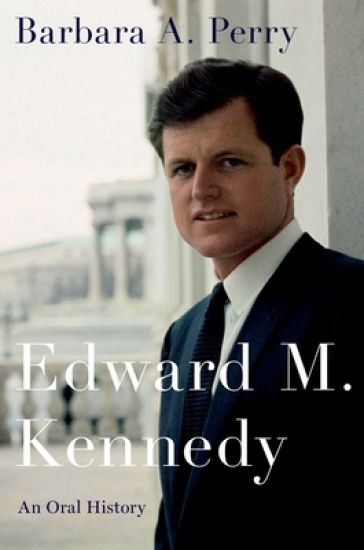
For Kennedy devotees, as well as readers unfamiliar with the "lion of the Senate", this book presents the compelling story of Edward Kennedy's unexpected rise to become one of the most consequential legislators in American history and a passionate defender of progressive values, achieving legislative compromises across the partisan divide. What distinguishes Edward Kennedy: An Oral History is the nuanced detail that emerges from the senator's never-before published, complete descriptions of his life and work, placed alongside the observations of his friends, family, and associates. The senator's twenty released interviews reveal, in his own voice, the stories of Kennedy triumph and tragedy--from the Oval Office to the waters of Chappaquiddick. Spanning the presidencies of JFK to Barack Obama, Edward Kennedy was an iconic player in American political life, the youngest sibling of America's most powerful dynasty; he candidly addresses this role: his legislative accomplishments and failures, his unsuccessful run for the White House, his impact on the Supreme Court, his observations on Washington gridlock, and his personal faults. The interviews and introductions to them create an unsurpassed and illuminating volume. Gathered as part of the massive Edward Kennedy Oral History Project, conducted by the University of Virginia's Miller Center, the senator's interviews allow readers to see how oral history can evolve over a three-year period, drawing out additional details as the interviewee becomes increasingly comfortable with the process and the interviewer. Yet, given the Kennedys' well-known penchant for image creation, what the senator doesn't say or how he says what he chooses to include, is often more revealing than a simple declarative statement.
A scholarly edition of poems by Edward, Lord Herbert of Cherbury. The edition presents an authoritative text, together with an introduction, commentary notes, and scholarly apparatus.
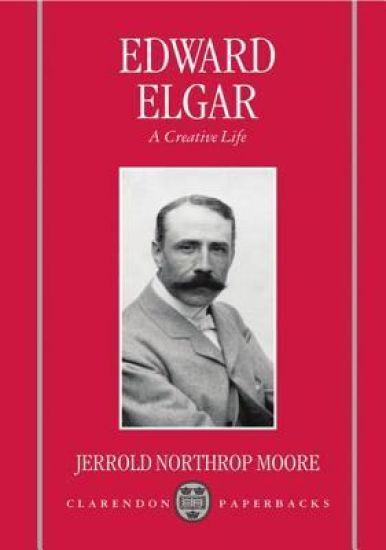
Edward Elgar is among the greatest of all English composers, and this major biography, the culmination of twenty years' work, is probably the most complete and perceptive study of the composer to date. Drawing on the vast amount of source material, much of it previously unpublished, Jerrold Northrop Moore presents Elgar's life and works as inseparable parts of a single creative career. This classic study, unavailable for many years, is here reissued as a Clarendon Paperback.
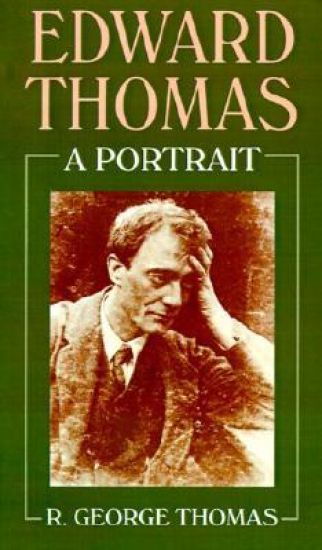
Edward Thomas 1878-1917, published author, critic, and essayist, died at 39, a casualty of World War I. At the suggestion of his friend Robert Frost, Thomas began to write poetry and six months after his death his first book of poems was published. As the prose writer died, the poet was born, and it is on the poems that his reputation still rests. This new biography--based on some 1,800 of Thomas's letters--tells the story of his courtship, his restless marriage, and his tormented need to choose between happiness with his wife and children and the need to find his way as a writer alone. With delicacy and understanding the book describes Thomas's complex character and his pilgrimage on the road to self-discovery, and reveals how the emergence of Thomas the poet became inevitable.
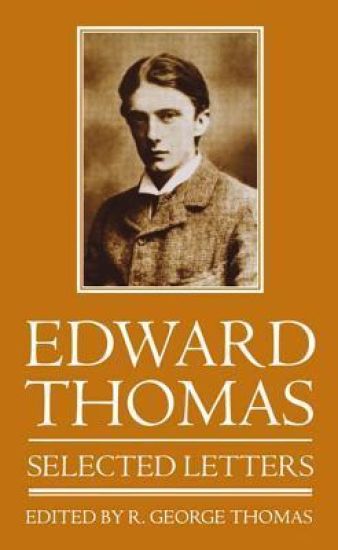
Edward Thomas, professional author and critic, was thirty-nine when he was killed in the Arras offensive on Easter Day, 1917. Six months later his first collection of poems was published and his literary reputation secured. These Selected Letters present a uniquely vivid portrait of Thomas's life, from his time as an undergraduate at Oxford through to his final days at the Front. Chosen from more than 2,000 extant letters from Thomas to his family and literary friends - including Robert Frost, Walter de la Mare, and Eleanor Farjeon - the selection traces his struggle to establish himself as a writer, his long and successful fight against depression, and, amid the strain of a marriage which sometimes brought much agony, the strength of his love for his wife Helen. The letters, which formed a key source for R George Thomas's highly praised biography of a poet, help substantiate the editor's belief that despite Thomas's immense prose output and the late flowering of his verse in 1914-1916, it was nevertheless the name and nature of poetry that was Edward Thomas's dominant lifelong concern.
Edward Gibbon's presentation of character in both the History of the Decline and Fall of the Roman Empire and in his posthumously published Memoirs demonstrates a prevailing interest in the values of transcendent heroism and individual liberty, but also an insistent awareness of the dangers these values pose to coherence and narrative order. In this study, Charlotte Roberts demonstrates how these dynamics also inform the 'character' of the Decline and Fall: in which ironic difference confronts enervating uniformity; oddity counters specious lucidity; and revision combats repetition. Edward Gibbon and the Shape of History explores the Decline and Fall as a work of scholarship and of literature, tracing both its expansive outline and its expressive details. A close examination of each of the three instalments of Gibbon's history reveals an intimate relationship between the style of Gibbon's narrative and the overall shape of his historiographical composition. The constant interplay between style and substance, or between the particular details of composition and the larger patterns of argument and narrative, informs every aspect of Gibbon's work: from his reception of established and innovative historiographical conventions to the expression of his narrative voice. Through a combination of close reading and larger literary and scholarly analysis, Charlotte Roberts conveys a sense of the Decline and Fall as a work more complex and conflicted, in its tone and structure, than has been appreciated by previous scholars, without losing sight of the grand contours of Gibbon's superlative achievement.
Edward Lear and the Play of Poetry
Oxford University Press
2016
sidottu
Of all the Victorian poets, Edward Lear has a good claim to the widest audience: admired and championed by critics and poets from John Ruskin to John Ashbery, he has also been read, heard, and loved by generations of children. As a central figure in the literature of nonsense Lear has also shaped the evolution of modern literature, and his work continues to influence and inspire writers and readers today. This collection of essays, the first ever devoted solely to Lear, builds on a recent resurgence of critical interest and asks how it is that the play of Lear's poetry continues to delight, and to challenge our sense of what poetry can be. These seventeen chapters, written by established and emerging critics of poetry, seek to explore and appreciate the playfulness embodied in the poems, and to provide contexts in which it can be better understood and enjoyed. They consider how Lear's poems play off various inheritances (the literary fool, Romantic lyric, his religious upbringing), explore particular forms in which his playful genius took flight (his letters, his queer writings about love), and trace lines of Learical influence and inheritance by showing how other poets and thinkers across the nineteenth and twentieth centuries played off Lear in their turn (Stein, Eliot, Auden, Smith, Ashbery, and others).

Edward Thomas: Prose Writings: A Selected Edition
Oxford University Press
2017
sidottu
Edward Thomas is a key figure in the English literary canon. A major twentieth-century poet, he was also one of England's most experienced and respected Edwardian and Georgian critics, and an exceptional observer of the countryside. Although he died at the age of only 39, his prose output was considerable and encompassed a wide range of genres: biography, autobiography, essays, reviews, fiction, nature books, travel writings, and anthologies. While Thomas's stature as a poet is widely appreciated, his prose works have yet to be given their critical due -- in large part because scholarly editions have hitherto been lacking. Edward Thomas: Prose Writings: A Selected Edition shows that Thomas's prose deserves to be much better known by literary scholars but also the general reading public. This six-volume edition establishes him as one of the most important prose writers in English, who contributed remarkable ideas and representations of the self and community, the landscape and ecology, literature and history, the spiritual and artistic life. It is the definitive edition of Thomas's prose and a significant scholarly resource for the twenty-first century. Volume V is dedicated to Edward Thomas's work in literary criticism. Known as a diverse and prolific reviewer of literature, including of modern poetry, Thomas also wrote a significant number of broadly critical studies at book length. These books helped alter his established reputation as a nature writer, and included studies of Lefcadio Hearn, Maurice Maeterlinck, and of Keats. Volume 5 reproduces the two most important of his works in criticism: Thomas's Algernon Charles Swinburne: A Study (1912) and Walter Pater: A Study (1913). These are important texts in the last few years of Thomas's career as a prose writer, in which obliquely he assesses his own relationship with prose and with creative language, analysing via two other writers what were some of the largest challenges for his authorship. Presented as an evaluation of two major Victorian writers, the two books are best understood as self-examination. And they are also, as the Introduction argues, telling versions of Thomas's 'unlived lives': in assessing both Swinburne and Pater, Thomas contemplates lives that he had not himself led. The books are suffused with his own dismay, self-criticism, longing, and desire. They are unmissable steps on Thomas the poet's way to discovering that prose was not the best literary form for his self-expression. Fully annotated, this edition draws widely on the surviving manuscripts of these two works to present a unique insight into Thomas at work, finding the physical traces in the manuscript record of the very troubles he was claiming true of two other writers. The edition also adds further literary material, including reviews and an early Paterian short-story by Thomas to indicate something of his debts -- sometimes despite his protestations -- to authors of the previous generation.

Edward Thomas: Prose Writings: A Selected Edition
Oxford University Press
2023
sidottu
Edward Thomas can be seen as the most important poetry critic in the early twentieth century. Thomas was a prose-writer before he was a poet. The Selected Edition of his prose, and especially this volume, shows that he was also a critic before he was a poet. His unusual literary career opens up key questions about the relation between poetry and criticism, as well as between poetry and prose. Thomas wrote books about poetry, but his criticism mainly took the form of reviews. He reviewed collections, editions, and studies of poetry, most regularly, for the Daily Chronicle and the Morning Post. These reviews amount to a unique commentary on the state of poetry and of poetry criticism after 1900. Since reviewing provided Thomas's main income, he also reviewed other kinds of book. Hence the sheer mass of his reviews, the stress he suffered as a literary journalist. Yet his criticism maintains an astonishingly high standard. Thomas's response to contemporary poetry intersects with his readings of older poetry. No critic or poet of the time was so deeply acquainted with the traditions of English-language poetry or so alert to new poetic movements in Ireland and America. Edward Thomas's writings on poetry have a double importance. Besides suggesting the hidden evolution of his own aesthetic, they constitute a lost history and critique of poetry before the Great War. They change our assumptions about that period. Thomas's perspectives on poets such as Yeats, Hardy, Frost, Lawrence, and Pound illuminate the making of modern poetry.
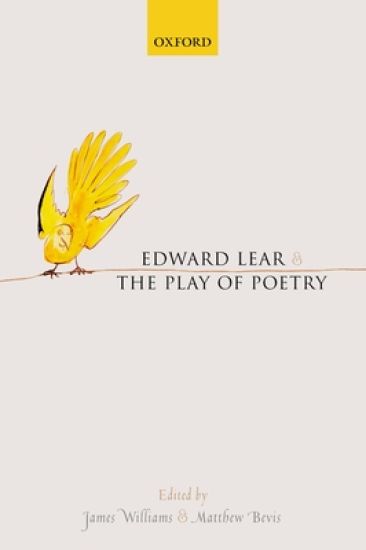
Edward Lear and the Play of Poetry
Oxford University Press
2019
nidottu
Of all the Victorian poets, Edward Lear has a good claim to the widest audience: admired and championed by critics and poets from John Ruskin to John Ashbery, he has also been read, heard, and loved by generations of children. As a central figure in the literature of nonsense, Lear has also shaped the evolution of modern literature, and his work continues to influence and inspire writers and readers today. This collection of essays-the first ever devoted solely to Lear-builds on a recent resurgence of critical interest and asks how it is that the play of Lear's poetry continues to delight, and to challenge our sense of what poetry can be. These seventeen chapters, written by established and emerging critics of poetry, seek to explore and appreciate the playfulness embodied in the poems, and to provide contexts in which it can be better understood and enjoyed. They consider how Lear's poems play off various inheritances (the literary fool, Romantic lyric, his religious upbringing), explore particular forms in which his playful genius took flight (his letters, his queer writings about love), and trace lines of Learical influence and inheritance by showing how other poets and thinkers across the nineteenth and twentieth centuries played off Lear in their turn (Joyce, Stein, Eliot, Auden, Smith, Ashbery, and others).

Edward Thomas (1878-1917) is a renowned poet. Until recently, his prose writing has, by comparison, been neglected and very often dismissed by critics. Thanks not least to the multi-volume new edition being published by OUP (gen. eds. Guy Cuthbertson and Lucy Newlyn), this body of work is being re-evaluated. This new study by Ralph Pite forms part of that undertaking; it is the first to consider Thomas's prose on its own terms, independently of the poetry that it preceded. By considering all of Thomas's prose work in its wide variety of genres (nature writing, literary criticism, fiction, autobiography) and by drawing, for the first time, on the whole range of his reviewing, this study transforms understanding of his development. The continuity of his critical perspective emerges; his Celtic loyalties, their nature and their depth, are revealed; both the complexity and the conviction of his politics are brought to light, alongside his receptive alertness to innovative writing and his own originality and daring as a writer. The view of his achievement generated by his interwar reception (itself the outcome of societal mourning and griefwork) is challenged; so is the critical consensus regarding the quality of his prose and the reasons behind its changing styles across Thomas's career. From all of this, it becomes clear, moreover, how powerfully Thomas's work speaks in the contemporary moment of environmental and climate breakdown. Thomas's prose seeks constantly to articulate a relationship of absolute interdependence between human beings and the natural world. His writing is so exploratory and original because Thomas seeks to address the problematic reality that interdependence--this truth of humanity's place in natural world--is perceptible to Western eyes only as mystery.

Edward Thomas: Prose Writings: A Selected Edition
Oxford University Press
2011
sidottu
Edward Thomas is an important figure in the English literary canon, a major twentieth-century poet, he was also one of England's most experienced and respected Edwardian and Georgian critics, and an observer of the countryside second to none. Although he died at the age of only 39, his prose output was massive and encompassed a range of genres: biography, autobiography, essays, reviews, fiction, nature books, travel writings, and anthologies. While Thomas's stature as a poet is widely appreciated, his prose works have yet to be given their critical due - in large part because scholarly editions have hitherto been lacking. Edward Thomas: Prose Writings: A Selected Edition shows that Thomas's prose deserves to be much better known, by literary scholars but also the general reading public. This six-volume edition establishes him as one of the most important prose writers in English, who contributed remarkable ideas and representations of the self and community, the landscape and ecology, literature and history, the spiritual and artistic life. It is the definitive edition of Thomas's prose and a significant scholarly resource for the twenty-first century. The second volume contains Thomas's writings on England and Wales, and is mostly concerned with his response to the countryside. It covers the entirety of his writing career, showing the development of his identity and style. Works appear in chronological order within the volume, which begins with a comprehensive introduction, providing biographical details, an account of the circumstances of composition, historical contextualisation of the volume's themes and concerns, and an interpretation based on original research. Thomas's complex and brilliant prose, intricately woven using many quotations and allusions, is elucidated by a detailed headnote at the start of each work, and by extensive annotation.

Edward Thomas: Prose Writings: A Selected Edition
Oxford University Press
2011
sidottu
Autobiographies is the first volume in Edward Thomas: Prose Writings: A Selected Edition. It contains the autobiographical prose of one of the most respected British writers of the twentieth century, including the autobiographical story The Happy-Go-Lucky Morgans, the posthumously published 'autobiography' The Childhood of Edward Thomas, the essay 'How I Began', the previously unpublished 'Addenda to Autobiography', and a long section from 'Fiction' (also previously unpublished). In these works, all written between 1912 and 1914, Thomas provides a remarkable portrait of his childhood and teenage years in London, Wiltshire, and Wales. Writing this prose was a journey away from a troubled present back into earlier and happier experiences, but these unique autobiographies also have much in common with his other prose works. The complexity and brilliance of Thomas's autobiographical prose is discussed and revealed in a long introduction, by a detailed headnote at the start of each work, and by extensive annotation. Thomas's prose has never previously been given the scholarly attention that it receives here. Although Thomas's autobiographies are very accessible, and written with a longing for the simplicity of childhood, they are also intricately woven, using many quotations and allusions. The longest of the works, The Happy-Go-Lucky Morgans, is both his simplest prose work and his most complex. Indeed, Autobiographies contains some of Thomas's finest prose, written in the two years, and in some cases merely a few months, before his decision to start writing the poetry for which he is most, and greatly, esteemed. Edward Thomas: Prose Writings: A Selected Edition will appeal to those who know and admire his prose, as well as those who have never encountered it before, and show that Thomas's prose, not least his autobiographical prose, deserves to be much better known.
Edward Thomas: Prose Writings: A Selected Edition
Oxford University Press
2018
sidottu
Edward Thomas is an important figure in the English literary canon, a major twentieth-century poet, he was also one of England's most experienced and respected Edwardian and Georgian critics, and an observer of the countryside second to none. Although he died at the age of only 39, his prose output was massive and encompassed a range of genres: biography, autobiography, essays, reviews, fiction, nature books, travel writings, and anthologies. While Thomas's stature as a poet is widely appreciated, his prose works have yet to be given their critical due - in large part because scholarly editions have hitherto been lacking. Edward Thomas: Prose Writings: A Selected Edition shows that Thomas's prose deserves to be much better known, by literary scholars but also the general reading public. This six-volume edition establishes him as one of the most important prose writers in English, who contributed remarkable ideas and representations of the self and community, the landscape and ecology, literature and history, the spiritual and artistic life. It is the definitive edition of Thomas's prose and a significant scholarly resource for the twenty-first century. The third volume provides the annotated texts of two biographies by Thomas: Richard Jefferies: His Life and Work (1909) and George Borrow: The Man and His Books (1912). A detailed introduction addresses a range of matters relating to the subjects of these two biographies as well as to Thomas's approach to them. Among the topics discussed in relation to Jefferies are: the correspondences between Jefferies' life and Thomas's; the influence of Jefferies on Thomas's thought and writing, including such matters as mystical experience and the passage of time; Thomas's unwarranted anxieties about the quality of the biography; and the high standing of the biography in the century since its publication. Among the topics discussed in relation to Borrow are: Thomas's ambivalence towards his subject; the influence of Borrow on later attitudes to walking and the open air, particularly as these were expressed in literature; the popular and literary interest (again attributable in part to Borrow's influence) in Romani life; and the way in which Thomas's approach to the Borrow biography, with its emphasis on the value of impressions as distinct from facts, chimes with Modernist thinking about the nature of narrative. The edition's extensive notes provide further insights into the texts and their cultural context.

Edward Said
University of Chicago Press
2005
nidottu
In Edward Said: Continuing the Conversation, Edward Said's long-time friends and collaborators continue their dialogue with Said where they left off following his death in the fall of 2003. The essays, imagining and recalling the cadences of Said's conversation, take various forms, including elaborations on his ideas, applications of his thought to new problems, and recollections of the indescribable electricity that made conversation with him intense and memorable. This lively, personal tone is a direct result of editors Homi Bhabha and W. J. T. Mitchell urging contributors to write in the spirit of a conversation interrupted, a call on hold, a letter waiting for a reply, a question hanging in the air. This is a work of immense imaginative and intellectual force and compelling candor, honoring Said's legacy as an activist intellectual. This collection includes essays by Lila Abu-Lughod, Daniel Barenboim, Akeel Bilgrami, Paul Bove, Timothy Brennan, Noam Chomsky, Ranajit Guha, Harry Harootunian, Saree Makdisi, Aamir Mufti, Roger Owen, Gyan Prakash, Dan Rabinowitz, Jacqueline Rose, and Gayatri Spivak.
This third volume of the Selected Papers of Edward Shils brings together ten essays, three of which have never been published before and all the others of which have been completely revised and elaborated. They deal with the history of American and European sociology as an intellectual undertaking and as a means to the attainment of practical ends. Professor Shils's main themes are the influence of ethical and practical intentions on scholarly study in the social sciences, the autonomy of the intellectual tradition of sociology, and the significance of the institutional organization of sociological teaching and research.

Do you know the six skills used to describe? Edward Echidna is grumpy because he doesn't know the describing tools, and his teacher has given him a describing-your-backyard homework task. Can Grandpa Echidna help Edward learn to describe? Learn the six skills needed to describe, along with Edward.
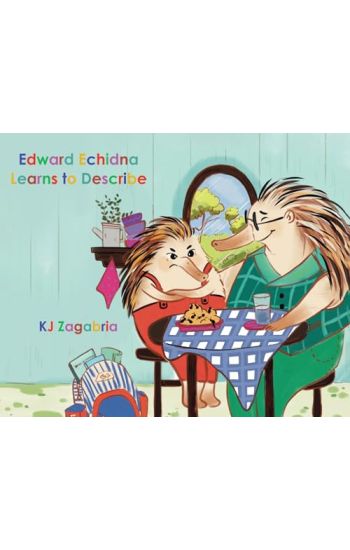
Do you know the six skills used to describe? Edward Echidna is grumpy because he doesn't know the describing tools, and his teacher has given him a describing-your-backyard homework task. Can Grandpa Echidna help Edward learn to describe? Learn the six skills needed to describe, along with Edward.
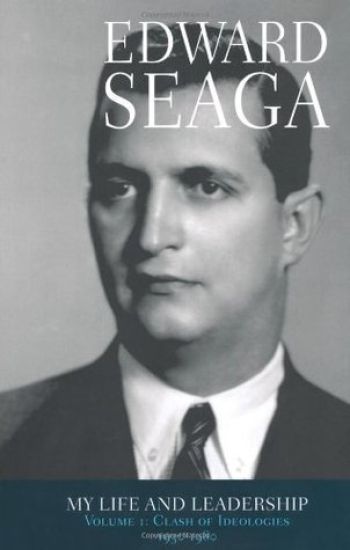
Edward Seaga is one of the outstanding politicians of Jamaican history, certainly the most creative and controversial. His autobiography offers a unique insight into the emergence of modern Jamaica, a journey characterized by inspiring idealism, ideological intrigue, bold strategizing, violent conflict and a triumphant finale. The young protege of legendary National Hero and Leader of the Jamaica Labour Party, Alexander Bustamante, Harvard graduate Edward Seaga was drawn to the roots of Jamaican folk society as a live-in research student of the life of the poor in rural and inner-city communities. He rose dramatically through the political ranks to leadership of the JLP in 15 years after which he led the party for the next 30 years. As the youngest parliamentarian, he gave notice in his signature speech on the 'haves and have-nots', that his mission was to pull up the poor without pulling down the rich, because in a country with little wealth both capital and labour are mutually dependent in a symbiosis for success. This was Bustamante's underlying pragmatic philosophy too.In describing his own political journey Seaga gives a fascinating and enlightening commentary on Jamaica's modern history in unprecedented detail on the aspirations and achievements of governments over 50 years. His story gathers momentum as the country is ravaged by the ideological differences between the JLP and the opposing People's National Party, led by Michael Manley, culminating in the violence and terror of the 1976 State of Emergency. Volume 1 concludes dramatically with the JLP's return to power - and Edward Seaga elected as Prime Minister of Jamaica.