

Kirjahaku
Etsi kirjoja tekijän nimen, kirjan nimen tai ISBN:n perusteella.
1000 tulosta hakusanalla Edward Codrington
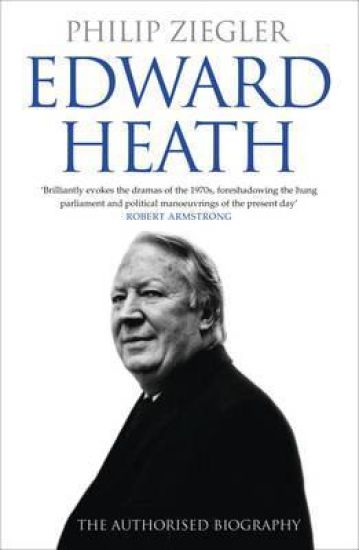
The magisterial official life of Britain's complex and misunderstood former prime minister, which offers a fundamental reassessment of his reputation. Edward Heath arguably changed the lives of the British people more than any prime minister since Winston Churchill. By securing Britain's entry into Europe he reversed almost a thousand years of history and embarked on a course that would lead to the legal, political, economic and social transformation of this country. By abolishing the Resale Price Maintenance he cleared the way for the all-conquering march of the supermarket and revolutionised every high street in the country. He forced through both reforms by a combination of determination, patience and persuasive powers, against the inertia or active hostility of a large part of the British population, including many in his own party. Yet Heath today is a largely forgotten figure, completely eclipsed by his more famous successor. His working class origins and suspect accent made him an unlikely Tory leader. But he was a trail-blazer, and without him it is unlikely that Mrs Thatcher would ever have risen to prominence. With exclusive access to the huge collection of Heath's personal papers, distinguished biographer Philip Ziegler reassesses the contribution of one of the most resolute and forceful politicians in recent British history.

Penelope Fitzgerald, the Booker Prize-winning author of ‘Offshore’ and ‘The Blue Flower’, turns her attention to the remarkable life of the Pre-Raphaelite artist Edward Burne-Jones. ‘I mean by a picture a beautiful, romantic dream of something that never was, never will be, in a light better than any light that ever shone – in a land no one can define or remember, only desire’ Edward Burne-Jones Edward Burne-Jones (1833-1898) was the prototypical pre-Raphaelite but with a truly individual sensibility. Penelope Fitzgerald’s delightful biography charts his life from humble beginnings in Birmingham as the son of an unsuccessful framer, through a transformative period at Oxford, where he met his close friend and collaborator William Morris, and on to the apprenticeship with Dante Gabriel Rossetti that would shape his artistic vision. His work harks back to an Arthurian England – an Arcadia that offered solace against the onset of the Industrial Revolution, and on a deeply personal level provided respite from his ever-present melancholia. This is an illuminating portrait of a fascinating figure – artistic genius, doting father, troubled husband – written with all Penelope Fitzgerald’s characteristic sympathy and insight.
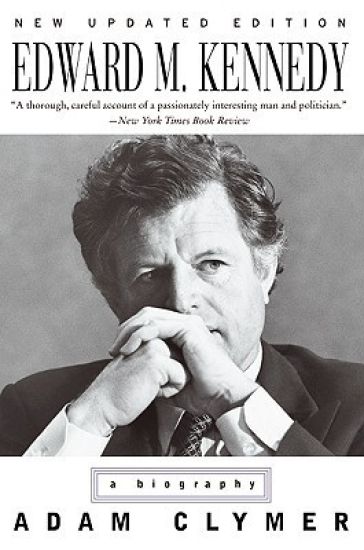
Edward M. Kennedy is one of the most influential senators in Congress. For the last 35 years, he′s played a major role in events ranging from the Vietnam War to Supreme Court confirmations. He′s also been closely associated with issues such as health care, civil rights and campaign finance reform. More than the foremost lawmaker and best orator in the Senate, he′s enthralled (and disappointed) a generation who saw him as the keeper of his famous brothers′ flame. He′s seen America -- and her politics -- change in drastic ways. In this definitive biography, New York Times Washington Editor Adam Clymer draws an in-depth portrait of this complex man. Through interviews with Kennedy, and the people close to him, he places Kennedy′s career in a historical perspective, and observes how Kennedy′s personal life has affected his political performance. The Senator has dealt with his infamous legacy, struggled to overcome the Chappaquiddick incident, and handled spectacular failures as well as many truimphs. He′s one of the few old-fashioned liberals who has held the Democratic Party to its principles, and is a hero to many. This is a unique, enormously readable chronicle of one of the most fascinating political figures of our time.
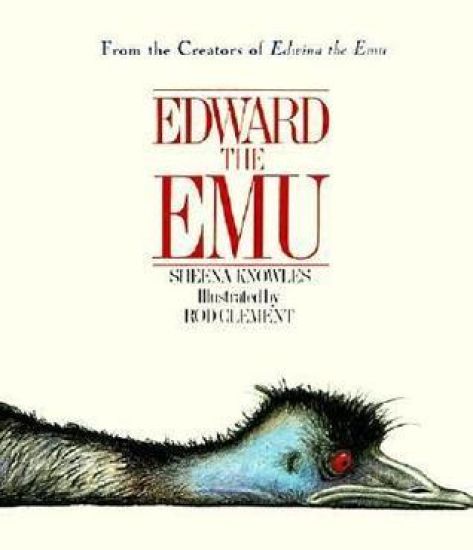
Sheena Knowles's upbeat, rhyming text and Rod Clement's expressive illustrations are sure to make readers laugh out loud. Over 100 5-star reviewers agree: "A wonderful book with a wonderful message: be yourself ""If you buy one book for sheer fun, there's no question it should be this one." --San Diego Union TribuneTired of his life as an emu, Edward decides to try being something else for a change. He tries swimming with the seals, he spends a day lounging with the lions, and even slithers with the snakes. But Edward soon discovers that being an emu may be the best thing after all. This picture book is an excellent choice to share in the classroom or at home--both adults and kids will laugh at and sympathize with Edward the Emu.
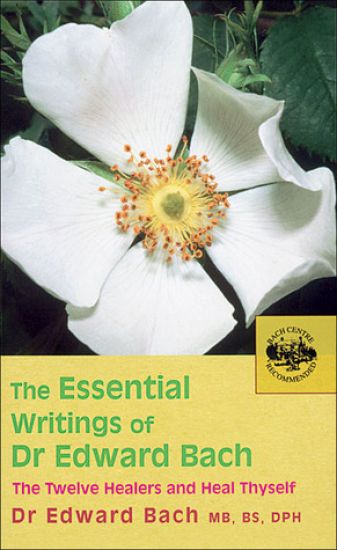
"The Twelve Healers" introduces Dr. Bach's world-renowned remedies, which provide a system for healing the mental and spiritual anguish at the root of ill health and unhappiness. The 38 remedies are grouped in seven helpful categories and advice is given on the types of personality most likely to benefit from each remedy. In "Heal Thyself," Dr. Bach explains the philosophy that underpins any practical work with the remedies. He looks at the real cause and cure of disease, and gives practical as well as spiritual guidance on how we can all help to heal ourselves.

The destruction of the French army at Crécy in 1346 and the subsequent siege and capture of Calais marked a new era in European history. The most powerful, glamorous and respected of all western monarchies had been completely humiliated by England, a country long viewed either as a chaotic backwater or a mere French satellite.The young Edward III's triumph would launch both countries, as we now know, into a grim cycle of some 90 years of further fighting ending with English defeat, but after Crécy anything seemed possible - Edward's claim to be King of France could be pressed home and, in any event, enormous rewards of land, treasure and prestige were available both to the king and to the close companions who had made the victory possible. It was to enshrine this moment that Edward created one of the most famous of all knightly orders, the Company of the Garter.Barber writes about both the great campaigns and the individuals who formed the original membership of the Company - and through their biographies makes the period tangible and fascinating. This is a book about knighthood, battle tactics and grand strategy, but it is also about fashion, literature and the privates lives of everyone from queens to freebooters. Barber's book is a remarkable achievement - but also an extremely enjoyable one.
The acclaimed Penguin Monarchs series: short, fresh, expert accounts of England's rulers - now in paperback'After my death', George V said of his eldest son and heir, 'the boy will ruin himself in 12 months'. From the death of his father in 1936 to the constitutional crisis provoked by his proposal to the then-married American socialite Wallis Simpson and his subsequent abdication, Edward VIII reigned for less than year. In choosing the woman he loved over his royal birthright, Edward fulfilled his father's prophecy and instigated the monarchy's most significant upheaval of the twentieth century. Retitled 'Duke of Windsor' and essentially exiled, Edward has remained a controversial figure ever since. Through his correspondence with, amongst other confidants, Winston Churchill, Piers Brendon traces Edward's tumultuous life in this superb, pacey biography.

The acclaimed Penguin Monarchs series: short, fresh, expert accounts of England's rulers - now in paperbackEdward I (1272-1307) is one of the most commanding of all English rulers. He fought in southwest France, in Wales, In Scotland and in northern France, he ruled with ruthlessness and confidence, undoing the chaotic failure of his father, Henry III's reign. He reshaped England's legal system and came close to bringing the whole island of Great Britain under his rule. He promoted the idea of himself as the new King Arthur, his Round Table still hanging in Winchester Castle to this day. His greatest monuments are the extraordinary castles - Caernarfon, Beaumaris, Harlech and Conwy - built to ensure his rule of Wales and some of the largest of all medieval buildings.Andy King's brilliant short biography brings to life a strange, complex man whose triumphs raise all kinds of questions about the nature of kingship - how could someone who established so many key elements in England's unique legal and parliamentary system also have been such a harsh, militarily brutal warrior?

The acclaimed Penguin Monarchs series: short, fresh, expert accounts of England's rulers - now in paperbackEdward III ruled England for fifty years. He was a paragon of kingship in the eyes of his contemporaries, the perfect king in those of later generations. Venerated as the victor of Sluys and Crécy and the founder of the Order of the Garter, he was regarded with awe even by his enemies. But he lived too long, and was ultimately condemned to see thirty years of conquests reversed in less than five. In this gripping new account of Edward III's rise and fall, Jonathan Sumption introduces us to a fêted king who ended his life a heroic failure. Jonathan Sumption is a former history fellow of Magdalen College Oxford. He is the author of Pilgrimage and The Albigensian Crusade, as well as the first four volumes in his celebrated history of the Hundred Years War, Trial by Battle, Trial by Fire, Divided Houses and Cursed Kings. He was awarded the 2009 Wolfson History Prize for Divided Houses.
The acclaimed Penguin Monarchs series: short, fresh, expert accounts of England's rulers - now in paperbackLike his mother Queen Victoria, Edward VII defined an era. Both reflected the personalities of their central figures: hers grand, imperial and pretty stiff; his no less grand, but much more relaxed and enjoyable. This book conveys Edward's distinct personality and significant influences. To the despair of his parents, he rebelled as a young man, conducting many affairs and living a life of pleasure. But as king he made a distinct contribution to European diplomacy and - which is little known - to London, laying out the Mall and Admiralty Arch. Richard Davenport-Hines's book is as enjoyable as its subject and the age he made.
'Edward was a man of considerable charm, who perhaps relied too much upon that charm to keep tensions within his entourage at bay' In 1461 Edward earl of March, a handsome, charismatic eighteen-year old, usurped the English throne during the first and most fierce of the Wars of the Roses. The years that followed witnessed a period that has been described as a golden age. Yet, argues A. J. Pollard, Edward was a man of limited vision, who squandered his talents and failed to secure his own dynasty.
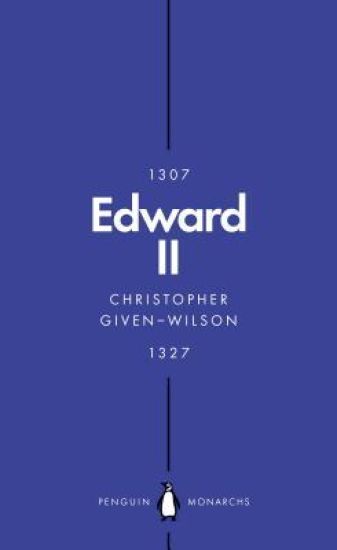
'He seems to have laboured under an almost child-like misapprehension about the size of his world. Had greatness not been thrust upon him, he might have lived a life of great harmlessness'The reign of Edward II was a succession of disasters. Inept in war, and in thrall to favourites, most notably the young nobleman Piers Gaveston, he preferred drinking, driving carts and rowing boats to the tedium of government. After twenty ruinous years, he was imprisoned and murdered. This remarkable book gives a glimpse into the abyss: the terrors of kingship.
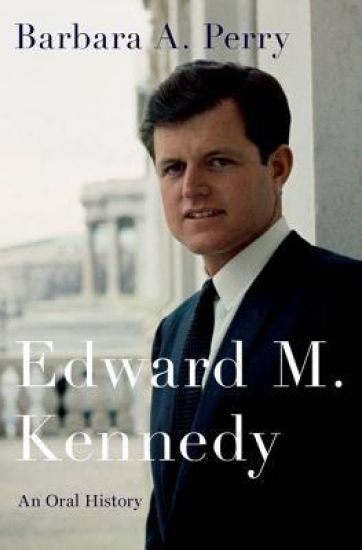
For Kennedy devotees, as well as readers unfamiliar with the "lion of the Senate," this book presents the compelling story of Edward Kennedy's unexpected rise to become one of the most consequential legislators in American history and a passionate defender of progressive values, achieving legislative compromises across the partisan divide. What distinguishes Edward Kennedy: An Oral History is the nuanced detail that emerges from the senator's never-before-published, complete descriptions of his life and work, placed alongside the observations of his friends, family, and associates. The senator's twenty released interviews reveal, in his own voice, the stories of Kennedy triumph and tragedy--from the Oval Office to the waters of Chappaquiddick. Spanning the presidencies of JFK to Barack Obama, Edward Kennedy was an iconic player in American political life, the youngest sibling of America's most powerful dynasty; he candidly addresses this role: his legislative accomplishments and failures, his unsuccessful run for the White House, his impact on the Supreme Court, his observations on Washington gridlock, and his personal faults. The interviews and introductions to them create an unsurpassed and illuminating volume. Gathered as part of the massive Edward Kennedy Oral History Project, conducted by the University of Virginia's Miller Center, the senator's interviews allow readers to see how oral history can evolve over a three-year period, drawing out additional details as the interviewee becomes increasingly comfortable with the process and the interviewer. Yet, given the Kennedys' well-known penchant for image creation, what the senator doesn't say or how he says what he chooses to include, is often more revealing than a simple declarative statement.

For Kennedy devotees, as well as readers unfamiliar with the "lion of the Senate", this book presents the compelling story of Edward Kennedy's unexpected rise to become one of the most consequential legislators in American history and a passionate defender of progressive values, achieving legislative compromises across the partisan divide. What distinguishes Edward Kennedy: An Oral History is the nuanced detail that emerges from the senator's never-before published, complete descriptions of his life and work, placed alongside the observations of his friends, family, and associates. The senator's twenty released interviews reveal, in his own voice, the stories of Kennedy triumph and tragedy--from the Oval Office to the waters of Chappaquiddick. Spanning the presidencies of JFK to Barack Obama, Edward Kennedy was an iconic player in American political life, the youngest sibling of America's most powerful dynasty; he candidly addresses this role: his legislative accomplishments and failures, his unsuccessful run for the White House, his impact on the Supreme Court, his observations on Washington gridlock, and his personal faults. The interviews and introductions to them create an unsurpassed and illuminating volume. Gathered as part of the massive Edward Kennedy Oral History Project, conducted by the University of Virginia's Miller Center, the senator's interviews allow readers to see how oral history can evolve over a three-year period, drawing out additional details as the interviewee becomes increasingly comfortable with the process and the interviewer. Yet, given the Kennedys' well-known penchant for image creation, what the senator doesn't say or how he says what he chooses to include, is often more revealing than a simple declarative statement.

A scholarly edition of poems by Edward, Lord Herbert of Cherbury. The edition presents an authoritative text, together with an introduction, commentary notes, and scholarly apparatus.
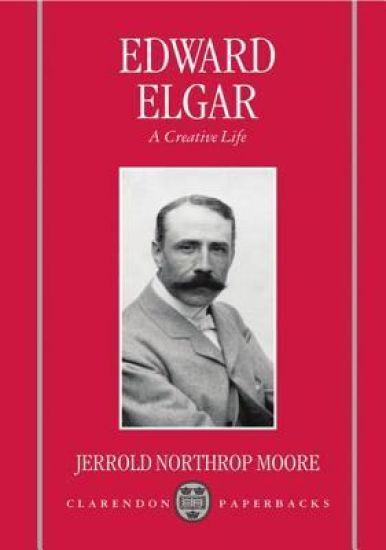
Edward Elgar is among the greatest of all English composers, and this major biography, the culmination of twenty years' work, is probably the most complete and perceptive study of the composer to date. Drawing on the vast amount of source material, much of it previously unpublished, Jerrold Northrop Moore presents Elgar's life and works as inseparable parts of a single creative career. This classic study, unavailable for many years, is here reissued as a Clarendon Paperback.
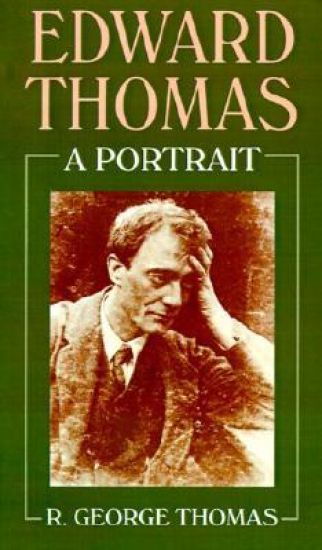
Edward Thomas 1878-1917, published author, critic, and essayist, died at 39, a casualty of World War I. At the suggestion of his friend Robert Frost, Thomas began to write poetry and six months after his death his first book of poems was published. As the prose writer died, the poet was born, and it is on the poems that his reputation still rests. This new biography--based on some 1,800 of Thomas's letters--tells the story of his courtship, his restless marriage, and his tormented need to choose between happiness with his wife and children and the need to find his way as a writer alone. With delicacy and understanding the book describes Thomas's complex character and his pilgrimage on the road to self-discovery, and reveals how the emergence of Thomas the poet became inevitable.