Kirjojen hintavertailu. Mukana 11 627 373 kirjaa ja 12 kauppaa.

Kirjahaku

Etsi kirjoja tekijän nimen, kirjan nimen tai ISBN:n perusteella.

1000 tulosta hakusanalla Edward Lewis

Sanctioned Violence in Early China

Sanctioned Violence in Early China

Mark Edward Lewis

State University of New York Press
1989
pokkari
This book provides new insight into the creation of the Chinese empire by examining the changing forms of permitted violence-warfare, hunting, sacrifice, punishments, and vengeance. It analyzes the interlinked evolution of these violent practices to reveal changes in the nature of political authority, in the basic units of social organization, and in the fundamental commitments of the ruling elite. The work offers a new interpretation of the changes that underlay the transformation of the Chinese polity from a league of city states dominated by aristocratic lineages to a unified, territorial state controlled by a supreme autocrat and his agents. In addition, it shows how a new pattern of violence was rationalized and how the Chinese of the period incorporated their ideas about violence into the myths and proto-scientific theories that provided historical and natural prototypes for the imperial state.
Writing and Authority in Early China

Writing and Authority in Early China

Mark Edward Lewis

State University of New York Press
1999
pokkari
Traces the evolving uses of writing to command assent and authority in early China, an evolution that culminated in the establishment of a textual canon as the basis of imperial authority.This book traces the evolving uses of writing to command assent and obedience in early China, an evolution that culminated in the establishment of a textual canon as the foundation of imperial authority. Its central theme is the emergence of this body of writings as the textual double of the state, and of the text-based sage as the double of the ruler. The book examines the full range of writings employed in early China, such as divinatory records, written communications with ancestors, government documents, the collective writings of philosophical and textual traditions, speeches attributed to historical figures, chronicles, verse anthologies, commentaries, and encyclopedic compendia. Lewis shows how these writings served to administer populations, control officials, form new social groups, invent new models of authority, and create an artificial language whose mastery generated power and whose graphs became potent objects. Writing and Authority in Early China traces the enterprise of creating a parallel reality within texts that depicted the entire world. These texts provided models for the invention of a world empire, and one version ultimately became the first state canon of imperial China. This canon served to perpetuate the dream and the reality of the imperial system across the centuries.
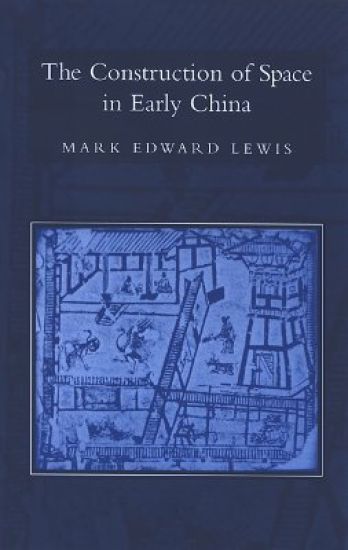
The Construction of Space in Early China

The Construction of Space in Early China

Mark Edward Lewis

State University of New York Press
2005
sidottu
Shows how the emerging Chinese empire purposely reconceived but was also constrained by basic spatial units such as the body, the household, the region, and the world.This book examines the formation of the Chinese empire through its reorganization and reinterpretation of its basic spatial units: the human body, the household, the city, the region, and the world. The central theme of the book is the way all these forms of ordered space were reshaped by the project of unification and how, at the same time, that unification was constrained and limited by the necessary survival of the units on which it was based. Consequently, as Mark Edward Lewis shows, each level of spatial organization could achieve order and meaning only within an encompassing, superior whole: the body within the household, the household within the lineage and state, the city within the region, and the region within the world empire, while each level still contained within itself the smaller units from which it was formed. The unity that was the empire's highest goal avoided collapse back into the original chaos of nondistinction only by preserving within itself the very divisions on the basis of family or region that it claimed to transcend.
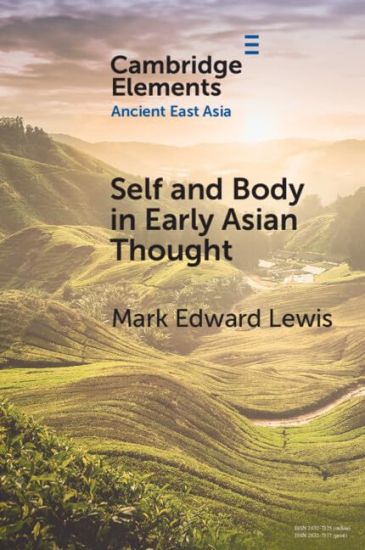
Self and Body in Early East Asian Thought

Self and Body in Early East Asian Thought

Mark Edward Lewis

Cambridge University Press
2025
sidottu
This Element examines evolving methods of cultivating the embodied self, including healing diseases and creating a superior person, in late Warring States and early imperial East Asia. It analyses many topics, including the textualization of bodily regimens and therapies, their systematization, their dissemination among different (and sometimes rival) social groups, and the diversity of traditions – religious, pharmacological, nourishing of life – that contested and combined to form a hegemonic medical practice. These topics in turn feature several issues: models of the body, regimens of cultivating and extending vitality, models of disease, and therapies for these ailments. All these ideas will be refined and extended through comparison with early Western medical traditions.
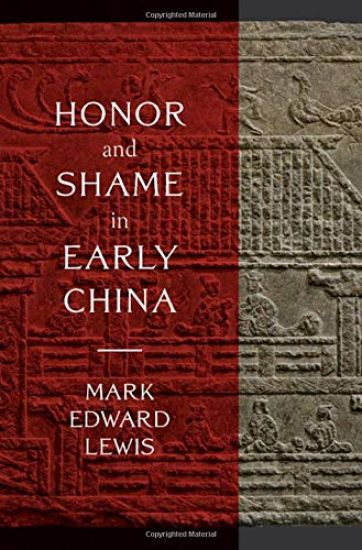
Honor and Shame in Early China

Honor and Shame in Early China

Mark Edward Lewis

Cambridge University Press
2020
sidottu
In this major new study, Mark Edward Lewis traces how the changing language of honor and shame helped to articulate and justify transformations in Chinese society between the Warring States and the end of the Han dynasty. Through careful examination of a wide variety of texts, he demonstrates how honor-shame discourse justified the actions of diverse and potentially rival groups. Over centuries, the formally recognized political order came to be intertwined with groups articulating alternative models of honor. These groups both participated in the existing order and, through their own visions of what was truly honourable, paved the way for subsequent political structures. Filling a major lacuna in the study of early China, Lewis presents ways in which the early Chinese empires can be fruitfully considered in comparative context and develops a more systematic understanding of the fundamental role of honor/shame in shaping states and societies.
Violence and the Rise of Centralized States in East Asia

Violence and the Rise of Centralized States in East Asia

Mark Edward Lewis

Cambridge University Press
2022
pokkari
Violence, both physical and nonphysical, is central to any society, but it is a version of the problem that it claims to solve. This Element examines how states in ancient East Asia, from the late Shang through the end of the Han dynasty, wielded violence to create and display authority, and also how their licit violence was entangled in the 'savage' or 'criminal' violence whose suppression justified their power. The East Asian cases are supplemented through citing comparable Western ones. The themes examined include the emergence of the warrior as a human type, the overlap of hunts and combat (and the overlap between treatments of alien species and alien peoples), sacrifice of both alien captives and 'death attendants' from one's own groups, the impact of military specialization and the increased scale of armies, the emergent ideal of self-sacrifice, and the diverse aspects of violence in the regime of law.
Self and Body in Early East Asian Thought

Self and Body in Early East Asian Thought

Mark Edward Lewis

Cambridge University Press
2025
pokkari
This Element examines evolving methods of cultivating the embodied self, including healing diseases and creating a superior person, in late Warring States and early imperial East Asia. It analyses many topics, including the textualization of bodily regimens and therapies, their systematization, their dissemination among different (and sometimes rival) social groups, and the diversity of traditions – religious, pharmacological, nourishing of life – that contested and combined to form a hegemonic medical practice. These topics in turn feature several issues: models of the body, regimens of cultivating and extending vitality, models of disease, and therapies for these ailments. All these ideas will be refined and extended through comparison with early Western medical traditions.
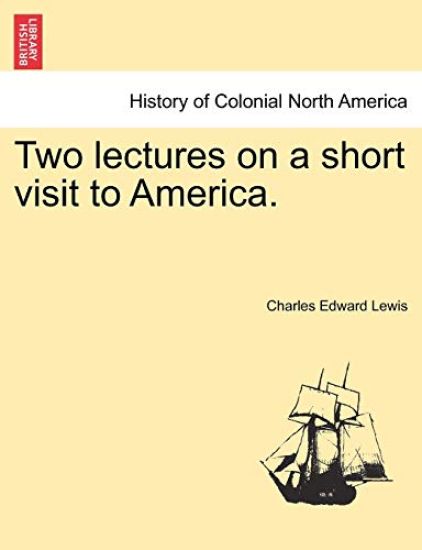
Two Lectures on a Short Visit to America.

Two Lectures on a Short Visit to America.

Charles Edward Lewis

British Library, Historical Print Editions
2011
pokkari
Title: Two lectures on a short visit to America.Publisher: British Library, Historical Print EditionsThe British Library is the national library of the United Kingdom. It is one of the world's largest research libraries holding over 150 million items in all known languages and formats: books, journals, newspapers, sound recordings, patents, maps, stamps, prints and much more. Its collections include around 14 million books, along with substantial additional collections of manuscripts and historical items dating back as far as 300 BC.The HISTORY OF COLONIAL NORTH AMERICA collection includes books from the British Library digitised by Microsoft. This collection refers to the European settlements in North America through independence, with emphasis on the history of the thirteen colonies of Britain. Attention is paid to the histories of Jamestown and the early colonial interactions with Native Americans. The contextual framework of this collection highlights 16th century English, Scottish, French, Spanish, and Dutch expansion. ++++The below data was compiled from various identification fields in the bibliographic record of this title. This data is provided as an additional tool in helping to insure edition identification: ++++ British Library Lewis, Charles Edward; 1876. 106 p.; 8 . 10409.e.28.
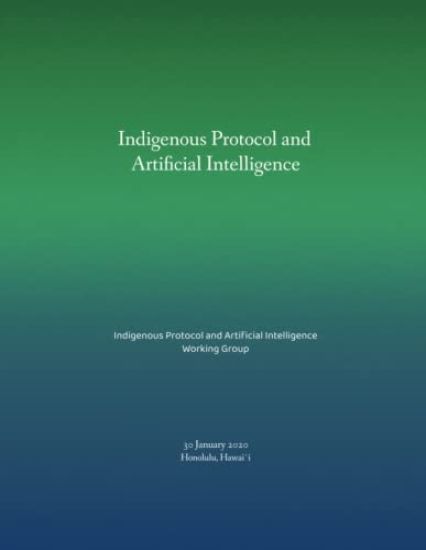
Indigenous Protocol and Artificial Intelligence

Indigenous Protocol and Artificial Intelligence

Jason Edward Lewis; Angie Abdilla; Noelani Arista

Lulu.com
2022
pokkari
This position paper on Indigenous Protocol (IP) and Artificial Intelligence (AI) is a starting place for those who want to design and create AI from an ethical position that centers Indigenous concerns. Each Indigenous community will have its own particular approach to the questions we raise in what follows. What we have written here is not a substitute for establishing and maintaining relationships of reciprocal care and support with specific Indigenous communities. Rather, this document offers a range of ideas to take into consideration when entering into conversations which prioritize Indigenous perspectives in the development of artificial intelligence. It captures multiple layers of a discussion that happened over 20 months, across 20 time zones, during two workshops, and between Indigenous people (and a few non-Indigenous folks) from diverse communities in Aotearoa, Australia, North America, and the Pacific. Indigenous ways of knowing are rooted in distinct, sovereign territories across the planet. These extremely diverse landscapes and histories have influenced different communities and their discrete cultural protocols over time. A single 'Indigenous perspective' does not exist, as epistemologies are motivated and shaped by the grounding of specific communities in particular territories. Historically, scholarly traditions that homogenize diverse Indigenous cultural practices have resulted in ontological and epistemological violence, and a flattening of the rich texture and variability of Indigenous thought. Our aim is to articulate a multiplicity of Indigenous knowledge systems and technological practices that can and should be brought to bear on the 'question of AI.' To that end, rather than being a unified statement this position paper is a collection of heterogeneous texts that range from design guidelines to scholarly essays to artworks to descriptions of technology prototypes to poetry. We feel such a somewhat multivocal and unruly format more accurately reflects the fact that this conversation is very much in an incipient stage as well as keeps the reader aware of the range of viewpoints expressed in the workshops.
Ka?ina Hana ?Oiwia me ka Waihona ?Ike Hakuhia

Ka?ina Hana ?Oiwia me ka Waihona ?Ike Hakuhia

Jason Edward Lewis; Angie Abdilla; Noelani Arista

Lulu.com
2022
pokkari
This position paper on Indigenous Protocol (IP) and Artificial Intelligence (AI) is a starting place for those who want to design and create AI from an ethical position that centers Indigenous concerns. Each Indigenous community will have its own particular approach to the questions we raise in what follows. What we have written here is not a substitute for establishing and maintaining relationships of reciprocal care and support with specific Indigenous communities. Rather, this document offers a range of ideas to take into consideration when entering into conversations which prioritize Indigenous perspectives in the development of artificial intelligence. It captures multiple layers of a discussion that happened over 20 months, across 20 time zones, during two workshops, and between Indigenous people (and a few non-Indigenous folks) from diverse communities in Aotearoa, Australia, North America, and the Pacific. Indigenous ways of knowing are rooted in distinct, sovereign territories across the planet. These extremely diverse landscapes and histories have influenced different communities and their discrete cultural protocols over time. A single 'Indigenous perspective' does not exist, as epistemologies are motivated and shaped by the grounding of specific communities in particular territories. Historically, scholarly traditions that homogenize diverse Indigenous cultural practices have resulted in ontological and epistemological violence, and a flattening of the rich texture and variability of Indigenous thought. Our aim is to articulate a multiplicity of Indigenous knowledge systems and technological practices that can and should be brought to bear on the 'question of AI.' To that end, rather than being a unified statement this position paper is a collection of heterogeneous texts that range from design guidelines to scholarly essays to artworks to descriptions of technology prototypes to poetry. We feel such a somewhat multivocal and unruly format more accurately reflects the fact that this conversation is very much in an incipient stage as well as keeps the reader aware of the range of viewpoints expressed in the workshops.
Black Beaver: The Trapper: From The Amazon to the McKenzie River

Black Beaver: The Trapper: From The Amazon to the McKenzie River

General Edward Lewis

Createspace Independent Publishing Platform
2018
nidottu
This special re-print edition of General Edward Lewis' book "Black Beaver: The Trapper" is the memoir of a 19th Century frontiersman, trapper, mine and adventure-seeker, Edward Lewis. Written in 1911, "Black Beaver: The Trapper" tells the exploits of the author from his youngest years trapping as a hobby in Michigan, and finally his foray into the American Wilderness as a young man as a roving trapper trying to make his way in the world. His exploits eventually lead him into adventure into the Canadian North, to Alaska, back into the American Rockies and eventually into the furthest unknown reaches of the Arctic in search of fur. A splendid memoir that provides insights into the author's assorted tricks of the trapping trade. Note: This edition is a perfect facsimile of the original edition and is not set in a modern typeface. As a result, some type characters and images might suffer from slight imperfections or minor shadows in the page background.
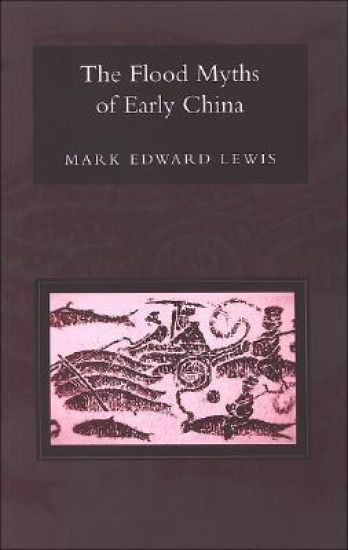
The Flood Myths of Early China

The Flood Myths of Early China

Mark Edward Lewis

State University of New York Press
2006
sidottu
Explores how the flood myths of early China provided a template for that society's major social and political institutions. Early Chinese ideas about the construction of an ordered human space received narrative form in a set of stories dealing with the rescue of the world and its inhabitants from a universal flood. This book demonstrates how early Chinese stories of the re-creation of the world from a watery chaos provided principles underlying such fundamental units as the state, lineage, the married couple, and even the human body. These myths also supplied a charter for the major political and social institutions of Warring States (481–221 BC) and early imperial (220 BC–AD 220) China. In some versions of the tales, the flood was triggered by rebellion, while other versions linked the taming of the flood with the creation of the institution of a lineage, and still others linked the taming to the process in which the divided principles of the masculine and the feminine were joined in the married couple to produce an ordered household. While availing themselves of earlier stories and of central religious rituals of the period, these myths transformed earlier divinities or animal spirits into rulers or ministers and provided both etiologies and legitimation for the emerging political and social institutions that culminated in the creation of a unitary empire.
Flat Rolled Products: Rolling Treatment; Proceedings of a Technical Conference

Flat Rolled Products: Rolling Treatment; Proceedings of a Technical Conference

Metallurgical Society of Aime Iron and; T. E. Editor Dancy; Edward Lewis 1912- Editor Robinson

Hassell Street Press
2021
sidottu
This work has been selected by scholars as being culturally important and is part of the knowledge base of civilization as we know it.This work is in the public domain in the United States of America, and possibly other nations. Within the United States, you may freely copy and distribute this work, as no entity (individual or corporate) has a copyright on the body of the work.Scholars believe, and we concur, that this work is important enough to be preserved, reproduced, and made generally available to the public. To ensure a quality reading experience, this work has been proofread and republished using a format that seamlessly blends the original graphical elements with text in an easy-to-read typeface.We appreciate your support of the preservation process, and thank you for being an important part of keeping this knowledge alive and relevant.