

Kirjahaku
Etsi kirjoja tekijän nimen, kirjan nimen tai ISBN:n perusteella.
1000 tulosta hakusanalla Edward M Shepard

Collected here in this 8-in-1 omnibus edition are all of E. M. Bounds' powerful books on prayer. No one else wrote with such power and authority on prayer. These classic books continue to inspire and instruct us on all aspects of prayer and its uses in everyday Christian life. "Prayer has to do with the entire man. Prayer takes in man in his whole being, mind, soul and body. It takes the whole man to pray, and prayer affects the entire man in its gracious results. As the whole nature of man enters into prayer, so also all that belongs to man is the beneficiary of prayer. All of man receives benefits in prayer. The whole man must be given to God in praying. The largest results in praying come to him who gives himself, all of himself, all that belongs to himself, to God. This is the secret of full consecration, and this is a condition of successful praying, and the sort of praying which brings the largest fruits." -E. M. Bounds


Introduction to Crime Scene Photography acquaints the reader with the essentials of basic crime scene photography techniques. It looks at the concepts related to composition and relates them to the types of photographs captured by crime scene photographers. It explains how to capture images based on the exposure settings chosen to produce the effect desired. It considers the techniques used needed to control and maximize Depth of Field (DOF), and reviews how the different lenses will affect an image. Organized into seven chapters, the book begins with an overview of crime scene photography and composition, including the three cardinal rules of good photography. It then proceeds with a discussion of the benefits of bounce flash and how to utilize this technique to properly compose the subject of interest. It also explains how to capture any image necessary at the crime scene by combining the concepts of composition, nonflash exposure, DOF, flash exposure, and the use of various types of lenses. In addition, the reader is introduced to various energy sources and filters, digital processing of evidentiary photography, and legal issues related to photographs and digital images. Examples and illustrations are provided throughout to demonstrate how the concepts examined tend to form a sort of symbiotic relationship. This text will benefit scene investigators and photographers, forensic consultants, forensic scientists, undergraduate students in forensic and/or criminal justice programs, law enforcement professionals, and anyone who wants to acquire the skills needed to be a successful crime scene photographer.
Crime Scene Photography, Third Edition, covers the general principles and concepts of photography, while also delving into the more practical elements and advanced concepts of forensic photography. Robinson assists the reader in understanding and applying essential concepts in order to create images that are able to withstand challenges in court. This text is a required reading by both the International Association for Identification’s Crime Scene Certification Board and the Forensic Photography Certification Board. Includes an instructor website with lecture slides, practical exercises, a test bank, and image collection and many videos which can be used.

The Old Army: A Portrait of the American Army in Peacetime, 1784-1898
Edward M. Coffman
Oxford University Press
1988
nidottu
One of the most important works of military history published in the last decade, The Old Army is the only comprehensive study of the people who made up the "garrison world" in the peacetime intervals between the War for Independence and the Spanish-American War. Drawing on diaries, letters, and other primary documents, Edward M. Coffman vividly recreates the harsh, often lonely life of men, collected mostly from the streets of Northern cities, for whom enlistment was "a leap in the dark...a choice of evils." He pays special attention to the roles of women and children, as well as black Americans, and to the development of military professionalism. From the testimony of those who lived it, Coffman traces the evolution of the American Army from "the days of small things"--of limited resources and downright hardship--to the modern military age that began at the turn of the century.
BL The first full-length study of the Athenian politician Aeschines Though often overshadowed by his famous rival Demosthenes, Aeschines plays a major role in the decisive events that marked the rise of Macedonian power in Greece and thus marked the transition from the Classical to the Hellenistic period.

Organization Ethics in Health Care
Edward M. Spencer; Ann E. Mills; Mary V. Rorty; Patricia H. erhane
Oxford University Press Inc
2000
sidottu
This book covers the new field of healthcare organization ethics from theory to practical application. It can be used as a text for courses on the subject, as a reference for those interested in the present status of the field, and as a practical guide for healthcare executives, clinicians and committee members who are beginning to develop an organizational ethics program for their institution.
Philosophy, Psychiatry and Neuroscience - Three Approaches to the Mind
Edward M. Hundert
Clarendon Press
1990
nidottu
This book proposes a new, unified view of the mind which integrates the insights of philosophers, psychologists, and neuroscientists. Through a detailed discussion of major theories from all these, and related disciplines, the author gradually reveals fundamental links between these previously unconnected approaches to human thought and experience. The author has studied medicine, philosophy, mathematics and history, and is currently a practising psychiatrist and a teacher at the Harvard Medical School. He discusses diverse fields of thought with depth and clarity, and his unique perspective should stimulate a re-evaluation of our traditional approaches to the mind.
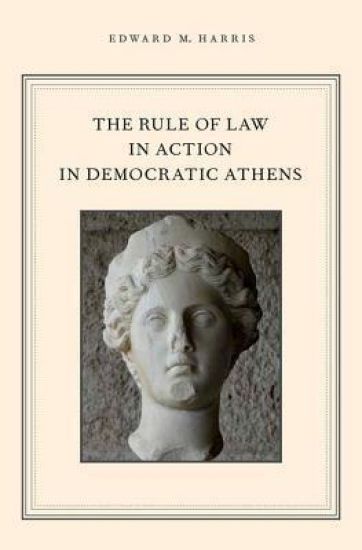
The Rule of Law in Action in Democratic Athens
Edward M. Harris
Oxford University Press Inc
2013
sidottu
The Rule of Law in Action in Democratic Athens examines how the Athenians attempted to enforce and apply the law when judging disputes in court. Recent scholarship has paid considerable attention to the practice and execution of Greek law. However, much of this work has left several flawed assumptions unchallenged, such as that Athenian law was primarily concerned with procedure; that the main task of enforcement lay in the hands of private citizens; that the Athenians used the courts not to uphold the law but to pursue personal feuds; and that the Athenian courts rendered ad hoc judgments and paid little attention to the letter of the law. Drawing on modern legal theory, the author examines the nature of "open texture" in Athenian law and reveals that the Athenians were much more sophisticated in their approach to law than many modern scholars have assumed, and thus breaks considerable new ground in the field. At the same time, the book studies the weaknesses of the Athenian legal system and how they contributed to Athens' defeat in the Peloponnesian War. By reexamining the available evidence, Edward Harris provides a much needed corrective to long-held views and places the Athenian administration of justice in its broad political and social context.
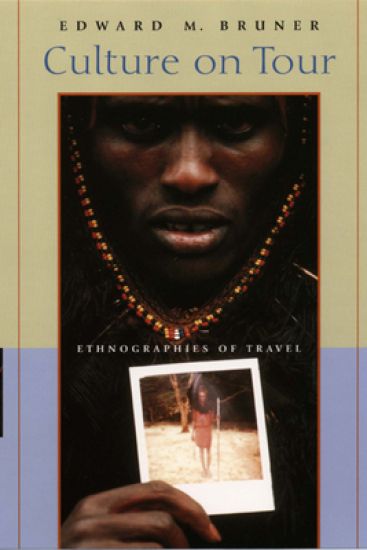
Recruited to be a lecturer on a group tour of Indonesia, Edward M. Bruner decided to make the tourists aware of tourism itself. He photographed tourists photographing Indonesians, asking the group how they felt having their pictures taken without their permission. After a dance performance, Bruner explained to the group that the exhibition was not traditional, but instead had been set up specifically for tourists. His efforts to induce reflexivity led to conflict with the tour company, which wanted the displays to be viewed as replicas of culture and to remain unexamined. Although Bruner was eventually fired, the experience became part of a sustained exploration of tourist performances, narratives, and practices.Synthesizing more than twenty years of research in cultural tourism, Culture on Tour analyzes a remarkable variety of tourist productions, ranging from safari excursions in Kenya and dance dramas in Bali to an Abraham Lincoln heritage site in Illinois. Bruner examines each site in all its particularity, taking account of global and local factors, as well as the multiple perspectives of the various actors—the tourists, the producers, the locals, and even the anthropologist himself. The collection will be essential to those in the field as well as to readers interested in globalization and travel.

Recruited to be a lecturer on a group tour of Indonesia, Edward M. Bruner decided to make the tourists aware of tourism itself. He photographed tourists photographing Indonesians, asking the group how they felt having their pictures taken without their permission. After a dance performance, Bruner explained to the group that the exhibition was not traditional, but instead had been set up specifically for tourists. His efforts to induce reflexivity led to conflict with the tour company, which wanted the displays to be viewed as replicas of culture and to remain unexamined. Although Bruner was eventually fired, the experience became part of a sustained exploration of tourist performances, narratives, and practices.Synthesizing more than twenty years of research in cultural tourism, Culture on Tour analyzes a remarkable variety of tourist productions, ranging from safari excursions in Kenya and dance dramas in Bali to an Abraham Lincoln heritage site in Illinois. Bruner examines each site in all its particularity, taking account of global and local factors, as well as the multiple perspectives of the various actors—the tourists, the producers, the locals, and even the anthropologist himself. The collection will be essential to those in the field as well as to readers interested in globalization and travel.
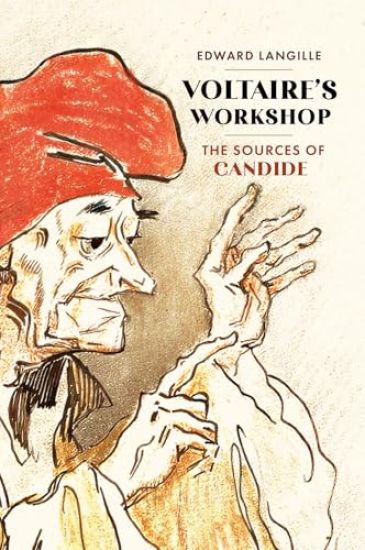
Candide is the best-known, most singular expression of Voltaire's thought, standing out not only within the author's tremendous output but also within the thousand-year tradition of French literature. It is studied in every major language and its phrases are a part of everyday speech, in English and in French. Yet Voltaire didn't keep any records about how and when he composed Candide or any hints to its underlying meaning. Beyond popular acclaim, Candide's status is cemented by the work of critics concerned with the circumstances of its composition. Their research has led to a wealth of secondary literature but surprisingly few conclusions. In Voltaire's Workshop Edward Langille argues that the 1750 French translation of Henry Fielding's Tom Jones by Pierre-Antoine de La Place was Candide's most important source. Langille uncovers a range of similarities – of vocabulary and phrasing, overarching narrative structures, and composition of characters – and pertinent commentary in other works by Voltaire. Through the La Place translation, he argues, Fielding furnished Voltaire with a plot, a framework, and a set of characters that he could rewrite into a text that struck contemporary readers as entirely original. Voltaire's Workshop addresses one of literature's greatest mysteries, raising larger questions about how Voltaire worked and wrote fiction and, more broadly, about textual filiations in the eighteenth century.

Unwelcome Muse Chinese Literature in Shanghai and Peking 1937-1945
Edward M. Gunn
Columbia University Press
2022
sidottu
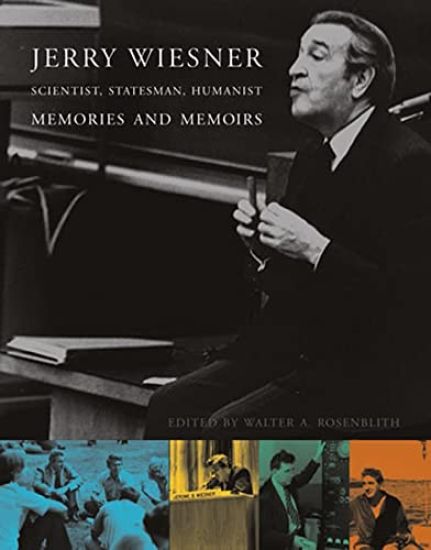
How Jerry Wiesner, presidential science adviser and president of MIT, worked to make a better and safer world, as told by friends and colleagues and in his own autobiographical writings.The recurring theme in Jerry Wiesner's varied and distinguished career was what Senator Edward M. Kennedy calls in the foreword to this book a "passionate involvement to make a better world, and a safer world." His odyssey as a public citizen included work as an acoustician for folklorist Alan Lomax in the Library of Congress, research at MIT's Radiation Lab and at Los Alamos, service as President John F. Kennedy's Special Assistant for Science and Technology, and his years at MIT as professor, dean, provost, and president. At Los Alamos he received what he called "a valuable education on issues that were to occupy a large part of my life." The lessons learned informed his later work on nuclear disarmament; he was a pivotal adviser on both the 1963 partial Nuclear Test Ban Treaty and the 1972 ABM Treaty and an early member of the Pugwash group, an organization of scientists from both sides of the Iron Curtain. His many accomplishments as president of MIT similarly reflected his conviction that science and technology cannot be separate from society.Jerry Wiesner had long planned an autobiographical book that would combine personal experience and historical interpretation, covering the wide range of interests that he compared to "the many parts of a giant jigsaw puzzle," but the commitments of his postretirement life and a serious stroke in 1989 kept him from completing it. Jerry Wiesner, Scientist, Statesman, Humanist, conceived by Wiesner's longtime colleague and friend Walter Rosenblith, fills the gap between the unwritten autobiography and the still-to-be-written biography, assembling reminiscences of Wiesner by such friends as Alan Lomax, Theodore C. Sorensen, and John Kenneth Galbraith, and writings by Wiesner himself, including the autobiographical pieces that would have been the basis of his own book.
Written by the leading political expert on Suriname, this thrilling tale describes ethnically inspired guerilla warfare, terrible human rights violations, military coups, painful redemocratization processes, and economic implosion. Although part of the American family of nations in the Western Hemisphere, there is almost nothing written about Suriname as a modern country. There are some ethnographies, some histories of ex-slave rebellions, and passing references to the atrocities of colonial plantation systems. After that, the dark clouds of obscurity close over a fascinating if beleaguered close American cousin, one whose history as an independent nation has much to say to the strife-ridden trouble spots of the 1990s--Bosnia, Sri Lanka, Liberia, and Nicaragua.

Collins traces Communist strategy in the so-called Cold War from its ideological roots, through its successes, to the system's collapse. He demonstrates that Communist ideology made the Cold War inevitable, shaped Communist strategy and the resultant structure and purpose of Communist states, and assured that Soviet and other Communist states and party strategies would be subsets of a larger Communist world strategy. Collins challenges American perception and conduct of the Cold War as essentially a conflict between Great Powers in a bipolar world, demonstrating that it was in fact a real war, with its objective to create a Communist world.He illuminates the central role of internal strategy conflicts in fractionating the Communist world, and the direct linkage between the failure of Communist world strategy and the system's collapse. This is a major synthesis that will be of interest to scholars and researchers of international Communism and security issues as well as lay readers.

Common-Property Arrangements and Scarce Resources
Edward M. Barbanell
Praeger Publishers Inc
2001
sidottu
It is widely held that private ownership is the preferred end state for all scarce resources. Those who hold this view have not looked closely enough at water in the American West, Barbanell contends. Because of water's special attributes, private ownership is an ineffective means for protecting individuals interests. Splitting the various rights of ownership between individual resources users and the community to which they belong can better protect those interests. Barbanell develops a conception of this form of common ownership, a common-property arrangement, and shows that it can function effectively for water in the West. More generally, he offers an expanded framework for analyzing right relationships and examining problems related to resource scarcity.Some economists argue that John Locke's account of property justifies the private ownership of water in the West. Barbanell argues, however, that because Locke did not think carefully enough about the variable nature of resources, his account does not support that conclusion. Although economists recognize that private ownership may not be perfectly suited to all resources, they are nonetheless skeptical about common ownership alternatives. Barbanell shows that this skepticism is unwarranted. When the rights relationship among members of a resource community is based on mutual expectations of reciprocal behavior, then a common-property arrangement can function effectively to control the degradation and depletion of a scarce resource. Barbanell's argument that common ownership is a conceptually sound and politically viable alternative for water will be of particular interest to public policy makers, environmentalists, resource economists, and political philosophers.