Despite its global advantages, the North Atlantic Treaty Organization (NATO)'s current deterrent posture in the Baltic states is militarily weak and generally questionable. A Russian invasion there would almost surely capture some or all of those states' capital cities within a few days, presenting NATO with a fait accompli. This report examines what role nonstrategic nuclear weapons could play in deterring such an invasion.
Kristy Gonzalez Morganti; Sebastian Bauhoff; Janice C. Blanchard; Mahshid Abir; Neema Iyer; Alexandria C. Smith; Joseph V. Vesely; Edward N. Okeke; Arthur L. Kellermann
This work has been selected by scholars as being culturally important and is part of the knowledge base of civilization as we know it.This work is in the public domain in the United States of America, and possibly other nations. Within the United States, you may freely copy and distribute this work, as no entity (individual or corporate) has a copyright on the body of the work.Scholars believe, and we concur, that this work is important enough to be preserved, reproduced, and made generally available to the public. To ensure a quality reading experience, this work has been proofread and republished using a format that seamlessly blends the original graphical elements with text in an easy-to-read typeface.We appreciate your support of the preservation process, and thank you for being an important part of keeping this knowledge alive and relevant.
Edzard Reuter ist uberzeugter Europaer und uberzeugter Kampfer fur eine Wirtschaft, die auch am Wohl der Mitarbeiter*innen, der Umwelt, der Gesellschaft ausgerichtet ist. In seinem neuen Buch zieht er ein Fazit seines uber 90-jahrigen Lebens als politisch und gesellschaftlich engagierter Mensch und als langjahriger Vorstandsvorsitzender der Daimler Benz AG. Der Kenner und Beobachter der Weltpolitik und der Weltwirtschaft zeigt umfassend auf, wie die Welt sich verandert hat und welche Rolle dabei der Nahe Osten, Russland, die USA und China spielen. Die aktuelle Situation in der Ukraine bezeugt die Dringlichkeit eines Paradigmenwechsels in der EU. Fur Reuter ist angesichts vielschichtiger Herausforderungen der Weg fur die Europaische Union klar: Sie muss sich zu einem eigenstandigen Staatsgebilde wandeln. Was hierfur notig ist, sind vor allem visionare Menschen, die klar und deutlich sagen, wohin der Weg fuhren soll - und die zugleich den Mut aufbringen, sich selbst zu korrigieren, wenn ein Irrweg eingeschlagen wurde.
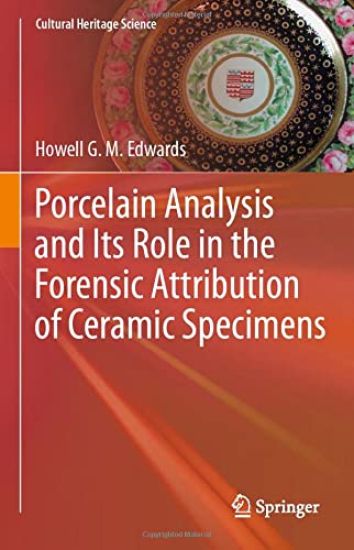
The material for this book arose from the author’s research into porcelains over many years, as a collector in appreciation of their artistic beauty , as an analytical chemist in the scientific interrogation of their body paste, enamel pigments and glaze compositions, and as a ceramic historian in the assessment of their manufactory foundations and their correlation with available documentation relating to their recipes and formulations. A discussion of the role of analysis in the framework of a holistic assessment of artworks and specifically the composition of porcelain, namely hard paste, soft paste, phosphatic, bone china and magnesian, is followed by its growth from its beginnings in China to its importation into Europe in the 16th Century. A survey of European porcelain manufactories in the 17th and 18th Centuries is followed by a description of the raw materials, minerals and recipes for porcelain manufacture and details of thechemistry of the high temperature firing processes involved therein. The historical backgrounds to several important European factories are considered, highlighting the imperfections in the written record that have been perpetuated through the ages. The analytical chemical information derived from the interrogation of specimens, from fragments, shards or perfect finished items, is reviewed and operational protocols established for the identification of a factory output from the data presented. Several case studies are examined in detail across several porcelain manufactories to indicate the role adopted by modern analytical science, with information provided at the quantitative elemental oxide and qualitative molecular spectroscopic levels, where applicable. The attribution of a specimen to a particular factory is either supported thereby or in some cases a potential reassessment of an earlier attribution is indicated. Overall, the information provided by analytical chemical data is seen to be extremely useful for porcelain identification and for its potential attribution in the context of a holistic forensic evaluation of hitherto unknown porcelain exemplars of questionable factory origins.