Kirjojen hintavertailu. Mukana 11 342 296 kirjaa ja 12 kauppaa.

Kirjahaku

Etsi kirjoja tekijän nimen, kirjan nimen tai ISBN:n perusteella.

1000 tulosta hakusanalla Edwin Reed

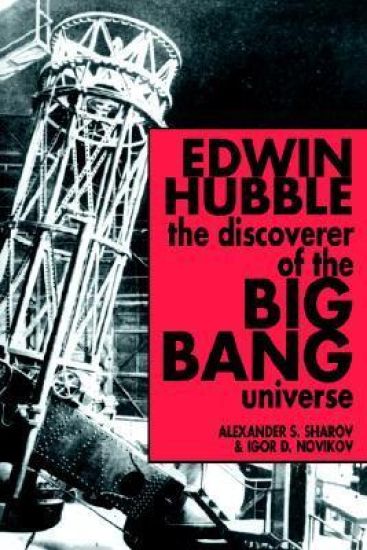
Edwin Hubble, The Discoverer of the Big Bang Universe

Edwin Hubble, The Discoverer of the Big Bang Universe

Alexander S. Sharov; Igor D. Novikov

Cambridge University Press
2005
pokkari
This book is the first complete account of the scientific life and work of Edwin Hubble, whose discoveries firmly established the United States as the leading nation in observational astronomy. One of the outstanding astronomers of the twentieth century, Hubble discovered the expansion of the Universe. He opened the world of galaxies for science when he showed that spiral nebulae beyond the Milky Way are galaxies extending to the limits of the Universe, and participating in a general expansion of the cosmos. The exploding Universe of Hubble, now termed the Big Bang, determined the origin of the elements, of galaxies and of the stars. The second part of the book describes the fundamental discoveries on the nature of the Universe made subsequently, and thus sets his achievements in context. Written by two prominent astronomers who have built on Hubble's work, this book is a classic of science, setting out the thrilling story of the exploding Universe.
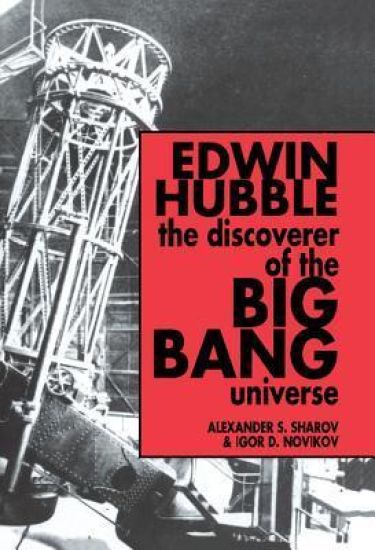
Edwin Hubble, The Discoverer of the Big Bang Universe

Edwin Hubble, The Discoverer of the Big Bang Universe

Alexander S. Sharov; Igor D. Novikov

Cambridge University Press
1993
sidottu
This book is the first complete account of the scientific life and work of Edwin Hubble, whose discoveries firmly established the United States as the leading nation in observational astronomy. One of the outstanding astronomers of the twentieth century, Hubble discovered the expansion of the Universe. He opened the world of galaxies for science when he showed that spiral nebulae beyond the Milky Way are galaxies extending to the limits of the Universe, and participating in a general expansion of the cosmos. The exploding Universe of Hubble, now termed the Big Bang, determined the origin of the elements, of galaxies and of the stars. The second part of the book describes the fundamental discoveries on the nature of the Universe made subsequently, and thus sets his achievements in context. Written by two prominent astronomers who have built on Hubble’s work, this book is a classic of science, setting out the thrilling story of the exploding Universe.
Edwin Muir Selected Poems

Edwin Muir Selected Poems

Edwin Muir

Faber Faber
2008
nidottu
Born on the Orkney island of Wyre in 1887, Edwin Muir settled in various parts of Europe during the first half of the twentieth century - from Glasgow, to Austria and Czechoslovakia throughout to 1920s, 1930s and again after the war. Muir's poetry bears oblique witness to the most traumatic years and events of this century, and is haunted by the symbolic 'fable' which he longed to find beneath the surface 'story' of mere events, as he came to terms with his own nature amidst the terror and confusion of the European maelstrom. As Seamus Heaney has written: 'Muir's poetic strength revealed itself in being able to co-ordinate the nightmare of history with that place in himself where he had trembled with anticipation . . . His simultaneous at-homeness and abroadness is exemplary.'
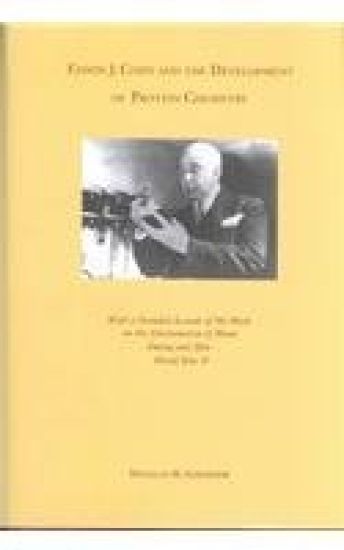
Edwin J. Cohn and the Development of Protein Chemistry

Edwin J. Cohn and the Development of Protein Chemistry

Douglas M. Surgenor

Harvard University Press
2002
sidottu
“Blood,” Goethe observed in Faust, “is a very special juice.” How special it is and how complex as well is revealed in Douglas Surgenor’s Edwin J. Cohn and the Development of Protein Chemistry.As Surgenor aptly shows, what began as a modest program in basic research at the Harvard Medical School in 1920 with the establishment of a small laboratory for the study of the physical chemistry of proteins, suddenly and quite unexpectedly took on immensely practical proportions twenty years later when the onset of World War II made requisite new sophisticated blood techniques and blood substitutes for the treatment of military casualties.The knowledge and expertise gained by Edwin Cohn and his laboratory associates in the study of proteins, amino acids, and peptides in blood after 1920 put them in a unique position to carry out the search for new blood products. Edwin J. Cohn and the Development of Protein Chemistry discloses how the wartime emergency called into play Cohn’s talents as a leader who drew together chemists, clinicians, pathologists, immunologists, and others in the attainment of a complex goal. The revolution Cohn started has still not run its course.