Land is an irreplaceable and priceless wealth of society. Land is the most important resource of nature, a material condition for human life and activity, a material condition for people's livelihood, the main source of food. In this regard, the organization and rational use of land is the basic condition for the existence and development of any nation. Rational use of lands implies ensuring such use, which takes into account geographical, natural-climatic, landscape and soil characteristics of lands, needs in creating comfortable and safe conditions for residence and life activity of the population in combination with the interests of economically efficient land use, preservation of the integrity of land plots and prevention of their fragmentation, protection of lands and other natural objects, prevention of dangerous negative changes in their condition. One of the means of ensuring rational land use are measures on land management of the territory. At the same time, land management as a socio-economic phenomenon has its own regularities of manifestation, its subject and methods of scientific research.
Land ist ein unersetzlicher und unbezahlbarer Reichtum der Gesellschaft. Der Boden ist die wichtigste Ressource der Natur, eine materielle Voraussetzung f r das Leben und die T tigkeit des Menschen, eine materielle Voraussetzung f r den Lebensunterhalt der Menschen, die Hauptnahrungsquelle. In dieser Hinsicht ist die Organisation und rationelle Nutzung des Bodens die Grundvoraussetzung f r die Existenz und Entwicklung jeder Nation. Die rationelle Nutzung des Bodens bedeutet, eine solche Nutzung zu gew hrleisten, die die geographischen, nat rlich-klimatischen, landschaftlichen und bodenkundlichen Eigenschaften des Bodens, die Erfordernisse der Schaffung komfortabler und sicherer Bedingungen f r den Aufenthalt und die Lebensaktivit ten der Bev lkerung in Verbindung mit den Interessen einer wirtschaftlich effizienten Bodennutzung, der Erhaltung der Unversehrtheit der Grundst cke und der Verhinderung ihrer Zersplitterung, des Schutzes des Bodens und anderer nat rlicher Objekte sowie der Verhinderung gef hrlicher negativer Ver nderungen in ihrem Zustand ber cksichtigt. Eines der Mittel zur Gew hrleistung einer rationellen Bodennutzung sind Ma nahmen zur Bodenbewirtschaftung des Territoriums. Gleichzeitig hat das Bodenmanagement als sozio konomisches Ph nomen seine eigenen Erscheinungsformen, seinen Gegenstand und seine Methoden der wissenschaftlichen Forschung.
La terre est une richesse irrempla able et inestimable de la soci t . La terre est la ressource la plus importante de la nature, une condition mat rielle pour la vie et l'activit humaine, une condition mat rielle pour la subsistance des gens, la principale source de nourriture. cet gard, l'organisation et l'utilisation rationnelle de la terre sont la condition fondamentale de l'existence et du d veloppement de toute nation. L'utilisation rationnelle des terres implique de garantir une utilisation qui tienne compte des caract ristiques g ographiques, naturelles et climatiques, du paysage et du sol des terres, des besoins de cr er des conditions confortables et s res pour la r sidence et l'activit de la population en combinaison avec les int r ts d'une utilisation conomiquement efficace des terres, de la pr servation de l'int grit des parcelles et de la pr vention de leur fragmentation, de la protection des terres et des autres objets naturels, de la pr vention des changements n gatifs dangereux dans leur tat. L'un des moyens d'assurer une utilisation rationnelle des terres est de prendre des mesures de gestion des terres du territoire. En m me temps, la gestion des terres, en tant que ph nom ne socio- conomique, a ses propres r gularit s de manifestation, son sujet et ses m thodes de recherche scientifique.
La terra una ricchezza insostituibile e inestimabile della societ . La terra la risorsa pi importante della natura, una condizione materiale per la vita e l'attivit umana, una condizione materiale per il sostentamento delle persone, la principale fonte di cibo. A questo proposito, l'organizzazione e l'uso razionale della terra la condizione fondamentale per l'esistenza e lo sviluppo di qualsiasi nazione. L'uso razionale della terra implica la garanzia di un uso che tenga conto delle caratteristiche geografiche, naturali, climatiche, paesaggistiche e pedologiche dei terreni, della necessit di creare condizioni confortevoli e sicure per la residenza e l'attivit di vita della popolazione in combinazione con gli interessi di un uso economicamente efficiente della terra, della conservazione dell'integrit degli appezzamenti e della prevenzione della loro frammentazione, della protezione dei terreni e di altri oggetti naturali, della prevenzione di pericolosi cambiamenti negativi nel loro stato. Uno dei mezzi per garantire un uso razionale del territorio sono le misure di gestione del territorio. Allo stesso tempo, la gestione del territorio come fenomeno socio-economico ha le sue proprie regolarit di manifestazione, il suo oggetto e i suoi metodi di ricerca scientifica.
A terra uma riqueza insubstitu vel e inestim vel da sociedade. A terra o recurso mais importante da natureza, uma condi o material para a vida e a atividade humanas, uma condi o material para a subsist ncia das pessoas, a principal fonte de alimenta o. A este respeito, a organiza o e a utiliza o racional da terra a condi o b sica para a exist ncia e o desenvolvimento de qualquer na o. A utiliza o racional das terras implica assegurar uma utiliza o que tenha em conta as caracter sticas geogr ficas, naturais e clim ticas, a paisagem e o solo das terras, as necessidades de cria o de condi es confort veis e seguras para a resid ncia e a atividade de vida da popula o, em combina o com os interesses de uma utiliza o economicamente eficiente das terras, a preserva o da integridade das parcelas de terra e a preven o da sua fragmenta o, a prote o das terras e de outros objectos naturais, a preven o de altera es negativas perigosas no seu estado. Um dos meios de assegurar uma utiliza o racional das terras s o as medidas de ordenamento do territ rio. Ao mesmo tempo, o ordenamento do territ rio, enquanto fen meno socioecon mico, tem as suas pr prias caracter sticas de manifesta o, o seu objeto e m todos de investiga o cient fica.
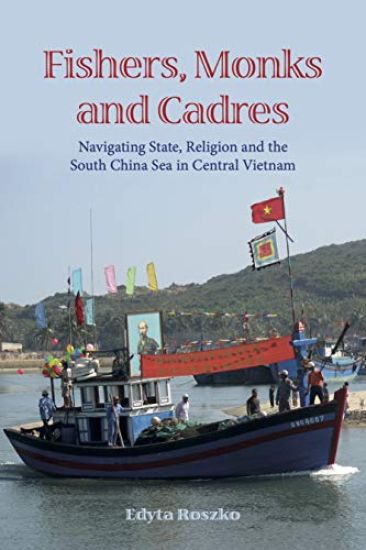
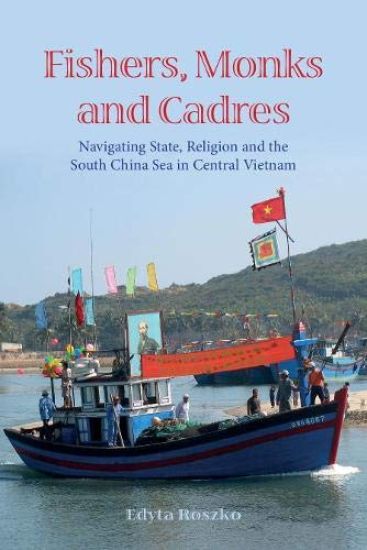
This remarkable and timely ethnography explores how fishing communities living on the fringe of the South China Sea in central Vietnam interact with state and religious authorities as well as their farmer neighbors - even while handling new geopolitical challenges. The focus is mainly on marginal people and their navigation between competing forces over the decades of massive change since their incorporation into the Socialist Republic of Vietnam in 1975. The sea, however, plays a major role in this study as does the location: a once-peripheral area now at the center of a global struggle for sovereignty, influence and control in the South China Sea. The coastal fishing communities at the heart of this study are peripheral not so much because of geographical remoteness as their presumed social 'backwardness'; they only partially fit into the social imaginary of Vietnam's territory and nation. The state thus tries to incorporate them through various cultural agendas while religious reformers seek to purify their religious practices. Yet, recently, these communities have also come to be seen as guardians of an ancient fishing culture, important in Vietnam's resistance to Chinese claims over the South China Sea. The fishers have responded to their situation with a blend of conformity, co-option and subtle indiscipline. A complex, triadic relationship is at play here. Within it are various shifting binaries - e.g. secular/religious, fishers/farmers, local ritual/Buddhist doctrine, etc. - and different protagonists (state officials, religious figures, fishermen and -women) who construct, enact, and deconstruct these relations in shifting alliances and changing contexts. Fishers, Monks and Cadres is a significant new work. Its vivid portrait of local beliefs and practices makes a powerful argument for looking beyond monolithic religious traditions. Its triadic analysis and subtle use of binaries offer startlingly fresh ways to view Vietnamese society and local political power. The book demonstrates Vietnam is more than urban and agrarian society in the Red River Basin and Mekong Delta. Finally, the author builds on intensive, long-term research to portray a region at the forefront of geopolitical struggle, offering insights that will be fascinating and revealing to a much broader readership.
This remarkable and timely ethnography explores how fishing communities living on the fringe of the South China Sea in central Vietnam interact with state and religious authorities as well as their farmer neighbors - even while handling new geopolitical challenges. The focus is mainly on marginal people and their navigation between competing forces over the decades of massive change since their incorporation into the Socialist Republic of Vietnam in 1975. The sea, however, plays a major role in this study as does the location: a once-peripheral area now at the center of a global struggle for sovereignty, influence and control in the South China Sea. The coastal fishing communities at the heart of this study are peripheral not so much because of geographical remoteness as their presumed social 'backwardness'; they only partially fit into the social imaginary of Vietnam's territory and nation. The state thus tries to incorporate them through various cultural agendas while religious reformers seek to purify their religious practices. Yet, recently, these communities have also come to be seen as guardians of an ancient fishing culture, important in Vietnam's resistance to Chinese claims over the South China Sea. The fishers have responded to their situation with a blend of conformity, co-option and subtle indiscipline. A complex, triadic relationship is at play here. Within it are various shifting binaries - e.g. secular/religious, fishers/farmers, local ritual/Buddhist doctrine, etc. - and different protagonists (state officials, religious figures, fishermen and -women) who construct, enact, and deconstruct these relations in shifting alliances and changing contexts. Fishers, Monks and Cadres is a significant new work. Its vivid portrait of local beliefs and practices makes a powerful argument for looking beyond monolithic religious traditions. Its triadic analysis and subtle use of binaries offer startlingly fresh ways to view Vietnamese society and local political power. The book demonstrates Vietnam is more than urban and agrarian society in the Red River Basin and Mekong Delta. Finally, the author builds on intensive, long-term research to portray a region at the forefront of geopolitical struggle, offering insights that will be fascinating and revealing to a much broader readership.
In this eloquent, intimate journey of the poetry delights, the author shares thoughts and various engles of perception on many aspects in life, nature, inner emotions and music. "Walk a while with me" is an expedition to explore unknwon, discovering your own self thourgh deeper meanings presented by each poem in the book. This leads us to a wide collection of poetry, where each of little treasures are different, crosses the boundaries of unspoken words and takes you to a unrevealed world full of emotions, wanders, drama with a hint of comedy included.
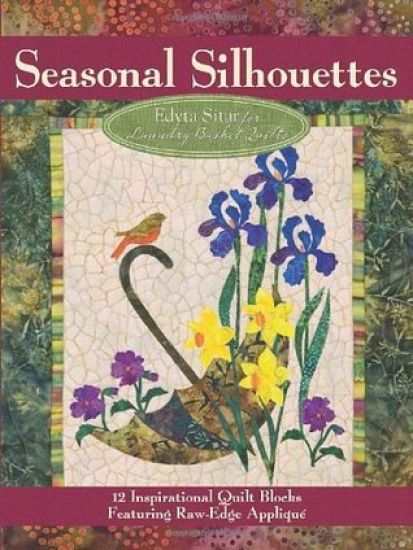
Edyta’s 12 blocks take you through the seasons of the year. Each appliqué quilt block features one or more of Edyta’s beautifully crafted silhouettes for raw-edge machine appliqué. ~Includes step-by-step instructions for Edyta’s raw-edge appliqué, quilting suggestions, favorite quilt binding techniques, full-size appliqué templates, and full-size placement diagrams for each of the 12 blocks. ~Five quilt settings provide the foundation for creating a one-, two- or four-block project, as well as a 12-block, 12-month, full-size calendar quilt.
I visited Lawrence Alaba Afere and his organization in Nigeria - a network of organic farmers and rural entrepreneurs. Learning from the great work he is doing and seeing the faces of people whose lives has been changed, I was inspired and moved. In 2007, when Lawrence graduated from University, he shocked his family with the news that he was not going to use his business management degree to land a high-paying job in the big city. Instead, he wanted to become a social entrepreneur working with agriculture in his hometown Akure, a low-income community in southwest Nigeria. Working with farmers and rural people was not Lawrence's initial plan when he gained admission to study business at the University in 2003. Like many of his classmates, he was excited about getting a job within the banking or oil and gas sector. This all changed, on a Friday back in November 2006 when he read a report in the local newspaper. A life-changing moment he will never forget. The study revealed some shocking statistics about unemployment in Nigeria and the lack of opportunities young graduates are facing when finishing school. More alarming were the predicted effects this would have on society, as the consequences of unemployment would mean that Nigeria would raise over 20 million highly skilled criminals. Lawrence instantly thought to himself that something simply had to change. Instead of waiting around for change to happen, he decided to lead the way for a better future. As his parents and siblings had hoped for Lawrence to stay in the big city and pursue a corporate job that could help provide for the family as well, the decision to return home and pursue his dream wasn't easy. When telling his family about his decision, they thought to themselves that he had been bewitched since after all, who would willingly choose a hard labor career such as farming over a high-paying office job?. Despite the pressure, Lawrence felt strongly about returning to his home town and told his parents: ""Mum and dad, please understand I need to do something different with my life and follow my own path". And that is exactly what Lawrence did. Today he is the founder of Springboard, an organization that combines organic farming with entrepreneurial training to create jobs and promote sustainable agriculture. Lawrence Alaba Afere was that change. By combining organic farming and entrepreneurial training, he found a way to help create jobs for young Nigerians and rural people who were migrating to the cities in search of jobs. Today, Lawrence is a farmer and continues to provide support for young Nigerians and rural people to start their own organic farms and village enterprises. The initiative led him to be named a Mandela Washington fellow in 2014, where he visited the US and spent a few weeks meeting President Barack Obama and a number of global business leaders. In 2016 he also became an Ashoka fellow. This story book was inspired by Lawrence and his network of organic farmers and rural entrepreneurs. The book will help throw more light on everyday change agents and inspire children to follow their dreams and make a change in their communities. To find out more about Lawrence and his activities, please visit the Springboard website at www.springboardnig.com
This book explores the socio-political practice of collective memory in the context of prejudices and stereotypes that circulate in the public sphere with regard to the role of women experiencing wartime and political violence.With a focus on Poland and Central and Eastern Europe, it draws on memoirs, biographies, autobiographies, testimonies by women authors, ideological proclamations and secular ‘hagiographies’ of heroines, female leaders and contemporary role models to examine the ways in which the oppression experienced by women during war is reflected in public discourse, how prejudices and stereotypes concerning the role of women are used politically and how women respond to the politicisation of their own narratives and participation in violence. Guided by the idea that memory is political, such that how we think about it, speak about it and how create it is a political issue, Women’s Roles in Times of War and Political Violence highlights the fate and experiences of those who have been and are still denied their ‘own voice’ by society. It will therefore appeal to scholars across the social sciences with interests in women’s studies, collective memory and women’s wartime experiences.
A smart city is a city that collates data via various technological methods, and uses insights gleaned from this data to manage assets, resources, services and operations more efficiently. Though the concept of ‘smart cities’ is fairly new, there is a vast amount of interest in the topic, exploring how technological advances can be used to better manage the integration of business and operations within a city, as well as how sustainable choices can be written into the fabric of an urban space. This book explores logistics within smart cities: the greater logistical demands of a smart city, how logistics can be adapted to new challenges, and what sort of new logistical support a smart city will need. The book pays particular attention to how logistical innovation within a smart city can lead to greater sustainability in the city, and on a global level. It will be of interest to academics working in logistics, urban planning, innovation management, digital technology, sustainability management, and operations management.
"Edita-me ou te devoro" o primeiro livro dos tr s que comp em o romance "A revoada dos elefantes" de autoria de Marcos Moura Vieira. Foi escrito inicialmente como um projeto a ser desenvolvido na oficina de romance conduzida pelo escritor Luiz Ant nio de Assis Brasil, na d cada de noventa do s culo XX, como parte do programa de extens o em Literatura Brasileira da Pontif cia Universidade Cat lica de Porto Alegre. A Revoada dos elefantes pois o resultado de um texto experimental, que foi publicado da integra em 2013, composto de tr s atos enunciativos: Edita-me ou te devoro, O livro de Isaias e O sexo sentido. A trama, desarticulada nos tr s livros, se passa no Brasil, entre Porto Alegre, S o Paulo e Imbituba, em Santa Catarina, onde dois intelectuais de meia idade, um homem e uma mulher, se reencontram ao cruzar com um adolescente na f de classe m dia que tornar-se- , ele mesmo, em escritor, em decorr ncia do impacto que este encontro ter em sua vida. O texto estrutura-se em tr s partes ou livros. No primeiro "Edita-me ou te devoro", de autoria de Tulio Armachand Botelho, o narrador relata a hist ria do relacionamento da escritora Holda Archanjo com o seu editor Isa as Cruz, acompanhando a tentativa que ele faz de comunicar-se com ela durante o ltimo carnaval do mil nio. O segundo livro, "Cartas de Isa as" traz algumas correspond ncias e apontamentos do final do s culo XX, escritos basicamente por Isa as Cruz e Holda Archanjo, mas assinados por Isa as Cruz, fazendo uma cr nica epistolar do horizonte apreciativo da sociedade brasileira no bote de iniciar o s culo XXI. O terceiro livro "O sexo sentido", apresenta um texto escrito por Holda Archanjo que d a sua perspectiva do encontro com T lio e Isa as, na praia do Rosa, durante o ltimo carnaval do s culo passado. Livro ali s, que encarna o livro demo, objeto da pol mica levantada em "Edita-me ou te devoro". Em "A revoada dos elefantes" Marcos Moura Vieira realiza uma fic o nova que, a exemplo das artes pl sticas contempor neas, constitui-se no fosso da sua base conceptual para realizar e dar o acabamento criatividade art stico-est tica na pr pria enuncia o de um g nero emergente. Desse modo a fic o tra ada em "A revoada dos elefantes" se realiza n o apenas por ou atrav s de um g nero liter rio autorit rio, mas ela se anuncia eminentemente persuasiva na teia pluril ngue dos seus g neros h bridos (novela / carta / di rio; narrativa / correspond ncia / autobiografia; romance /cr nica / poesia). A revoada dos elefantes um texto que aprofunda um di logo entre g neros liter rios e g neros do discurso e que, tal um elefante tentando al ar voo, est muito longe de alcan ar a compreens o do audit rio social ampliado. A publica o dos tr s livros em separado atualiza o projeto de instala o liter ria - conferindo materialidade aos tr s textos como de autoria de um outro: a personagem. Trata-se de um ato performativo que confia a T lio, Holda e Isa as o estatuto e a assinatura de autores. Boa leitura ent o deste texto creditado a Tulio Armachand Botelho.