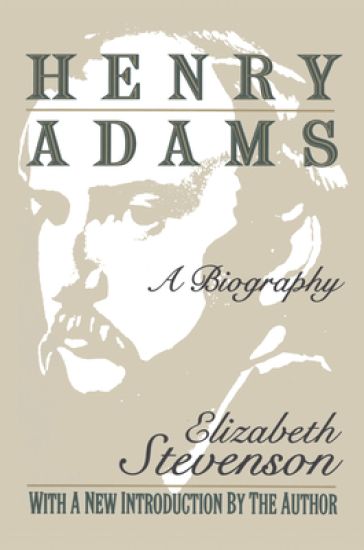
His great grandfather and his grandfather had been presidents of the United States, and to a small boy this seemed a matter of course in his family. But Henry Adams, belonging to a later generation, coming to maturity at the time of the Civil War, found himself in an age uncongenial to the leadership of such men as his ancestors. In the changing world of the late nineteenth century and early twentieth century, Adams found his rightful place as an observer and critic rather than a participant in public life. But no time and no country ever had a keener mind to take note of the comic and tragic qualities embedded in the political, economic, and human drama upon which he gazed. And his writings appeal timelessly in their incisive wit, their warm charm, and in the way they speak to us of a very individual personality. When Stevenson's book first appeared, the New York Times called it 'One of the noteable biographies of recent years,' and it won the Bancroft Prize that year. It remains an engrossing portrait of a remarkable man.It is good to take note of the sage he became in his late, great books: Mont-St. Michel and Chartres and The Education of Henry Adams. This biography explains how Henry Adams became the man both admired and feared in his later years. He was first a bright, unformed young man who was a diplomatic assistant to his father; then an ambitious journalist, a writer of several 'sensational' newspaper and magazine articles. Next he became a provocative and innovative teacher, and a historian unequalled in his presentation of the Jeffersonian period. Until his wife's tragic death, he was a willing actor on the social scene of his beloved Washington, D.C. Throughout, he remained a friend and instigator of the careers of friends in artistic and scientific fields. His writings speak to us still and seem contemporary in their tone as well as their view of cycles of culture and their warnings of decline and achievement.
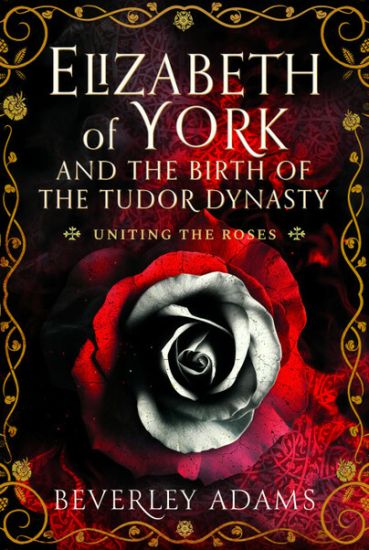
Elizabeth of York has often been overlooked by Tudor historians in favour of her infamous son King Henry VIII and his six wives, as well as her glorious ‘Virgin Queen’ granddaughter Queen Elizabeth I. But Elizabeth, the daughter of King Edward IV and Elizabeth Woodville, deserves far more recognition than she currently receives. She suffered the loss of her younger brothers, the Princes in the Tower, and lived through the reign of her maligned uncle King Richard III, who it has been suggested plotted to marry his niece. Elizabeth was born at a time when having women in power was not considered desirable, but if she had been able to rule then Elizabeth would have been England’s first queen regnant. It was her position as the heiress to the House of York that solidified her husband’s claim to the throne. When she married Henry VII they finally united the warring houses of Lancaster and York. It is often thought that Elizabeth was a weak, ineffectual and pious woman who was too meek to challenge her husband’s rule, but in reality she held some sway over her husband and he often valued her opinion. If anything, Elizabeth was a resolute, well-respected and influential queen. Despite being of Plantagenet blood, Elizabeth of York was the mother of the Tudor dynasty, one of England’s most powerful and ruthless monarchies. Yet she was a devoted mother and an adored queen to the people of England.
His great grandfather and his grandfather had been presidents of the United States, and to a small boy this seemed a matter of course in his family. But Henry Adams, belonging to a later generation, coming to maturity at the time of the Civil War, found himself in an age uncongenial to the leadership of such men as his ancestors. In the changing world of the late nineteenth century and early twentieth century, Adams found his rightful place as an observer and critic rather than a participant in public life. But no time and no country ever had a keener mind to take note of the comic and tragic qualities embedded in the political, economic, and human drama upon which he gazed. And his writings appeal timelessly in their incisive wit, their warm charm, and in the way they speak to us of a very individual personality. When Stevenson's book first appeared, the New York Times called it 'One of the noteable biographies of recent years,' and it won the Bancroft Prize that year. It remains an engrossing portrait of a remarkable man.It is good to take note of the sage he became in his late, great books: Mont-St. Michel and Chartres and The Education of Henry Adams. This biography explains how Henry Adams became the man both admired and feared in his later years. He was first a bright, unformed young man who was a diplomatic assistant to his father; then an ambitious journalist, a writer of several 'sensational' newspaper and magazine articles. Next he became a provocative and innovative teacher, and a historian unequalled in his presentation of the Jeffersonian period. Until his wife's tragic death, he was a willing actor on the social scene of his beloved Washington, D.C. Throughout, he remained a friend and instigator of the careers of friends in artistic and scientific fields. His writings speak to us still and seem contemporary in their tone as well as their view of cycles of culture and their warnings of decline and achievement.
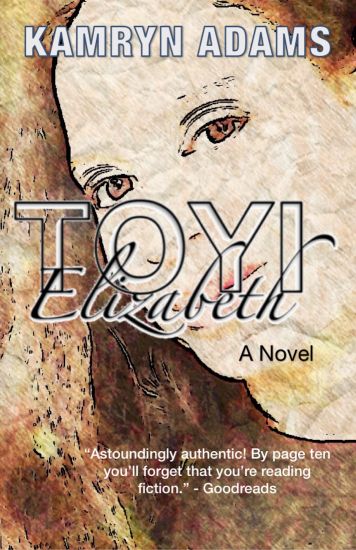
The award-winning author of Par for the Curse brings readers an impassioned story of grace with resilience often deeply hidden in the human spirit. Toyi Elizabeth is an inspiring tale that leaves readers to consider the strength, power, and love buried inside of them. Toyi Elizabeth was born during a frightening electrical storm in Appalachia, the kind that makes people go to church the following Sunday. Exhausted from the ever present storms in her life, Toyi Elizabeth makes a valiant attempt at suicide that was thwarted by a determined doctor with heterochromia and a nurse from the Black church. Upon waking, she is burdened by the story to be told. A life-long victim who now sees herself as a survivor, Toyi Elizabeth offers a memoir of heartbreaking historicity, healing wisdom, and delightful wit.
The award-winning author of Par for the Curse brings readers an impassioned story of grace with resilience often deeply hidden in the human spirit. Toyi Elizabeth is an inspiring tale that leaves readers to consider the strength, power, and love buried inside of them. Toyi Elizabeth was born during a frightening electrical storm in Appalachia, the kind that makes people go to church the following Sunday. Exhausted from the ever present storms in her life, Toyi Elizabeth makes a valiant attempt at suicide that was thwarted by a determined doctor with heterochromia and a nurse from the Black church. Upon waking, she is burdened by the story to be told. A life-long victim who now sees herself as a survivor, Toyi Elizabeth offers a memoir of heartbreaking historicity, healing wisdom, and delightful wit.
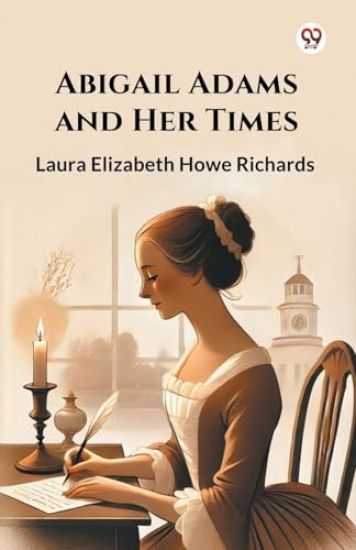
SEVENTEEN HUNDRED AND FORTY-FOUR George the Second on the throne of England, "snuffy old drone from the German hive"; Charles Edward Stuart ("bonnie Prince Charlie") making ready for his great coup which, the next year, was to cast down said George from the throne and set Charles Edward thereupon as "rightful, lawful prince-for wha'll be king but Charlie?", and which ended in Culloden and the final downfall and dispersion of the Scottish Stuarts. In France, Louis XV., Lord of Misrule, shepherding his people toward the Abyss with what skill was in him; at war with England, at war with Hungary; Frederick of Prussia alone standing by him. In Europe, generally, a seething condition which is not our immediate concern. In America, seething also: discontent, indignation, rising higher and higher under British imposition (not British either, being the work of Britain's German ruler, not of her people ), yet quelled for the moment by war with France. I am not writing a history; far from it. I am merely throwing on the screen, in the fashion of today, a few scenes to make a background for my little pen-picture-play. What is really our immediate concern is that on November eleventh of this same year, 1744, was born to the wife of the Reverend William Smith of Weymouth, Massachusetts, a daughter, baptized Abigail.
This book has been considered important throughout the human history, and so that this work is never forgotten we have made efforts in its preservation by republishing this book in a modern format for present and future generations. This whole book has been reformatted, retyped and designed. These books are not made of scanned copies of their original work and hence the text is clear and readable.
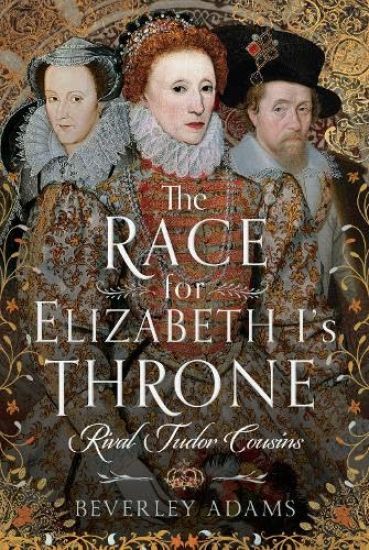
As the childless Elizabeth I lay on her deathbed, discussions over who would succeed her as ruler of England raged on amongst her advisors. The succession to Elizabeth’s throne was hotly debated throughout her reign (1558-1603) and despite having no direct heir, the queen refused to name her successor over safety concerns, being convinced a plot would be raised to oust her in favour of the heir. There were many contenders to the crown, but Elizabeth’s main rival was Mary, Queen of Scots but her Catholic faith and ill-advised marriage to fellow claimant Lord Darnley, against Elizabeth’s wishes, damaged her claim. Her claim was ended when the English queen had her Scottish counterpart executed in 1587. Other claims came from the Grey sisters Katherine and Mary, and later Margaret Clifford and Arbella Stuart. But the crown finally came to King James VI of Scotland, son of Mary and Darnley, in what was a smooth transition. His accession marked the end of the Tudor dynasty and the start of the Stuart era in England.
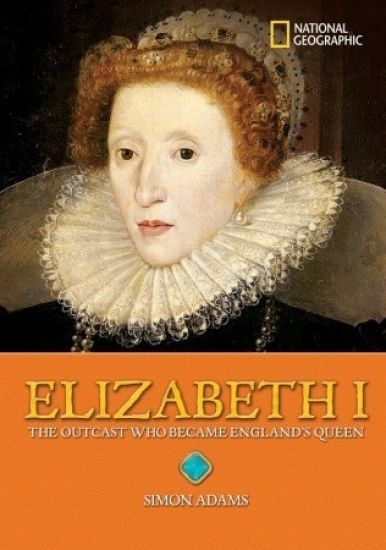
No one thought that Elizabeth would live to become Queen of England. Her father, Henry VIII, beheaded her mother, Anne Bolyn, for treason in 1536. He then disowned his daughter, declaring her illegitimate. But in 1544, Parliament reestablished the young princess in the line of succession after her half brother and her half sister. Endowed with immense personal courage and a keen awareness of her responsibility as a ruler, Elizabeth commanded throughout her reign the unwavering respect and allegiance of her subjects. National Geographic supports K-12 educators with ELA Common Core Resources.Visit www.natgeoed.org/commoncore for more information.
Kristallnacht to NurembergWorld War II through the articles and personal letters of an award-winning journalistDana Adams Schmidt was born in Bay Village, Ohio, in 1915 to a German/Austrian father and a mother from a prominent American family with roots to the early settlers. He was a graduate of Pomona College in Claremont, California and the Columbia School of Journalism.His mother, Margaret Adams Schmidt, plays a key role in this book because he had promised to write a letter home each week while abroad, which resulted in 1200 letters throughout the war. His sister, Elizabeth Schmidt Crahan, has brilliantly intertwined the letters with his main articles giving an intimate first-person account of World War II.His journalism career began in 1937 after winning a traveling scholarship from Columbia.While abroad, he joined the United Press and was sent to Berlin in 1938 because he spoke German. One of his first assignments as a reporter was to accompany the German army as it invaded the Sudetenland. In Berlin, he saw the devastation of the shops on the Kurfuerstendamm, Kristallnacht, and experienced the beginning of the persecution of the Jews. He was transferred to Sofia and then to Istanbul and Ankara. He was assigned to General Eisenhower's Allied Force Headquarters in Algiers. He covered the invasions of Sicily, Salerno, Corsica and Southern France. He joined NYT Paris staff in 1944, was sent to Frankfurt, covered the Nuremberg trials and continued his distinguished career as a foremost reporter in the Middle East. He authored four books.Elizabeth Schmidt Crahan was one of the first women to graduate from the University of Southern California's School of Architecture in 1938. She raised a family of four and returned to USC in the 1960s to earn a Master's in Library Science. She worked at the LA County Medical Association Library, becoming the Director in 1978 until she retired in 1990.
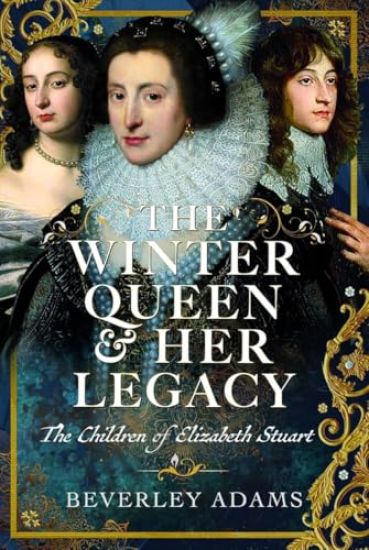
As the daughter of James VI and I and sister to King Charles I, Elizabeth Stuart was destined to become a pivotal part of the ever-changing political face of seventeenth-century Europe. She was married at the age of sixteen to Frederick V, Elector Palatine, and her life seemed destined for greatness, but was later marked by violent upheaval and exile following their fleeting reign as King and Queen of Bohemia, leading to her being remembered as the ‘Winter Queen’. But her true legacy lies in her children, whose lives, marriages and children shaped the face of Europe. The Winter Queen and her Legacy: The Children of Elizabeth Stuart is an in-depth narrative of Elizabeth’s life from her early life in Scotland via the glittering court of England to the war-torn lands of the Holy Roman Empire. It follows the struggles she faced as a monarch in exile and her fierce determination to protect her children’s dynastic rights. The book also explores the lives of her thirteen children, most notably Prince Rupert of the Rhine, a loyal supporter of his uncle, Charles I, and Sophia of Hanover, who stood just one step from the British throne through the Act of Settlement of 1701 but whose son would ascend it as King George I. Based on a variety of sources, The Winter Queen and her Legacy: The Children of Elizabeth Stuart offers a comprehensive look at the life of a woman whose lineage shaped the British monarchy and who influenced the political map of Europe.
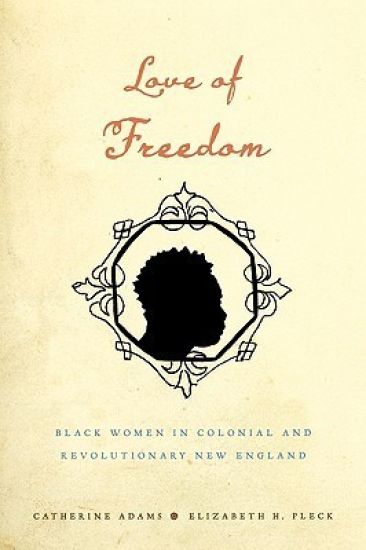
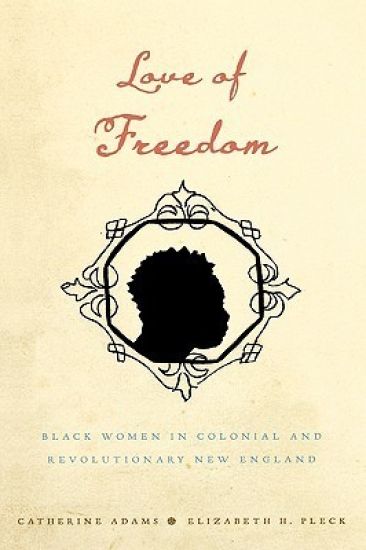
They baked New England's Thanksgiving pies, preached their faith to crowds of worshippers, spied for the patriots during the Revolution, wrote that human bondage as a sin, and demanded reparations for slavery. Black women in colonial and revolutionary New England sought not only legal emancipation from slavery but defined freedom more broadly to include spiritual, familial, and economic dimensions. Hidden behind the banner of achieving freedom was the assumption that freedom meant affirming black manhood The struggle for freedom in New England was different for women than for women. Black men in colonial and revolutionary New England were struggling for freedom from slavery and for the right to patriarchal control of their own families. Women had more complicated desires, seeking protection and support in a male headed household while also wanting personal liberty. Eventually women who were former slaves began to fight for dignity and respect for womanhood and access to schooling for black children.
They baked New England's Thanksgiving pies, preached their faith to crowds of worshippers, spied for the patriots during the Revolution, wrote that human bondage as a sin, and demanded reparations for slavery. Black women in colonial and revolutionary New England sought not only legal emancipation from slavery but defined freedom more broadly to include spiritual, familial, and economic dimensions. Hidden behind the banner of achieving freedom was the assumption that freedom meant affirming black manhood The struggle for freedom in New England was different for women than for women. Black men in colonial and revolutionary New England were struggling for freedom from slavery and for the right to patriarchal control of their own families. Women had more complicated desires, seeking protection and support in a male headed household while also wanting personal liberty. Eventually women who were former slaves began to fight for dignity and respect for womanhood and access to schooling for black children.