
Kirjahaku
Etsi kirjoja tekijän nimen, kirjan nimen tai ISBN:n perusteella.
1000 tulosta hakusanalla Elizabeth M Dembrowsky

A gay teacher is murdered at an exclusive boys' school in the Eastern suburbs of Sydney. His death exposes the rampant homophobia and sexist attitudes of the 1980's. The few women teachers bear the brunt of the gossip which swirls around the school and tension mounts as the finger pointing increases. Jealousy and prejudice are just two of the many reactions triggered by the murder of Bentley Shute. Was his death caused because of his popularity or for being gay? Or was it linked to his love of gossip?

Today Show's sleep expert Elizabeth Shannon controversially explores the lies you are told by your doctor, psychiatrist and do-gooders. With 1 in 6 Australians taking antidepressants, over 35 million psychotropic drug prescriptions written annually and 95.2 percent of insomnia patients being prescribed medications, the days of "asking your doctor" are over. The drugs are not evidence-based, doubling the suicide rate in children, injuring babies and more. In April 2017 GlaxoSmithKline was ordered to pay $ 3 million after the suicide death of Stewart Dolin who was taking antidepressants. No longer the lucky country, we're the nutty country. BUY THIS BOOK. WAKE UP. SAVE A LIFE.


Emotional Bridges to Puerto Rico examines the experiences of incorporation among two groups of middle-class Puerto Ricans: one that currently lives in the U.S. mainland and one that has resettled in Puerto Rico. The analysis focuses on their subjective interpretations of incorporation and the conditions under which they decide to move back and forth between the mainland and island. Findings reveal that migration to the mainland results in educational, occupational and economic gains in the U.S., which also help return migrants re-enter Island labor markets. U.S. settlement brings its own set of struggles. Puerto Ricans see themselves as members of transnational families, yet the struggles of leading dual lives result in settlement decisions that reflect desires to live locally with roots in one place instead of feeling split between the two. Experiences with U.S. racism complicate these decisions, given Puerto Ricans' struggles with racial identity and exclusion in spite of their economic, occupational, and residential integration into mainland society. This study illustrates the conditions under which various patterns of attachments to place-or emotional anchoring-develop, and how these feelings impact future Puerto Rican settlement.
Emotional Bridges to Puerto Rico examines the experiences of incorporation among two groups of middle-class Puerto Ricans: one that currently lives in the U.S. mainland and one that has resettled in Puerto Rico. The analysis focuses on their subjective interpretations of incorporation and the conditions under which they decide to move back and forth between the mainland and island. Findings reveal that migration to the mainland results in educational, occupational and economic gains in the U.S., which also help return migrants re-enter Island labor markets. U.S. settlement brings its own set of struggles. Puerto Ricans see themselves as members of transnational families, yet the struggles of leading dual lives result in settlement decisions that reflect desires to live locally with roots in one place instead of feeling split between the two. Experiences with U.S. racism complicate these decisions, given Puerto Ricans' struggles with racial identity and exclusion in spite of their economic, occupational, and residential integration into mainland society. This study illustrates the conditions under which various patterns of attachments to place-or emotional anchoring-develop, and how these feelings impact future Puerto Rican settlement.

This book challenges the orthodox views of William I's great census of 1086, to give an intriguing story of the origins of England's greatest historical record, as well as new insights into its contents.

Beignets, Po’ Boys, gumbo, jambalaya, Antoine’s. New Orleans’ celebrated status derives in large measure from its incredibly rich food culture, based mainly on Creole and Cajun traditions. At last, this world-class destination has its own food biography. Elizabeth M. Williams, a New Orleans native and founder of the Southern Food and Beverage Museum there, takes readers through the history of the city, showing how the natural environment and people have shaped the cooking we all love. The narrative starts by describing the indigenous population and material resources, then reveals the contributions of the immigrant populations, delves into markets and local food companies, and finally discusses famous restaurants, drinking culture, cooking at home and cookbooks, and signature foods dishes. This must-have book will inform and delight food aficionados and fans of the Big Easy itself.

The Role of Technology in Water Resources Planning and Management
Elizabeth M. (EDT) Perez; Warren Viessman
Amer Society of Civil Engineers
2009
pokkari

I Am in Here – The Journey of a Child with Autism Who Cannot Speak but Finds Her Voice
Elizabeth M. Bonker; Virginia G. Breen
Revell, a division of Baker Publishing Group
2014
nidottu
She looked into my eyes and blinked hers slowly and deliberately, like a stroke victim, to show me that although she couldn't speak, she understood what I was saying to her. I stroked her hair softly. 'I know you're in there, honey,' I told her. 'We'll get you out.'" Despite the horror of seeing fifteen-month-old Elizabeth slip away into autism, her mother knew that her bright little girl was still in there. When Elizabeth eventually learned to communicate, first by using a letterboard and later by typing, the poetry she wrote became proof of a glorious, life-affirming victory for this young girl and her family.I Am in Here is the spiritual journey of a mother and daughter who refuse to give up hope, who celebrate their victories, and who keep trying to move forward despite the obstacles. Although she cannot speak, Elizabeth writes poetry that shines a light on the inner world of autism and the world around us. That poetry and her mother's stirring storytelling combine in this inspirational book to proclaim that there is always a reason to take the next step forward--with hope.

In 2015, the New York Times reported, "The bright children of janitors and nail salon workers, bus drivers and fast-food cooks may not have grown up with the edifying vacations, museum excursions, daily doses of NPR and prep schools that groom Ivy applicants, but they are coveted candidates for elite campuses." What happens to academically talented but economically challenged "first-gen" students when they arrive on campus? Class markers aren't always visible from a distance, but socioeconomic differences permeate campus life—and the inner experiences of students—in real and sometimes unexpected ways. In Class and Campus Life, Elizabeth M. Lee shows how class differences are enacted and negotiated by students, faculty, and administrators at an elite liberal arts college for women located in the Northeast. Using material from two years of fieldwork and more than 140 interviews with students, faculty, administrators, and alumnae at the pseudonymous Linden College, Lee adds depth to our understanding of inequality in higher education. An essential part of her analysis is to illuminate the ways in which the students' and the college's practices interact, rather than evaluating them separately, as seemingly unrelated spheres. She also analyzes underlying moral judgments brought to light through cultural connotations of merit, hard work by individuals, and making it on your own that permeate American higher education. Using students' own descriptions and understandings of their experiences to illustrate the complexity of these issues, Lee shows how the lived experience of socioeconomic difference is often defined in moral, as well as economic, terms, and that tensions, often unspoken, undermine students' senses of belonging.
Conceiving Risk, Bearing Responsibility:
Elizabeth M. Armstrong
Johns Hopkins University Press
2008
nidottu
In American society, the consumption of alcohol during pregnancy is considered dangerous, irresponsible, and in some cases illegal. Pregnant women who have even a single drink routinely face openly voiced reproach. Yet fetal alcohol syndrome (FAS) in infants and children is notoriously difficult to diagnose, and the relationship between alcohol and adverse birth outcomes is riddled with puzzles and paradoxes. Sociologist Elizabeth M. Armstrong uses fetal alcohol syndrome and the problem of drinking during pregnancy to examine the assumed relationship between somatic and social disorder, the ways in which social problems are individualized, and the intertwining of health and morality that characterizes American society. She traces the evolution of medical knowledge about the effects of alcohol on fetal development, from nineteenth-century debates about drinking and heredity to the modern diagnosis of FAS and its kindred syndromes. She argues that issues of race, class, and gender have influenced medical findings about alcohol and reproduction and that these findings have always reflected broader social and moral preoccupations and, in particular, concerns about women's roles and place in society, as well as the fitness of future generations. Medical beliefs about drinking during pregnancy have often ignored the poverty, chaos, and insufficiency of some women's lives-factors that may be more responsible than alcohol for adverse outcomes in babies and children. Using primary sources and interviews to explore relationships between doctors and patients and women and their unborn children, Armstrong offers a provocative and detailed analysis of how drinking during pregnancy came to be considered a pervasive social problem, despite the uncertainties surrounding the epidemiology and etiology of fetal alcohol syndrome.

In this timely contribution to the debates on citizenship, Elizabeth Meehan provides an incisive analysis of the meaning of citizenship, and the links between civil, political and social citizenship. The book provides a clear account of the development of social rights within the European community in three key areas: social security and assistance; participation by workers in the undertakings in which they are employed; and the equal treatment of men and women. The author critically assesses the extent to which inequalities of class, gender and ethnicity are successfully addressed by community social policies.
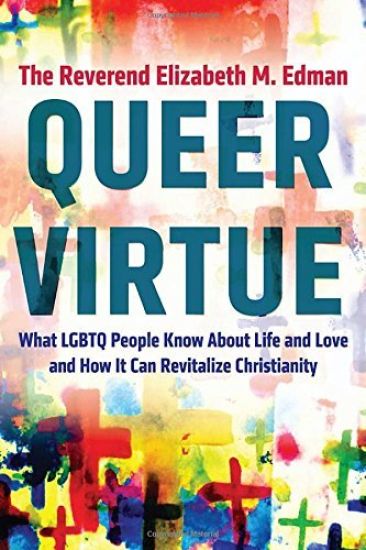
LGBTQ people are a gift to the Church and have the potential to revitalize Christianity. As an openly lesbian Episcopal priest and professional advocate for LGBTQ justice, the Reverend Elizabeth Edman has spent her career grappling with the core tenets of her faith. After deep reflection on her tradition, Edman is struck by the realization that her queer identity has taught her more about how to be a good Christian than the church. In Queer Virtue, Edman posits that Christianity, at its scriptural core, incessantly challenges its adherents to rupture false binaries, to "queer" lines that pit people against one another. Thus, Edman asserts that Christianity, far from being hostile to queer people, is itself inherently queer. Arguing from the heart of scripture, she reveals how queering Christianity--that is, disrupting simplistic ways of thinking about self and other--can illuminate contemporary Christian faith. Pushing well past the notion that "Christian love = tolerance," Edman offers a bold alternative: the recognition that queer people can help Christians better understand their fundamental calling and the creation of sacred space where LGBTQ Christians are seen as gifts to the church. By bringing queer ethics and Christian theology into conversation, Edman also shows how the realities of queer life demand a lived response of high moral caliber--one that resonates with the ethical path laid down by Christianity. Lively and impassioned, Edman proposes that queer experience be celebrated as inherently valuable, ethically virtuous, and illuminating the sacred. A rich and nuanced exploration, Queer Virtue mines the depths of Christianity's history, mission, and core theological premises to call all Christians to a more authentic and robust understanding of their faith.
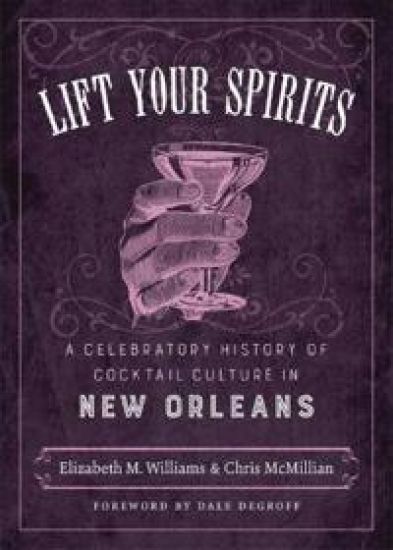
Lift Your Spirits
Elizabeth M. Williams; Chris McMillian; Dale DeGroff
Louisiana State University Press
2016
sidottu
The Sazerac, the Hurricane, and the absinthe glass of Herbsaint are among the many well-known creations native to New Orleans's longstanding drinking culture. But more than vehicles for alcohol, the cocktails and spirits that complement the city's culinary prowess are each a token of its history. In every bar-side toast or street-corner daiquiri you can find evidence of the people, politics, and convergence of ethnicities that drive the story of the Crescent City.In Lift Your Spirits: A Celebratory History of Cocktail Culture in New Orleans, Elizabeth M. Williams, founder and director of the Southern Food and Beverage Institute, and world-renowned bartender Chris McMillian illuminate the city's open embrace of alcohol, both in religious and secular life, while delving into the myths, traditions, and personalities that have made New Orleans a destination for imbibing tourists and a mecca for mixologists.With over 40 cocktail recipes interspersed among nearly three hundred years of history, a sampling of premier cocktail bars in New Orleans, and a glossary of terms to aid drink making and mixing, Lift Your Spirits honors the art of a good drink in the city of good times.
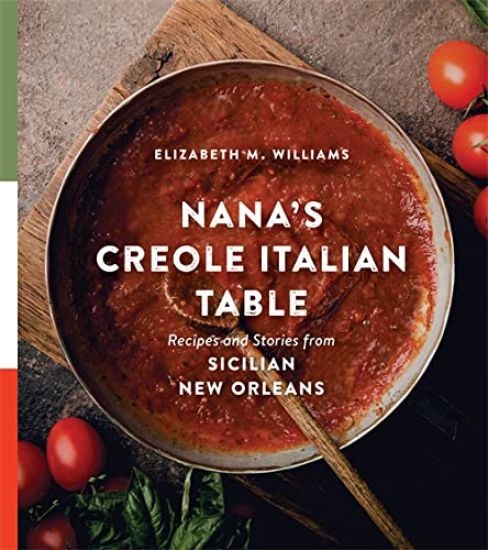
From meatball po'boys to Creole red gravy, the influence of Sicilian foodways permeates New Orleans, one of America's greatest food cities. Nana's Creole Italian Table tells the story of those immigrants and their communities through the lens of food, exploring the ways traditional Sicilian dishes such as pasta and olive salad became a part of—and were in turn changed by—the existing food culture in New Orleans.Sicilian immigrants—Elizabeth M. Williams's family among them—came to New Orleans in droves in the late nineteenth and early twentieth centuries, fleeing the instability of their own country and hoping to make a new home in America. This cookbook shares Williams's traditional family recipes, with variations that reveal the evolution and blending of Sicilian and Creole cuisines. Baked into every recipe is the history of Sicilian American culture as it has changed over the centuries, allowing each new generation to incorporate its own foodways and ever-evolving tastes.
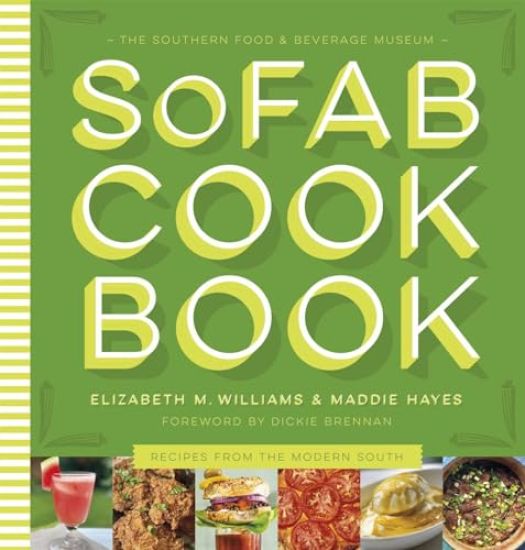
The Southern Food & Beverage Museum Cookbook
Elizabeth M. Williams; Maddie Hayes
LOUISIANA STATE UNIVERSITY PRESS
2024
sidottu
In the aftermath of Hurricane Katrina, a small group of dedicated dreamers opened the Southern Food & Beverage Museum (SoFAB) to tell the stories of the foods and drinks that have come to define the U.S. South. From its beginnings, SoFAB has focused on discovering, understanding, and celebrating food, drink, and related culture and folklife in America. As the museum grew, its staff and supporters learned to answer the question, "What is southern food?" in new ways that reflected the region's dynamism, its ingenuity in the face of hardship, and the contributions of generations of immigrant communities. The Southern Food & Beverage Museum Cookbook shares recipes particular to each southern state, all created by chefs who feel the connection of home.

The ups and downs of silk, cotton, and stocks syncopated with serialized novels in the late-nineteenth-century Arabic press: Time itself was changing. Novels of debt, dissimulation, and risk begin to appear in Arabic at a moment when France and Britain were unseating the Ottoman legacy in Beirut, Cairo, and beyond. Amid booms and crashes, serialized Arabic fiction and finance at once tell the other's story. While scholars of Arabic often write of a Nahdah, a sense of renaissance, Fictitious Capital argues instead that we read the trope of Nahdah as Walter Benjamin might have, as "one of the monuments of the bourgeoisie that [are] already in ruins." Financial speculation engendered an anxious mixture of hope and fear formally expressed in the mingling of financial news and serialized novels in such Arabic journals as Al-Jinan, Al-Muqtataf, and Al-Hilal. Holt recasts the historiography of the Nahdah, showing its sense of rise and renaissance to be a utopian, imperially mediated narrative of capital that encrypted its inevitable counterpart, capital flight.