Kirjojen hintavertailu. Mukana 11 244 527 kirjaa ja 12 kauppaa.

Kirjahaku

Etsi kirjoja tekijän nimen, kirjan nimen tai ISBN:n perusteella.

1000 tulosta hakusanalla Elizabeth Stuart Phelps

Trixy

Trixy

Elizabeth Stuart Phelps

Northwestern University Press
2019
nidottu
Trixy is a 1904 novel by the best-selling but largely forgotten American author and women's rights activist Elizabeth Stuart Phelps (1844-1911). The book decries the then-common practice of vivisection, or scientic experiments on live animals.Though not well known today, Phelps's 1868 spiritualist novel, The Gates Ajar, which offered a comforting view of the afterlife to readers traumatized by the Civil War, was the century's second best-selling American novel, surpassed only by Uncle Tom's Cabin. Recently scholars and readers have begun to reexamine Phelps's significance. In Trixy, contemporary readers can trace the roots of the early animal rights movement in Phelps' influential campaign to introduce legislation to regulate or end vivisection. Phelps not only presents a narrative polemic against the cruelty of vivisection but argues that training young doctors in vivisection makes them bad physicians.Emily E. VanDette's introduction illuminates that Phelps' protest writing, which included fiction, pamphlets, essays, and speeches, was well ahead of its time. As contemporary authors like Peter Singer, Jonathan Safran Foer, Donna Haraway, Gary Francione, and Carol J. Adams have extended her vision, they have also created new audiences for her work.

The Story of Avis

The Story of Avis

Elizabeth Stuart Phelps

Rutgers University Press
1985
nidottu
Avis is a nineteenth-century painter who strives to keep herself free of marriage and entanglements. As a child, Avis decides that given a woman's options of marriage or being a "lady," "I think I'd rather keep dogs." She is caught all the same, by a "modern man" and through her life, Elizabeth Stuart Phelps describes the struggle of a woman to be wife, mother, and artist. Although Avis declares and her fiance agrees that she must not "resign my profession as an artist," the reality greets her with their first house: "It was not quite clear where the studio was to be, unless in the attic." But the house is near the college, where her husband teaches, and that "in the view of the New England winters, and the delicate health of the young professor, was decisive." She returns from an hour in her studio to clogged drains and unexpected company, descending "from the sphinx to the drainpipe in one fell swoop." Truly, she does hate housekeeping, and while she loves her baby, "sometimes, sitting burdened with the child upon her arms, she looked out and off upon the summer sky with a strangling desolation like that of a forgotten diver, who sees the clouds flit, from the bottom of the sea." And so it goes. How modern is the "modern man" and how much do women's roles ever change? This book, written more than one hundred years ago, will still seem very real to many women today. -- From 500 Great Books by Women; review by Erica Bauermeister
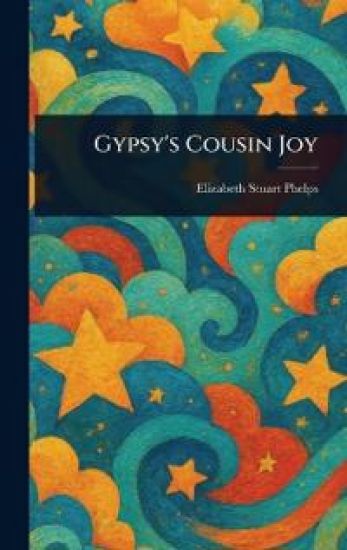
Gypsy's Cousin Joy

Gypsy's Cousin Joy

Elizabeth Stuart Phelps

Anson Street Press
2025
sidottu
"Gypsy's Cousin Joy," by Elizabeth Stuart Phelps, offers a heartwarming glimpse into family life and the bonds of childhood. This classic children's story explores the joys and challenges of friendship, particularly the special connection between cousins. Delve into a world where the everyday experiences of girls navigating family relationships become extraordinary. This carefully prepared print edition revives a beloved tale of kinship, capturing the essence of youthful camaraderie and the enduring power of family ties. Explore the themes of friendship, family, and growing up in this charming narrative that has resonated with readers for generations. A timeless exploration of childhood, "Gypsy's Cousin Joy" is a celebration of the simple yet profound moments that shape our lives.This work has been selected by scholars as being culturally important, and is part of the knowledge base of civilization as we know it.This work is in the public domain in the United States of America, and possibly other nations. Within the United States, you may freely copy and distribute this work, as no entity (individual or corporate) has a copyright on the body of the work.Scholars believe, and we concur, that this work is important enough to be preserved, reproduced, and made generally available to the public. We appreciate your support of the preservation process, and thank you for being an important part of keeping this knowledge alive and relevant.