This work has been selected by scholars as being culturally important and is part of the knowledge base of civilization as we know it.This work is in the public domain in the United States of America, and possibly other nations. Within the United States, you may freely copy and distribute this work, as no entity (individual or corporate) has a copyright on the body of the work.Scholars believe, and we concur, that this work is important enough to be preserved, reproduced, and made generally available to the public. To ensure a quality reading experience, this work has been proofread and republished using a format that seamlessly blends the original graphical elements with text in an easy-to-read typeface.We appreciate your support of the preservation process, and thank you for being an important part of keeping this knowledge alive and relevant.
"When a man meets the woman with whom he is destined to fall in love, he knows."● Ranked #1 Best Seller in Amazon's Historical Regency Fiction ●Praise for A Lasting Love Affair"A Lasting Love Affair is a light and quick escapist read that kept me company at a time when I needed a little Darcy pick-me-up, and I'm looking forward to reading more by this author." - Diary of an Eccentric"The writing in the story was very good. While the story was very fast moving, it flowed well and the language was very appropriate to the time, very much in the style of Jane Austen. This was a fun, quick, easy read, not without its angst, but also with touches of humour and romance." - Laughing with Lizzie"Such as any book of Ms P O Dixon, this is such a lovely mix of the original and its variation." - NetGalley Mr. Darcy was not looking to fall in love. He thought he had it all: wealth, privilege, and ardent passion for his sport. Then he meets Miss Elizabeth Bennet, and soon thereafter he knows that she is the woman with whom he is destined to spend his life.Having suffered a traumatic loss, Elizabeth knows the pain of heartache. She is determined to shield herself against forming strong attachments so she might never feel that way again. Then Mr. Darcy comes along, and he has a way of melting all her defenses.
A mother's journey to find and meet her baby who has gone before her on the journey to the other side of the veil. In this case through and at the hands of her own hands Cheryl's Momma finds she is wishing and longing for the weight of her child in her arms. She was missing the baby she thought she was not strong enough to carry. Now all she longed for was a moment of feeling the weight of that baby in her arms. This is the journey of healing and learning to trust... the journey of how Cheryl Elizabeth came into being - how she found herself being thrust so quickly into the realms of the next world and her own journey to reunite her spirit with that of her momma's... and in time prayerfully with her dad
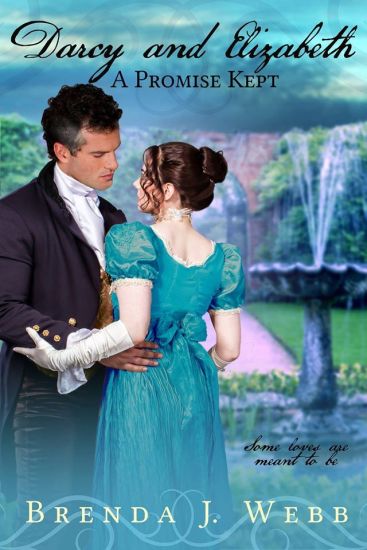
What if Darcy and Elizabeth were plunged into the war between England and France?It is 1803, and a treaty has allowed England and France to enjoy a brief moment of peace in the midst of the Napoleonic wars. Darcy is despondent over Elizabeth's refusal of his proposal at Hunsford, so Colonel Fitzwilliam proposes a trip to Paris as a distraction. At a ball Darcy unexpectedly encounters Elizabeth, who is visiting Paris with the Gardiners. He sees this as his opportunity to court Elizabeth properly and rectify past mistakes. Before he can make much progress, however, England declares war again and Darcy must help Elizabeth flee France.As they make their way to the coast, Elizabeth and Darcy must battle brigands, French soldiers, illness, and their own mutual attraction - all without a chaperone.When they return to England, Elizabeth and Darcy have their own secrets to conceal - even from those closest to them.
Toni Ross has written a beautiful memoir, the intimate story of a gay woman in a straight world. It has many comments about society in general, about gay society, gay men, wife and wife and so on. No holes barred. But always with love and compassion. A very beautiful and interesting love story which is very readable and extremely rewarding.
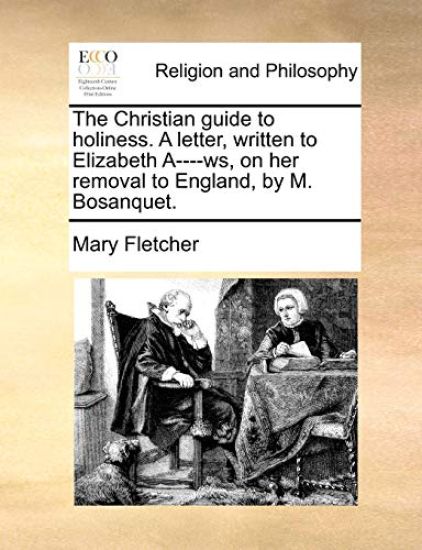
The 18th century was a wealth of knowledge, exploration and rapidly growing technology and expanding record-keeping made possible by advances in the printing press. In its determination to preserve the century of revolution, Gale initiated a revolution of its own: digitization of epic proportions to preserve these invaluable works in the largest archive of its kind. Now for the first time these high-quality digital copies of original 18th century manuscripts are available in print, making them highly accessible to libraries, undergraduate students, and independent scholars.The Age of Enlightenment profoundly enriched religious and philosophical understanding and continues to influence present-day thinking. Works collected here include masterpieces by David Hume, Immanuel Kant, and Jean-Jacques Rousseau, as well as religious sermons and moral debates on the issues of the day, such as the slave trade. The Age of Reason saw conflict between Protestantism and Catholicism transformed into one between faith and logic -- a debate that continues in the twenty-first century.++++The below data was compiled from various identification fields in the bibliographic record of this title. This data is provided as an additional tool in helping to insure edition identification: ++++British LibraryT231047Mary Bosanquet = Mary Fletcher.Burslem: printed, by J. Tregortha, M.DCC.L, XCVI i.e 1796]. 24p.; 4
This textbook is intended to give students a quick start in using theory to address syntactic questions. At each stage, Cowper is careful to introduce a theoretical apparatus that is no more complex than is required to deal with the phenomenon under consideration. Comprehensive and up-to-date, this accessible volume will also provide an excellent refresher for linguists returning to the study of Government-Binding theory. "Cowper exhibits the analytical devices of current principles-and-parameters approaches, takes readers carefully through the central elements of grammatical theory (including very recent work), and ushers them selectively into the technical literature...A serious introduction for those who want to know the nuts and bolts of syntactic theory and to see why linguists are so excited these days."--David Lightfoot, University of Maryland "An excellent short introduction to the Government and Binding model of syntactic theory...Cowper's work succeeds in teaching syntactic argumentation and in showing the conceptual reasons behind specific proposals in modern syntactic theory."--Jaklin Kornfilt, Syracuse University
The Basotho kingdom emerged and consolidated in the dramatic and dangerous environment of nineteenth-century South Africa. In this 2003 book, Elizabeth Eldredge provides a rich description of local agriculture, iron-working and craft industries, bringing out the resourceful responses of the Basotho to the challenges of drought and famine, and explaining the dynamics of the competition for land. During the colonial period, regional economic integration increasingly influenced local production, land use and internal politics, and drew the Basotho into the regional migrant labour system. Throughout these turbulent years, the overriding interest of the Basotho was the pursuit of security. Dr Eldredge analyzes the epic struggle which bound together rich and poor, chiefs and commoners, and men and women in a largely successful effort to sustain this fragile and innovative society in the face of political threats and environmental challenges.
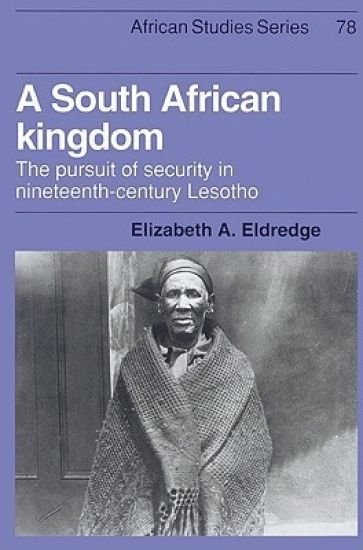
The Basotho kingdom emerged and consolidated in the dramatic and dangerous environment of nineteenth-century South Africa. Elizabeth Eldredge provides a rich description of local agriculture, iron-working and craft industries, bringing out the resourceful responses of the Basotho to the challenges of drought and famine, and explaining the dynamics of the competition for land. During the colonial period, regional economic integration increasingly influenced local production, land use and internal politics, and drew the Basotho into the regional migrant labour system. Throughout these turbulent years, the overriding interest of the Basotho was the pursuit of security. Dr Eldredge analyzes the epic struggle which bound together rich and poor, chiefs and commoners, and men and women in a largely successful effort to sustain this fragile and innovative society in the face of political threats and environmental challenges.
Because the two of you look forward to many happy and fulfilling years together, you need to know how to get your marriage off to a good start. And keep it growing. In “Building a Great Marriage”, Anne Ortlund presents building blocks for establishing a solid foundation: dealing with your expectations getting along with in-laws and your spouse’s friends improving your sex life joining a local church keeping your relationship fun and intimate surviving the storms of daily living sharing and assigning responsibilities and many more aspects of the first years of marriage.
Elizabeth Fay's invaluable book addresses the student in an immediate and direct manner to provide an unequalled introduction to the issues most important for feminist analyses of Romantic literature.
A full-color illustrated guide to the natural history of plants with medicinal properties Of the nearly 400,000 plants that have evolved on Earth, around seven percent of them have been used in traditional herbal medicine or as local remedies. More recently, scientific studies have revealed how plants may be sources of important medicines, often in the form of single isolated compounds. Plants That Cure explores these critical compounds and the plants that produce them. This richly illustrated book, filled with color photographs and diagrams, is organized by body system, which feeds into a discussion of the compounds and plants employed for particular conditions, including heart and circulatory problems, fatigue and dementia, nausea and indigestion, respiratory infections, arthritis and joint movement, eye conditions, reproductive issues, and types of cancer. This detailed book examines the mechanisms of action for these plants and also explains how some of their chemical compounds contribute to the functioning and survival of the plants themselves. Essential for herbalists, botanists, and anyone interested in natural remedies and drug discovery, Plants That Cure is the indispensable resource for understanding how medicinal plants work.Provides an authoritative natural history of the most important medicinal plantsFeatures hundreds of color photos and illustrationsExplores the roles of plants in different systems of traditional medicine throughout the worldLooks at specific body systems and the phytochemical compounds used to treat or alleviate systemic conditions, from heart ailments and respiratory infections to reproductive issues
Admissions and financial aid policies at liberal arts colleges have changed dramatically since 1955. Through the 1950s, most colleges in the United States enrolled fewer than 1000 students, nearly all of whom were white. Few colleges were truly selective in their admissions; they accepted most students who applied. In the 1960s, as the children of the baby boom reached college age and both federal and institutional financial aid programs expanded, many more students began to apply to college. For the first time, liberal arts colleges were faced with an abundance of applicants, which raised new questions. What criteria would they use to select students? How would they award financial aid? The answers to these questions were shaped by financial and educational considerations as well as by the struggles for civil rights and gender equality that swept across the nation. The colleges' answers also proved crucial to their futures, as the years since the mid-1970s have shown. When the influx of baby boom students slowed, colleges began to recruit aggressively in order to maintain their class sizes. In the past decade, financial aid has become another tool that colleges use to compete for the best students. By tracing the development of competitive admission and financial aid policies at a selected group of liberal arts colleges, Crafting a Class explores how institutional decisions reflect and respond to broad demographic, economic, political, and social forces. Elizabeth Duffy and Idana Goldberg closely studied sixteen liberal arts colleges in Massachusetts and Ohio. At each college, they not only collected empirical data on admissions, enrollment, and financial aid trends, but they also examined archival materials and interviewed current and former administrators. Duffy and Goldberg have produced an authoritative and highly readable account of some of the most important changes that have taken place in American higher education during the tumultuous decades since the mid-1950s. Crafting a Class will interest all readers who are concerned with the past and future directions of higher education in the United States. Originally published in 1997. The Princeton Legacy Library uses the latest print-on-demand technology to again make available previously out-of-print books from the distinguished backlist of Princeton University Press. These editions preserve the original texts of these important books while presenting them in durable paperback and hardcover editions. The goal of the Princeton Legacy Library is to vastly increase access to the rich scholarly heritage found in the thousands of books published by Princeton University Press since its founding in 1905.