Kirjojen hintavertailu. Mukana 12 595 353 kirjaa ja 12 kauppaa.

Kirjahaku

Etsi kirjoja tekijän nimen, kirjan nimen tai ISBN:n perusteella.

311 tulosta hakusanalla Emi Gayle

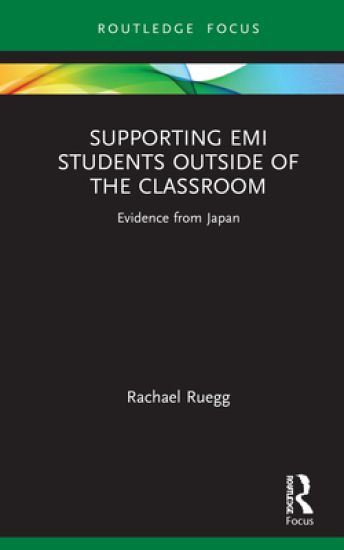
Supporting EMI Students Outside of the Classroom
There is a growing body of research on English-medium Instruction (EMI) in Asian contexts, and much of this research points out difficulties experienced by stakeholders. This volume takes up the issue of support for EMI, which is, and which can be, offered to students outside of the classroom in order to help them succeed academically in an EMI environment. Dr Ruegg’s book demonstrates the effectiveness of such support in the Japanese context. It begins by examining the support currently available for students in English-medium full degree programmes then goes on to examine one successful support service in more detail in order to determine the kinds of effects that can be achieved by establishing such a centre. The research reported in this book was conducted in Japan, but the findings will apply in other locations, especially in other Asian countries. The information provided in the book is expected to inform institutions who are looking to either establish an English-medium degree programme or improve on an existing programme by sharing information about the practices of other institutions.

Supporting EMI Students Outside of the Classroom
There is a growing body of research on English-medium Instruction (EMI) in Asian contexts, and much of this research points out difficulties experienced by stakeholders. This volume takes up the issue of support for EMI, which is, and which can be, offered to students outside of the classroom in order to help them succeed academically in an EMI environment. Dr Ruegg’s book demonstrates the effectiveness of such support in the Japanese context. It begins by examining the support currently available for students in English-medium full degree programmes then goes on to examine one successful support service in more detail in order to determine the kinds of effects that can be achieved by establishing such a centre. The research reported in this book was conducted in Japan, but the findings will apply in other locations, especially in other Asian countries. The information provided in the book is expected to inform institutions who are looking to either establish an English-medium degree programme or improve on an existing programme by sharing information about the practices of other institutions.
Rethinking EMI

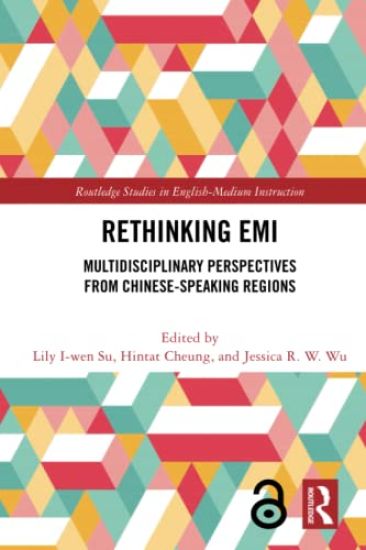
Rethinking EMI

TAYLOR FRANCIS LTD
2023
nidottu
Due to the competitive edge it confers on students, educational institutions, and non-English speaking nations in a globalized economy, English as a medium of instruction (EMI) has been gaining popularity in tertiary education in non-native English-speaking (NNES) countries. Institute-wide EMI implementation has often been imposed by top-down decisions, in combination with the optimistic view that the horse should always be placed before the cart. However, emerging evidence suggests that the delivery of such programs to NNES students has led to new pedagogical challenges and learning problems that go beyond the scope of language learning and teaching and deserve immediate attention. For example, how would an instructor respond to situations in which students’ learning of content is compromised by their limited language proficiency? This book draws on the current practice of EMI in diverse disciplines and university settings and examines how these new pedagogical and learning issues can be addressed. The discussion also involves a reflection on the essence of EMI in relation to the use of the first language (L1) as the medium of instruction in tertiary education. In addition, the book includes discussion about how to ensure and maintain the quality of EMI programs and assess the readiness of stakeholders for such programs, which include administrators, teachers, and students. The discussion is led by exemplars in Hong Kong and Taiwan, where the majority of students are native Chinese speakers, in the hope of developing critical perspectives and practical guidelines as references for EMI in other NNES settings.“The Open Access version of this book, available at http://www.taylorfrancis.com/books/e/ISBN, has been made available under a Creative Commons Attribution-Non Commercial-No Derivatives 4.0 license.
Zero EMI: Unlock Your Financial Freedom

Zero EMI: Unlock Your Financial Freedom

Ra Ma Palaniappan

Notion Press
2020
nidottu
Are you happy with the way you are handling your finances? Research says that 90% of the people work for EMI and not for anything else. People stick to their job because of the EMIs they must pay. Are you one among them and want to get rid of your EMIs? Are you looking for ways to achieve Financial Freedom? Do you want to be organized and manage your finances better?Zero EMI has the answers to all your questions and will help you control your finances, instead of being controlled by them. The author explains the concepts in simple English with the use of his personal stories and the stories of his friends. The book offers practical personal finance tips for salaried people in the age group of 22 to 50 years. Grab a copy if you want to learn how to reduce your loans, avoid taking loans and lead a stress-free life financially.
Optimising EMI in higher education through CLIL

Optimising EMI in higher education through CLIL

Maciej Londo

AV Akademikerverlag
2012
pokkari
The reasons for using foreign languages as medium of instruction vary across countries and educational settings. They stretch from pedagogical (e.g. language teaching), through practical (e.g. common language for education in multilingual societies) to ideological (e.g. integration). In the case of English, the reasons for its increased use as medium of instruction are closely related to the process of globalization and the establishment of English as an International Language. The present paper seeks to investigate the different rationales behind using English as medium of instruction (EMI) at tertiary level. In particular it focuses on the language-teaching dimension, which in the context of higher education is not always explicitly addressed. This lack of explicit language teaching objectives in English-‐medium courses is a barrier to unlocking the potential of EMI.
Proteção EMI para sistemas de comunicação

Proteção EMI para sistemas de comunicação

Chitra Rajendran

Edicoes Nosso Conhecimento
2025
nidottu
Este livro explora os desafios e as solu es relacionados com a interfer ncia electromagn tica (EMI) nos sistemas de comunica o modernos. Com a crescente complexidade das tecnologias digitais sem fios, autom veis, industriais e de alta velocidade, a EMI representa uma s ria amea a integridade do sinal e fiabilidade do sistema. O livro examina as fontes de EMI, os mecanismos de acoplamento e o seu impacto na transmiss o de dados, juntamente com estrat gias pormenorizadas de prote o, incluindo blindagem, filtragem, liga o terra e conce o de PCB. Tamb m aborda as principais normas internacionais de EMI/EMC e os protocolos de teste necess rios para a conformidade. A nfase colocada em t cnicas pr ticas de design, estudos de caso e inova es emergentes para construir sistemas resistentes a EMI. Esta obra um guia completo para engenheiros, investigadores e estudantes envolvidos na conce o de sistemas de comunica o e compatibilidade electromagn tica (EMC).
Materials for Potential EMI Shielding Applications

Materials for Potential EMI Shielding Applications

Elsevier Science Publishing Co Inc
2019
nidottu
Materials for Potential EMI Shielding Applications: Processing, Properties and Current Trends extensively and comprehensively reviews materials for EMI shielding applications, ranging from the principles to possible applications and various types of shielding materials. The book provides a thorough introduction to electromagnetic interference, its effect on both the environment and other electronic items, various materials that are used for electromagnetic interference shielding applications, and its properties. It explains the mechanism behind EMI shielding, the methods by which EMI SE of a given material is estimated, and the different fabrication methods currently employed for fabricating EMI shielding materials. Final sections focus on the theoretical background of EMI shielding and shielding mechanisms. This theoretical background is extended to the physics of EMI shielding, wherein the physics behind mechanism of shielding is explained.
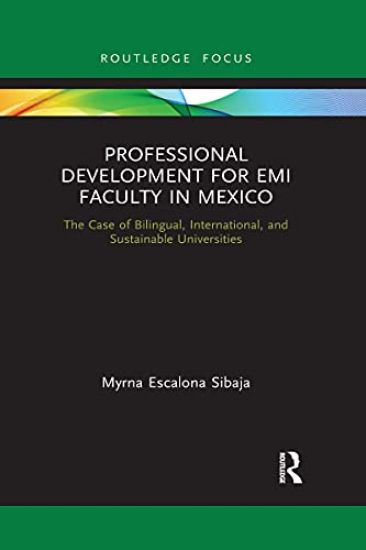
Professional Development for EMI Faculty in Mexico
Despite Mexico’s implementation of a bilingual model in its tertiary education programmes, this book is the first contribution to knowledge regarding EMI in Mexico. The author introduces readers to the Mexican higher education context before providing detailed information regarding the technological and polytechnic subsystem, where EMI has been implemented since 2012. The volume details a pilot and case study conducted in Mexican universities as well as the research findings and conclusions. It closes with recommendations, as well as suggestions for further research. The book explores the implications for the continuous professional development and training for lecturers in the current shift to EMI in Bilingual, International, and Sustainable (BIS) universities.This volume will be of particular interest to researchers in EMI and bilingualism.
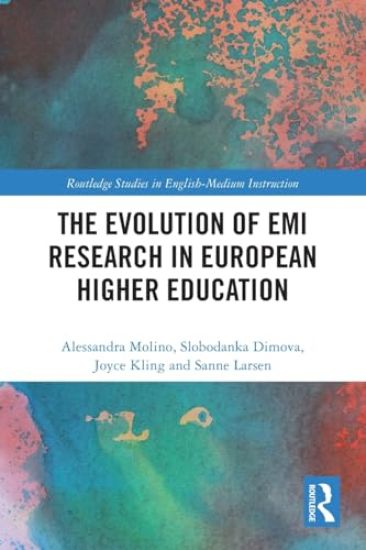
The Evolution of EMI Research in European Higher Education

The Evolution of EMI Research in European Higher Education

Alessandra Molino; Slobodanka Dimova; Joyce Kling; Sanne Larsen

TAYLOR FRANCIS LTD
2022
sidottu
This book presents state-of-the-art research into English-medium instruction (EMI) in European higher education over the last 20 years, offering a comprehensive comparative analysis toward identifying gaps in our understanding of relevant theories, research, and practice.Molino, Dimova, Kling, and Larsen argue for the need to take stock of the progression of EMI research in European higher education in order to consolidate scholarship and better inform EMI implementation in new contexts. Each chapter focuses on a different aspect of EMI implementation, including policies, attitudes, language use, assessment, training, learning outcomes, identity, and intercultural communication across five different countries: Denmark, Croatia, Italy, the Netherlands, and Spain. The book brings together the authors' collective work on an annotated database of over 200 resources, featuring a range of publications of varying format, type, and language, as well as information on relevant research questions, methodologies, and findings. This detailed approach allows in-depth discussions on the most widely researched areas in EMI as well as those under-explored toward outlining a way forward for future research in both the European higher education context and on a global scale.This book will be key reading for scholars working in English-medium instruction, world Englishes, English as an international language, English as a lingua franca, and applied linguistics.
The Evolution of EMI Research in European Higher Education

The Evolution of EMI Research in European Higher Education

Alessandra Molino; Slobodanka Dimova; Joyce Kling; Sanne Larsen

TAYLOR FRANCIS LTD
2024
nidottu
This book presents state-of-the-art research into English-medium instruction (EMI) in European higher education over the last 20 years, offering a comprehensive comparative analysis toward identifying gaps in our understanding of relevant theories, research, and practice.Molino, Dimova, Kling, and Larsen argue for the need to take stock of the progression of EMI research in European higher education in order to consolidate scholarship and better inform EMI implementation in new contexts. Each chapter focuses on a different aspect of EMI implementation, including policies, attitudes, language use, assessment, training, learning outcomes, identity, and intercultural communication across five different countries: Denmark, Croatia, Italy, the Netherlands, and Spain. The book brings together the authors' collective work on an annotated database of over 200 resources, featuring a range of publications of varying format, type, and language, as well as information on relevant research questions, methodologies, and findings. This detailed approach allows in-depth discussions on the most widely researched areas in EMI as well as those under-explored toward outlining a way forward for future research in both the European higher education context and on a global scale.This book will be key reading for scholars working in English-medium instruction, world Englishes, English as an international language, English as a lingua franca, and applied linguistics.
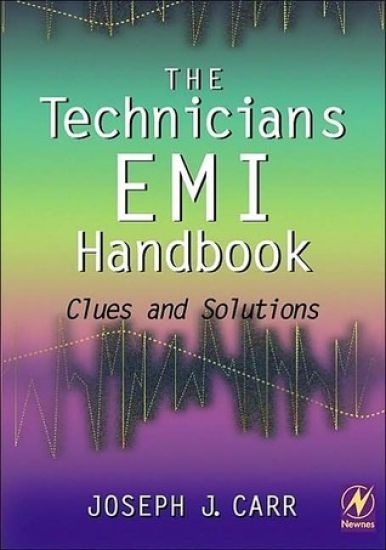
The Technician's EMI Handbook

The Technician's EMI Handbook

Joseph Carr

Newnes (an imprint of Butterworth-Heinemann Ltd )
2000
nidottu
A hands-on guide to finding the sources of electromagnetic interference and then fixing the problems. Includes basic theory of EMI as well as detailed explanations of why this problem is becoming more serious as the international scope of the communications and electronics industries grow. This book is not a textbook, but rather a handbook that will become a constant source of reference for anyone who runs into trouble with EMI. Includes chapters on grounding, circuit shielding and filtering, preventing EMI in circuit design, as well as EMI sources such as power lines, transmitters, television, consumer electronics, telephones, automobiles, and the ever-frustrating mystery EMI. There are very few other books available even though EMI is constantly discussed and cursed. Most of the books on the market are about how to prevent EMI in circuit design or approaches to understanding the theory behind EMI. Though this information is important, especially to an engineering audience, these books hold no value at all to the technicians and hands-on practitioners in the fields of communications and servicing.These savvy professionals know that the book they are looking for and need is just not on the market. To get the information they need, this group is forced to read every magazine article they can find on the subject and rely on the advice of other professionals whether through technician groups or newsgroups. This book fills a void in the telecommunications and electronics industries by providing practical troubleshooting information.
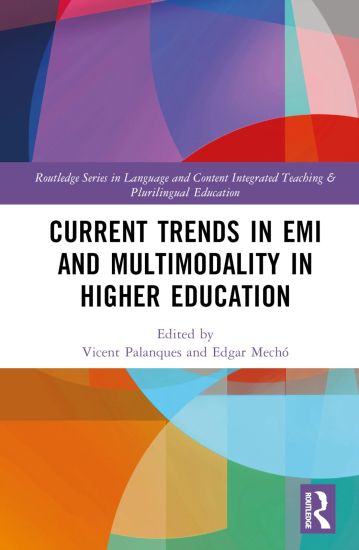
Current Trends in EMI and Multimodality in Higher Education
Looking at both English Medium Instruction (EMI) and multimodality in higher education, this edited volume bridges the gap between the two contexts by offering various new insights into fundamentals in multilingual education, EMI discourse and current teaching practices in internationalised contexts. Current demands in communication, especially in higher-education contexts, require examining EMI from a multimodal perspective with the aim of giving explicit attention to modern discourse practices.The contributors reflect on the principles guiding EMI and multimodality and their application in higher education using both practical examples and data-driven evidences. They discuss EMI multimodal discourse from an empirical perspective to unveil communicative practices in internationalised higher-education contexts; and exemplify classroom applications and ESP and EAP pedagogical practices that promote multimodal competence in higher education. The contributors provide solid theoretical foundations, key principles, research evidence and pedagogical implications that inform current methodologies and practices for EMI, ESP and EAP, as well as multimodality in higher education.This volume on EMI and multimodality in higher education will have broad appeal for researchers worldwide from various fields of expertise within education and applied linguistics.
Current Trends in EMI and Multimodality in Higher Education
Looking at both English Medium Instruction (EMI) and multimodality in higher education, this edited volume bridges the gap between the two contexts by offering various new insights into fundamentals in multilingual education, EMI discourse and current teaching practices in internationalised contexts. Current demands in communication, especially in higher-education contexts, require examining EMI from a multimodal perspective with the aim of giving explicit attention to modern discourse practices. The contributors reflect on the principles guiding EMI and multimodality and their application in higher education using both practical examples and data-driven evidences. They discuss EMI multimodal discourse from an empirical perspective to unveil communicative practices in internationalised higher-education contexts; and exemplify classroom applications and ESP and EAP pedagogical practices that promote multimodal competence in higher education. The contributors provide solid theoretical foundations, key principles, research evidence and pedagogical implications that inform current methodologies and practices for EMI, ESP and EAP, as well as multimodality in higher education. This volume on EMI and multimodality in higher education will have broad appeal for researchers worldwide from various fields of expertise within education and applied linguistics.
Professional Development for EMI Faculty in Mexico

Professional Development for EMI Faculty in Mexico

Myrna Escalona Sibaja

TAYLOR FRANCIS LTD
2021
nidottu
Despite Mexico’s implementation of a bilingual model in its tertiary education programmes, this book is the first contribution to knowledge regarding EMI in Mexico. The author introduces readers to the Mexican higher education context before providing detailed information regarding the technological and polytechnic subsystem, where EMI has been implemented since 2012. The volume details a pilot and case study conducted in Mexican universities as well as the research findings and conclusions. It closes with recommendations, as well as suggestions for further research. The book explores the implications for the continuous professional development and training for lecturers in the current shift to EMI in Bilingual, International, and Sustainable (BIS) universities.This volume will be of particular interest to researchers in EMI and bilingualism.