Kirjojen hintavertailu. Mukana 12 595 353 kirjaa ja 12 kauppaa.

Kirjahaku

Etsi kirjoja tekijän nimen, kirjan nimen tai ISBN:n perusteella.

361 tulosta hakusanalla Emiko Jean

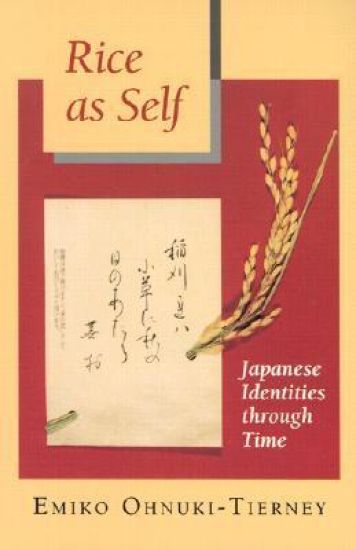
Rice as Self

Rice as Self

Emiko Ohnuki-Tierney

Princeton University Press
1994
pokkari
Are we what we eat? What does food reveal about how we live and how we think of ourselves in relation to others? Why do people have a strong attachment to their own cuisine and an aversion to the foodways of others? In this engaging account of the crucial significance rice has for the Japanese, Rice as Self examines how people use the metaphor of a principal food in conceptualizing themselves in relation to other peoples. Emiko Ohnuki-Tierney traces the changing contours that the Japanese notion of the self has taken as different historical Others--whether Chinese or Westerner--have emerged, and shows how rice and rice paddies have served as the vehicle for this deliberation. Using Japan as an example, she proposes a new cross-cultural model for the interpretation of the self and other.
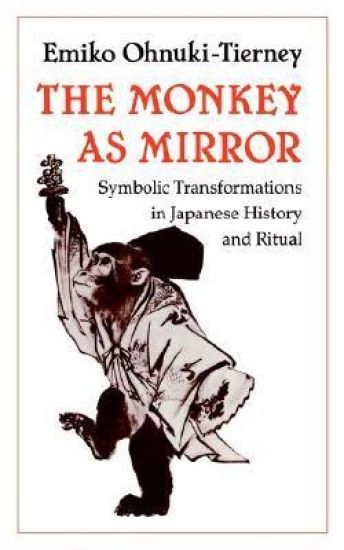
The Monkey as Mirror

The Monkey as Mirror

Emiko Ohnuki-Tierney

Princeton University Press
1989
pokkari
This tripartite study of the monkey metaphor, the monkey performance, and the 'special status' people traces changes in Japanese culture from the eighth century to the present. During early periods of Japanese history the monkey's nearness to the human-animal boundary made it a revered mediator or an animal deity closest to humans. Later it became a scapegoat mocked for its vain efforts to behave in a human fashion. Modern Japanese have begun to see a new meaning in the monkey--a clown who turns itself into an object of laughter while challenging the basic assumptions of Japanese culture and society.
Flowers That Kill

Flowers That Kill

Emiko Ohnuki-Tierney

Stanford University Press
2015
sidottu
Flowers are beautiful. People often communicate their love, sorrow, and other feelings to each other by offering flowers, like roses. Flowers can also be symbols of collective identity, as cherry blossoms are for the Japanese. But, are they also deceptive? Do people become aware when their meaning changes, perhaps as flowers are deployed by the state and dictators? Did people recognize that the roses they offered to Stalin and Hitler became a propaganda tool? Or were they like the Japanese, who, including the soldiers, did not realize when the state told them to fall like cherry blossoms, it meant their deaths? Flowers That Kill proposes an entirely new theoretical understanding of the role of quotidian symbols and their political significance to understand how they lead people, if indirectly, to wars, violence, and even self-exclusion and self-destruction precisely because symbolic communication is full of ambiguity and opacity. Using a broad comparative approach, Emiko Ohnuki-Tierney illustrates how the aesthetic and multiple meanings of symbols, and at times symbols without images become possible sources for creating opacity which prevents people from recognizing the shifting meaning of the symbols.
Flowers That Kill

Flowers That Kill

Emiko Ohnuki-Tierney

Stanford University Press
2015
pokkari
Flowers are beautiful. People often communicate their love, sorrow, and other feelings to each other by offering flowers, like roses. Flowers can also be symbols of collective identity, as cherry blossoms are for the Japanese. But, are they also deceptive? Do people become aware when their meaning changes, perhaps as flowers are deployed by the state and dictators? Did people recognize that the roses they offered to Stalin and Hitler became a propaganda tool? Or were they like the Japanese, who, including the soldiers, did not realize when the state told them to fall like cherry blossoms, it meant their deaths? Flowers That Kill proposes an entirely new theoretical understanding of the role of quotidian symbols and their political significance to understand how they lead people, if indirectly, to wars, violence, and even self-exclusion and self-destruction precisely because symbolic communication is full of ambiguity and opacity. Using a broad comparative approach, Emiko Ohnuki-Tierney illustrates how the aesthetic and multiple meanings of symbols, and at times symbols without images become possible sources for creating opacity which prevents people from recognizing the shifting meaning of the symbols.
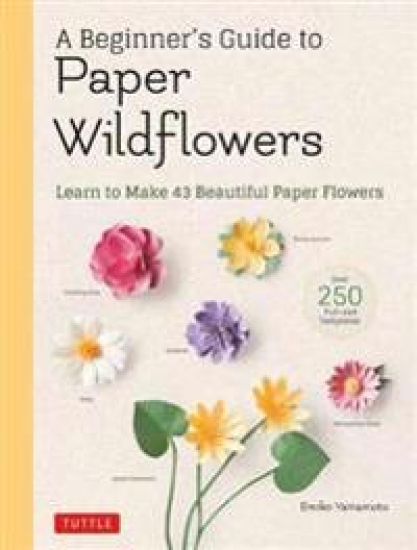
A Beginner's Guide to Paper Wildflowers

A Beginner's Guide to Paper Wildflowers

Emiko Yamamoto

Tuttle Publishing
2021
nidottu
Create dozens of beautiful paper wildflowers that look just like the real thing!In this book, paper artist Emiko Yamamoto presents her secrets for making realistic blossoms, leaves and stems from inexpensive colored paper sheets. Her flexible cut, curl and paste method makes it easy to create an amazing variety of different flowers and to tailor your creations to specific settings, occasions and color palettes.This how-to guide has all the information you need:Descriptions of the necessary materials and toolsActual-size templates that you traceStep-by-step instructions for cutting out the petals and leaves, giving the paper realistic curls and creases, and putting all the pieces together with simple dabs of glueWith just scissors, a few sheets of colorful Tant origami paper and craft glue, you can create breathtaking, inexpensive paper flowers. The chapters are divided into Spring, Summer, Autumn and Winter, so your paper bouquet will always be in season!A Beginner's Guide to Paper Wildflowers features more than 40 distinct flowers, including:Grape HyacinthBluebellWild TulipClimbing RoseLavenderPoppyForget-Me-NotWheatSnowdropPrimroseAnd more!Show off the finished pieces in a shadow box, make special handmade cards, fill vases full of flowers that will never wilt, or decorate things like place settings and gift toppers.
Fabulous Paper Flowers

Fabulous Paper Flowers

Emiko Yamamoto

Tuttle Publishing
2021
nidottu
Exquisite paper flowers that never wilt!In this book, Japanese paper crafting expert Emiko Yamamoto reveals her secrets for making realistic blossoms, leaves and stems from inexpensive colored paper sheets. Her simple cut-curl-paste method is perfect for beginners—making it easy to create dozens of lifelike flowers.Fabulous Paper Flowers features 43 varieties of Asian flowers for every season, including:Spring: Wild Cherry Blossoms, White Clover, Japanese Primrose, Japanese Marigolds & Fuji Dawn VioletsSummer: Bigleaf Hydrangea, Japanese Iris, Water Lilies, Moutan Peony, Japanese Morning Glory & Evening PrimroseFall: Cosmos, Japanese Bush Clover, Cranesbill Geraniums, Japanese Maple Leaves & Gingko LeavesWinter: Heavenly Bamboo, Japanese Camellia, Snow Camellia, Pheasant's Eye, Japanese Plum & Chinese Sacred LiliesThe finished pieces look great as table settings, wearable brooches, gift toppers, in framed displays, on handmade cards and so much more. Make wedding decor on a budget, decorate for a baby shower, make a dinner party special or surprise a loved one with a handmade gift—with this book, the possibilities are endless!This complete how-to guide has descriptions of the easy-to-find materials and tools, templates that you can trace and cut out, and step-by-step photos showing you how to curl and crease the pieces, then assemble them with dabs of glue.
Fabulous Paper Flowers

Fabulous Paper Flowers

Emiko Yamamoto

TUTTLE PUBLISHING
2025
nidottu
Exquisite paper flowers that never wilt!In this book, Japanese paper crafting expert Emiko Yamamoto reveals her secrets for making realistic blossoms, leaves and stems from inexpensive colored paper sheets. Her simple cut-curl-paste method is perfect for beginners—making it easy to create dozens of lifelike flowers.Fabulous Paper Flowers features 43 varieties of Asian flowers for every season, including:Spring: Wild Cherry Blossoms, White Clover, Japanese Primrose, Japanese Marigolds & Fuji Dawn VioletsSummer: Bigleaf Hydrangea, Japanese Iris, Water Lilies, Moutan Peony, Japanese Morning Glory & Evening PrimroseFall: Cosmos, Japanese Bush Clover, Cranesbill Geraniums, Japanese Maple Leaves & Gingko LeavesWinter: Heavenly Bamboo, Japanese Camellia, Snow Camellia, Pheasant's Eye, Japanese Plum & Chinese Sacred LiliesThe finished pieces look great as table settings, wearable brooches, gift toppers, in framed displays, on handmade cards and so much more. Make wedding decor on a budget, decorate for a baby shower, make a dinner party special or surprise a loved one with a handmade gift—with this book, the possibilities are endless!This complete how-to guide has descriptions of the easy-to-find materials and tools, templates that you can trace and cut out, and step-by-step photos showing you how to curl and crease the pieces, then assemble them with dabs of glue.

The Canada-Caribbean Remittance Corridor

The Canada-Caribbean Remittance Corridor

Emiko Todoroki; Matteo Vaccani; Wameek Noor

World Bank Publications
2009
nidottu
Several economies in the Caribbean region, especially from the lower-income group, are highly dependent on remittances. Between 1991 and 2006, the combined flows of total remittances reaching the Caribbean have averaged almost 17 per cent annual growth, surpassing US$6 billion in 2005 and overtaking the region's total ODA and FDI inflows. In addition, remittances represent more than 20 percent of the domestic gross domestic product (GDP) in some Caribbean countries and have played a significant role in lessening both balance of payment deficits and the impact of natural disasters to which the region is particularly vulnerable. This study undertakes an analysis of the various dynamics underlying the Canada-Caribbean remittance corridor, including Caribbean migration issues and diaspora dynamics, remittance market landscapes, and regulatory frameworks. The study is intended to assist Canadian and Caribbean national authorities to sustain the continued growth and competitiveness of their remittance industries, while protecting them abuse by criminals. The study particularly emphasizes continued policy improvements in each country's regulatory framework to improve financial sector development and to enhance poverty reduction.
Nyepi

Nyepi

Emiko Saraswati Susilo; Dewa Ayu Dewi Larassanti

Emiko Sarasawati Susilo
2023
pokkari
A richly illustrated book inspired by Bali's New Year's tradition of "Nyepi," a day of silence. Ayu and Dod are a sister and brother who race through the rice fields, see monsters dancing up and down the streets, sit up in the dark watching the stars, and listen to the bustling sounds of nature on the Day of Silence in Bali.
Ai Ribbon

Ai Ribbon

Emiko Kouji

Lulu.com
2013
pokkari
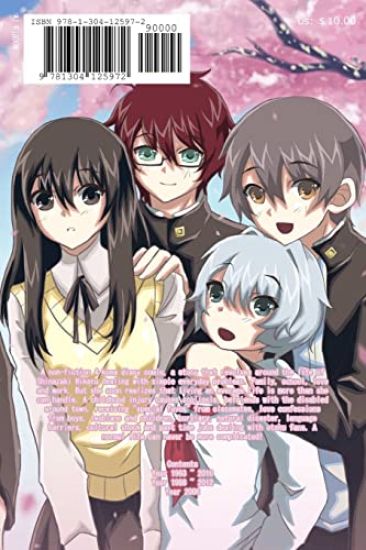
A non-fiction 4-koma diary comic, a story that revolves around the life of Shinazaki Hikaru dealing with simple everyday problems. Family, school, love and work. But she soon realizes that living an average life is more than she can handle. A childhood injury causes scoliosis, befriends with the disabled around town, receiving "special favor" from classmates, love confessions from boys, lesbians and children, burglary, natural disaster, language barriers, cultural shock and part time jobs dealing with otaku fans. A normal life can never be more complicated Note: Reads from right to left (Reversed book)
Instruction Manual for the "NOT" Theory

Instruction Manual for the "NOT" Theory

Emiko Lewis-Sanchez

Lulu.com
2005
pokkari
The "Not" Theory raises the question, "How can one be free from intellectual constraints?" It then gives a basic, elementary response and reasoning. This begs the question, "Is it correct?" You will not find the answer here. Instead, the book is an instruction manual/preparation guide/workbook for testing the "Not" Theory: a structure to bring together a group of 7 artists (from any medium) to create an art project of any kind (i.e. a series of paintings, sculptures, poems, photographs, a video, theater, dance, multi-media project, etc.) It is broken down into three phases: Constraints (X), Destruction (Adding Y to X), and Freedom. The group must experience Phase I together, in the format given. However, Phase II and III cannot be forced onto the group. They must choose to continue testing the theory. Last question: "Is freedom possible?" It is up to you to determine.
Making Remittances Work

Making Remittances Work

Emiko Todoroki; Wameek Noor; Kuntay Celik; Anoma Kulathunga

World Bank Publications
2014
nidottu
H.M. Queen Máxima of the Netherlands, United Nations Secretary-General's Special Advocate for Inclusive Finance for Development stated that 'the impact of helping migrants and their families will be lasting and global if we link remittances to other financial services and make them more affordable and more relevant to their needs.'Remittances are a critical source of financing for most developing countries. The importance of remittances goes beyond numbers. For many households in developing countries, they are probably the most stable source of primary or additional income.At the same time, the September 11, 2001, terrorist attacks exposed the use and abuse of remittance channels for financing terrorism. In response to this threat, the international community issued new international anti-money laundering/combating the financing of terrorism (AML/CFT) standards on remittance transfers and their service providers. For the first time, remittance service providers were required to be brought under the government oversight and either registered with or licensed by a competent authority, and to be subject to AML/CFT obligations.While the FATF Recommendations appear straightforward on paper, regulating and supervising in practice the money transfer business has proved to be a very challenging task in both developed and developing countries.This book assists policy makers, regulators, and supervisors of money transfer businesses to craft effective regulatory and supervisory frameworks governing remittances that meet international AML/CFT standards, while at the same time ensuring that the neediest have access to these crucial services.
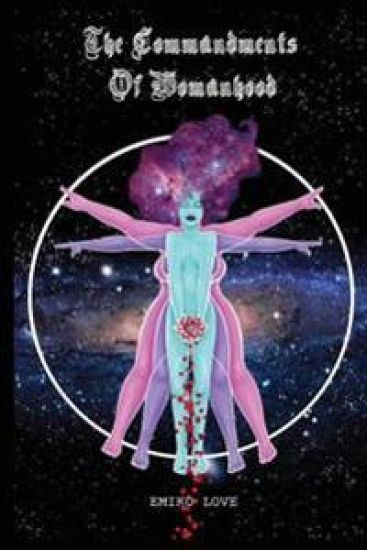
The Commandments of Womanhood

The Commandments of Womanhood

Emiko Love

Createspace Independent Publishing Platform
2017
nidottu
The Commandments of Womanhood is a ten chapter inspirational handbook mirrored after The Ten Commandments with a new aged spin. In this power and insightful book, Emiko Love reflects on 10 core principles she discovered while transitioning into Womanhood during her early 20s. From unpackaging emotional baggage while overcoming depression to building wealth, this step by step handbook aids in assisting young women on how to tap into their fullest potential while becoming the best version of themselves. Regardless of what you've been through or how many times you've forgotten your self worth, it's never to late to develop a powerful mindset to build you back up. This book is an ode to the journey of womanhood and a love letter of forgiveness to mistakes encountered along the way. The Commandments of Womanhood is the type of book that every woman should keep handy in their bag to remind them of their greatness. "Rise up Queens, remember who you are. Don't ever let this world convince you to dim that star "