For junior/senior-level courses in Kinematics, Mechanisms, and Dynamics. * This thorough and comprehensive web-enhanced edition has been updated and enhanced to meet the needs of today's students. * The software associated with the book makes it very useful for designing and analyzing linkage and CAM mechanisms. No other book has a web connection like this one.
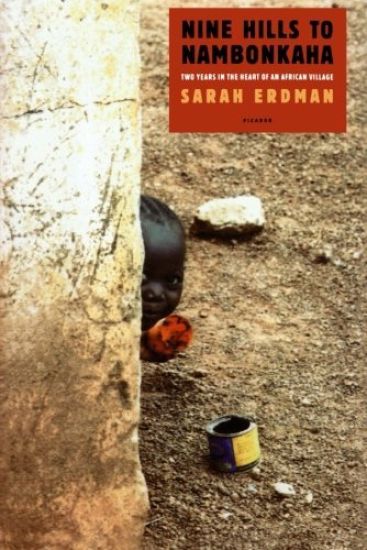
The village of Nambonkaha in the Ivory Coast is a place where electricity hasn't yet arrived, where sorcerers still conjure magic, where the tok-tok sound of women pounding corn fills the morning air like a drumbeat. As Sarah Erdman enters the social fold of the village as a Peace Corps volunteer, she finds that Nambonkaha is also a place where AIDS threatens and poverty is constant, where women suffer the indignities of patriarchal customs, and where children work like adults while still managing to dream. Lyrical and topical, Erdman's beautiful debut captures the astonishing spirit of an unforgettable community.
Welcoming Young Children into the Museum provides all of the information practitioners need to consider when making the decision to engage with this audience and their carers. Meeting the reader where they are, this guide enables professionals to work toward outcomes that fit with their needs.Working methodically from the initial stages of bringing staff on board, through to implementation and evaluation, readers are carefully steered through each phase. "Big-picture" needs, like adherence to mission, are considered alongside logistical components, like cleaning schedules, to ensure that museums cater to young children in a way that is beneficial to both the visitors and the institution. Drawing on current neurological research and best practices in early childhood education and development, this guide presents case studies from a variety of different institutions around the world that demonstrate that creating interesting, developmentally appropriate opportunities for young children is about much more than just simplifying what is already on offer. Erdman, Nguyen and Middleton demonstrate that the age and needs of the visitors must be taken into careful consideration, as well as the assets and potential obstacles of the institution.Welcoming Young Children into the Museum will be essential reading for professionals working in museums large and small, regardless of type. It will be useful to those who are considering setting up new programmes for early years audiences and those with existing programmes, who would like to improve their offering.
Welcoming Young Children into the Museum provides all of the information practitioners need to consider when making the decision to engage with this audience and their carers. Meeting the reader where they are, this guide enables professionals to work toward outcomes that fit with their needs.Working methodically from the initial stages of bringing staff on board, through to implementation and evaluation, readers are carefully steered through each phase. "Big-picture" needs, like adherence to mission, are considered alongside logistical components, like cleaning schedules, to ensure that museums cater to young children in a way that is beneficial to both the visitors and the institution. Drawing on current neurological research and best practices in early childhood education and development, this guide presents case studies from a variety of different institutions around the world that demonstrate that creating interesting, developmentally appropriate opportunities for young children is about much more than just simplifying what is already on offer. Erdman, Nguyen and Middleton demonstrate that the age and needs of the visitors must be taken into careful consideration, as well as the assets and potential obstacles of the institution.Welcoming Young Children into the Museum will be essential reading for professionals working in museums large and small, regardless of type. It will be useful to those who are considering setting up new programmes for early years audiences and those with existing programmes, who would like to improve their offering.
(10 sessions) Each study in the God's Word for Today series provides an in-depth exploration of a book of the Bible. Each session includes: background information on the book of the Bible, its author, audience, occasion, and purpose;learning experiences that promote exciting and challenging discussions;notes for leaders that answer questions, suggest a learning process, and provide additional information;discussion starters that help participants apply God's Word to their daily lives.The apostle Matthew writes his gospel to proclaim to the world that its promised Savior has come. Pointing to Jesus as the fulfillment of the Old Testament prophesies, Matthew proclaims the universality of Jesus' love.
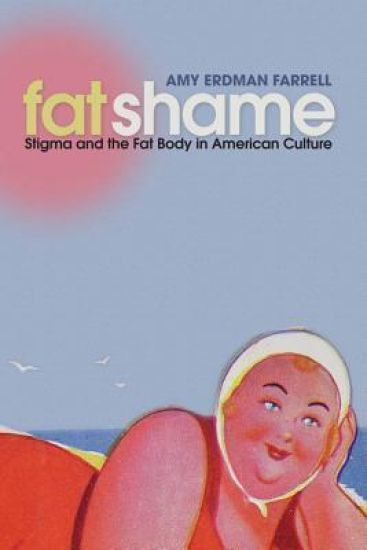
One of Choice's Significant University Press Titles for Undergraduates, 2010-2011 A necessary cultural and historical discussion on the stigma of fatness To be fat hasn't always occasioned the level of hysteria that this condition receives today and indeed was once considered an admirable trait. Fat Shame: Stigma and the Fat Body in American Culture explores this arc, from veneration to shame, examining the historic roots of our contemporary anxiety about fatness. Tracing the cultural denigration of fatness to the mid 19th century, Amy Farrell argues that the stigma associated with a fat body preceded any health concerns about a large body size. Firmly in place by the time the diet industry began to flourish in the 1920s, the development of fat stigma was related not only to cultural anxieties that emerged during the modern period related to consumer excess, but, even more profoundly, to prevailing ideas about race, civilization and evolution. For 19th and early 20th century thinkers, fatness was a key marker of inferiority, of an uncivilized, barbaric, and primitive body. This idea—that fatness is a sign of a primitive person—endures today, fueling both our $60 billion "war on fat" and our cultural distress over the "obesity epidemic." Farrell draws on a wide array of sources, including political cartoons, popular literature, postcards, advertisements, and physicians' manuals, to explore the link between our historic denigration of fatness and our contemporary concern over obesity. Her work sheds particular light on feminisms' fraught relationship to fatness. From the white suffragists of the early 20th century to contemporary public figures like Oprah Winfrey, Monica Lewinsky, and even the Obama family, Farrell explores the ways that those who seek to shed stigmatized identities—whether of gender, race, ethnicity or class—often take part in weight reduction schemes and fat mockery in order to validate themselves as "civilized." In sharp contrast to these narratives of fat shame are the ideas of contemporary fat activists, whose articulation of a new vision of the body Farrell explores in depth. This book is significant for anyone concerned about the contemporary "war on fat" and the ways that notions of the "civilized body" continue to legitimate discrimination and cultural oppression.
One of Choice's Significant University Press Titles for Undergraduates, 2010-2011 A necessary cultural and historical discussion on the stigma of fatness To be fat hasn't always occasioned the level of hysteria that this condition receives today and indeed was once considered an admirable trait. Fat Shame: Stigma and the Fat Body in American Culture explores this arc, from veneration to shame, examining the historic roots of our contemporary anxiety about fatness. Tracing the cultural denigration of fatness to the mid 19th century, Amy Farrell argues that the stigma associated with a fat body preceded any health concerns about a large body size. Firmly in place by the time the diet industry began to flourish in the 1920s, the development of fat stigma was related not only to cultural anxieties that emerged during the modern period related to consumer excess, but, even more profoundly, to prevailing ideas about race, civilization and evolution. For 19th and early 20th century thinkers, fatness was a key marker of inferiority, of an uncivilized, barbaric, and primitive body. This idea—that fatness is a sign of a primitive person—endures today, fueling both our $60 billion "war on fat" and our cultural distress over the "obesity epidemic." Farrell draws on a wide array of sources, including political cartoons, popular literature, postcards, advertisements, and physicians' manuals, to explore the link between our historic denigration of fatness and our contemporary concern over obesity. Her work sheds particular light on feminisms' fraught relationship to fatness. From the white suffragists of the early 20th century to contemporary public figures like Oprah Winfrey, Monica Lewinsky, and even the Obama family, Farrell explores the ways that those who seek to shed stigmatized identities—whether of gender, race, ethnicity or class—often take part in weight reduction schemes and fat mockery in order to validate themselves as "civilized." In sharp contrast to these narratives of fat shame are the ideas of contemporary fat activists, whose articulation of a new vision of the body Farrell explores in depth. This book is significant for anyone concerned about the contemporary "war on fat" and the ways that notions of the "civilized body" continue to legitimate discrimination and cultural oppression.
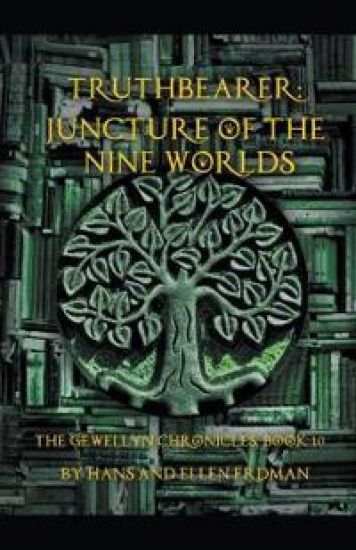
The Durglad; the dark forest. Ellandaril, the hidden home of the last Valar, and the center of knowledge with its vast library. Will the Durglad yield to Iolena Yaleria-Clark, Queen of the Great Forest Realm, or will it hold it's secrets fast? Is the lost land of Ellandaril and the Old World hiding deep in the forest? What will the Trinity of the Trutbearer find if the Shepherds of the Durglad allow them passage? Why does everything their magically gifted mapmaker, Tessa Chart puts down on paper vanish before she can finish it? What caused the sadness of the forest that both Fiona and her mother, Iolena, can feel? Who holds the answers, the Librarian, Lord of Ellandaril, or the Dark Lord, Declan Dhark himself? What will Connor Clark, his beautiful wife Iolena, and their adopted daughter, Menta Kai, find if they can enter the Durglad? So many questions that need to be answered before the Truthbearer can take the Truth to the rest of the Nine Worlds. Truthbearer: Juncture of the Nine Worlds is the tenth book in the saga of the Gewellyn Chronicles, the epic fantasy series that combines Christian truth, epic adventure, a dash of history and myth, and blends them into an amazing story of faith, family, and friendship.
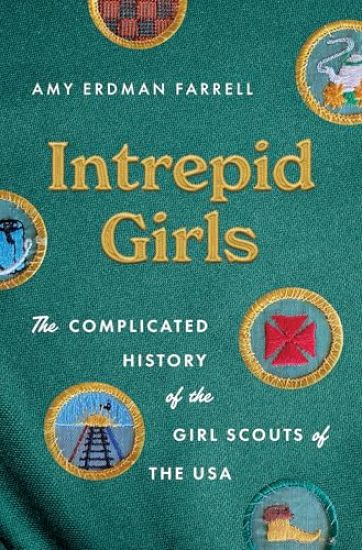
When eight-year-old Amy Erdman Farrell moved with her family to Akron, Ohio, in 972, she found herself adrift in a sea of taunting boys and mean girls. Shy by nature, she dreaded her long, unhappy days at school. But a few years later, Farrell found an escape from bullying, the promise of sisterhood, a rising sense of confidence, adventure, and—best of all—lifelong friendship when she joined a Girl Scout troop. Decades later, award-winning author Farrell returns to those formative experiences to explore the complicated and surprising history of the Girl Scouts of the USA.Drawing from extensive archival research, visits to iconic Girl Scout sites around the world, and vivid personal reflections, Farrell uncovers the Girl Scouts intricate history, revealing how the organization has shaped the lives of more than 5 million girls and women since its founding in 9 2. With Farrell as our own intrepid guide, we travel to American Indian Boarding Schools, Japanese American incarceration centers, segregated African American communities, middle-class white neighborhoods, and outposts throughout the globe. Intrepid Girls unpacks how the Girl Scouts navigated tensions over feminism, race, class, and political differences, carving out extraordinary opportunities for girls and women—even as it participated in the very discrimination it promised to transcend.For anyone who has ever worn a uniform or wondered about the hidden history behind this iconic American institution, Intrepid Girls will surprise, inspire, and challenge what we think we know about the Girl Scouts.
I used to work in PR, if you’re going to kill yourself let’s make it an event . . . You can own this, Sam. For the first time in your life you. Could be. In charge. Things are getting tough for Sam. No job, benefits stopped and stuck in a tiny flat with his girlfriend Maya and her mum. The pressure is building. It feels like there might be only one way out.But every ending is a beginning and there are plenty of people keen to capitalise on Sam’s momentous decision. From corrupt local politicians to kids trying to raise the number of views of their online videos, everyone wants a piece of Sam’s demise. It scarcely matters what Sam actually wants. Faced with the promise of immortality, what’s his life worth?Suhayla El-Bushra takes the satiric masterpiece by Nikolai Erdman and smashes it into contemporary urban Britain. It’s provocative, fast-paced and very funny.
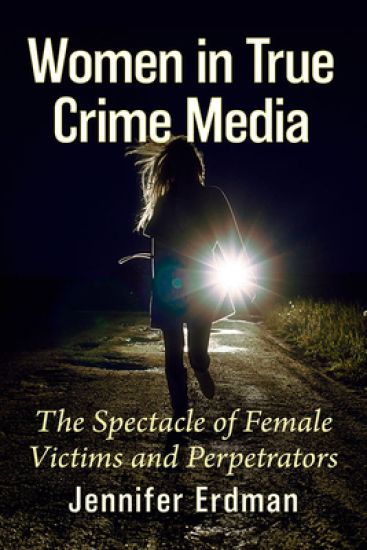
While many people think true crime is a new phenomenon, Americans have been obsessed with the genre for over a century, and popular culture continuously tries to cash in. The names of infamous serial killers are well-known, but the identities of their often-female victims are frequently lost to history. This text flips the script and focuses on the women to keep their identities known and remembered. This is the first book to examine how popular culture has mistreated women as both perpetrators and victims of crime, covering a hundred-year span from 1920 to 2020. Detailed is popular culture's interest in true crime and how women in true crime documentation have largely been sexualized and victim-blamed over the decades.