Kirjojen hintavertailu. Mukana 11 244 527 kirjaa ja 12 kauppaa.

Kirjahaku

Etsi kirjoja tekijän nimen, kirjan nimen tai ISBN:n perusteella.

1000 tulosta hakusanalla Eric C. Smith

Marriage, Writing, and Romanticism

Marriage, Writing, and Romanticism

Eric C. Walker

Stanford University Press
2009
sidottu
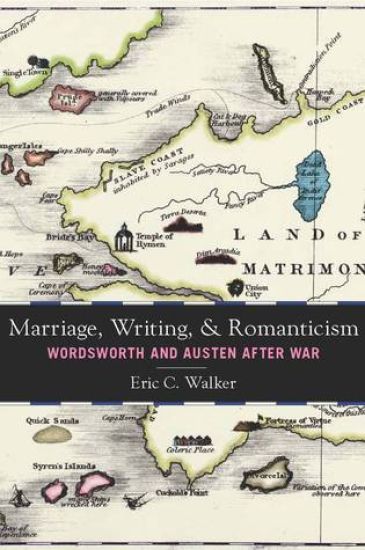
Marriage, Writing, and Romanticism studies marriage in two sets of literary texts from the Regency decade: the novels of Jane Austen—who avoided marriage in her own life but seems to have written about nothing else—and a set of non-canonical and generally unfamiliar poems by William Wordsworth, who seems never to turn to the subject of his own marriage. With other Romantic writers who also figure in this study, Austen and Wordsworth confronted the impossibility of writing about anything other than marriage and the imperative either to celebrate or condemn it. Thanks to the latest scholarly editions of Wordsworth, Walker introduces previously undiscussed material. Walker reads conjugality as the compulsory ground of modern identity, an Enlightenment legacy we still grapple with today, and offers new perspectives on literature through the writing of Austen and Wordsworth and theories of marriage in Godwin, Wollstonecraft, Hegel, Kierkegaard, and, in our time, Adam Phillips and Stanley Cavell.
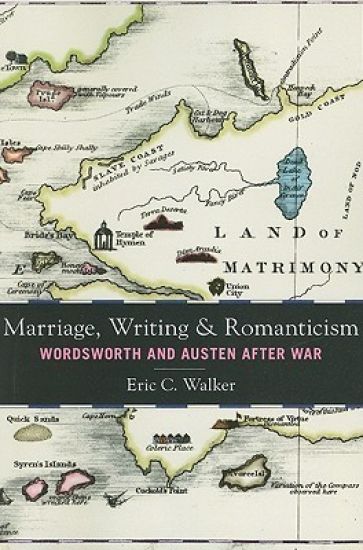
Marriage, Writing, and Romanticism

Marriage, Writing, and Romanticism

Eric C. Walker

Stanford University Press
2011
pokkari
Marriage, Writing, and Romanticism studies marriage in two sets of literary texts from the Regency decade: the novels of Jane Austen—who avoided marriage in her own life but seems to have written about nothing else—and a set of non-canonical and generally unfamiliar poems by William Wordsworth, who seems never to turn to the subject of his own marriage.With other Romantic writers who also figure in this study, Austen and Wordsworth confronted the impossibility of writing about anything other than marriage and the imperative either to celebrate or condemn it. Thanks to the latest scholarly editions of Wordsworth, Walker introduces previously undiscussed material.Walker reads conjugality as the compulsory ground of modern identity, an Enlightenment legacy we still grapple with today, and offers new perspectives on literature through the writing of Austen and Wordsworth and theories of marriage in Godwin, Wollstonecraft, Hegel, Kierkegaard, and, in our time, Adam Phillips and Stanley Cavell.

Smack

Smack

Eric C. Schneider

University of Pennsylvania Press
2011
pokkari
Why do the vast majority of heroin users live in cities? In his provocative history of heroin in the United States, Eric C. Schneider explains what is distinctively urban about this undisputed king of underworld drugs. During the twentieth century, New York City was the nation's heroin capital-over half of all known addicts lived there, and underworld bosses like Vito Genovese, Nicky Barnes, and Frank Lucas used their international networks to import and distribute the drug to cities throughout the country, generating vast sums of capital in return. Schneider uncovers how New York, as the principal distribution hub, organized the global trade in heroin and sustained the subcultures that supported its use. Through interviews with former junkies and clinic workers and in-depth archival research, Schneider also chronicles the dramatically shifting demographic profile of heroin users. Originally popular among working-class whites in the 1920s, heroin became associated with jazz musicians and Beat writers in the 1940s. Musician Red Rodney called heroin the trademark of the bebop generation. "It was the thing that gave us membership in a unique club," he proclaimed. Smack takes readers through the typical haunts of heroin users-52nd Street jazz clubs, Times Square cafeterias, Chicago's South Side street corners-to explain how young people were initiated into the drug culture. Smack recounts the explosion of heroin use among middle-class young people in the 1960s and 1970s. It became the drug of choice among a wide swath of youth, from hippies in Haight-Ashbury and soldiers in Vietnam to punks on the Lower East Side. Panics over the drug led to the passage of increasingly severe legislation that entrapped heroin users in the criminal justice system without addressing the issues that led to its use in the first place. The book ends with a meditation on the evolution of the war on drugs and addresses why efforts to solve the drug problem must go beyond eliminating supply.
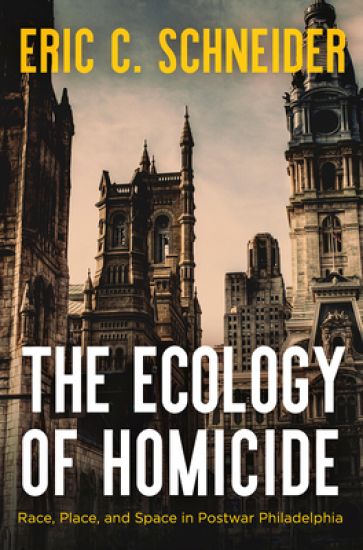
The Ecology of Homicide

The Ecology of Homicide

Eric C. Schneider

University of Pennsylvania Press
2020
sidottu
Like so many big cities in the United States, Philadelphia has suffered from a strikingly high murder rate over the past fifty years. Such tragic loss of life, as Eric C. Schneider demonstrates, does not occur randomly throughout the city; rather, murders have been racialized and spatialized, concentrated in the low-income African American populations living within particular neighborhoods. In The Ecology of Homicide, Schneider tracks the history of murder in Philadelphia during a critical period from World War II until the early 1980s, focusing on the years leading up to and immediately following the 1966 Miranda Supreme Court decision and the shift to easier gun access and the resulting spike in violence that followed. Examining the transcripts of nearly two hundred murder trials, The Ecology of Homicide presents the voices of victims and perpetrators of crime, as well as the enforcers of the law-using, to an unprecedented degree, the words of the people who were actually involved. In Schneider's hands, their perspectives produce an intimate record of what was happening on the streets of Philadelphia in the decades from 1940 until 1980, describing how race factored into everyday life, how corrosive crime was to the larger community, how the law intersected with every action of everyone involved, and, most critically, how individuals saw themselves and others. Schneider traces the ways in which low-income African American neighborhoods became ever more dangerous for those who lived there as the combined effects of concentrated poverty, economic disinvestment, and misguided policy accumulated to sustain and deepen what he calls an "ecology of violence," bound in place over time. Covering topics including gender, urban redevelopment, community involvement, children, and gangs, as well as the impact of violence perpetrated by and against police, The Ecology of Homicide is a powerful link between urban history and the contemporary city.
Haphazard Families

Haphazard Families

Eric C Walker

OHIO STATE UNIVERSITY PRESS
2024
sidottu
There are no provisions for adoption in English common law, and adoption wasn't legally formalized in England and Wales until 1926. But a century earlier, untimely adoptions navigated the new exceptionalism of childhood in Romanticism. In Haphazard Families, Eric C. Walker explores the history of the adopted child in Romantic-era England. Taking up the stories of both fictional and historical adoptees, he demonstrates how these children, diminished to nonpersons, shouldered the burden of social constructs of nation, family, gender, and class. Walker further demonstrates how Rousseau's infamous failure to follow his own ideals of parenthood shaped British reactions in famous texts such as Frankenstein and Emma. Incorporating perspectives from Romantic scholarship and critical adoption studies and examining the stories of adopted children associated with Queen Caroline, Anna Letitia Barbauld, Jane Austen, the Wordsworth siblings, Mary Shelley, Charles and Mary Lamb, Letitia Landon, and others, Haphazard Families considers how Romantic constructions of childhood supply foundational structures of modern adoptee subjectivity
Haphazard Families

Haphazard Families

Eric C Walker

OHIO STATE UNIVERSITY PRESS
2024
pokkari
There are no provisions for adoption in English common law, and adoption wasn't legally formalized in England and Wales until 1926. But a century earlier, untimely adoptions navigated the new exceptionalism of childhood in Romanticism. In Haphazard Families, Eric C. Walker explores the history of the adopted child in Romantic-era England. Taking up the stories of both fictional and historical adoptees, he demonstrates how these children, diminished to nonpersons, shouldered the burden of social constructs of nation, family, gender, and class. Walker further demonstrates how Rousseau's infamous failure to follow his own ideals of parenthood shaped British reactions in famous texts such as Frankenstein and Emma. Incorporating perspectives from Romantic scholarship and critical adoption studies and examining the stories of adopted children associated with Queen Caroline, Anna Letitia Barbauld, Jane Austen, the Wordsworth siblings, Mary Shelley, Charles and Mary Lamb, Letitia Landon, and others, Haphazard Families considers how Romantic constructions of childhood supply foundational structures of modern adoptee subjectivity
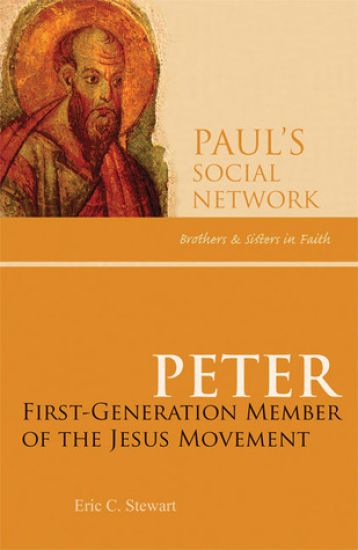
Peter

Peter

Eric C. Stewart

Liturgical Press
2012
pokkari
Unlike other New Testament persons described in the Paul's Social Network Series, Peter was a member of Jesus' inner circle during his life and ministry in Galilee. In Peter, Eric Stewart explores the depictions of Peter that appear throughout the New Testament for insights into who he was. Readers will learn what it means that Peter was a villager and a fisherman, a holy person, an authorized change agent, a moral entrepreneur, a healer, a speaker, and a writer. In the end, they will understand Peter's message, and the message of his Master, far more deeply.
In the Web of Class

In the Web of Class

Eric C. Schneider

New York University Press
1993
pokkari
"An analytic overview of the history of social welfare and juvenile justice in Boston..[Schneider] traces cogently the origins, development, and ultimate failure of Protestant and Catholic reformers' efforts to ameliorate working-class poverty and juvenile delinquency." ?Choice"Anyone who wants to understand why America's approach to juvenile justice doesn't work should read In the Web of Class." ?Michael B. Katz,University of Pennsylvania
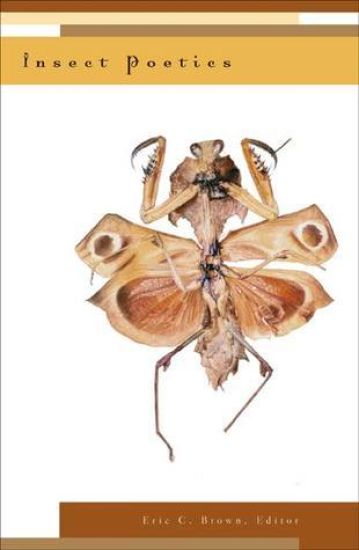
Insect Poetics

Insect Poetics

Eric C. Brown

University of Minnesota Press
2006
nidottu
Insects are everywhere. There are millions of species sharing the world with humans and other animals. Though literally woven into the fabric of human affairs, insects are considered alien from the human world. Animal studies and rights have become a fecund field, but for the most part scant attention has been paid to the relationship between insects and humans. Insect Poetics redresses that imbalance by welcoming insects into the world of letters and cultural debate. In Insect Poetics, the first book to comprehensively explore the cultural and textual meanings of bugs, editor Eric Brown argues that insects are humanity’s “other.” In order to be experienced, the insect world must be mediated by art or technology (as in the case of an ant farm or Kafka’s Metamorphoses) while humans observe, detached and fascinated. In eighteen original essays, this book illuminates the ways in which our human intellectual and cultural models have been influenced by the natural history of insects. Through critical readings contributors address such topics as performing insects in Shakespeare’s Coriolanus, the cockroach in the contemporary American novel, the butterfly’s “voyage out” in Virginia Woolf, and images of insect eating in literature and popular culture. In surprising ways, contributors tease out the particularities of insects as cultural signifiers and propose ways of thinking about “insectivity,” suggesting fertile cross-pollinations between entomology and the arts, between insects and the humanities. Contributors: May Berenbaum, Yves Cambefort, Marion W. Copeland, Nicky Coutts, Bertrand Gervais, Sarah Gordon, Cristopher Hollingsworth, Heather Johnson, Richard J. Leskosky, Tony McGowan, Erika Mae Olbricht, Marc Olivier, Roy Rosenstein, Rachel Sarsfield, Charlotte Sleigh, Andre Stipanovic. Eric C. Brown is assistant professor of English at the University of Maine at Farmington. He has written previously about insects and eschatology in Edmund Spenser’s Muiopotmos.
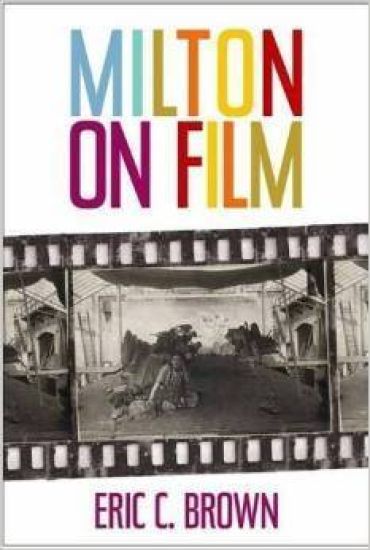
Milton on Film

Milton on Film

Eric C. Brown

Duquesne University Press
2015
sidottu
In January 2012, shooting was set to begin in Sydney, Australia, on the Hollywood-backed production of Milton sParadise Lost, with Oscar nominee Bradley Cooper cast as Satan. Yet just two weeks before the start of production, Legendary Pictures delayed the project, reportedly due to budgetary concerns, and soon the company had suspended the film indefinitely. Milton scholar Eric C. Brown, who was then serving as a script consultant for the studio, sees his experience with that project as part of a long and perplexing story of Milton on film. Indeed, as Brown details in this comprehensive study, Milton s place in the popular imagination and his extensive influence upon the cinema, in particular has been both pervasive and persistent."
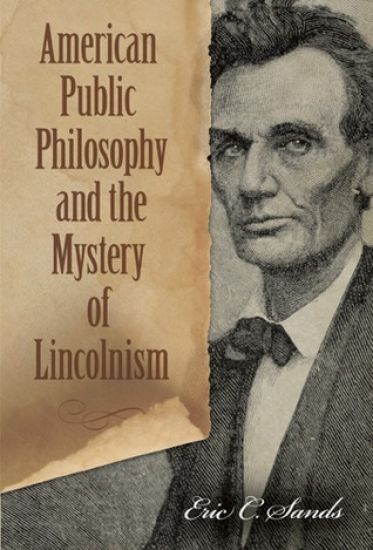
American Public Philosophy and the Mystery of Lincolnism

American Public Philosophy and the Mystery of Lincolnism

Eric C. Sands

University of Missouri Press
2009
sidottu
Although he is revered as one of our greatest presidents, Abraham Lincoln seems to lack the legacy of others like Jefferson or Jackson who brought about new conceptions of American political life. In this study of Lincoln's political thought, Eric Sands blends political science, history, and political theory to offer a fresh perspective on Lincoln, his thought, and the politics of Reconstruction. In this new consideration of Lincoln's 'public philosophy' - the nation's understanding of itself - Sands seeks to determine why the spirit that successfully led the Union through the Civil War was unable to sustain itself during Reconstruction. He defines Lincolnism as a rededication to the principle of natural rights, a narrative of Divine Providence, a sentiment of brotherhood, and an augmentation of founding principles. He then explains how Lincoln's assassination, Johnson's succession, and developments in philosophy and science worked to undermine this philosophy after the war.Sands investigates why the Republican Party was unable to sustain Lincoln's ideas and why neither Republicans nor Democrats were able to formulate a compelling substitute public philosophy for Lincolnism. He describes how Radical Republicans and Purist Democrats battled for control over America's public philosophy, then how Moderate Republicans and Legitimist Democrats abandoned battles over first principles completely. By the end of Reconstruction, public philosophy politics were rejected altogether, ultimately frustrating efforts to move the nation toward the realization of full equality under the law. By reflecting on public policy formation and change, Sands evaluates the strengths and weaknesses of public philosophy politics and shows that the most inspiring and noble kind of politics, even if oriented toward moral principles, can also be dangerous and divisive.His work lends new insight into the role of ideas in politics and offers readers a new understanding of the consequences of Lincoln's actions and death of Reconstruction policies - and of why no concept of a 'Lincolnian democracy' survived during the Reconstruction Era.
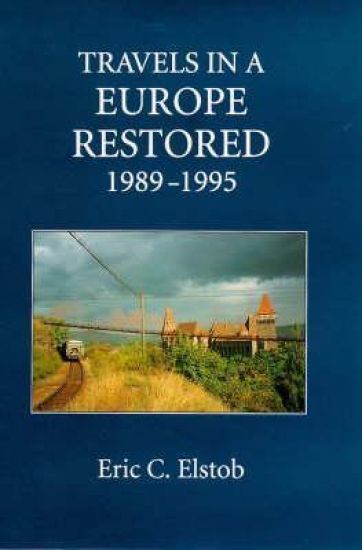
Travels in a Europe Restored: 1989-1995

Travels in a Europe Restored: 1989-1995

Eric C. Elstob

The Boydell Press
1997
sidottu
The collapse of Communism in eastern Europe viewed through personal experience. Europe Restored is a highly personal account of the fall of the Iron Curtain, written from an unusual viewpoint. Eric Elstob was director of various investment trusts in the City during the years before and after the collapse of Communism, with a special interest in European affairs. But he also travelled as an ordinary tourist in eastern Europe, and this book juxtaposes vividly the vignettes of everyday life that he encountered with his high-levelcontacts in the financial and political world; a discussion of the problems of switching from a command economy to a market economy with the finance minister in the capital one month is set beside a talk with the baker who had just bought his shop in a village the next month. Such daily encounters offer exceptional grass-roots witness to the economic challenges facing the former eastern European countries as they struggle to rejoin the wider European economic and cultural entity. ERIC ELSTOB was vice-chairman of the Foreign and Colonial Group until his retirement in 1995.
Seeing Underground

Seeing Underground

Eric C. Nystrom

University of Nevada Press
2016
nidottu
The digging of mineral wealth from the ground dates to prehistoric times, and Europeans pursued mining in the Americas from the earliest colonial days. Prior to the Civil War, very little mining went deep enough to require maps. However, the major finds of the mid-nineteenth century, such as the Comstock Lode, were vastly larger and deeper than any previous finds in America. Nystrom argues that, as industrial mining came of age in the United States, the development of maps and models gave power to a new visual culture. These maps and models became necessary tools in creating and controlling the mines’ pitch-dark, three-dimensional space. Nystrom demonstrates that these neglected artifacts of the nineteenth and early twentieth centuries have much to teach us today.
Seeing Underground

Seeing Underground

Eric C. Nystrom

University of Nevada Press
2014
sidottu
Digging mineral wealth from the ground dates to prehistoric times, and Europeans pursued mining in the Americas from the earliest colonial days. Prior to the Civil War, little mining was deep enough to require maps. However, the major finds of the mid-nineteenth century, such as the Comstock Lode, were vastly larger than any before in America. In Seeing Underground, Nystrom argues that, as industrial mining came of age in the United States, the development of maps and models gave power to a new visual culture and allowed mining engineers to advance their profession, gaining authority over mining operations from the miners themselves. Starting in the late nineteenth century, mining engineers developed a new set of practises, artifacts, and discourses to visualise complex, pitch-dark three-dimensional spaces. These maps and models became necessary tools in creating and controlling those spaces. They made mining more understandable, predictable, and profitable. Nystrom shows that this new visual culture was crucial to specific developments in American mining, such as implementing new safety regulations after the Avondale, Pennsylvania, fire of 1869 killed 110 men and boys; understanding complex geology, as in the rich ores of Butte, Montana; and settling high-stakes litigation, such as the Tonopah, Nevada, Jim Butler v. West End lawsuit, which reached the US Supreme Court. Nystrom demonstrates that these neglected artifacts of the nineteenth and early twentieth centuries have much to teach us today. The development of a visual culture helped create a new professional class of mining engineers and changed how mining was done.
Expert Systems Applications in Integrated Network Management
While many books focus on the broader, socially ethical topics of widening participation and promoting equal opportunities, this text focuses specifically on the lecturer's professional responsibilities. It covers everyday, real-life moral dilemmas which confront university teachers when dealing with students and colleagues - whether arising from facilitated discussion in the classroom, deciding whether it is fair to extend a deadline, investigating suspected plagiarism or dealing with complaints.