

Kirjahaku
Etsi kirjoja tekijän nimen, kirjan nimen tai ISBN:n perusteella.
1000 tulosta hakusanalla Eric K. Williams

The Essence of Child Development: Growth Essentials
Eric K. Donkor
Createspace Independent Publishing Platform
2013
nidottu

Infant, Adolescent & Adult Mental Health Issues
Eric K. Donkor
Createspace Independent Publishing Platform
2013
nidottu


Viral Marketing: How To Create A Viral Campaign That Becomes Out-Of-Control!
Eric K. Turner
Createspace Independent Publishing Platform
2014
nidottu







This revealing and sobering volume brings the big picture of the HIV/AIDS epidemic into focus.Virtually every aspect of the AIDS crisis is covered in this 2nd edition of AIDS Crisis in America, from the basic science of AIDS to demographics and public policy issues. Using facts and findings on the crisis in the United States, the authors give an informative and insightful look at the impact of the epidemic on a variety of populations, including homosexuals, drug users, women, children, hemophiliacs, and various ethnic groups.Other featured topics are AIDS activism, the impact of triple combination therapy, the evolution of public opinion, and HIV/AIDS and the law. The volume concludes with a list of organizations, government agencies, hotlines, and internet resources, as well as other print and nonprint resources. Students and researchers will find everything they need to know about the AIDS crisis in this timely work.List of organizations, government agencies, hotlines, and internet resourcesIncludes other print and nonprint resources

In a feat of remarkable research and timely reclamation, Eric K. Washington uncovers the nearly forgotten life of James H. Williams (1878-1948), the chief porter of Grand Central Terminal's Red Caps-a multitude of Harlem-based black men whom he organized into the essential labor force of America's most august railroad station. Washington reveals that despite the highly racialized and often exploitative nature of the work, the Red Cap was a highly coveted job for college-bound black men determined to join New York's bourgeoning middle class. Examining the deeply intertwined subjects of class, labor, and African American history, Washington chronicles Williams's life, showing how the enterprising son of freed slaves successfully navigated the segregated world of the northern metropolis, and in so doing ultimately achieved financial and social influence. With this biography, Williams must now be considered, along with Cornelius Vanderbilt and Jacqueline Onassis, one of the great heroes of Grand Central's storied past.

Jātaka Tales: Volume 4: Folk Tales of the Buddha's Previous Lives
Eric K. Van Horn
Independently Published
2020
nidottu
The Jātaka Tales are the Buddhist equivalent of Aesop's Fables. They are morality stories. In the Buddhist cultures of that time, these were the stories that children grew up hearing. They were the popular entertainment of their time. Families would gather together in the evening after the day's work was done and share these tales. And it is from these stories that people learned about the standards of conduct for followers of the Buddha. Like Aesop's Fables, the main characters in these stories can be a king, a merchant, a craftsperson, or an animal. This collection contains stories 151-200 of the 547 total stories. There are a number of stories about friendship. Jātaka 157 tells the story of a jackal and a lion whose families stay friends for generations. Jātaka 162 tells the story of both good and bad friendship, with the good friendship coming between a black deer, a leopard, a lion, and a tiger. Jātaka 190 tells a story of both friendship and deep faith.Jātakas 173 - 176 have mischievous monkeys at the heart of the story, but in Jātaka 177 a monkey is finally the hero. A monkey named "Senaka" saves his entire tribe by quick thinking. In other Jātakas we have tree fairies, elephants, and even people ( ). In one story a man is rumored to have become a monk. This inspires him to actually become a monk. In all, these stories represent the breadth the human experience. What we see is that in 2500 years, the spectrum of experiences has not changed at all.

Jataka Tales: Volume 1: Folk Tales of the Buddha's Previous Lives
Eric K. Van Horn
Createspace Independent Publishing Platform
2018
nidottu
The Jataka Tales are the Buddhist equivalent of Aesop's Fables. They are morality stories. In the Buddhist cultures of that time, these were the stories that children grew up hearing. They were the popular entertainment. Families would gather together in the evening after the day's work was done and share these tales. And it is from these stories that people learned about the standards of conduct for followers of the Buddha. Like Aesop's Fables, the main characters in these stories can be a king, a merchant, a craftsperson, or an animal. In this collection, which contains the first 50 of the 547 total stories, we learn about a foolish merchant in Jataka #1. We read about a wise monkey who outwits an ogre to save his followers in Jataka 20. In Jataka 19 we learn about the Buddhist reverence for animal life. Jataka 24 tells the story of a brave war horse who saves the kingdom, and the touching relationship between the war horse and his cavalryman. And Jataka 27 tells of the friendship between an elephant and a dog, their separation, and finally the happy ending and their joyous reunion. Not all of the stories are happy ones. There are a number of stories about Devadatta, the monk who tried to kill the Buddha. There are also stories about foolish people, including a dim-witted son who accidentally killed his father and a parallel story about an equally dim-witted daughter who killed her mother. In all these stories represent the whole of the human experience. What we see is that in 2500 years, the spectrum of humanity has not changed at all.

Going into space for a trip to the moon to look at some real estate deals that are being planned for living on the moon soon. The earth's climate has been unpredictable and out of control, since the melting of the polar icecaps.

iNautilus: Guide for Organizational Navigation
Eric K. Beschinski
Greenfire Innovations, LLC
2020
nidottu
Take your organization to the next level. The iNautilus Guide for Organizational Navigation provides a systematic approach to strategic planning + execution that is clear, concise, progressive, functional, and manageable. Designed for long term success getting your organization from "here" to "there", iNautilus provides a visual, easy-to-follow motif and re-frames tried and true organizational management concepts into a fresh, new perspective.

piNautilus: Guide for Personal Navigation
Eric K. Beschinski
Greenfire Innovations, LLC
2021
nidottu
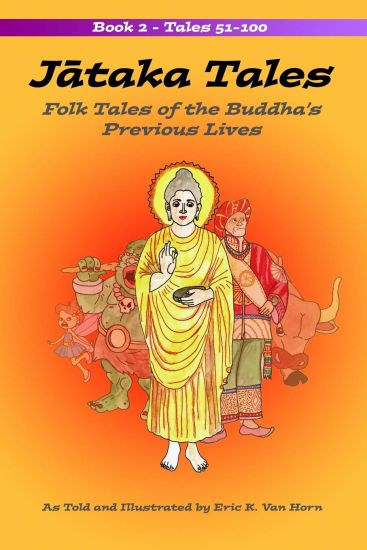
Jataka Tales: Volume 2: Folk Tales of the Buddha's Previous Lives
Eric K. Van Horn
Independently Published
2018
nidottu
The Jātaka Tales are the Buddhist equivalent of Aesop's Fables. They are morality stories. In the Buddhist cultures of that time, these were the stories that children grew up hearing. They were the popular entertainment of their time. Families would gather together in the evening after the day's work was done and share these tales. And it is from these stories that people learned about the standards of conduct for followers of the Buddha.Like Aesop's Fables, the main characters in these stories can be a king, a merchant, a craftsperson, or an animal. This collection contains stories 51-100 of the 547 total stories. Jātaka 68 tells the lovely story about the Buddha and an old couple who - seemingly confused - turn out to have been his parents in many previous lives. Jātaka 72 brings back the Buddha's nemesis - Devadatta - in a story about ingratitude. The Mud Pie Friends - Jātaka 83 - tells a touching story about the great benefactor Anāthapiṇḍika and his childhood friend with whom he made mud pies.A common theme of the Buddha's was the folly of superstition. This is the main topic of Jātakas 87 and 97. And in Jātaka 76 we hear the profound message of how by caring for our own bodies and minds, we also care for others.In all these stories represent the breadth the human experience. What we see is that in 2500 years, the spectrum of humanity has not changed at all.