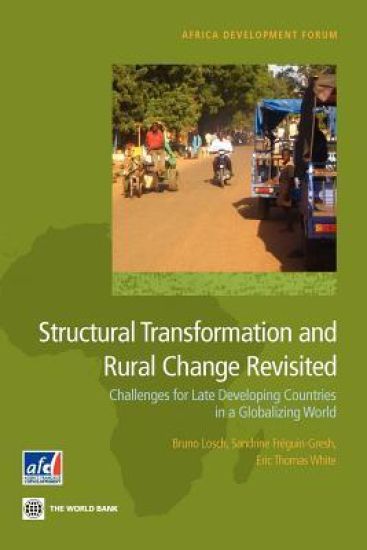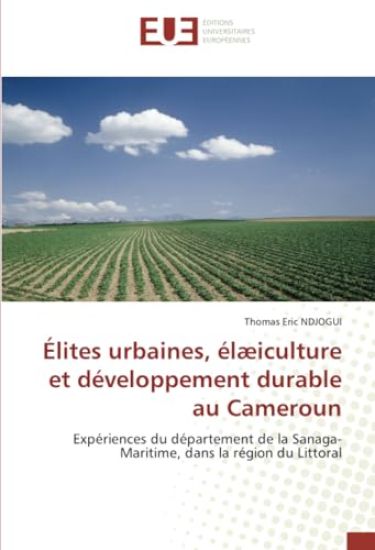
This book makes a compelling case for reintegrating structural issues into agricultural and rural development policies, which have for the last 30 years over-focused on short-term issues. It shows how the liberalization of agriculture in many late developing countries has not in fact led to the development of the vibrant rural non-farm economy so often discussed in the literature. Neither has it led to a large-scale integration of agricultural producers into the global economy. Most producers remain engaged in traditional crops—mainly staples—and in traditional marketing systems characterized by limited contractualization. Yet in spite of these observations the book draws optimistic conclusions: there are a clear set of policy priorities that, if adapted to individual country contexts, can facilitate an enduring and productive rural transformation. The book is based on an in-depth seven-country study that surveyed 8,000 rural households. It specifically focuses on these households’ activity and income structures in an evolving agricultural context marked by liberalization and trends of increasing economic integration. In doing so it reviews the very different levels (and trajectories) of rural diversification among countries at various stages in the structural transformation process. Among late developers, such as the countries of sub-Saharan Africa, a common observation is an incipient economic transition that is accompanied by a strong process of demographic transition. Consequently, growing cohorts of new labor market entrants pose a dramatic challenge. This new demographic structure offers a huge opportunity for growth if it can be accommodated, and if not it represents a serious political and economic liability. If overall economic diversification is the major avenue for change, sustainable growth, and job creation, then it is clear that agriculture and the rural economy will have a critical role to play in the coming two decades. Based on its investigation of existing rural realities, the book suggests several policy orientations. These include a clear need to focus on staples and family agriculture, to engage in targeted development strategies at the regional level, and to pursue a policy of “territorial development” that promotes strong rural-urban linkages at the level of rural localities, towns and districts.
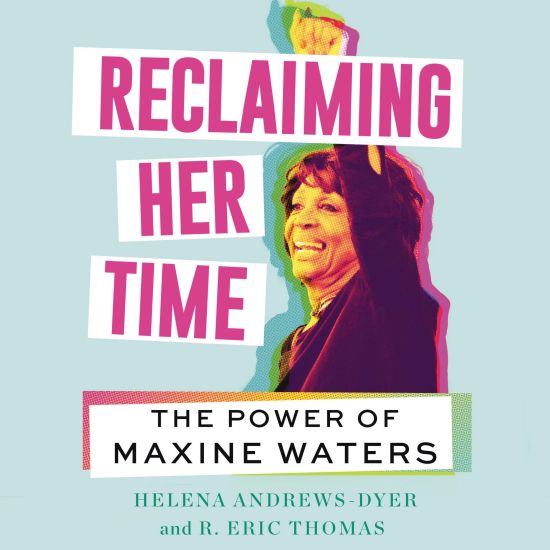
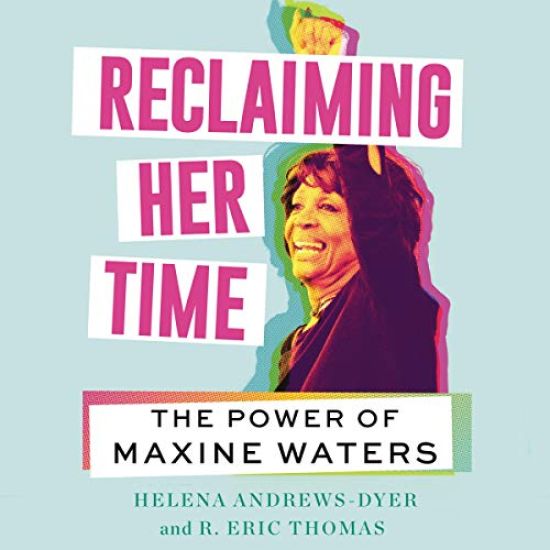
In the tradition of Notorious RBG, a lively celebration of the life, wisdom, wit, legacy, and fearless style of iconic American Congresswoman Maxine Waters."Let me just say this: I'm a strong black woman, and I cannot be intimidated. I cannot be undermined. I cannot be thought to be afraid of Bill O'Reilly or anyone."--Maxine Waters To millions nationwide, Congresswoman Maxine Waters is a hero of the resistance and an icon, serving eye rolls, withering looks, and sharp retorts to any who dare waste her time on nonsense. But behind the Auntie Maxine meme is a seasoned public servant and she's not here to play. Throughout her forty years in public service and eighty years on earth, U.S. Representative for California's 43rd district has been a role model, a crusader for justice, a game-changer, a trailblazer, and an advocate for the marginalized who has long defied her critics, including her most vocal detractor, Donald J. Trump. And she's just getting started. From her anti-apartheid work and support of affirmative action to her passionate opposition to the Iraq War and calls to hold Trump to account, you can count on Auntie Maxine to speak truth to power and do it with grace and, sometimes, sass. As ranking member of the House Financial Services Committee and one of the most powerful black women in America, she is the strong, ethical voice the country has always needed, especially right now.Reclaiming Her Time pays tribute to all things Maxine Waters, from growing up in St. Louis "too skinny" and "too black," to taking on Wall Street during the financial crisis and coming out on top in her legendary showdowns with Trump and his cronies. Featuring inspiring highlights from her personal life and political career, beloved memes, and testimonies from her many friends and fans, Reclaiming Her Time is a funny, warm, and admiring portrait of a champion who refuses to stay silent in the face of corruption and injustice; a powerful woman who is an inspiration to us all.Supplemental enhancement PDF accompanies the audiobook.
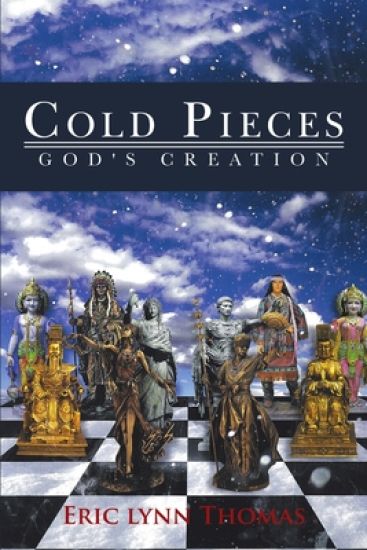
Cold Pieces is a piece (book) about humanity being created in the image and likeness of God. Made to bear His image. It's purpose is to let people know that they are God's most preeminent creation made to reflect Him. They are a walking manifestation of God . They are a Cold Piece. About the Author: Eric is a preacher teacher and motivational speaker and philanthropist. Education is his passion of life. He is a graduate of Belhaven University were he earned a Bachelor's Degree in Interdisciplinary Studies with Biblical Studies as his major. He's also a member of the Alpha Sigma Lambda Honor Society, A member of the Fannie Lou Hamer Political Action Committee, and a participant in helping and serving the homeless and the less fortunate. Eric is currently in the Master of Science in Leadership Program. Educating and lifting the consciousness of those who enter his realm is his assignment.
The idea of being both 'Native' and 'Christian' has been especially challenging among American Indians. Indian people have endured five hundred years of colonial dominance and the results have left divisions between those who are traditionalists, keeping to the old ways, and those who are progressives, embracing the new. Since the mid-1990s there has been a resurgence among Indian evangelicals who wish to break down the 'identity crisis' related to being Native and Christian. Native Christians are encouraging other Natives to meet somewhere in the middle of traditionalism and progressivism. Eric Bates addresses the question of Native American identity, a question that has been problematic among both Native Americans and non-Indians. Blood quantum as an indicator of Indigenous identity has led to constructions of different levels of Indianness. Pan-Indianism has brought together Native peoples from a variety of tribal backgrounds and has formed a new sense of collective identity as Indians versus tribal affiliations. Using situational analysis, Bates examines contextualized ministry via a Native Christian conference which allows Christian Indians to express their Indianness by wearing Native regalia, using Indigenous instruments, and employing other forms of Native expression.
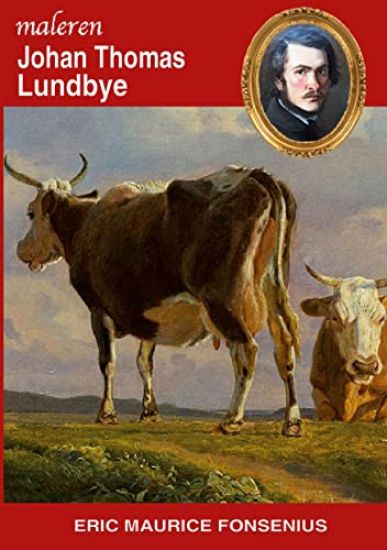
Denne bog hører til en serie af små informative bøger om udvalgte danske kunstmalere, især med vægt lagt på udøvere af genren realisme. Hver enkelt bog i serien kommer med en kort biografi og en fyldig præsentation af kunstnerens værker, så vidt muligt med titel og årstal.
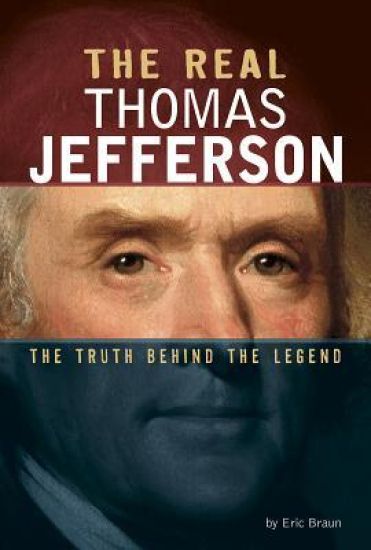
Thomas Jefferson set the course for a new nation ruled by and for the people. In the Declaration of Independence, his words explained that all people are created equal and all deserve life, liberty, and the pursuit of happiness. Jefferson's vision continues to guide the United States, but his own life wasn't always inspiring. There are hard truths about Jefferson, just as there are towering achievements. In that sense, many people believe Jefferson was very much like the nation he helped create.
Rejected in the sixteenth century by both Protestants and Catholics, yet hailed by Marxist historians as a forerunner of the Marxist revolution, this volume tells M?ntzer's story and offers a critical assessment of him in light of his extant works, with particular attention to the religious foundations of his revolutionary program.
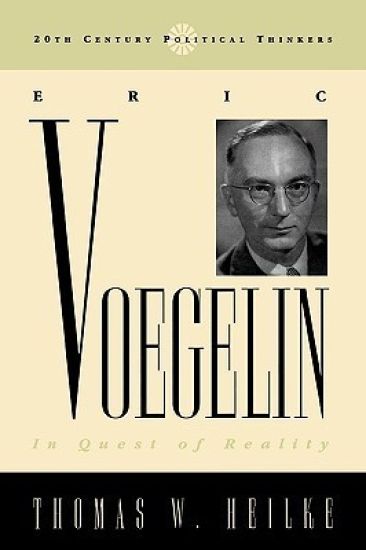
During his distinguished academic career, Eric Voegelin was described as the most important philosopher of history and consciousness since Toynbee; a political theorist of exceptional scope and erudition; a theologian with profound insights into the nature of religious experience. Similarly, Voegelin has been interpreted by his critics using virtually every ideological label available: fascist, communist, liberal, conservative, existentialist, fideist, socialist, reactionary, Jew, Catholic, and Protestant. Regardless of such efforts to characterize his writings using such neat categories, Voegelin has been celebrated by intellectuals of all stripes for the fresh new light he has cast on the modern predicament. Widely recognized political theorist Thomas Heilke contends that while some of these appellations may have elements of truth, none of these labels are ultimately capable of properly representing the essence of Voegelin's work. With startling new insights into the theoretical foundations of Voegelin's writings, Heilke's gripping analysis and compelling conclusions demonstrate how his subject was primarily a philosopher in quest of reality, and why no ideological category can grasp the core of such an intellectual journey. This book will be of interest to political theorists, theologians, philosophers, and intellectual historians.
This work has been selected by scholars as being culturally important and is part of the knowledge base of civilization as we know it.This work is in the public domain in the United States of America, and possibly other nations. Within the United States, you may freely copy and distribute this work, as no entity (individual or corporate) has a copyright on the body of the work.Scholars believe, and we concur, that this work is important enough to be preserved, reproduced, and made generally available to the public. To ensure a quality reading experience, this work has been proofread and republished using a format that seamlessly blends the original graphical elements with text in an easy-to-read typeface.We appreciate your support of the preservation process, and thank you for being an important part of keeping this knowledge alive and relevant.