Kirjojen hintavertailu. Mukana 11 627 354 kirjaa ja 12 kauppaa.

Kirjahaku

Etsi kirjoja tekijän nimen, kirjan nimen tai ISBN:n perusteella.

1000 tulosta hakusanalla Ernst Haffner

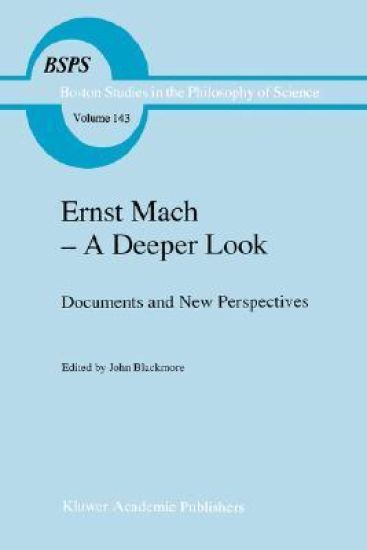
Ernst Mach — A Deeper Look
Ernst Mach -- A Deeper Look has been written to reveal to English-speaking readers the recent revival of interest in Ernst Mach in Europe and Japan. The book is a storehouse of new information on Mach as a philosopher, historian, scientist and person, containing a number of biographical and philosophical manuscripts publihsed for the first time, along with correspondence and other matters published for the first time in English. The book also provides English translations of Mach's controversies with leading physicists and psychologists, such as Max Planck and Carl Stumpf, and offers basic evidence for resolving Mach's position on atomism and Einstein's theory of relativity. Mach's scientific, philosophical and personal influence in a number of countries -- Austria, Germany, Bohemia and Yugoslavia among them -- has been carefully explored and many aspects detailed for the first time. All of the articles are eminently readable, especially those written by Mach's sister. They are deeply researched, new interpretations abound, and the bibliography includes recent works by and about Mach from over a dozen countries. The book also contains many articles by or about Mach's contemporaries, including Ostwald, Dingler, Weichert and, especially, Einstein. Finally, and most intriguingly, the original ideas of Japanese scholars are presented, built on Mach's philosophy. These demonstrate how Mach's world view is currently contributing to the solution of contemporary philosophical problems.
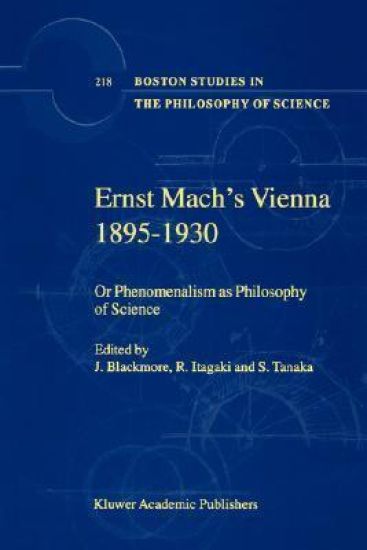
Ernst Mach's Vienna 1895-1930
Section Guide 1. Prolegomena 2. Biographical Sketch 3. Epistemology 4. Textbook Ontology 1. PROLEGOMENA While both philosophers and historians almost always love truth and the search for truth, and both often carry out extensive research, there can be noticeable differences when historians write about the history of philosophy and when philosophers write about it. Philosophers often look at the past with categories and interests taken from the present or at the least from the recent past, but many historians, especially those who love research for its own sake, will try to look at the past from a perspective either from that period or from even earlier. Both camps look for roots, but view them with different lenses and presupposi tions. This prolegomena has been added to prepare some philosophers for what will hopefully only be the mildest of shocks, for seeing the history of philosophy in a way which does not treat what is recent or latest as best, but which loves the context of ideas for its own sake, a context which can be very foreign to contemporary likes and dislikes. To be sure, we historians can deceive ourselves as easily as philosophers, but we tend to do so about different things.
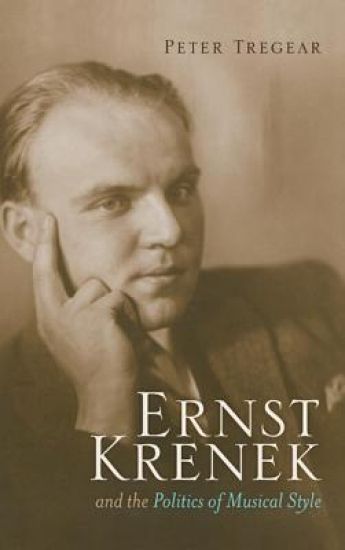
Ernst Krenek and the Politics of Musical Style
Ernst Krenek has been described as a “one-man history of twentieth-century music.” His vast compositional output encompasses many of its extremes and expresses many of its contradictions. Few have attempted, however, to contextualize Krenek’s compositional output because our understanding of classical music in the first half of the twentieth century still largely remains focused on the music of a few canonical figures. Responding to renewed interest from performers in Krenek’s work, particularly his operas, Peter Tregear’s Ernst Krenek and the Politics of Musical Style addresses this gap in the scholarly literature and makes an important contribution to our comprehension of the ways in which his music reflected and informed broader social and political debates in Austria and Germany at the time. Focusing on Krenek’s compositional path from the eclectic musical language of Jonny spielt auf to the austere twelve-tone technique of Karl V, Tregear provides an historical and critical context to this most historically significant period of Krenek’s creative life. His study also enriches our understanding of many of Krenek’s contemporaries, such as Alban Berg and Arnold Schoenberg. This book should interest students, scholars and practitioners with an interest in modern opera, and contemporary classical music as well as early-20th-century German history more generally.
Ernst Kurth As Theorist and Analyst

Ernst Kurth As Theorist and Analyst

Lee A. Rothfarb

University of Pennsylvania Press
1989
sidottu
Ernst Kurth as Theorist and Analyst is the first book length study devoted to the writings of one of this century's most important music theorists. In contrast to previous discussions, Lee A. Rothfarb's study explains Kurth's theories in light of his analyses of specific musical examples. Unlike many of his contemporaries, Kurth approached music primarily from a cognitive rather than a purely technical viewpoint. In a unique kind of experiential analysis, he examined the psychological foundations of counterpoint, harmony, and form, and considered the affective, as opposed to solely structural or syntactic, effects of melody, chord, interval, and tone. The introduction provides a biographical sketch of Kurth, based on archival research and personal interview with his widow, son, and many of his doctoral students. Rothfarb also discusses the intellectual currents of the late nineteenth and early twentieth centuries, both musical and nonmusical, which shaped Kurth's outlook. Eight chapters summarize the main ideas of Grundlagen des linearen Kontrapunkts and Romantische Harmonik and show the directions Kurth took in his later works, Bruckner and Musikpsychologie. A final chapter identified his influence on several of his well-known contemporaries. Ernst Kurth as Theorist and Analyst will interest music theorists, musicologists, and advanced students of music theory.
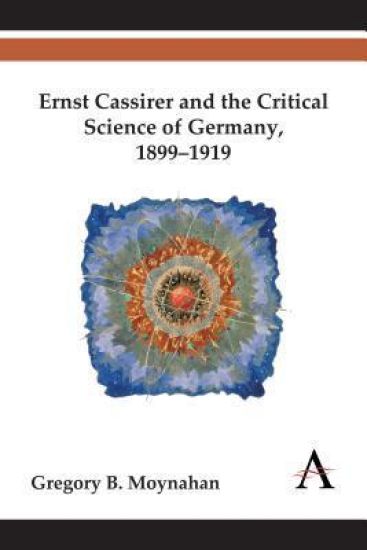
Ernst Cassirer and the Critical Science of Germany, 1899–1919
Recovering a lost world of the politics of science in Imperial Germany, Gregory B. Moynahan approaches the life and work of the philosopher and historian Ernst Cassirer (1874–1945) from a revisionist perspective, using this framework to redefine the origins of twentieth-century critical historicism and critical theory. The only text in English to focus on the first half of the polymath Cassirer’s career and his role in the Marburg School, this volume illuminates one of the most important – and in English, least-studied – reform movements in Imperial Germany.
Ernst L. Freud, Architect

Ernst L. Freud, Architect

Volker M. Welter

Berghahn Books
2011
pokkari
Ernst L. Freud (1892–1970) was a son of Sigmund Freud and the father of painter Lucian Freud and the late Sir Clement Freud, politician and broadcaster. After his studies in Munich and Vienna, where he and his friend Richard Neutra attended Adolf Loos’s private Bauschule, Freud practiced in Berlin and, after 1933, in London. Even though his work focused on domestic architecture and interiors, Freud was possibly the first architect to design psychoanalytical consulting rooms—including the customary couches—a subject dealt with here for the first time. By interweaving an account of Freud’s professional and personal life in Vienna, Berlin, and London with a critical discussion of selected examples of his domestic architecture, interior designs, and psychoanalytic consulting rooms, the author offers a rich tapestry of Ernst L. Freud’s world. His clients constituted a “Who’s Who” of the Jewish and non-Jewish bourgeoisie in 1920s Berlin and later in London, among them the S. Fischer publisher family, Melanie Klein, Ernest Jones, the Spenders, and Julian Huxley. While moving within a social class known for its cultural and avant-garde activities, Freud refrained from spatial, formal, or technological experiments. Instead, he focused on creating modern homes for his bourgeois clients.
Ernst Abbe

Ernst Abbe

M. Von (Moritz) 1868-1940 N. 8. Rohr

Hassell Street Press
2021
nidottu
This work has been selected by scholars as being culturally important and is part of the knowledge base of civilization as we know it.This work is in the public domain in the United States of America, and possibly other nations. Within the United States, you may freely copy and distribute this work, as no entity (individual or corporate) has a copyright on the body of the work.Scholars believe, and we concur, that this work is important enough to be preserved, reproduced, and made generally available to the public. To ensure a quality reading experience, this work has been proofread and republished using a format that seamlessly blends the original graphical elements with text in an easy-to-read typeface.We appreciate your support of the preservation process, and thank you for being an important part of keeping this knowledge alive and relevant.