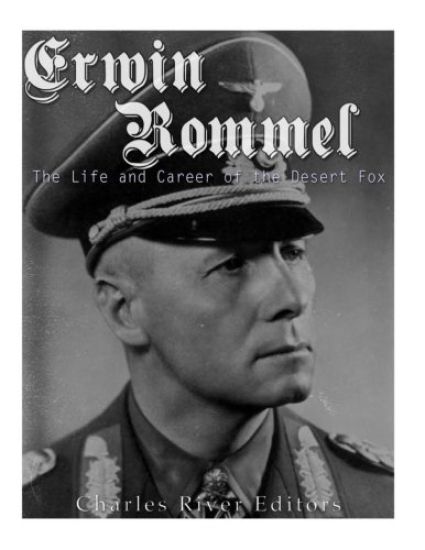
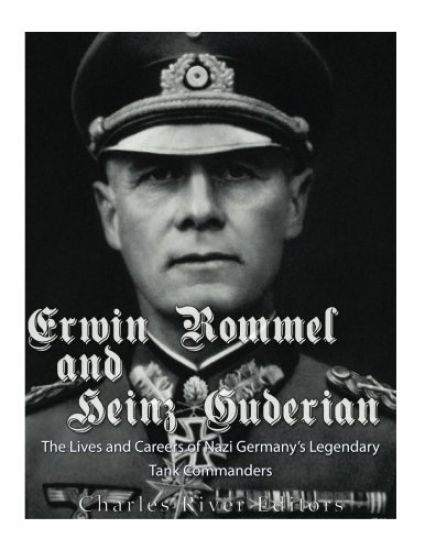
Erwin Rommel* * *Download for FREE on Kindle Unlimited ] Free BONUS Inside * * *Read On Your Computer, MAC, Smartphone, Kindle Reader, iPad, or Tablet.He was known as the
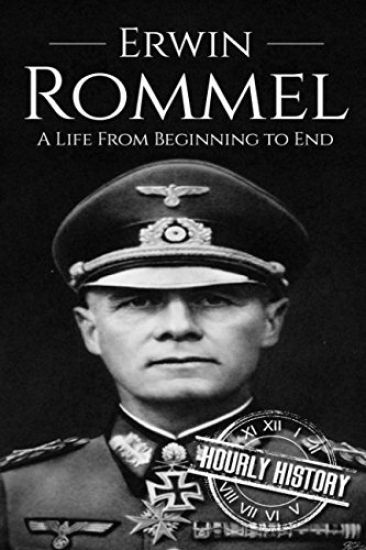
*Includes pictures *Includes Rommel's quotes about his life and the war *Includes online resources and a bibliography for further reading "Be an example to your men in your duty and in private life. Never spare yourself, and let the troops see that you don't in your endurance of fatigue and privation. Always be tactful and well-mannered, and teach your subordinates to be the same. Avoid excessive sharpness or harshness of voice, which usually indicates the man who has shortcomings of his own to hide." - Erwin Rommel One of his biographers called him "a complex man: a born leader, a brilliant soldier, a devoted husband, a proud father; intelligent, instinctive, brave, compassionate, vain, egotistical, and arrogant." As that description suggests, every account of Erwin Rommel's life must address what appears to be its inherent contradictions. Fittingly, and in the same vein, he remains one of the best remembered generals of World War II and history at large, despite the fact he was on the losing side, and he was defeated at the most famous battle of his career, the decisive Battle of El Alamein. Nonetheless, the Desert Fox has been a legend on both sides of the Atlantic for over 70 years, thanks to the crucial role he played in history's deadliest conflict. Before his legendary encounters against the British and Americans in North Africa, Rommel gained much fame for his role in the invasions of Poland and France before was sent to North Africa in February 1941. In describing Rommel, the Italian officer Alessandro Predieri talked about his "two very rare and precious gifts" "The first is luck, which you will remember, Napoleon prescribed to his generals...The second gift is that of being able to keep his bearings in the midst of all the confusion of modern desert warfare. His instinct tells him immediately where a difficult situation is going to develop, and off he goes with his Kampfstaffel Headquarters Group], which he treats like a Praetorian Guard, and puts things right, charging around like a junior officer." With the Axis forces trying to push through Egypt towards the Suez Canal and the British Mandate of Palestine, American forces landed to their west in North Africa, which ultimately compelled Rommel to try to break through before the Allies could build up and overwhelm them with superior numbers.The Second Battle of El Alamein was a turning point in the two-year conflict between Allied forces and a combined German-Italian force in North Africa. While the scale of the battle paled in comparison to the battles of the Eastern Front, where the majority of German troops were concentrated, it still marked an important victory in World War II, especially from the British perspective. After leaving North Africa, Rommel spent much of the later part of the war strengthening German defenses across the Atlantic in anticipation of an amphibious Allied landing, which would come in June 1944. But the murky role he played in the notorious July 20 plot on Adolf Hitler's life in 1944, the closest an assassination attempt got to killing the Nazi Fuhrer, would bring about the Desert Fox's untimely demise in October 1944, even as the Soviets and Western Allies were tightening the vise on Germany. Compelled to take cyanide by authorities, the Desert Fox insisted he was innocent until his dying day, and his popularity forced the Nazi government to claim his death was brought about by a heart attack or a cerebral embolism. In fact, Rommel was given an official state funeral, and Winston Churchill would go on to praise him, "He also deserves our respect because, although a loyal German soldier, he came to hate Hitler and all his works, and took part in the conspiracy to rescue Germany by displacing the maniac and tyrant. For this, he paid the forfeit of his life."
*Includes pictures *Includes Rommel's quotes about his life and the war *Includes online resources and a bibliography for further reading "Be an example to your men in your duty and in private life. Never spare yourself, and let the troops see that you don't in your endurance of fatigue and privation. Always be tactful and well-mannered, and teach your subordinates to be the same. Avoid excessive sharpness or harshness of voice, which usually indicates the man who has shortcomings of his own to hide." - Erwin Rommel One of his biographers called him "a complex man: a born leader, a brilliant soldier, a devoted husband, a proud father; intelligent, instinctive, brave, compassionate, vain, egotistical, and arrogant." As that description suggests, every account of Erwin Rommel's life must address what appears to be its inherent contradictions. Fittingly, and in the same vein, he remains one of the best remembered generals of World War II and history at large, despite the fact he was on the losing side, and he was defeated at the most famous battle of his career, the decisive Battle of El Alamein. Nonetheless, the Desert Fox has been a legend on both sides of the Atlantic for over 70 years, thanks to the crucial role he played in history's deadliest conflict. Before his legendary encounters against the British and Americans in North Africa, Rommel gained much fame for his role in the invasions of Poland and France before was sent to North Africa in February 1941. In describing Rommel, the Italian officer Alessandro Predieri talked about his "two very rare and precious gifts" "The first is luck, which you will remember, Napoleon prescribed to his generals...The second gift is that of being able to keep his bearings in the midst of all the confusion of modern desert warfare. His instinct tells him immediately where a difficult situation is going to develop, and off he goes with his Kampfstaffel Headquarters Group], which he treats like a Praetorian Guard, and puts things right, charging around like a junior officer." With the Axis forces trying to push through Egypt towards the Suez Canal and the British Mandate of Palestine, American forces landed to their west in North Africa, which ultimately compelled Rommel to try to break through before the Allies could build up and overwhelm them with superior numbers.The Second Battle of El Alamein was a turning point in the two-year conflict between Allied forces and a combined German-Italian force in North Africa. While the scale of the battle paled in comparison to the battles of the Eastern Front, where the majority of German troops were concentrated, it still marked an important victory in World War II, especially from the British perspective. After leaving North Africa, Rommel spent much of the later part of the war strengthening German defenses across the Atlantic in anticipation of an amphibious Allied landing, which would come in June 1944. But the murky role he played in the notorious July 20 plot on Adolf Hitler's life in 1944, the closest an assassination attempt got to killing the Nazi Fuhrer, would bring about the Desert Fox's untimely demise in October 1944, even as the Soviets and Western Allies were tightening the vise on Germany. Compelled to take cyanide by authorities, the Desert Fox insisted he was innocent until his dying day, and his popularity forced the Nazi government to claim his death was brought about by a heart attack or a cerebral embolism. In fact, Rommel was given an official state funeral, and Winston Churchill would go on to praise him, "He also deserves our respect because, although a loyal German soldier, he came to hate Hitler and all his works, and took part in the conspiracy to rescue Germany by displacing the maniac and tyrant. For this, he paid the forfeit of his life."
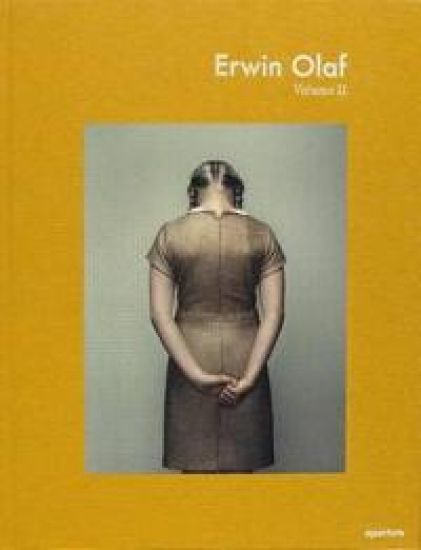
Erwin Olaf ’s approach to storytelling is uniquely evocative and enticingly ambiguous. According to critic Francis Hodgson, Olaf ’s images “lead us to a ‘Stimmung’ (a sense of atmosphere) which is broad enough to repay many second readings of the pictures and so keep us viewers interested.” In this presentation of his most recent work, Olaf expands on his established style of highly polished, and stylized color studio images to include a series drawn from his sculptural video installation, Keyholes; a group of black-and-white images he has exhibited as carbon prints; and photographs created on location in Berlin—a departure from the constructed mise-en-sc è ne of earlier work produced in his Amsterdam studio. Erwin Olaf: Volume II showcases the artist at the height of his powers, as an artisan of atmosphere and a craftsman who uses high polish to both perverse and seductive effect.
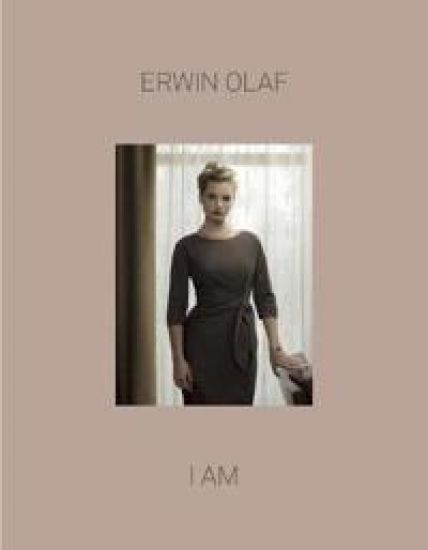
In honor of Erwin Olaf ’s sixtieth birthday, Erwin Olaf: I Am presents the first comprehensive survey of his work, bringing together his earliest images in black and white with his now-iconic color work, including selections from his most recent and heretofore unpublished series shot in Shanghai. This chronological presentation traces the evolution of the artist from cheeky provocateur to royal portraitist, as well as the refinement of his unique vision and stylistic panache over the last four decades. Interspersed among the various series is a wry, incisive commentary by Olaf on the contexts of and inspirations for his work. The book is published to accompany the largest retrospective of Olaf ’s work to date, a multiple-venue show that will encompass installations at the Rijksmuseum, Amsterdam; Gemeentemuseum Den Haag; and Fotomuseum Den Haag. Launching in February 2019, the show will subsequently travel to other venues in Europe, Shanghai, and the United States.
A memorial exhibition catalog highlighting the performance-inspired and staged works of one of the Netherlands’ most acclaimed photographers Dutch photographer Erwin Olaf emerged onto the Amsterdam photography scene in his early 20s. His first formal self-portrait shows influence from New York artists such as Andy Warhol and Robert Mapplethorpe, while also signaling the signatures of his aesthetic throughout his career: layering props and details in open-ended narrative relationships, leading viewers to fantasize about what story is being told. Throughout the 1980s, Olaf became a well-known and well-loved artist and gay rights activist in the Netherlands, photographing drag queens, bodybuilders, fetishists and celebrities at discotheques and other performances. Olaf’s artwork illuminated and celebrated underground scenes, claiming a spotlight for LGBTQ+ identities that expanded everyday possibilities for gay people throughout the Netherlands. This volume includes a selection of key series centered on the concept of performance, a recurring theme in the artist’s four-decade career. In particular, it delves into Olaf’s intimate and formal relationship with dance. The artist discussed ballet as a major source of inspiration for his personal work, in particular the precision and tension between beauty and gritty strength the genre requires. Olaf’s final completed series, Dance in Close Up (2022), represents a collaboration between the artist and choreographer Hans van Manen, celebrating their shared vision of evocative gesture and the gifts of the stage. Erwin Olaf was born in the Netherlands in 1959, and died there in 2023. His work is held in permanent collections such as the Rijksmuseum; the Fonds National d’Art Contemporain, Paris; and the Museum Ludwig, Cologne; and also circulates on the Dutch Euro coin.
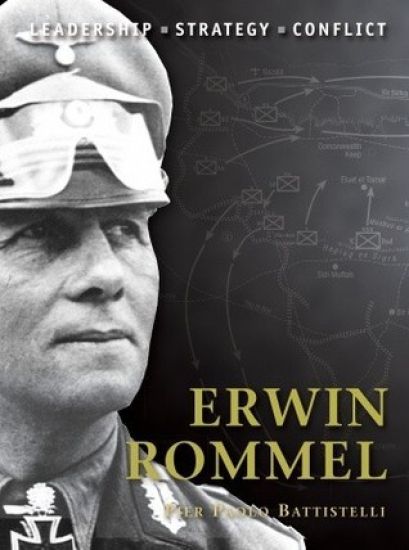
Nicknamed 'The Desert Fox' for his cunning command of the Afrika Korps, Erwin Rommel remains one of the most popular and studied of Germany's World War II commanders. He got his first taste of combat in World War I, where his daring command earned him the Blue Max, Germany's highest decoration for bravery. He followed this up with numerous successes early in World War II in both Europe and Africa, before facing his biggest challenge - organizing the defence of France. Implicated in the plot to kill Hitler, Rommel chose suicide over a public trial. This book looks at the life of this daring soldier, focusing on his style of command and the tactical decisions that earned him his fearsome reputation.
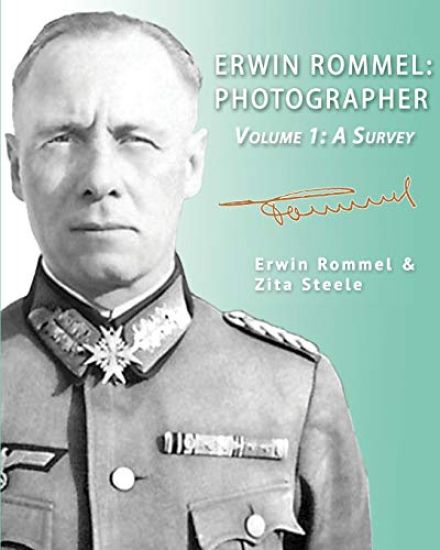
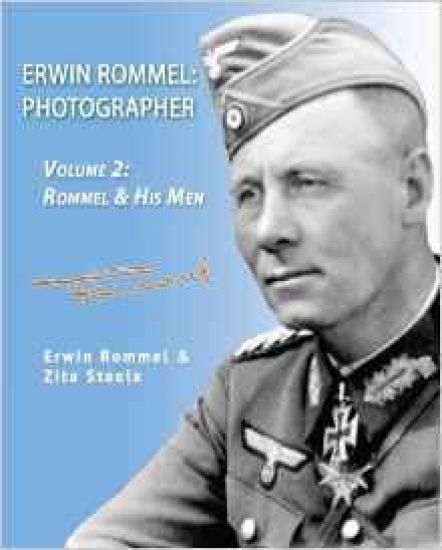
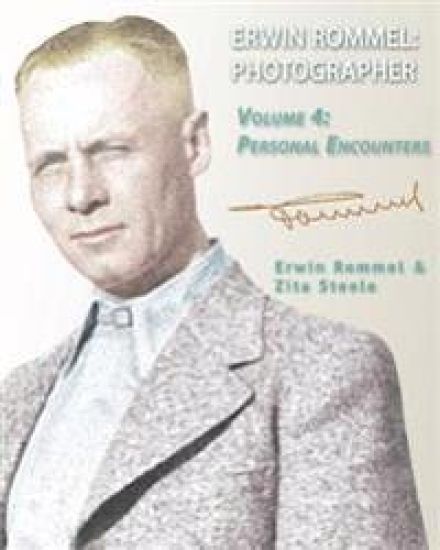
Take a journey behind the camera of a world-famous military commander. Learn about the personal life of Field Marshal Erwin Rommel. See Rommel's private photo collection, reunified for the first time since 1945. Never-before-seen photos and excerpts from Rommel's private photo albums published for the first time shed light on his important relationships. Witness Rommel's interactions with family, friends, officers and ordinary people. Features: - ideal for collectors and those who want to learn more about Rommel - 275 photos from Rommel's personal photo albums - 125 photos taken by Rommel, including color photos - 100] photos by author Zita Steele - with photos of key places and items in Rommel's life Historical photos are digitally restored and enhanced for detail. Some are colorized. Author and artist Zita Steele traveled through Germany and Austria to gain insights into Rommel's life and experiences. She uses her expertise in social sciences, the study of people, to share new knowledge and insights about the personal life of this notable military leader.
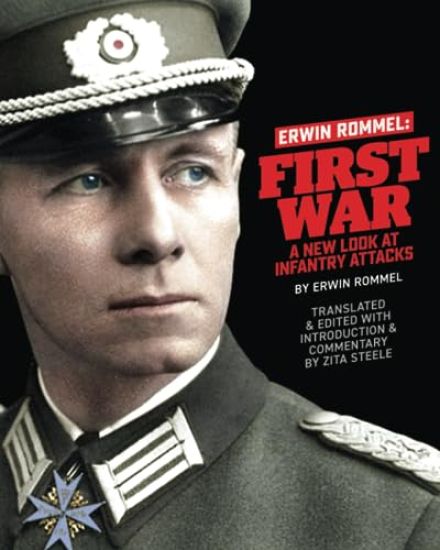
More than just a new German-to-English translation of Rommel's memoir, "Erwin Rommel: First War-A New Look At Infantry Attacks" by military historian/author Zita Steele (pen name for Zita Ballinger Fletcher) provides analysis of Rommel's transformation from a na ve young soldier into a formidable World War II general. This book is an authoritative work on Rommel's life, his tactical lessons and military career during World War I. It gives a vibrant look at Rommel as a young soldier with many rare photographs and allows readers to "hear" his voice like never before as they witness his transformation into a famous commander. This new take on "Infantry Attacks " is exciting to read and provides a better understanding of Rommel's tactics, his personality as a writer and experiences as World War I veteran. Features include: Richly illustrated with photos from Rommel's private albums, including First World War photographs, plus all 83 maps he drew for the bookDetailed introduction illuminates Rommel's writing style, experiences as a mountain trooper and situation in life when he first left for war, including details about his early relationships with his wife Lucie and girlfriend Walburga Stemmer New, vivid and accurate translation of "Infantry Attacks " faithful to the original German brings Rommel's colorful writing style to life for readers to "hear" his unique voice Censored passages restored in full and translation errors are correctedLost notes restored from Rommel's previously overlooked phrases he emphasized in tactical lessons now contained in bold to show his military lesson focus points based on his wartime experiencesCommentary in each chapter shares details about Rommel's original German text (slang expressions, songs, cultural references and insights into his unique word choices) to better understand exactly what he said and whyAnalysis of Rommel's transformation from a young soldier into a famous generalConclusion examines the impact of Rommel's first war on his life and career This well-researched, fascinating book is a must-have for anyone interested in Erwin Rommel.
*Includes pictures *Includes accounts of the fighting *Includes online resources and a bibliography for further reading One of his biographers called him "a complex man: a born leader, a brilliant soldier, a devoted husband, a proud father; intelligent, instinctive, brave, compassionate, vain, egotistical, and arrogant." As that description suggests, every account of Erwin Rommel's life must address what appears to be its inherent contradictions. Fittingly, and in the same vein, he remains one of the best remembered generals of World War II and history at large, despite the fact he was on the losing side, and he was defeated at the most famous battle of his career, the decisive Battle of El Alamein. With the Axis forces trying to push through Egypt towards the Suez Canal and the British Mandate of Palestine, American forces landed to their west in North Africa, which ultimately compelled Rommel to try to break through before the Allies could build up and overwhelm them with superior numbers. Given that the combined Allied forces under Bernard Montgomery already had an advantage in manpower, Montgomery also wanted to be aggressive, and the fighting would start in late October 1942 with an Allied attack. At Alamein, 195,000 troops in 11 divisions faced off against 50,000 Germans (four divisions) and 54,000 Italians (eight divisions), where they were able to use their superior numbers and weapons to defeat the Axis troops. Over the next few weeks, the Allies made steady progress and forced Rommel to conduct a fighting retreat to safety until his army linked up with another Axis army in Tunisia, but the fighting at the end of 1942 inevitably compelled all Axis forces to quit the theater, the first time since the beginning of the war that Africa was safe for the Allies. After leaving North Africa, Rommel spent much of the later part of the war strengthening German defenses across the Atlantic in anticipation of an amphibious Allied landing, which would come in June 1944. But the murky role he played in the notorious July 20 plot on Adolf Hitler's life in 1944, the closest an assassination attempt got to killing the Nazi Fuhrer, would bring about the Desert Fox's untimely demise in October 1944, even as the Soviets and Western Allies were tightening the vise on Germany. Compelled to take cyanide by authorities, the Desert Fox insisted he was innocent until his dying day, and his popularity forced the Nazi government to claim his death was brought about by a heart attack or a cerebral embolism. In fact, Rommel was given an official state funeral, and Winston Churchill would go on to praise him, "He also deserves our respect because, although a loyal German soldier, he came to hate Hitler and all his works, and took part in the conspiracy to rescue Germany by displacing the maniac and tyrant. For this, he paid the forfeit of his life. In the sombre wars of modern democracy, chivalry finds no place ... Still, I do not regret or retract the tribute I paid to Rommel, unfashionable though it was judged." While there is a great division when it comes to historical opinion with respect to Rommel's merits as a general as well as the moral choices he made, both historians and the public continue to be intrigued by this man who has been dead for over 70 years. People at large continue to consider Rommel one of the greatest generals of the 20th century, an opinion shared by many of his contemporaries on both sides of World War II. For example, British General Harold Alexander hinted at both his strengths and weaknesses, commenting, "He was a tactician of the greatest ability, with a firm grasp of every detail of the employment of armour in action, and very quick to seize the fleeting opportunity and the critical turning point of a mobile battle. I felt certain doubts, however, about his strategic ability, in particular as to whether he fully understood the importance of a sound administrative plan."