Kirjahaku
Etsi kirjoja tekijän nimen, kirjan nimen tai ISBN:n perusteella.
1000 tulosta hakusanalla Eugene Bagger



Life Wins!: A Collection of Essays and Sermons by Dr. Eugene R. "Woody" Widrick
Eugene R. Widrick
Palma Sola Publishing
2010
nidottu

Eugene de Kock het die bloed van tientalle mense aan sy hande. Vir die meeste Suid-Afrikaners is hy die "monster" van Vlakplaas. Tog was Anemari Jansen gefassineer toe sy hom vir die eerste keer ontmoet. Hoe versoen sy die man "met die sagte stem" met die mens wat Prime Evil gedoop is? Die boek skets 'n prentjie van 'n intelligente, komplekse mens. Dit belig nie net De Kock se keuses nie, maar ook die onlangse Suid-Afrikaanse verlede op 'n openbarende, soms skokkende manier.
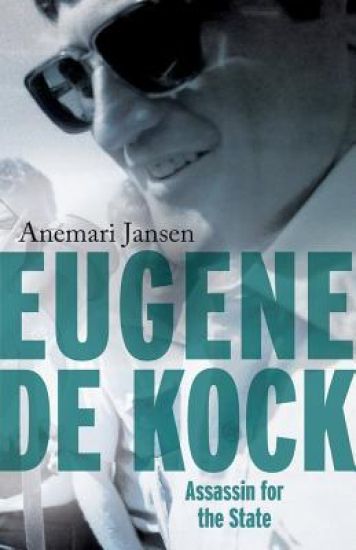
Anemari Jansen met Eugene de Kock in Pretoria Central Prison in 2011 and was immediately intrigued - how could the prisoner "with the soft voice" be reconciled with the man dubbed "Prime Evil"? She tracked down De Kock's family, friends, and former Koevoet and Vlakplaas colleagues in her search for answers. This book also quotes from De Kock's diaries and an unpublished manuscript. De Kock is scathingly honest: about the atrocities he committed, about the superiors from whom he received his orders - and about his shame.
The Writings in Prose and Verse of Eugene Field. Second Book of Verse
Eugene Field
Trieste Publishing
2018
nidottu

The Writings in Prose and Verse of Eugene Field; Poems of Childhood; The Works of Eugene Field; Vol. IV
Eugene Field
Trieste Publishing
2018
nidottu

The Works of Eugene Field Vol. III the Writings in Prose and Verse of Eugene Field. Second Book of Verse
Eugene Field
Trieste Publishing
2018
nidottu
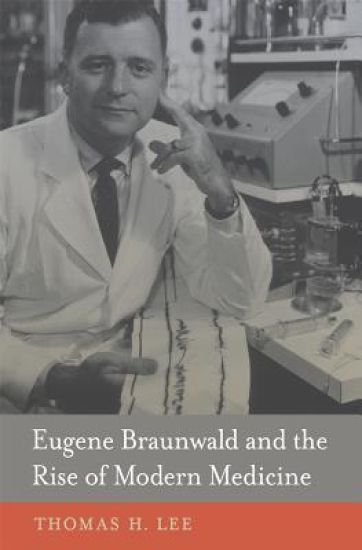
Eugene Braunwald and the Rise of Modern Medicine
Thomas H. Lee
Harvard University Press
2013
sidottu
Since the 1950s, the death rate from heart attacks has plunged from 35 percent to about 5 percent—and fatalistic attitudes toward this disease and many others have faded into history. Much of the improved survival and change in attitudes can be traced to the work of Eugene Braunwald, MD. In the 1960s, he proved that myocardial infarction was not a “bolt from the blue” but a dynamic process that plays out over hours and thus could be altered by treatment. By redirecting cardiology from passive, risk-averse observation to active intervention, he helped transform not just his own field but the culture of American medicine.Braunwald’s personal story demonstrates how the forces of history affected the generation of researchers responsible for so many medical advances in the second half of the twentieth century. In 1938 Nazi occupiers forced his family to flee Vienna for Brooklyn. Because of Jewish quotas in medical schools, he was the last person admitted to his class, but went on to graduate number one. When the Doctor Draft threatened to interrupt his medical training during the Korean War, he joined the National Institutes of Health instead of the Navy, and there he began the research that made him the most influential cardiologist of his time.In Eugene Braunwald and the Rise of Modern Medicine, Thomas H. Lee offers insights that only authoritative firsthand interviews can provide, to bring us closer to this iconic figure in modern medicine.
Eugène Scribe and the French Theatre, 1815-1860
Neil Cole Arvin
Harvard University Press
2013
sidottu
The Description for this book, Eugene Onegin: A Novel in Verse: Commentary, will be forthcoming.
When Vladimir Nabokov's translation of Pushkin’s masterpiece Eugene Onegin was first published in 1964, it ignited a storm of controversy that famously resulted in the demise of Nabokov’s friendship with critic Edmund Wilson. While Wilson derided it as a disappointment in the New York Review of Books, other critics hailed the translation and accompanying commentary as Nabokov’s highest achievement. Nabokov himself strove to render a literal translation that captured "the exact contextual meaning of the original," arguing that, "only this is true translation." Nabokov’s Eugene Onegin remains the most famous and frequently cited English-language version of the most celebrated poem in Russian literature, a translation that reflects a lifelong admiration of Pushkin on the part of one of the twentieth century’s most brilliant writers. Now with a new foreword by Nabokov biographer Brian Boyd, this edition brings a classic work of enduring literary interest to a new generation of readers.

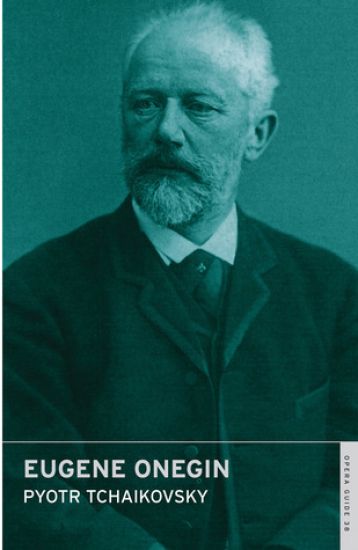
This tender, lyrical and passionate story of unrequited love holds a special place in Russian hearts. Tatyana’s letter scene and the Polonaise are two much loved glories of the score; each act is tightly constructed around an antithesis of public and private scenes, and the dances are integral to the drama. The essence of both opera and poem is yearning, whether the artist’s quest for his muse, or the lover for the beloved. Both poet and composer are true, in different ways, to this theme. The essays included in this guide explore the subtle and unexpected relationship between the words and music in Tchaikovsky’s intimate ‘Lyrical Scenes after Pushkin’.Contents: Pushkin into Tchaikovsky: Caustic Novel, Sentimental Opera, Caryl Emerson; Tchaikovsky’s ‘Eugene Onegin’, Roland John Wiley; An Appreciation of ‘Eugene Onegin’, Natalia Challis; Eugene Onegin: Libretto by Konstantin Shilovsky and Pyotr Tchaikovsky; Eugene Onegin: English translation by David Lloyd-Jones