Kirjojen hintavertailu. Mukana 11 244 527 kirjaa ja 12 kauppaa.

Kirjahaku

Etsi kirjoja tekijän nimen, kirjan nimen tai ISBN:n perusteella.

1000 tulosta hakusanalla Eugene Simpson Tanner

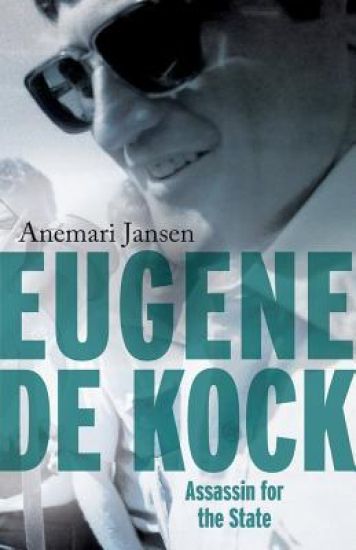
Eugene de Kock

Eugene de Kock

Anemari Jansen

Tafelberg
2015
nidottu
Eugene de Kock het die bloed van tientalle mense aan sy hande. Vir die meeste Suid-Afrikaners is hy die "monster" van Vlakplaas. Tog was Anemari Jansen gefassineer toe sy hom vir die eerste keer ontmoet. Hoe versoen sy die man "met die sagte stem" met die mens wat Prime Evil gedoop is? Die boek skets 'n prentjie van 'n intelligente, komplekse mens. Dit belig nie net De Kock se keuses nie, maar ook die onlangse Suid-Afrikaanse verlede op 'n openbarende, soms skokkende manier.
Eugene de Kock

Eugene de Kock

Anemari Jansen

Tafelberg
2015
nidottu
Anemari Jansen met Eugene de Kock in Pretoria Central Prison in 2011 and was immediately intrigued - how could the prisoner "with the soft voice" be reconciled with the man dubbed "Prime Evil"? She tracked down De Kock's family, friends, and former Koevoet and Vlakplaas colleagues in her search for answers. This book also quotes from De Kock's diaries and an unpublished manuscript. De Kock is scathingly honest: about the atrocities he committed, about the superiors from whom he received his orders - and about his shame.
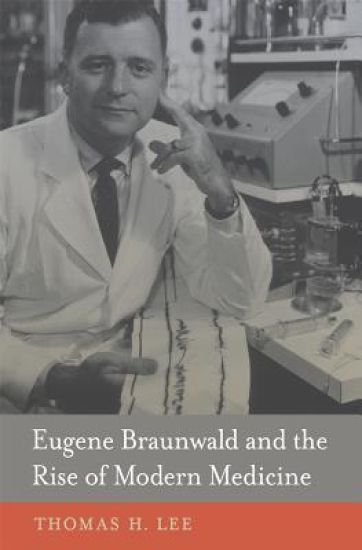
Eugene Braunwald and the Rise of Modern Medicine

Eugene Braunwald and the Rise of Modern Medicine

Thomas H. Lee

Harvard University Press
2013
sidottu
Since the 1950s, the death rate from heart attacks has plunged from 35 percent to about 5 percent—and fatalistic attitudes toward this disease and many others have faded into history. Much of the improved survival and change in attitudes can be traced to the work of Eugene Braunwald, MD. In the 1960s, he proved that myocardial infarction was not a “bolt from the blue” but a dynamic process that plays out over hours and thus could be altered by treatment. By redirecting cardiology from passive, risk-averse observation to active intervention, he helped transform not just his own field but the culture of American medicine.Braunwald’s personal story demonstrates how the forces of history affected the generation of researchers responsible for so many medical advances in the second half of the twentieth century. In 1938 Nazi occupiers forced his family to flee Vienna for Brooklyn. Because of Jewish quotas in medical schools, he was the last person admitted to his class, but went on to graduate number one. When the Doctor Draft threatened to interrupt his medical training during the Korean War, he joined the National Institutes of Health instead of the Navy, and there he began the research that made him the most influential cardiologist of his time.In Eugene Braunwald and the Rise of Modern Medicine, Thomas H. Lee offers insights that only authoritative firsthand interviews can provide, to bring us closer to this iconic figure in modern medicine.
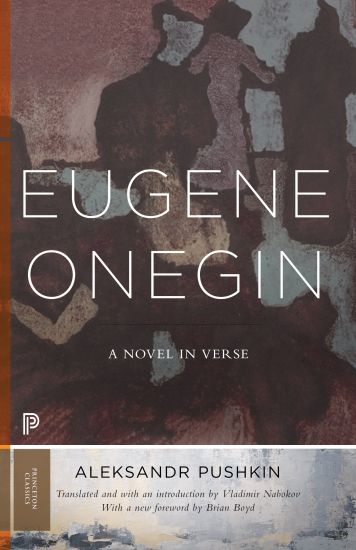
Eugene Onegin

Eugene Onegin

Aleksandr Pushkin; Brian Boyd

Princeton University Press
2018
pokkari
When Vladimir Nabokov's translation of Pushkin’s masterpiece Eugene Onegin was first published in 1964, it ignited a storm of controversy that famously resulted in the demise of Nabokov’s friendship with critic Edmund Wilson. While Wilson derided it as a disappointment in the New York Review of Books, other critics hailed the translation and accompanying commentary as Nabokov’s highest achievement. Nabokov himself strove to render a literal translation that captured "the exact contextual meaning of the original," arguing that, "only this is true translation." Nabokov’s Eugene Onegin remains the most famous and frequently cited English-language version of the most celebrated poem in Russian literature, a translation that reflects a lifelong admiration of Pushkin on the part of one of the twentieth century’s most brilliant writers. Now with a new foreword by Nabokov biographer Brian Boyd, this edition brings a classic work of enduring literary interest to a new generation of readers.
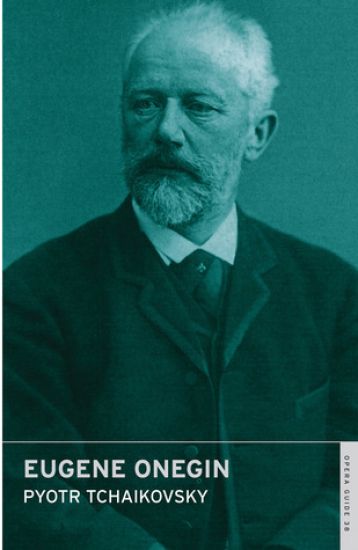
Eugene Onegin

Eugene Onegin

Pyotr Ilyich Tchaikovsky

Overture Publishing
2016
nidottu
This tender, lyrical and passionate story of unrequited love holds a special place in Russian hearts. Tatyana’s letter scene and the Polonaise are two much loved glories of the score; each act is tightly constructed around an antithesis of public and private scenes, and the dances are integral to the drama. The essence of both opera and poem is yearning, whether the artist’s quest for his muse, or the lover for the beloved. Both poet and composer are true, in different ways, to this theme. The essays included in this guide explore the subtle and unexpected relationship between the words and music in Tchaikovsky’s intimate ‘Lyrical Scenes after Pushkin’.Contents: Pushkin into Tchaikovsky: Caustic Novel, Sentimental Opera, Caryl Emerson; Tchaikovsky’s ‘Eugene Onegin’, Roland John Wiley; An Appreciation of ‘Eugene Onegin’, Natalia Challis; Eugene Onegin: Libretto by Konstantin Shilovsky and Pyotr Tchaikovsky; Eugene Onegin: English translation by David Lloyd-Jones
Eugene O'Neill

Eugene O'Neill

Egil Törnqvist

McFarland Co Inc
2004
pokkari
Eugene O'Neill wrote his plays for a theatre in which the playwright would take a central position. He presented himself as a controlling personality both in the texts--in the form of ample stage directions--and in performances based on these texts. His plays address several audiences--reader, spectator, and production team--and scripts were often different from the published versions. This study examines O'Neill's multiple roles as a writer for many audiences. After a description of O'Neill's working conditions and the multiple audiences of the plays, this study examines the various formal aspects of the plays: titles, settings in time and place, names and addresses, language, and connections and allusions to other works. An examination of the plays follows, with particular emphasis on Bound East for Cardiff, Long Day's Journey Into Night, and A Touch of the Poet.
Eugene O'Neill and His Early Contemporaries
Eugene O'Neill was one of the great American playwrights of the twentieth century. Spanning the years 1910-1930, the 14 essays in this volume address the milieu he knew best--his friends in bohemian Greenwich Village, Provincetown, on waterfronts around the globe, and in the other beloved communities that comprised his early circle. At a time when O'Neill's creative powers were in their infancy, these influences formed the backdrop of his creative development and, consequently, demand more intensive study than they have received to date. This collection also highlights the larger modernist period and its impact on the First World War, the Little Theater Movement, the Abbey Players of Dublin, philosophical anarchism, and other contemporary upheavals that permeate his drama. Interspersed with rare period photos and illustrations, this volume contextualizes O'Neill's plays in the tumult of his historical and cultural moment, offering scholars a fresh approach to his life and art.
Eugene Ely, Daredevil Aviator

Eugene Ely, Daredevil Aviator

William M. Miller

McFarland Co Inc
2014
pokkari
Eugene Burton Ely was buried the day after his 25th birthday, less than a half-mile from where he was born. No sooner had he captured the world's eye and gained the fame he sought, than he crashed into the earth. Until 1911, the last year of his life, hardly anyone knew his name. More than a century later, nothing has changed. An Iowa farm boy afraid of heights, Ely was the first to land an airplane on the deck of a ship. To some, he is the father of naval aviation, the inspiration behind today's nuclear aircraft carriers--but many details of his life have been lost until now. This book seeks to fill this void.
Eugene Field and His Age

Eugene Field and His Age

Lewis O. Saum

University of Nebraska Press
2000
sidottu
Eugene Field (1850–95) is perhaps best remembered for his children's verse, especially "Little Boy Blue" and "Wynken, Blynken, and Nod." During his journalistic career, however, his column, "Sharps and Flats," in the Chicago Daily News illuminated the shenanigans of local and national politics, captured the excitement of baseball, and praised the cultural scene of Chicago and the West over that of the East Coast and Europe. Field used whimsy, satire, and, at times, unadorned admiration to depict and encapsulate the energy of a young nation reinventing itself and its political ambitions in the closing decades of the nineteenth century. Foremost, Field was a political observer. During his lifetime politics saw more public awareness and involvement than at any other time in American history, and Field's great popularity derived mainly from his near-ceaseless commentary—arch, outlandish, comic, serious—on that arena of affairs. Field also devoted many columns to entertainment and diversions, discussing the baseball "idiocy" that stormed Chicago and championing and criticizing authors and actors.
The Best Novels and Stories of Eugene Manlove Rhodes

The Best Novels and Stories of Eugene Manlove Rhodes

Eugene Manlove Rhodes; W. H. Hutchinson

Bison Books
1987
pokkari
Eugene Manlove Rhodes's masterpiece, "Pasó Por Aquí", opens this collection of his short novels and stories, set in New Mexico, where he lived during the 1880s and 1890s. J. Frank Dobie praised Rhodes's artistry, and Bernard DeVoto thought he wrote "much the best dialogue . . . Of western characters since Mark Twain." Included are the novelettes "Good Men and True," "Bransford of Rainbow Range," and "The Trusty Knaves."