Kirjojen hintavertailu. Mukana 11 699 587 kirjaa ja 12 kauppaa.

Kirjahaku

Etsi kirjoja tekijän nimen, kirjan nimen tai ISBN:n perusteella.

1000 tulosta hakusanalla Experience Mayhew

Experience

Experience

VDM Publishing House
2010
nidottu
Observera att förlaget som ger ut denna produkt baserar innehållet i sina produkter på fria källor som Wikipedia. Boken är med stor sannolikhet endast ett utdrag ur dessa informationskällor, alltså inte en vanlig bok i den bemärkelsen.
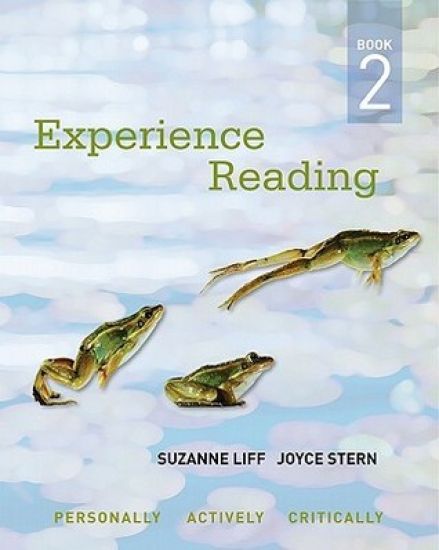
Experience Reading, Book 2

Experience Reading, Book 2

Liff Suzanne; Joyce Stern

McGraw-Hill Professional
2011
nidottu
CONNECT READING provides a personalized learning plan for each student, continually developed and refined as students achieve mastery. Each student plan is created through an individualized diagnostic that evaluates skills from 7th-grade level through college-readiness, for second-language learners, international students, adult students, and traditional high-schoolers. Offered completely online, CONNECT READING can be used in conjunction with EXPERIENCE READING BOOK 1 or EXPERIENCE READING BOOK 2, which provide a printed experience that teaches and strengthens comprehension and critical reading skills. Experience Reading uses authentic material allowing students to unlock textbook content across academic disciplines.
Experience Spanish

Experience Spanish

María Amores; José Luis Suárez-García; Michael Morris

McGraw-Hill Professional
2011
sidottu
Your students are changing. Technology is changing. The idea of the “classroom” is changing. Now, the way your students experience Spanish can change as well!At McGraw-Hill, we rededicated ourselves over the past few years to broadening and deepening our understanding of the student and instructor experience in World Languages. Employing a wide array of research tools including surveys, focus groups, and ethnographic studies, we identified a number of areas for improvement upon the existing learning materials available. The result is Experience Spanish.Experience Spanish is a first. Its groundbreaking adaptive diagnostic and synchronous/asynchronous conversation tools create a 24/7 active language-in-culture environment never possible before. With Experience Spanish, instructors can tailor the environment while students tailor the experience, allowing everyone to take ownership of the learning experience. Affording the flexibility that only an integrated solution can provide, Experience Spanish provides an opportunity for instructors to quickly and easily provide a common learning experience for their students regardless of whether the course is face-to-face, online, or hybrid. At the same time, students have all of the tools at their fingertips to take their second language acquisition from the classroom to their communities in an efficient and personalized way. With Experience Spanish, your concerns about different levels of student preparedness and delivering consistent and meaningful courses in different formats are behind you.Own the experience. Take charge of learning. Experience Spanish and experience the world.*Connect Spanish, including but not limited to the workbook/lab manual, LearnSmart, the video program, and chat tools, is sold separately and does not come automatically with the purchase of the textbook.
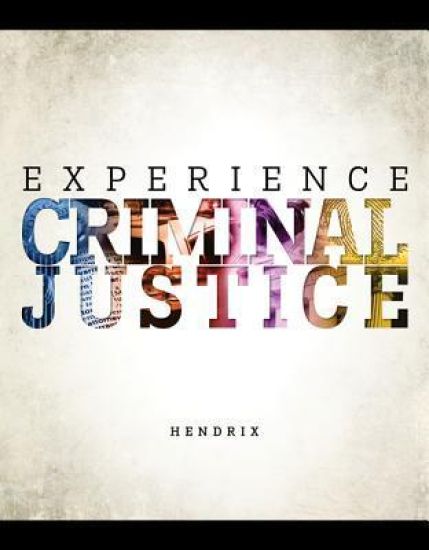
Experience Criminal Justice

Experience Criminal Justice

Nicole Hendrix; James a. Inciardi

McGraw-Hill Companies
2013
nidottu
Experience Criminal Justice provides an environment for students to apply the foundations of the Criminal Justice system to interactive and assignable activities online. Students will read about the foundations of Courts, Cops, and Corrections in the streamlined, brief text, and then apply those foundations online as they use their own discretionary skills in You Make the Call videos and other online activities. Should officers issue a ticket to every single person who gets caught speeding? Students find out how to make their own decisions and learn that the Criminal Justice system isn't all black and white. Experience Criminal Justice is assignable, tied to student learning outcomes, and is completely integrated with Blackboard. Instructors and students can now access their course content through the Connect digital learning platform by purchasing either standalone Connect access or a bundle of print and Connect access. McGraw-Hill Connect(R) is a subscription-based learning service accessible online through your personal computer or tablet. Choose this option if your instructor will require Connect to be used in the course. Your subscription to Connect includes the following: - SmartBook(R) - an adaptive digital version of the course textbook that personalizes your reading experience based on how well you are learning the content.- Access to your instructor's homework assignments, quizzes, syllabus, notes, reminders, and other important files for the course.- Progress dashboards that quickly show how you are performing on your assignments and tips for improvement.- The option to purchase (for a small fee) a print version of the book. This binder-ready, loose-leaf version includes free shipping. Complete system requirements to use Connect can be found here: http: //www.mheducation.com/highered/platforms/connect/training-support-students.html
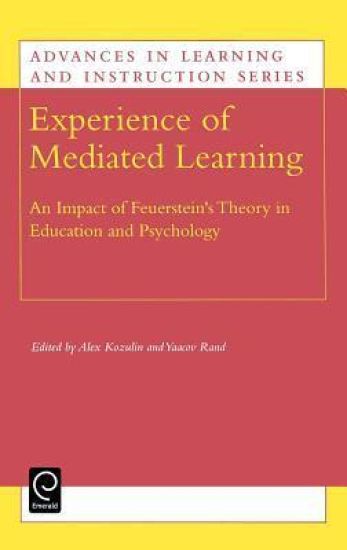
Experience of Mediated Learning
In this volume, the authors examine the impact of Feuerstein's theory of Mediated Learning Experience (MLE) on our understanding of the learning, instruction and cognitive modifiability of children, adolescents and young adults. The book begins with a historical essay charting the origins of the theory in Feuerstein's work with holocaust survivors and immigrant children, to the current international acceptance and application of his ideas. The authors discuss key issues such as: the relationship between Feuerstein's theory and the changing agenda of psychological research; developments in the fields of learning potential assessment and their contribution to a more culturally equitable evaluation procedure; the influence of MLE theory on the enhancement of the learning potential of students. The discussion concludes with a consideration of the more problematic aspects of Feuerstein's work and an examination of alternative assessment methods.
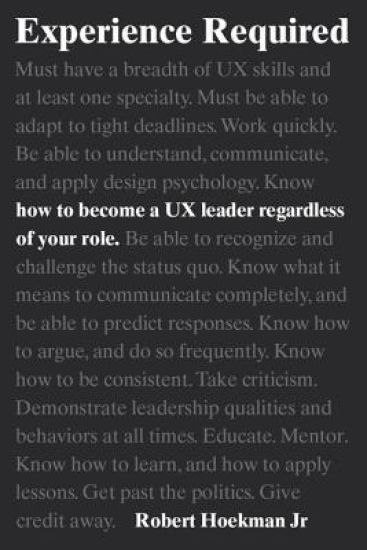
Experience Required

Experience Required

Robert Hoekman

New Riders Publishing
2016
nidottu
For all the resources on great design, there is almost nothing on how to be a great design professional. For all the schools and classes and workshops on what constitutes a good user experience, there is not one bit of formalized education on how to earn the respect of your team and get your recommendations out the door. Sure, they’ll teach you how to do user research and testing and interaction design. They’ll teach you about process. But where’s the book on how to convince people you’re right? On what skills will make you the most valuable? How to fend off the bad ideas and fight for the good ones? How to move from junior to senior? How to become a UX leader? In Experience Required, veteran UX strategist Robert Hoekman Jr reveals the following and much more: • the pros and cons of generalists, specialists, and “unicorns” • the art and imperative of forming a good argument • why communication may be your biggest obstacle • the qualities and actions of effective design leaders • why being unreasonable might be the key to your success Whatever your role, Experience Required teaches you to become the UX leader you’ve always wanted to be. Take charge of your next project starting right now.
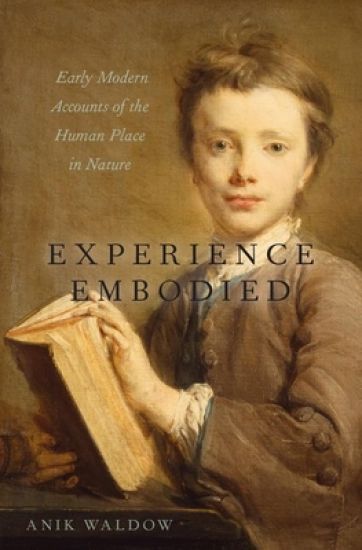
Experience Embodied

Experience Embodied

Anik Waldow

Oxford University Press Inc
2020
sidottu
Anik Waldow develops an account of embodied experience that extends from Descartes' conception of the human body as firmly integrated into the causal play of nature, to Kant's understanding of anthropology as a discipline that provides us with guidance in our lives as embodied creatures. Waldow defends the claim that during the early modern period, the debate on experience not only focused on questions arising from the subjectivity of our thinking and feeling, it also foregrounded the essentially embodied dimension of our lives as humans. By taking this approach, Waldow departs from the traditional epistemological route dominant in treatments of early-modern conceptions of experience. She makes the case that reflections on experience took center stage in a debate that was moral in nature, because it raised questions about the developmental potential of human beings and their capacity to instantiate the principles of self-determined agency in their lives. These questions emerged for many early modern authors since they understood that the fact that humans are embodied entailed that they are similarly responsive and causally-determined like other non-human animals. While this perspective made it possible to acknowledge that humans are part of the causal dynamics of nature, it called into question their ability to act in accordance with the principles of free, rational agency. Experience Embodied reveals how early modern authors responded to this challenge, offering a new perspective on the centrality of the concept of experience in comprehending the uniquely human place in nature.
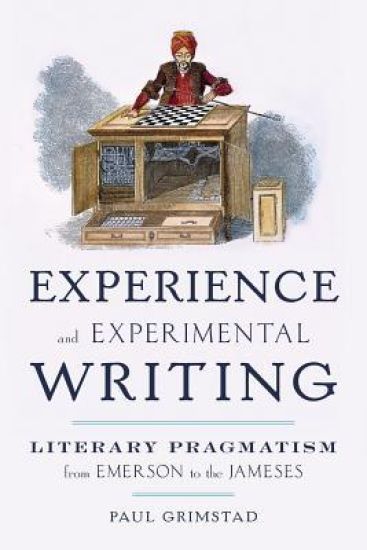
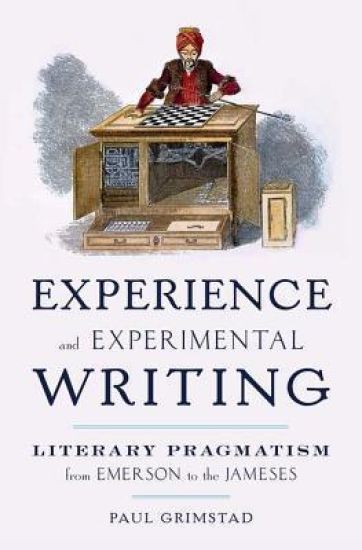
Experience and Experimental Writing

Experience and Experimental Writing

Paul Grimstad

Oxford University Press Inc
2016
nidottu
American pragmatism is premised on the notion that to find out what something is, look to fruits rather than roots. But the thought of the classical pragmatists is itself the fruit, this book argues, of earlier literary experiments in American literature. Ralph Waldo Emerson, Edgar Allan Poe, Herman Melville, and (contemporaneously with the flowering of pragmatism) Henry James, each in their different ways prefigure at the level of literary form what emerge as the guiding ideas of classical pragmatism. Specifically, this link occurs in the way an experimental approach to composition informs the classical pragmatists' guiding and central idea that experience is not a matter of correspondence but of an ongoing attunement to the process. The link between experience and experiment is thus a way of gauging the deeper intellectual history by which literary experiments such as Emerson's Essays, Poe's invention of the detective story in "The Murders in the Rue Morgue," Melville's strange follow-up to Moby-Dick, Pierre, and Henry James's late style, find their philosophical expression in some of the guiding ideas of classical pragmatism: Charles Peirce's notion of the "abductive" inference; William James's notion of "Radical empiricism" and John Dewey's naturalist account of experience. The book frames this set of claims in relation to more contemporary debates within literary criticism and philosophy that have so far not been taken up in this context: putting Richard Poirier's account of the relation of pragmatism to literature into dialogue with Stanley Cavell's inheritance of Emerson as someone decidedly not a "pragmatist"; to the differences between classical pragmatists like William James and John Dewey and more recent, post-linguistic turn thinkers like Richard Rorty and Robert Brandom.
Experience, Evidence, and Sense

Experience, Evidence, and Sense

Anna Wierzbicka

Oxford University Press Inc
2010
sidottu
This book is based on two ideas: first, that any language-English no less than any other-represents a universe of meaning, shaped by the history and experience of the men and women who have created it, and second, that in any language certain culture-specific words act as linchpins for whole networks of meanings, and that penetrating the meanings of those key words can therefore open our eyes to an entire cultural universe. In this book Anna Wierzbicka demonstrates that three uniquely English words-evidence, experience, and sense-are exactly such linchpins. Using a rigorous plain language approach to meaning analysis, she unpackages the dense cultural meanings of these key words, disentangles their multiple meanings, and traces their origins back to the tradition of British empiricism. In so doing she reveals much about cultural attitudes embedded not only in British and American English, but other global varieties of English. An interdisciplinary work, Experience, Evidence, and Sense is accessible to both scholars and students in linguistics and English, as well as historians of ideas, sociologists, anthropologists, literary scholars, and scholars of communication.
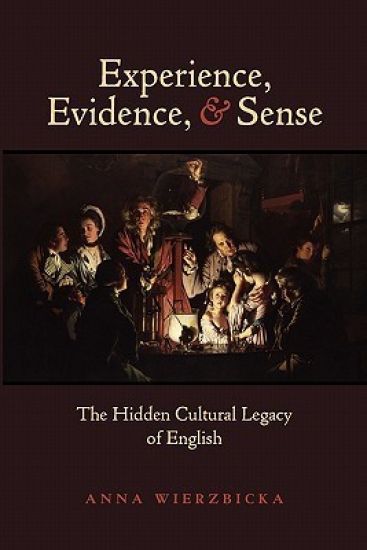
Experience, Evidence, and Sense

Experience, Evidence, and Sense

Anna Wierzbicka

Oxford University Press Inc
2010
nidottu
This book is based on two ideas: first, that any language-English no less than any other-represents a universe of meaning, shaped by the history and experience of the men and women who have created it, and second, that in any language certain culture-specific words act as linchpins for whole networks of meanings, and that penetrating the meanings of those key words can therefore open our eyes to an entire cultural universe. In this book Anna Wierzbicka demonstrates that three uniquely English words-evidence, experience, and sense-are exactly such linchpins. Using a rigorous plain language approach to meaning analysis, she unpackages the dense cultural meanings of these key words, disentangles their multiple meanings, and traces their origins back to the tradition of British empiricism. In so doing she reveals much about cultural attitudes embedded not only in British and American English, but other global varieties of English. An interdisciplinary work, Experience, Evidence, and Sense is accessible to both scholars and students in linguistics and English, as well as historians of ideas, sociologists, anthropologists, literary scholars, and scholars of communication.
Experience and Expression

Experience and Expression

Schulte

Clarendon Press
1995
nidottu
The writings preserved in Wittgenstein's manuscripts from 1945 to 1949, after he had completed the first part of Philosophical Investigations, chiefly concern the nature of certain psychological concepts. In this book Joachim Schulte uses these manuscripts - not the selections from them published so far - as a basis for reconstructing the central arguments and conceptual elucidations developed by Wittgenstein during that period. One of the principal subjects is the connection between instinctive reactions, linguistic and non-linguistic context, and mastery of a technique. This connection is explored through clarification of the concepts experience, sensation, and understanding - a clarification which provides illuminating contributions to the philosophy of psychology, aesthetics, and the theory of meaning. Wittgenstein's thoughts on the logic of language and his reflections on psychological concepts are closely knit. This is shown by his discussion of Moore's paradox, which sheds new light both on the limits of logical analysis and on certain curious features of the concepts believe, assume, and assert. The original German edition of this book was widely applauded as an outstanding work of scholarship offering unique and valuable insights. By translating it into fluent and limpid English, and at the same time enriching it with various amendments and additions, Dr Schulte has brought an important work to a wider scholarly community.
Experience, Narrative, and Criticism in Ancient Greece
Experience, Narrative, and Criticism in Ancient Greece pursues a new approach to ancient Greek narrative beyond the taxonomies of structuralist narratologies. Focusing on the phenomenal and experiential dimension of our response to narrative, it triangulates ancient narrative with ancient criticism and cognitive approaches, opening up new vistas within the study of classical literature while ably deploying the ancient material to demonstrate the value of a historical perspective for cognitive studies. Concepts such as immersion and embodiment help to establish a more comprehensive understanding of ancient narrative and ancient reading habits, as manifested in Greek criticism and rhetorical theory. The thirteen chapters presented here tackle a broad range of narrative genres, broadly understood: besides epic, historiography, and the novel, tragedy and early Christian texts are also considered alongside non-literary media, such as dance and sculpture. Authored by international specialists in the language, literature, and culture of ancient Greece, each chapter utilizes a rich set of theoretical and methodological tools drawn from cognitive studies, phenomenology, and linguistics that place them at the vanguard of a strong new current in classical scholarship and literary criticism more generally.
Experience and Possibility

Experience and Possibility

Joseph Mendola

Oxford University Press
2021
sidottu
Experience and Possibility concerns the modal ontology of experience. It investigates the detailed metaphysics of the colors, shapes, and other concrete properties present in our experience of ordinary concrete objects, and also of their spatial and temporal relations. It examines their experienced particularity, and the nature of their locations and material bits. This detailed concern with specific cases reveals many inadequacies of traditional ontology. But the central novelty of the book is an intense focus on the modal aspects of such experienced entities, and what it reveals about modality in general. The reality of such things would involve in surprising ways not merely what would hence be actual but also what would be merely possible. This supports a general conception of modality, of the possible and the necessary, according to which the actual and the possible are locally entwined and involve different types of being. The particulars, properties, and relations we experience involve distinctive forms of modal structure, characteristic of specific sorts of universals and irreducible particularities. When this experience is not veridical, when for instance the color we experience is somewhat misleading about reality, it is a puzzle how we have such experience nonetheless. Exploration of these forms of modal structure is groundwork for a new account of how our neurophysiology explains such misleading experience, how our physical structure delivers such qualia. This is sketched for the case of experienced color. Its core idea is that the apparent modal structure of things we experience is sometimes due to the actual modal structure of the neurophysiology that constitutes that experience.
Experience and the World's Own Language

Experience and the World's Own Language

Richard Gaskin

Clarendon Press
2006
sidottu
John McDowell's 'minimal empiricism' is one of the most influential and widely discussed doctrines in contemporary philosophy. Richard Gaskin subjects it to careful examination and criticism. The doctrine is undermined, he argues, by inadequacies in the way McDowell conceives what he styles the 'order of justification' connecting world, experience, and judgement. McDowell's conception of the roles played by causation and nature in this order is threatened with vacuity; and the requirements of self-consciousness and verbal articulacy which he places on subjects participating in the justificatory relation between experience and judgement are unwarranted, and have the implausible consequence that infants and non-human animals are excluded from the 'order of justification' and so are deprived of experience of the world. Above all, McDowell's position is vitiated by a substantial error he commits in the philosophy of language: following ancient tradition rather than Frege's radical departure from that tradition, he locates concepts at the level of sense rather than at the level of reference in the semantical hierarchy. This error generates an unwanted Kantian transcendental idealism which in effect delivers a reductio ad absurdum of McDowell's metaphysical economy. Gaskin goes on to show how to correct the mistake, and thereby presents his own version of empiricism. First we must follow Frege in his location of concepts at the level of reference, but then we must go beyond Frege and locate not only concepts but also propositions at that level; and this in turn requires us to take seriously an idea which McDowell mentions only to reject, that of objects as speaking to us 'in the world's own language'. If empiricism is to have any chance of success it must be still more minimal in its pretensions than McDowell allows: in particular, it must abandon the individualistic and intellectualistic construction which McDowell places on the 'order of justification'.
Experience and History

Experience and History

David Carr

Oxford University Press Inc
2014
sidottu
David Carr outlines a distinctively phenomenological approach to history. Rather than asking what history is or how we know history, a phenomenology of history inquires into history as a phenomenon and into the experience of the historical. How does history present itself to us, how does it enter our lives, and what are the forms of experience in which it does so? History is usually associated with social existence and its past, and so Carr probes the experience of the social world and of its temporality. Experience in this context connotes not just observation but also involvement and interaction: We experience history not just in the social world around us but also in our own engagement with it. For several decades, philosophers' reflections on history have been dominated by two themes: representation and memory. Each is conceived as a relation to the past: representation can be of the past, and memory is by its nature of the past. On both of these accounts, history is separated by a gap from what it seeks to find or wants to know, and its activity is seen by philosophers as that of bridging this gap. This constitutes the problem to which the philosophy of history addresses itself: how does history bridge the gap which separates it from its object, the past? It is against this background that a phenomenological approach, based on the concept of experience, can be proposed as a means of solving this problem-or at least addressing it in a way that takes us beyond the notion of a gap between present and past.
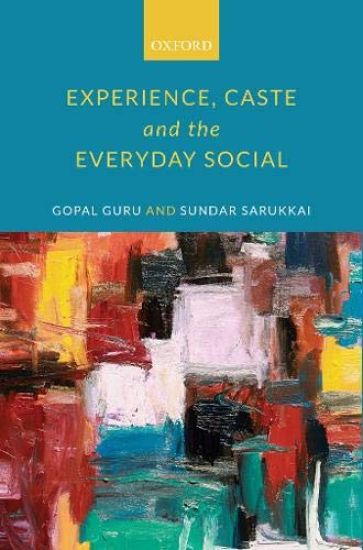
Experience, Caste, and the Everyday Social

Experience, Caste, and the Everyday Social

Gopal Guru; Sundar Sarukkai

OUP India
2019
sidottu
This book is an exploration of the nature of this 'social'; it argues that our definition of sociality is influenced largely by our everyday lives, the institutions we are part of, and the relationships we build-all of these experiences catalyse the way we see the social world and shape how we act in it. We smell, touch, and taste the social; we belong to the social (every social collection is defined by our sense of belongingness to, for instance, the family, the community, or the caste); and from all of this we understand something of the nature of the social. This volume is a theoretical interpretation of the process of the creation of the 'social' through our everyday lives-of how we construct a sense of 'identity', 'authority', and 'ethics' through sensory perceptions that we experience in our daily lives.
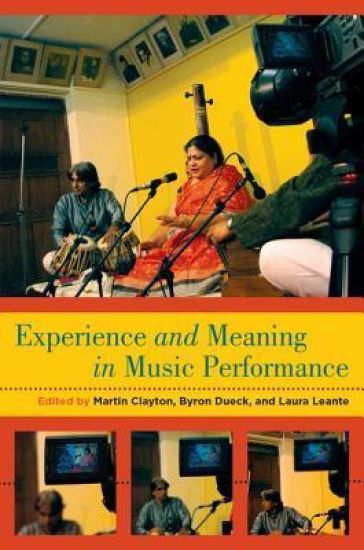
Experience and Meaning in Music Performance
How does the immediate experience of musical sound relate to processes of meaning construction and discursive mediation? This question lies at the heart of the studies presented in Experience and Meaning in Music Performance, a unique multi-authored work that both draws on and contributes to current debates in a wide range of disciplines, including ethnomusicology, musicology, psychology, and cognitive science. Addressing a wide range of musical practices from Indian raga and Afro-Brazilian Congado rituals to jazz, rock, and Canadian aboriginal fiddling, the coherence of this study is underpinned by its three main themes: experience, meaning, and performance. Central to all of the studies are moments of performance: those junctures when sound and meaning are actually produced. Experience-what people do, and what they feel, while engaging in music-is equally important. And considered alongside these is meaning: what people put into a performance, what they (and others) get out of it, and, more broadly, how discourses shape performances and experiences of music. In tracing trajectories from moments of musical execution, this volume a novel and productive view of how cultural practice relates to the experience and meaning of musical performance. A model of interdisciplinary study, and including access to an array of audio-visual materials available on an extensive companion website, Experience and Meaning in Music Performance is essential reading for scholars and students of ethnomusicology and music psychology.
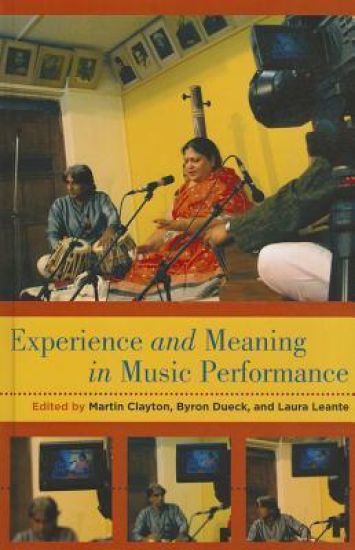
Experience and Meaning in Music Performance
How does the immediate experience of musical sound relate to processes of meaning construction and discursive mediation? This question lies at the heart of the studies presented in Experience and Meaning in Music Performance, a unique multi-authored work that both draws on and contributes to current debates in a wide range of disciplines, including ethnomusicology, musicology, psychology, and cognitive science. Addressing a wide range of musical practices from Indian raga and Afro-Brazilian Congado rituals to jazz, rock, and Canadian aboriginal fiddling, the coherence of this study is underpinned by its three main themes: experience, meaning, and performance. Central to all of the studies are moments of performance: those junctures when sound and meaning are actually produced. Experience-what people do, and what they feel, while engaging in music-is equally important. And considered alongside these is meaning: what people put into a performance, what they (and others) get out of it, and, more broadly, how discourses shape performances and experiences of music. In tracing trajectories from moments of musical execution, this volume a novel and productive view of how cultural practice relates to the experience and meaning of musical performance. A model of interdisciplinary study, and including access to an array of audio-visual materials available on an extensive companion website, Experience and Meaning in Music Performance is essential reading for scholars and students of ethnomusicology and music psychology.

Experience and Experimental Writing

Experience and Experimental Writing

Paul Grimstad

Oxford University Press Inc
2013
sidottu
American pragmatism is premised on the notion that to find out what something is, look to fruits rather than roots. But the thought of the classical pragmatists is itself the fruit, this book argues, of earlier literary experiments in American literature. Ralph Waldo Emerson, Edgar Allan Poe, Herman Melville, and (contemporaneously with the flowering of pragmatism) Henry James, each in their different ways prefigure at the level of literary form what emerge as the guiding ideas of classical pragmatism. Specifically, this link occurs in the way an experimental approach to composition informs the classical pragmatists' guiding and central idea that experience is not a matter of correspondence but of an ongoing attunement to the process. The link between experience and experiment is thus a way of gauging the deeper intellectual history by which literary experiments such as Emerson's Essays, Poe's invention of the detective story in "The Murders in the Rue Morgue," Melville's strange follow-up to Moby-Dick, Pierre, and Henry James's late style, find their philosophical expression in some of the guiding ideas of classical pragmatism: Charles Peirce's notion of the "abductive" inference; William James's notion of "Radical empiricism" and John Dewey's naturalist account of experience. The book frames this set of claims in relation to more contemporary debates within literary criticism and philosophy that have so far not been taken up in this context: putting Richard Poirier's account of the relation of pragmatism to literature into dialogue with Stanley Cavell's inheritance of Emerson as someone decidedly not a "pragmatist"; to the differences between classical pragmatists like William James and John Dewey and more recent, post-linguistic turn thinkers like Richard Rorty and Robert Brandom.
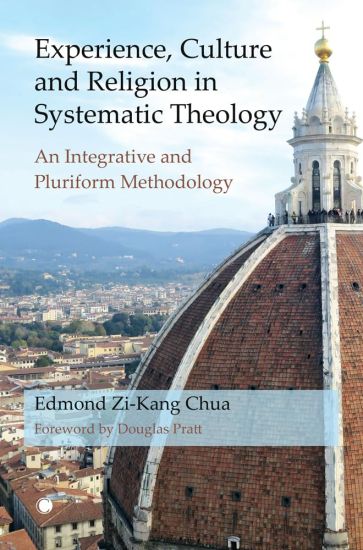
Experience, Culture and Religion in Systematic Theology

Experience, Culture and Religion in Systematic Theology

Edmond Zi-Kang Chua

JAMES CLARKE CO LTD
2024
nidottu
Most systematicians take as their starting point the nature of God, and scripture as the means by which God's nature is revealed, but what would a systematic theology look like that began with an experiential knowledge of God? Here, Edmond Chua offers a method for just such an approach. Beginning with realms of human experience including psychology, cultural diversity and religious plurality, he builds the framework of a systematic theology that is inclusive and pluriform, while retaining the core tenets of a Christian doctrine of God. Notwithstanding his novel methodology, Chua's argument remains biblically rooted and appreciative of the Christian tradition. In the latter half of the book he returns to the classical doctrines of the Trinity, Christology, evil, sin and salvation, allowing his inclusive view of the human religious experience to shed new light on the wisdom bequeathed by Paul, Augustine, Aquinas, Luther, Barth, and others. The result is a bold Christian vision that is culturally engaged and globally applicable, of interest to systematic theologians while contributing to interreligious dialogue.