Purchase one of 1st World Library's Classic Books and help support our free internet library of downloadable eBooks. Visit us online at www.1stWorldLibrary.ORG - - Come on, Nort! It's your turn to cut out the next one! "S'pose I make a mux of it, Bud!" "Shucks! You won't do that! You've roped a calf before "Yes, but not at a big round-up like this. If I make a fizzle the fellows will give me the laugh!"
Comparative neurological studies of the evolutionary development of struc tures within the central nervous system of vertebrates have depended to a large extent upon morphological rather than functional criteria. Classical comparative anatomical studies, which have attempted to demonstrate homologies between parts of the brain in representatives of different vertebrate classes may be grouped under three general headings: 1. comparison of the embryological development of brain structures; 2. comparison in adult forms of the topographical relations of neuron groupings and fiber tracts, and of the morphology of cell types ( cyto architectonics); and 3. analysis and comparison of fiber connections between particular cell groupings or regions. Of these three, the third encompasses func tional relationships most directly, but even in well-defined fiber tracts the direction of conduction often remains indefinite, and the extent and activity of more diffuse systems is poorly known. In recent years a nurober of investigations applying electrophysiological and degeneration methods to submammalian forms have been reported. Those most pertinent to the present studies include the papers of . ARMSTRONG et al. (1953), KRUGERand associates (e. g. HERIC and KRUGER, 1966; KRUGERand BERKOWITZ, 1960; PowELL and KRUG ER, 1960}, GusEL'NIKov and SUPIN (1964) and KARA MYAN and BELEKJIOVA (1964) on various reptiles, and of PowELL and CowAN (1961), KARTEN and REVZIN (1966) and REVZIN and KARTEN (1967) on the pigeon.
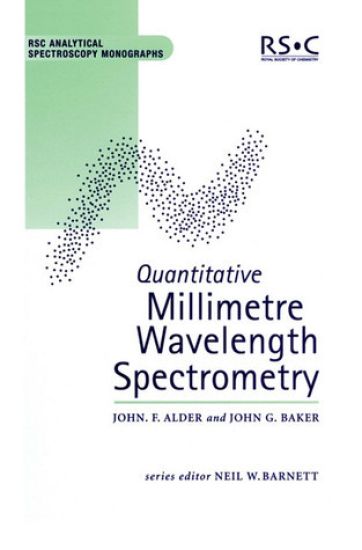
This unique book demonstrates the current status, and future potential, of millimetre wavelength (MMW) spectrometry as a means of quantitative analysis of gaseous mixtures. After outlining the spectroscopic theory required, the authors then go on to discuss the components of an MMW cavity spectrometer, concentrating on compact, automatic, low-cost instruments. Other topics covered include solid state MMW sources with both cryogenically cooled and room temperature detectors. Post-detector signal processing, smoothing, filtering and spectral profile fitting are also discussed. The book concludes with a look at the future of the technique, in areas such as millimetre wave-over-fibre technology. Quantitative Millimetre Wavelength Spectrometry will be welcomed by practitioners in both industry and academia.
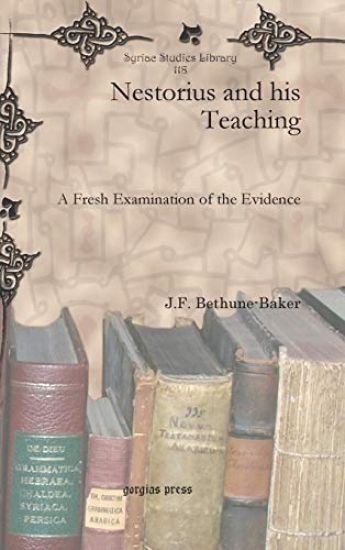
This still standard study on Nestorius is guided by the question: Did Nestorius mean what people have thought that he meant? Chapters cover the sources and content for our knowledge about his teaching.
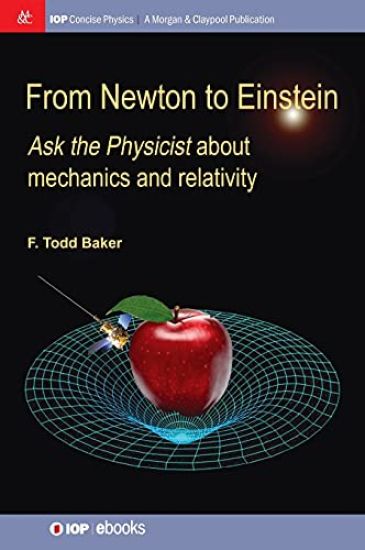
From Newton to Einstein is a book devoted to classical mechanics. "Classical" here includes the theory of special relativity as well because, as argued in the book, it is essentially Newtonian mechanics extended to very high speeds. This information is expanded from the author's popular Q&A website, a site aimed primarily at general readers who are curious about how physics explains the workings of the world. Hence, the answers emphasize concepts over formalism, and the mathematics is kept to a minimum. Students new to physics will find discussion and quantitative calculations for areas often neglected in introductory courses (e.g. air drag and non-inertial frames).The author gives us a more intuitive approach to special relativity than normally taught in introductory courses. One chapter discusses general relativity in a completely non-mathematical way emphasizing the equivalence principle and the generalized principle of relativity; the examples in this chapter can offer a new slant on applications of classical mechanics. Another chapter is devoted to the physics of computer games, sci-fi, superheroes, and super weapons for those interested in the intersection of popular culture and science. Professional scientists will find topics that they may find amusing and, in some cases, everyday applications that they had not thought of. Brief tutorials are given for essential concepts (e.g. Newton's laws) and appendices give technical details for the interested reader.