Kirjojen hintavertailu. Mukana 12 390 323 kirjaa ja 12 kauppaa.

Kirjahaku

Etsi kirjoja tekijän nimen, kirjan nimen tai ISBN:n perusteella.

1000 tulosta hakusanalla Feiler Bruce

Mr. and Mrs. Feiler: Easter 2015

Mr. and Mrs. Feiler: Easter 2015

Tanja M. Feiler F.; Dirk L. Feiler F.

Createspace Independent Publishing Platform
2015
nidottu
Man-made Inteligens today is truth, we recognize, I have experienced it - a phone answers the question: Have you any idea welch' a body you want to have with yes ... and shows on the display: For example, as this speech when I asked: Can you help me - it's not good for me: Let me think saying it - and said, meeting two IPHON'S, in this moment, the LLL emerged - According to Los laugh, just solely gschaffen of the einzigartigigen - party man and I met my wife. I would like to mention - I think; Even today, the fescheste - KPT. US Enterprise JamesTKirk@f rimmer.int.
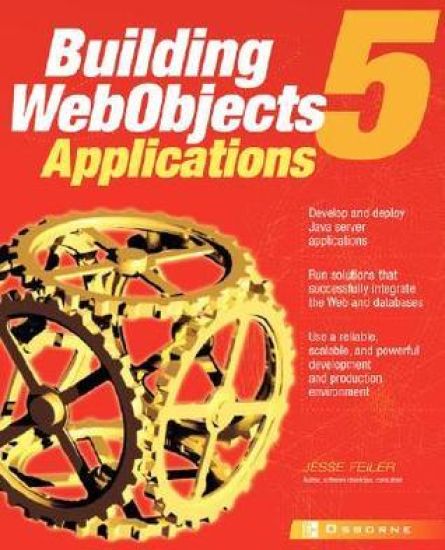
Building WebObjects 5 Applications

Building WebObjects 5 Applications

Feiler Jesse

McGraw-Hill Professional
2001
nidottu
This professional resource explains in full how to use WebObjects 5 for Java. You'll get details on deployment, database interaction, optimization, security, client and server-side technologies, and much more. There's also a jump-start section to guide you to the most productive and efficient ways to implement a WebObjects solution.
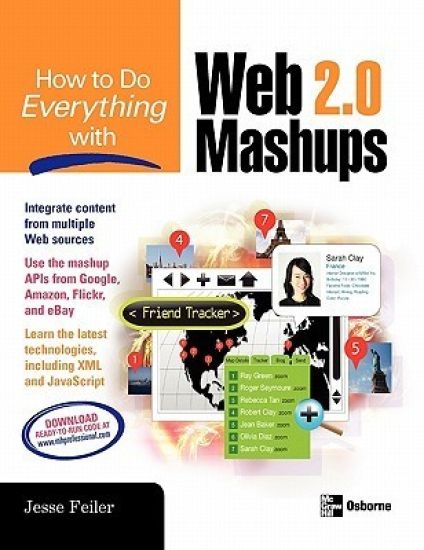
How to Do Everything with Web 2.0 Mashups

How to Do Everything with Web 2.0 Mashups

Jesse Feiler

McGraw-Hill Professional
2007
nidottu
Publisher's Note: Products purchased from Third Party sellers are not guaranteed by the publisher for quality, authenticity, or access to any online entitlements included with the product.Want to supercharge your website with the latest searching, mapping, shopping, and imaging tools? Now you can build amazing mashups with help from this step-by-step guide. How to Do Everything with Web 2.0 Mashups shows you how to remix the best of Google, Amazon, Flickr, and eBay to create customized applications. You'll learn to use essential Web 2.0 technologies--including XML, JavaScript, XHTML, and REST--and seamlessly integrate them into your own innovative mashups.Build dynamic mashups using XML and JavaScriptUse MySQL with PHP to retrieve data from databasesReceive data via RSS and Atom Learn to use XMLHttpRequest, XML-RPC, REST, and JSON Structure your mashup pages using XHTMLIncorporate Google searching and mapping technologies Integrate Amazon Web ServicesInclude Flickr photos in your mashups Tap into eBay tools and map the locations of eBay sellersSuccessfully manage multiple technologies in your mashups
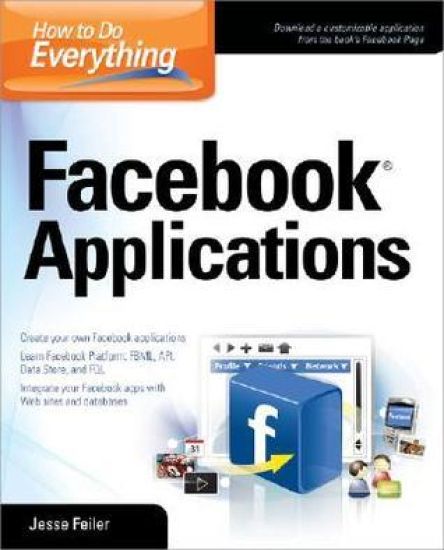
How to Do Everything: Facebook Applications

How to Do Everything: Facebook Applications

Jesse Feiler

McGraw-Hill Professional
2008
nidottu
Publisher's Note: Products purchased from Third Party sellers are not guaranteed by the publisher for quality, authenticity, or access to any online entitlements included with the product.Create your own Facebook applications!With coverage of Facebook API, FBML, and FQL as well as MySQL and REST, How to Do Everything: Facebook Applications is a clear, start-to-finish guide to developing unique apps that run on Facebook Platform. Learn how to integrate Facebook applications with websites, blogs, and databases, and use your apps to sell a product and market a business, organization, or cause. You'll also discover how to provide entertainment and information to users while creating an advertising platform to make money. Get started quickly by downloading a pre-built, customizable Facebook application from the book's Facebook Page.Understand the Facebook Platform architecture Format Web pages and manage data using XML, XHTML, and CSS Use PHP and FBML (Facebook Markup Language)Work with the Facebook object, Facebook REST object, and Facebook APIUse FQL (Facebook Query Language), Mock-AJAX, FBJS (Facebook JavaScript), and Facebook MobileMaster the Facebook Developer ApplicationDesign your application interface and implement utilitiesIntegrate MySQL or Data Store dataAdd viral features including News Feed and Mini-Feed stories, notifications and requests, Share buttons, and favorites listsPromote your business with Facebook Social Ads, Facebook Pages, and Facebook Beacon
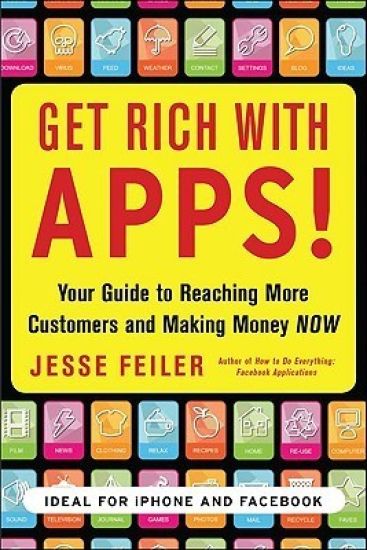
Get Rich with Apps!: Your Guide to Reaching More Customers and Making Money Now
Grab a share of one of today’s hottest markets!Out of nowhere, apps have taken the world by storm. In a short time, millions ofcustomers have downloaded apps—and they’re eagerly awaiting more.If you’re considering entering the market, stop thinking about it and make yourmove. You’ll reach more customers, expand your product offerings, and grownew revenue streams. And it’s much easier than you may realize. Get Rich withApps! explains how to:Marry iPhone and Facebook app features with your business andmarketing needsIntegrate apps with other resources, such as databases and websitesTake advantage of the social web to expand your customer baseMeasure the success of new and existing projectsYou don’t need a team of computer whizzes to make a killing in the apps market.All you need is the business advice in this book to get an early foothold ina market with a soaring future.
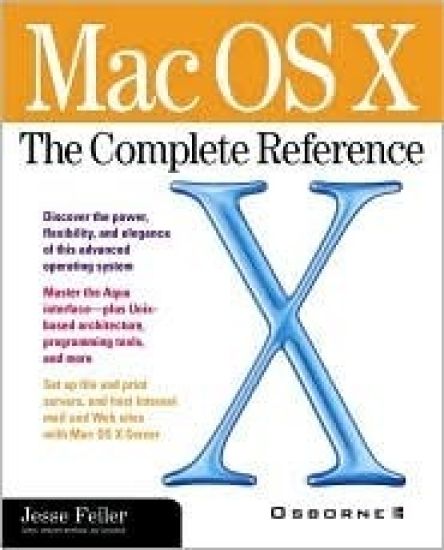
Mac OS X: The Complete Reference

Mac OS X: The Complete Reference

Jesse Feiler

McGraw-Hill Professional
2001
nidottu
A complete guide to all the new features of Mac OS X. Written by experienced author and Mac expert Jesse Feiler, this reference will show both new and current power users how to get the most out of this powerful new operating system.
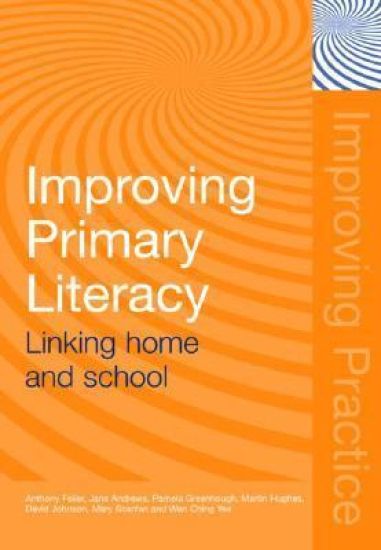
Improving Primary Literacy

Improving Primary Literacy

Anthony Feiler; Jane Andrews; Pamela Greenhough; Martin Hughes; David Johnson; Mary Scanlan; Wan Ching Yee

Routledge
2007
nidottu
Parents can play an immensely important role in supporting their children's literacy learning at home, but how can primary teachers enlist the support of parents in helping children learn literacy?With a focus on improving children's literacy skills, this book provides practical answers to key questions that are directly relevant to all primary teachers and to many parents. It presents new ways of linking learning in home and school through a range of activities that can be used to share knowledge between children, parents and teachers. Activities include:teachers and children making videos to show parents how children learn literacy in schoolparents and children taking photos of the 'everyday' literacy they use outside schoolparents and teachers exchanging information through Home-School folders and diaries.Particular attention is given to ways of working with parents from a diverse range of family backgrounds reflecting the multi-ethnic nature of many schools today.The practical activities can easily be fitted into the day-to-day activities of busy classrooms and can provide crucial new ways of improving children's learning of literacy skills.
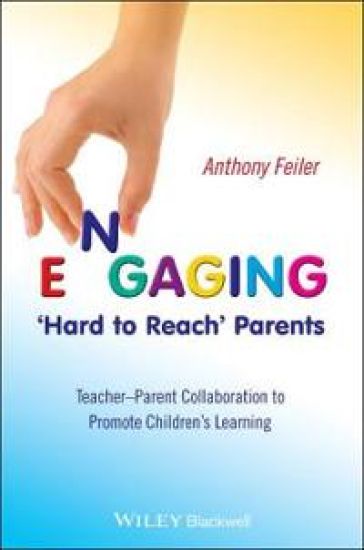
Engaging 'Hard to Reach' Parents

Engaging 'Hard to Reach' Parents

Anthony Feiler

John Wiley Sons Inc
2010
nidottu
Engaging ‘Hard to Reach’ Parents “This is a readable yet academically rigorous book that draws together findings from contemporary theory, research and practice. It provides a range of positive and constructive approaches for schools and other organizations which will help them to meet the challenge of engaging effectively with parents, and in so doing improve the quality of education for all children, especially those from disadvantaged communities.”Peter Farrell, Sarah Fielden Professor of Special Needs and Educational Psychology, School of Education, University of Manchester “Clarity and integrity permeate this important book. An excellent variety of real-life examples of school–parent collaboration is discussed, and the balance of policy, theory and practice is outstandingly well-handled. This highly readable book will appeal to both practitioners and education students from the UK and from international contexts.”Professor Gary Thomas, Head of School of Education, University of Birmingham Teachers often comment that the parents they most want to speak to have least contact with the school. There are many reasons why families’ participation in schooling may be low – from difficulties with English to pressures of work – but there is consistent evidence that all parents are acutely interested in their children’s education and want to know how to help. Parents are a child’s first and most enduring teachers, and they create home environments where children spend much of their waking lives. Their involvement has an impact throughout children’s school careers. In Engaging ‘Hard to Reach’ Parents, Anthony Feiler emphasizes what schools can do to facilitatethe communication process, rather than adopting a ‘blaming’ or ‘deficit’ view of families. Real-world case studies of initiatives that promote effective cooperation between parents and teachers are presented, allowing readers to learn about successful strategies rooted in practical experience. Feiler highlights the particular benefits of home–school collaboration in circumstances that are challenging, and focuses on tactics that schools can adopt in order to better engage with so-called ‘hard to reach’ parents. By supporting the drive for stronger relationships between schools and the communities they serve, this book makes an important contribution to the development of inclusive education.
Engaging 'Hard to Reach' Parents

Engaging 'Hard to Reach' Parents

Anthony Feiler

John Wiley Sons Inc
2010
sidottu
Engaging ‘Hard to Reach’ Parents “This is a readable yet academically rigorous book that draws together findings from contemporary theory, research and practice. It provides a range of positive and constructive approaches for schools and other organizations which will help them to meet the challenge of engaging effectively with parents, and in so doing improve the quality of education for all children, especially those from disadvantaged communities.”Peter Farrell, Sarah Fielden Professor of Special Needs and Educational Psychology, School of Education, University of Manchester “Clarity and integrity permeate this important book. An excellent variety of real-life examples of school–parent collaboration is discussed, and the balance of policy, theory and practice is outstandingly well-handled. This highly readable book will appeal to both practitioners and education students from the UK and from international contexts.”Professor Gary Thomas, Head of School of Education, University of Birmingham Teachers often comment that the parents they most want to speak to have least contact with the school. There are many reasons why families’ participation in schooling may be low – from difficulties with English to pressures of work – but there is consistent evidence that all parents are acutely interested in their children’s education and want to know how to help. Parents are a child’s first and most enduring teachers, and they create home environments where children spend much of their waking lives. Their involvement has an impact throughout children’s school careers. In Engaging ‘Hard to Reach’ Parents, Anthony Feiler emphasizes what schools can do to facilitatethe communication process, rather than adopting a ‘blaming’ or ‘deficit’ view of families. Real-world case studies of initiatives that promote effective cooperation between parents and teachers are presented, allowing readers to learn about successful strategies rooted in practical experience. Feiler highlights the particular benefits of home–school collaboration in circumstances that are challenging, and focuses on tactics that schools can adopt in order to better engage with so-called ‘hard to reach’ parents. By supporting the drive for stronger relationships between schools and the communities they serve, this book makes an important contribution to the development of inclusive education.
Logics of War

Logics of War

Therese Feiler

T. T.Clark Ltd
2019
sidottu
The modern ethics of war is a field of disparate, competing voices based on often unexplored theological and metaphysical assumptions. Therese Feiler approaches them from the borderline area between systematics, philosophical theology and religious studies. With reference to G. W. F. Hegel's and like-minded thinkers' 'theo–logic' that negotiates Christ’s mediation and immanent dialectics, Feiler identifies the logic and problem of mediation as the core concern of political ethics. Feiler unites five representative authors from now disparate strands of contemporary just war ethics, testing whether they offer a meaningful possibility of mediation and subsequent reconciliation: a sovereign realist and a cosmopolitan idealist; a rationalist individualist, an idealist Christian ethicist, and finally, an evangelical theologian. Opening the just war debate for comparative critical engagement, Feiler creates a fascinating study that locates a “dynamic point” at which faithful, free political action can be wrestled from irony, tragedy, and melancholic inertia in the face of totalitarian suffocation.
Logics of War

Logics of War

Therese Feiler

T. T.Clark Ltd
2021
nidottu
The modern ethics of war is a field of disparate, competing voices based on often unexplored theological and metaphysical assumptions. Therese Feiler approaches them from the borderline area between systematics, philosophical theology and religious studies. With reference to G. W. F. Hegel's and like-minded thinkers' 'theo–logic' that negotiates Christ’s mediation and immanent dialectics, Feiler identifies the logic and problem of mediation as the core concern of political ethics. Feiler unites five representative authors from now disparate strands of contemporary just war ethics, testing whether they offer a meaningful possibility of mediation and subsequent reconciliation: a sovereign realist and a cosmopolitan idealist; a rationalist individualist, an idealist Christian ethicist, and finally, an evangelical theologian. Opening the just war debate for comparative critical engagement, Feiler creates a fascinating study that locates a “dynamic point” at which faithful, free political action can be wrestled from irony, tragedy, and melancholic inertia in the face of totalitarian suffocation.
Without Regard to Sex, Race, or Color

Without Regard to Sex, Race, or Color

Andrew Feiler

University of Georgia Press
2015
sidottu
This gathering of sixty images, along with the essays that frame them, gives us a new way to think about the too often troubled status of historically black colleges and universities (HBCUs). The bell in the clock tower at Atlanta’s Morris Brown College bears an inscription about the ideal of educational access, that it be “without regard to sex, race, or color.” Yet most of the Morris Brown campus has lain silent for more than a decade. Established in 1881, it was all but shut down in 2002 after years of fiscal hardship were capped by a mismanagement scandal. Pride still runs high among its alumni, however, and its current leadership vows to revive the school. Meanwhile, as Andrew Feiler’s stirring photos show, Morris Brown is literally falling apart.In the spirit of those photographers who have documented the physical decline of our valued institutions—from small family farms to entire cities—Feiler points his lens at one embattled place and dares us to look away. Aiming to “open minds, trigger emotion, stimulate discussion, and, perhaps, prompt action,” his images project a new layer of meaning onto the Morris Brown story. We see classrooms, dorms, gym facilities, and other spaces no longer alive with students, faculty, and staff but rather mired in a state of uncertainty where hopes of normality’s return mutely battle a host of unwelcome alternate futures. We see how time passes without regard for academic years, regular maintenance cycles, or the other comings and goings that would ordinarily call attention to the leaks, invading animals, acts of vandalism, and other forces working to peel the paint from Morris Brown’s walls, buckle its floors, and molder its furnishings. We see garbage piling up alongside sports trophies, scientific equipment, and other vestiges of the prouder past we would rather remember.Feiler’s photos are accompanied by writings that address the college’s profound impact on one family, history and memory, the documentary and narrative powers of photography, and the place of HBCUs in American public life. Images and text combine powerfully to show us what happens when a place meant to be honored is left to its own.
A Better Life for Their Children

A Better Life for Their Children

Andrew Feiler; John Lewis

University of Georgia Press
2021
sidottu
A Sarah Mills Hodge Fund publicationBorn to Jewish immigrants, Julius Rosenwald rose to lead Sears, Roebuck & Company and turn it into the world’s largest retailer. Born into slavery, Booker T. Washington became the founding principal of Tuskegee Institute. In 1912 the two men launched an ambitious program to partner with black communities across the segregated South to build public schools for African American children. This watershed moment in the history of philanthropy—one of the earliest collaborations between Jews and African Americans—drove dramatic improvement in African American educational attainment and fostered the generation who became the leaders and foot soldiers of the civil rights movement.Of the original 4,978 Rosenwald schools built between 1917 and 1937 across fifteen southern and border states, only about 500 survive. While some have been repurposed and a handful remain active schools, many remain unrestored and at risk of collapse. To tell this story visually, Andrew Feiler drove more than twenty-five thousand miles, photographed 105 schools, and interviewed dozens of former students, teachers, preservationists, and community leaders in all fifteen of the program states.A Better Life for their Children includes eighty-five duotone images that capture interiors and exteriors, schools restored and yet-to-be restored, and portraits of people with unique, compelling connections to these schools. Brief narratives written by Feiler accompany each photograph, telling the stories of Rosenwald schools’ connections to the Trail of Tears, the Great Migration, the Tuskegee Airmen, Brown v. Board of Education, embezzlement, murder, and more. Beyond the photographic documentation, A Better Life for Their Children includes essays from three prominent voices. Congressman John Lewis, who attended a Rosenwald school in Alabama, provides an introduction; preservationist Jeanne Cyriaque has penned a history of the Rosenwald program; and Brent Leggs, director of African American Cultural Heritage at the National Trust for Historic Preservation, has written a plea for preservation that serves as an afterword.