By critically examining the legal, institutional, and social factors that prohibit or promote students’ college choices, this Volume undermines the notion that African American students and their families are opposed to formal education, and reveals structural barriers which they face in accessing elite institutions.For African American students, unequal education is rooted in the history in the legacy of slavery and of the history of institutional and structural racism in United States. The long legacy of racism in education cannot be dismissed when reflecting on the college choice experiences of African American students made today. Authors uniquely apply Critical Race Theory (CRT) to analyse the college selection process of high achieving African American students and, highlight the similarities and differences within an impressive group of students, therefore challenging the deficit notions of African American students as perpetual under-achievers. They also show that contrary to the general assumption, African American parents are inclined towards providing their sons and daughters higher education at the elite institutes of US. The decision is often influenced by analysis of factors including the allocation of school resources, parental attitudes, university recruitment, campus outreach, and affordability. The issues of discrimination on the grounds of race, class, and gender often plays a vital role in decision making process.This text will be of great interest to graduate and postgraduate students, researchers, academics, professionals and policy makers in the field of Race & Ethnicity in Higher Education, Sociology of Education, Equality & Human Rights, and African American Studies.

Epstein Joyce L.; Sanders Mavis G.; Steven Sheldon; Simon Beth S.; Salinas Karen Clark; Jansorn Natalie R.; Frances L. VanVoorhis; Martin Cecelia S.; Thomas Brenda G.; Greenfield Marsha D.; Hutchins Darcy J.; Williams Kenyatta J.
Written by a team of well-known experts, this foundational text demonstrates a proven approach to implement and sustain inclusive, goal-oriented programs.
Excerpt: The Most Holy Virgin appeared to him one night in a dream, holding several rosaries in her hand, and sweetly invited him to select one of them: no doubt to reward him for his faithfulness in reciting the rosary, and to encourage him more and more to love that beautiful devotion. His angel guardian made himself visible to him frequently under the form of a beautiful child, clothed in the habit of Saint Dominic. Francis knew that his mother had vowed that he should enter the Order of that holy saint, and he desired nothing more than to do so. But his father having died, his mother remarried. Her second husband was a man of strange character, and would not hear of it. Instead of allowing him to learn Latin, he apprenticed him to a workman, who treated him with great cruelty; but Francis put his trust in God, and bore all this ill-treatment meekly. Other misfortunes soon fell upon him. The devil seeing the patient youth become holier and holier, began to persecute him, hoping to wear out his endurance, and to entice him into some sin. Under the form of a black-a-moor he appeared to him, and tried to snatch the rosary from his neck, where he always carried it. The holy youth held it with one hand, while he made the saving sign of the cross with the other saying to the devil: "Look at the cross "And the arch-fiend immediately took flight. Having thus learnt how formidable the Rosary is to the devil, he always carried two with him: one round his neck and the other in his pocket. The devil, not being able to harm his soul, revenged himself upon his body by striking and maltreating him; God permitting this to test his patience and humility. Some persons having noticed how Francis was tormented, fearing that he might be possessed, took him to be examined by a learned priest, who after he had questioned him said: "Tell his parents that he ought to be set to study, that he may become a religious, and then all this will cease." His mother was only too willing that he should do so, but his stepfather refused to receive him at home. One of the Dominican Fathers of Saint Paul's monastery came to his aid and offered him a part of his own cell. He gladly accepted this offer, and began to study Latin grammar with the children, although he was 17 years of age, rejoicing in the contempt heaped upon him on account of his ignorance. He soon surpassed them, and showed that he was possessed of great aptitude for study, and endowed with natural quickness of mind. His mother, having become a widow a second time, he returned to his home. He cherished his mother, served her with such tender love that she often said to her friends: "My son is a saint; he bathes my feet, he makes my bed, obeys me in all things, and gives me every mark of love." How different his conduct from that of young men of our time They accept every service from their parents, but give nothing in return. In his old age he once said: "If God is so merciful to me it is on account of the good will with which I always obeyed my mother." And when he was nominated Bishop several times he said: "I attribute these marks of honor to God alone, who wishes perhaps to reward me for the ardent desire I always had to honor my mother.
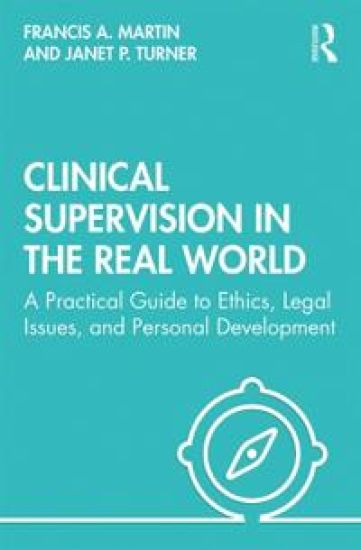
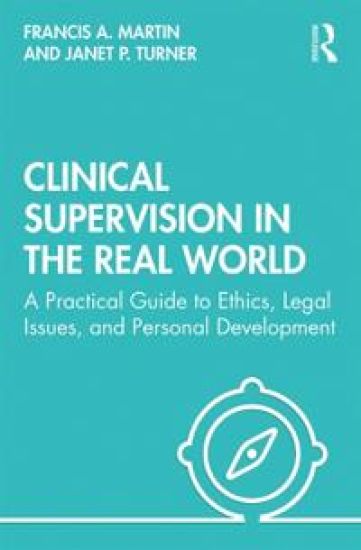
This practical guide provides support for mental health practitioners as they develop their approach to clinical supervision, drawing on the authors’ extensive experience of counseling and psychotherapy to bring readers into the "real world" of clinical supervision.Chapters introduce the essential responsibilities and tasks of a clinical supervisor and place emphasis on the development of a Competence-Oriented Model of Clinical Supervision, upon which a philosophical foundation for supervision can be built. Integrating up-to-date research with case vignettes and practical resources, the text discusses philosophies of clinical supervision and explores themes that often define a supervisor’s contextual world, from professional ethics and legal issues to the personal development of both the supervisor and the supervisee. Affirming and encouraging professional development as well as identifying a range of common challenges, Clinical Supervision in the Real World is a key resource for aspiring clinical supervisors looking to build their own philosophy of supervision.
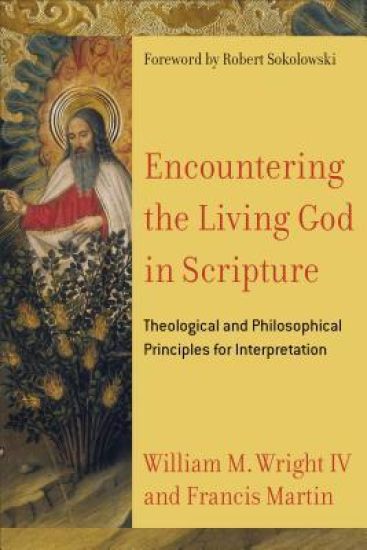
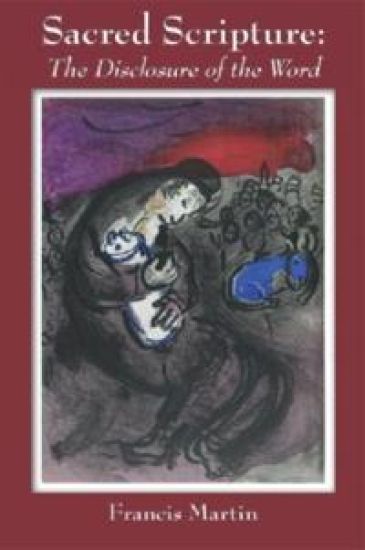
This work gives a philosophical and theological account of the belief that Scripture enables people to encounter the life-giving reality of God. The authors examine the biblical foundations for this belief as given in a variety of witnesses from both testaments and explain the philosophical and theological underpinnings of Christian exegesis. The book sums up and makes accessible the teaching of revered senior scholar and teacher Francis Martin and is aimed squarely at students, assuming no advanced training in philosophy or theology. It includes a foreword by Robert Sokolowski.
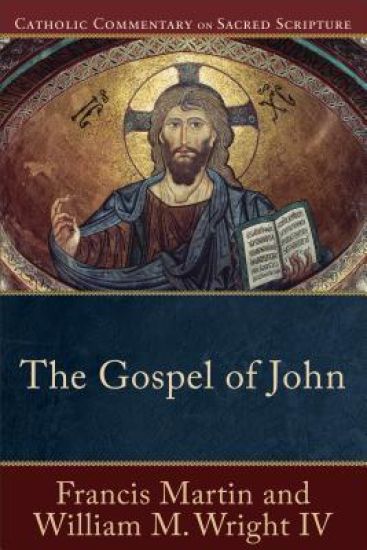
Examine the New Testament from within the living tradition of the Catholic ChurchIn this addition to the Catholic Commentary on Sacred Scripture, two well-respected New Testament scholars interpret the Gospel of John in its historical and literary setting as well as in light of the Church's doctrinal, liturgical, and spiritual tradition. They unpack the wisdom of the Fourth Gospel for the intellectual and spiritual transformation of its readers and connect the Gospel with a range of witnesses throughout the whole history of Catholicism. The CCSS relates Scripture to Christian life today, is faithfully Catholic, and is supplemented by features designed to help pastoral ministers, lay readers, and students better comprehend the Bible and use it more effectively.Commentary features include:? Biblical text from the New American Bible, Revised Edition (NABRE)? References to the Catechism, the Lectionary, and related biblical texts? Theological insights from Church fathers, saints, and popes? Reflection and application sections for daily Christian living? Suggested resources and an index of pastoral subjectsAttractively packaged and accessibly written, the CCSS aims to help readers understand their faith more deeply, nourish their spiritual life, and share the good news with others.
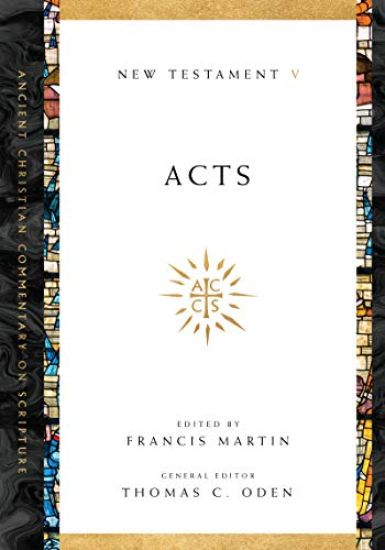
The Acts of the Apostles—or more in keeping with the author's intent, the Acts of the Ascended Lord—is part two of Luke's story of "all that Jesus began to do and teach." In it he recounts the expansion of the church as its witness spread from Jerusalem to all of Judea and Samaria and to the ends of the earth. While at least forty early church authors commented on Acts, the works of only three survive in their entirety—John Chrysostom's Homilies on the Acts of the Apostles, Bede the Venerable's Commentary on the Acts of the Apostles and a long Latin epic poem by Arator. In this Ancient Christian Commentary on Scripture volume, substantial selections from the first two of these appear with occasional excerpts from Arator alongside many excerpts from the fragments preserved in J. A. Cramer's Catena in Acta SS. Apostolorum. Among the latter we find selections from Basil the Great, Gregory of Nazianzus, Gregory of Nyssa, Ephrem the Syrian, Didymus the Blind, Athanasius, Jerome, John Cassian, Augustine, Ambrose, Justin Martyr, Irenaeus, Theodoret of Cyr, Origen, Cyril of Jerusalem, Cyril of Alexandria, Cassiodorus, and Hilary of Poitiers, some of which are here translated into English for the first time. As readers, we find these early authors transmit life to us because their faith brought them into living and experiential contact with the realities spoken of in the sacred text.
This unique book covers a broad diversity of fungal systems and provides unique insight into the functions of those fungi in various ecosystems – from soil, to plant, to human. Bringing together fungal genomic information on a variety of lifestyles and traits, the book covers saprotrophism, pathogenesis (including biotrophs, hemibiotrophs, necrotrophs) and symbiosis. Advances in high-throughput sequencing now offer unprecedented opportunities for identification of novel key molecular mechanisms controlling plant-microbe interactions, evolution of fungi and developmentally- and ecologically-relevant traits, this book explores how these massive streams of fungal sequences can be exploited to gain a deeper understanding of the evolution of fungi and their ecological role. Although tremendous progress has been made in recent years in fungal genomics, thanks to the sequencing of over one hundred fungal genomes, until now no book has used this information to bridge fungal genomics, molecular ecology and ecology. Edited by a recognized leader in fungal genomics and soil metagenomics with over a decade of experience, Genomics & Metagenomics for Harnessing the Ecology of Fungi will be a useful resource for the experienced as well as the new researchers entering the field.
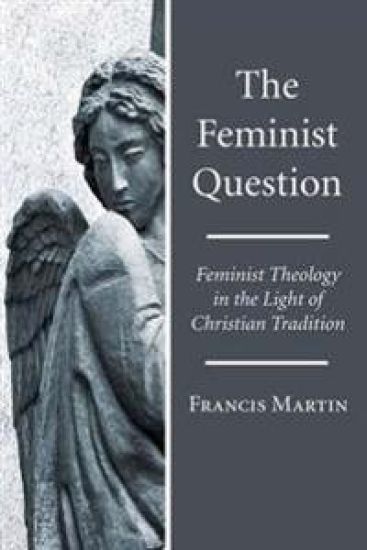
Available again due to popular demand, this penetrating study of modern Christian feminism examines the historical issues raised by feminist theology in light of the biblical worldview.
Fr. Francis Martin is that rare breed among scripture scholars: a master of the biblical languages, trained in the best elements of the historical-critical method, who has also mastered the philosophical and thrological traditions necessary for adequately interpreting Scripture in faith.