Kirjojen hintavertailu. Mukana 11 244 527 kirjaa ja 12 kauppaa.

Kirjahaku

Etsi kirjoja tekijän nimen, kirjan nimen tai ISBN:n perusteella.

1000 tulosta hakusanalla Francis Alua

Francis Parkman, Historian As Hero

Francis Parkman, Historian As Hero

Wilbur R. Jacobs

University of Texas Press
2011
pokkari
A historian who lived the kind of history he wrote, Francis Parkman is a major-and controversial-figure in American historiography. His narrative style, while popular with readers wanting a "good story," has raised many questions with professional historians. Was Parkman writing history or historical fiction? Did he color historical figures with his own heroic self-image? Was his objectivity compromised by his "unbending, conservative, Brahmin" values? These are some of the many issues that Wilbur Jacobs treats in this thought-provoking study.Jacobs carefully considers the "apprenticeship" of Francis Parkman, first spent in facing the rigors of the Oregon Trail and later in struggling to write his histories despite a mysterious, frequently incapacitating illness. He shows how these events allowed Parkman to create a heroic self-image, which impelled his desire for fame as a historian and influenced his treatment of both the "noble" and the "savage" characters of his histories.In addition to assessing the influence of Parkman's development and personality on his histories, Jacobs comments on Parkman's relationship to basic social and cultural issues of the nineteenth century. These include the slavery question, Native American issues, expansion of the suffrage to new groups, including women, and anti-Catholicism.
Francis Bacon

Francis Bacon

Mathews Nieves

Yale University Press
1996
sidottu
Beyond his own country Francis Bacon is remembered as a great man, founder of modern science and philosophy, a just judge and a teacher of kings. In England and America, however, he is more commonly seen as a cruel, corrupt and power-hungry politician. Which appraisal is correct? In this re-evaluation of one of Britain's most significant figures, Nieves Mathews examines the charges against Bacon and reveals how distorted facts can be recast as historical truths. In 1621 Bacon fell from power as Lord Chancellor, the highest position in the land. Charged with accepting bribes, he was convicted, fined, imprisoned and exiled from the Court. He died five years later, disgraced and deeply in debt. In this study of the Jacobean administration - a system which depended on corruption at every level - Nieves Mathews shows Bacon to have been among the least tainted of the king's officials, the scapegoat in a political conspiracy aimed at dislodging the royal favourite. The destruction of Bacon's reputation followed Thomas Babington Macaulay's eloquent "Essay on Bacon", published in 1837. Macaulay's depiction launched a search among Bacon's biographers for evidence of malice and corruption. Now Nieves Mathews in her reaappraisal portrays a man both single-minded and fallible, with qualities and flaws.
Francis of Assisi

Francis of Assisi

André Vauchez

Yale University Press
2013
pokkari
First published in France, where it was awarded the Prix Chateaubriand, this masterful new biography of Francis is now available in English In this towering work, André Vauchez draws on the vast body of scholarship on Francis of Assisi produced over the past forty years as well on as his own expertise in medieval hagiography to tell the most comprehensive and authoritative version of Francis’s life and afterlife published in the past half century. After a detailed and yet engaging reconstruction of Francis's life and work, Vauchez focuses on the myriad texts—hagiographies, chronicles, sermons, personal testimonies, etc.—of writers who recorded aspects of Francis's life and movement as they remembered them, and used those remembrances to construct a portrait of Francis relevant to their concerns. We see varying versions of his life reflected in the work of Machiavelli, Luther, Voltaire, German and English romantics, pre-Raphaelites, Italian nationalists, and Mussolini, and discover how peace activists, ecologists, or interreligious dialogists have used his example to promote their various causes. Particularly noteworthy is the attention Vauchez pays to Francis’s own writings, which strangely enough have been largely overlooked by later interpreters.The product of a lifetime of study, this book reveals a historian at the height of his powers.
Francis Picabia Catalogue Raisonné

Francis Picabia Catalogue Raisonné

William A. Camfield; Arnauld Pierre; Candace Clements; Beverley Calté; Aurélie Verdier; Pierre Calté

Yale University Press
2017
sidottu
The second of an important multi-volume catalogue project, this publication features work by Francis Picabia (1879-1953) that dates from 1915 into mid-1927. Beginning with Picabia’s elaboration of a personal machinist aesthetic, the book continues by looking at the artist’s central role in the formulation of the Paris Dada movement. That irreverent movement included Picabia’s increasingly provocative mechanomorphic compositions, complemented by his unorthodox writings and graphic designs as well as socially powerful performances. In the 1920s, Picabia turned to striking geometrical abstractions, subversive figurative art, and a collaboration in 1924 with the Swedish Ballet. The volume finishes with a look at Picabia’s creations of the mid-1920s, which included memorable collages and flamboyant figurative compositions known as the "monsters.” Distributed for Mercatorfonds
Francis of Assisi

Francis of Assisi

Volker Leppin

YALE UNIVERSITY PRESS
2025
sidottu
An award-winning historian reconstructs the life of Francis of Assisi, uncovering the man behind the myths “Refreshing. . . . Complex, multilayered, and ambitious.”—Costica Bradatan, Times Literary Supplement One of the most famous figures in Christian history, Francis of Assisi (1181/82–1226) was revered as a miracle worker during his life and quickly canonized after his death. He has inspired generations of Christians and other spiritual seekers, from medieval ascetics to 1960s hippies and modern environmentalists. The “poverello” wrote poems praising the sun, moon, and stars, spoke to the birds, and—so the story goes—even tamed a wolf. But what do we know for sure about who he was, and what is simply legend? Drawing on centuries of scholarship, Volker Leppin pieces together fragments of Francis’s life story to find a seeker who never reached his destination, a man whose extraordinary charisma drew others in yet who was uncomfortable in the spotlight. Amazingly, Francis stayed within the fold of the church while offering a new and radical vision of Christianity that proved wildly popular. Leppin’s Francis of Assisi sets Francis’s inner emotional and spiritual world against a broader historical background to show how the message of this inspiring and often vexing medieval saint continues to resonate in our contemporary world.
Francis Picabia

Francis Picabia

Candace Clements; Arnauld Pierre; William A. Camfield

YALE UNIVERSITY PRESS
2023
sidottu
This publication is the fourth volume of an important catalogue raisonné of the work of Francis Picabia This publication, the fourth volume of an important catalogue raisonné of the work of Francis Picabia (1879–1953), includes paintings and selected drawings dating from 1940 into 1952. During the war years, while still residing in the south of France, Picabia was primarily occupied by figural subjects?—multi-figure allegories, female nudes, and glamorous female "portraits"?—painted in bold illusionistic relief. Notorious even in his lifetime, most of these works are now known to have adapted photographic illustrations in older "girly" magazines and other popular media. Upon his return to Paris in the post-war period, Picabia renewed his earlier interests in abstract and sometimes non-objective art, still often drawing upon published sources ranging from prehistoric art to Nietzsche, and pursued frequent exhibition of his distinctive, constantly mutating responses to critical currents of the day. These included a series of severely reductive, subtly effective "point" or dot paintings beginning in 1949—three years before ill-health effectively ended Picabia’s half-century of artistic provocation.Distributed for Mercatorfonds
Francis Poulenc

Francis Poulenc

George Keck

Greenwood Press
1990
sidottu
Francis Poulenc: A Bio-Bibliography is a thorough presentation of the works of this often performed and critically appreciated 20th-century composer. George R. Keck traces events in Poulenc's life and offers a list of works and performances with the primary focus on those facts and influences which contributed to the development of the composer's distinctive musical style. Included in the text is a substantial discography as well as annotated entries by and about the composer which cover every phase of his career and affirm Poulenc's place in 20th-century music.The highly selective annotated bibliography comprises the major portion of the text. Since Keck's documentation of the development of Poulenc's style covers only representative works, he includes a list of all of Poulenc's compositions, arranged both alphabetically and chronologically, in the two appendixes. A complete index of names, places, and titles concludes the book.
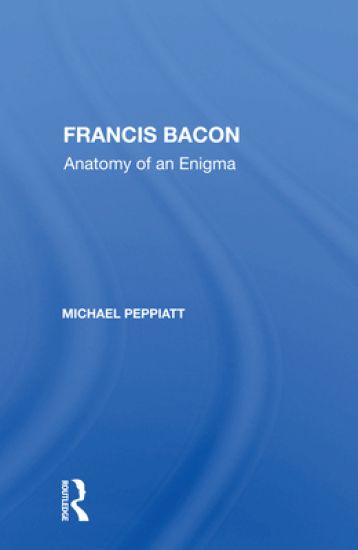
Francis Bacon

Francis Bacon

Michael Peppiatt

Routledge
2019
sidottu
This book, a biography on Francis Bacon, is inspired by the friendship the author had with Bacon and based on records of the conversations that took place since 1963. The book forms the first comprehensive account of the artist's life and his work.
Francis Bacon’s Contribution to Shakespeare

Francis Bacon’s Contribution to Shakespeare

Barry R. Clarke; Mark Rylance

Routledge
2019
sidottu
Francis Bacon's Contribution to Shakespeare advocates a paradigm shift away from a single-author theory of the Shakespeare work towards a many-hands theory. Here, the middle ground is adopted between competing so-called Stratfordian and alternative single-author conspiracy theories. In the process, arguments are advanced as to why Shakespeare’s First Folio (1623) presents as an unreliable document for attribution, and why contemporary opinion characterised Shakspere [his baptised name] as an opportunist businessman who acquired the work of others. Current methods of authorship attribution are critiqued, and an entirely new Rare Collocation Profiling (RCP) method is introduced which, unlike current stylometric methods, is capable of detecting multiple contributors to a text. Using the Early English Books Online database, rare phrases and collocations in a target text are identified together with the authors who used them. This allows a DNA-type profile to be constructed for the possible contributors to a text that also takes into account direction of influence. The method brings powerful new evidence to bear on crucial questions such as the author of the Groats-worth of Witte (1592) letter, the identifiable hands in 3 Henry VI, the extent of Francis Bacon’s contribution to Twelfth Night and The Tempest, and the scheduling of Love’s Labour’s Lost at the 1594–5 Gray’s Inn Christmas revels for which Bacon wrote entertainments. The treatise also provides detailed analyses of the nature of the complaint against Shakspere in the Groats-worth letter, the identity of the players who performed The Comedy of Errors at Gray’s Inn in 1594, and the reasons why Shakspere could not have had access to Virginia colony information that appears in The Tempest. With a Foreword by Sir Mark Rylance, this meticulously researched and penetrating study is a thought-provoking read for the inquisitive student in Shakespeare Studies.
Francis Bacon

Francis Bacon

Michael Peppiatt

Routledge
2020
nidottu
This book, a biography on Francis Bacon, is inspired by the friendship the author had with Bacon and based on records of the conversations that took place since 1963. The book forms the first comprehensive account of the artist's life and his work.
Francis Bacon’s Contribution to Shakespeare

Francis Bacon’s Contribution to Shakespeare

Barry R. Clarke; Mark Rylance

Routledge
2019
nidottu
Francis Bacon's Contribution to Shakespeare advocates a paradigm shift away from a single-author theory of the Shakespeare work towards a many-hands theory. Here, the middle ground is adopted between competing so-called Stratfordian and alternative single-author conspiracy theories. In the process, arguments are advanced as to why Shakespeare’s First Folio (1623) presents as an unreliable document for attribution, and why contemporary opinion characterised Shakspere [his baptised name] as an opportunist businessman who acquired the work of others. Current methods of authorship attribution are critiqued, and an entirely new Rare Collocation Profiling (RCP) method is introduced which, unlike current stylometric methods, is capable of detecting multiple contributors to a text. Using the Early English Books Online database, rare phrases and collocations in a target text are identified together with the authors who used them. This allows a DNA-type profile to be constructed for the possible contributors to a text that also takes into account direction of influence. The method brings powerful new evidence to bear on crucial questions such as the author of the Groats-worth of Witte (1592) letter, the identifiable hands in 3 Henry VI, the extent of Francis Bacon’s contribution to Twelfth Night and The Tempest, and the scheduling of Love’s Labour’s Lost at the 1594–5 Gray’s Inn Christmas revels for which Bacon wrote entertainments. The treatise also provides detailed analyses of the nature of the complaint against Shakspere in the Groats-worth letter, the identity of the players who performed The Comedy of Errors at Gray’s Inn in 1594, and the reasons why Shakspere could not have had access to Virginia colony information that appears in The Tempest. With a Foreword by Sir Mark Rylance, this meticulously researched and penetrating study is a thought-provoking read for the inquisitive student in Shakespeare Studies.
Francis Huxley and the Human Condition

Francis Huxley and the Human Condition

Ron Roberts; Theodor Itten

Routledge
2020
sidottu
Focused on the life and work of Francis Huxley (1923–2016), this book offers an exploration of the search to understand the human condition, one which is simultaneously biographical, philosophical, cultural, historical, political and epistemological.A member of the illustrious Huxley dynasty, Francis Huxley forged an unusual and innovative career, making key contributions to social anthropology, mental health care and the protection of indigenous peoples. His story reveals how the production and dissemination of ideas can be understood in an intergenerational context which is familial and sociological. The book reflects on the contemporary relevance of Huxley’s work, forging links between the central philosophical, cultural, scientific and political themes that dominate the turbulent early 21st century and the enduring questions that have driven human beings in the search to understand themselves and their place in the world. It will be of interest to scholars from across the social sciences and humanities.
Francis Huxley and the Human Condition

Francis Huxley and the Human Condition

Ron Roberts; Theodor Itten

TAYLOR FRANCIS LTD
2022
nidottu
Focused on the life and work of Francis Huxley (1923–2016), this book offers an exploration of the search to understand the human condition, one which is simultaneously biographical, philosophical, cultural, historical, political and epistemological.A member of the illustrious Huxley dynasty, Francis Huxley forged an unusual and innovative career, making key contributions to social anthropology, mental health care and the protection of indigenous peoples. His story reveals how the production and dissemination of ideas can be understood in an intergenerational context which is familial and sociological. The book reflects on the contemporary relevance of Huxley’s work, forging links between the central philosophical, cultural, scientific and political themes that dominate the turbulent early 21st century and the enduring questions that have driven human beings in the search to understand themselves and their place in the world. It will be of interest to scholars from across the social sciences and humanities.
Francis I and Sixteenth-Century France

Francis I and Sixteenth-Century France

Robert J. Knecht

Routledge
2020
nidottu
The reputation of Francis I, king of France (1515-47 ) has fluctuated over the centuries. Acclaimed as ’noble’ and ’great’ in the sixteenth century, he came to be unfairly denigrated under the Bourbon kings and the republic. But, in the twentieth century, research based on archival material has restored his standing as one of the most important rulers of his age. The present volume brings together seventeen articles by Robert Knecht published over several decades on particular aspects of the reign, with three specially translated from French into English. They examine the period in more depth than was possible in the author's 1994 biography of Francis I, and include studies of the Concordat of 1516 with the papacy, the Field of Cloth of Gold in 1520, the lit-de-justice of 1527, and the visit to France of the Emperor Charles V in 1540. Other articles consider the king’s attitude to the Reformation, his court, his relations with Paris and visits to Aquitaine, his patronage of architecture as demonstrated by his building of the château of Fontainebleau, and his relations with his mother, Louise of Savoy, and sister, Marguerite d’Angoulême. The king’s love of books and the political advice he received from scholars are also considered as well as the extent of his ’absolutism’. Two articles compare the English and French Reformations and the nobilities of the two countries. The volume is intended as a contribution to the celebration of the 500th anniversary of Francis I’s accession.
The Little Flowers of St. Francis of Assisi
With a new Preface by the noted writer Madeleine L'Engle, author of nearly fifty books of fiction and non-fiction, including A Wrinkle in Time. St. Francis of Assisi's ecstatic embrace of a life of poverty revolutionized Christianity even as it transformed the ethics of the West. In this luminous and lively book, St. Francis's followers preserved his legend and those of his first disciples, combining stories of miracles with convincing portraits of men who were no less human for having been touched by God."God is our home but many of us have strayed from our native land. The venerable authors of these Spiritual Classics are expert guides--may we follow their directions home."--Archbishop Desmond Tutu
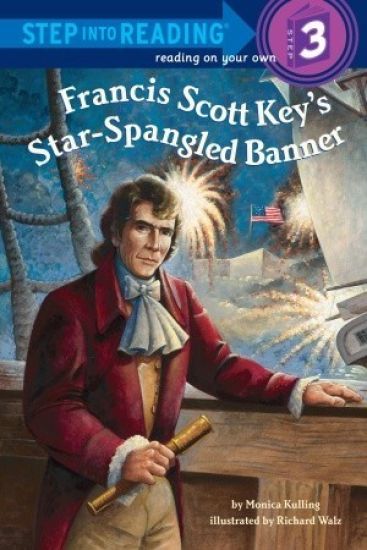
Francis Scott Key's Star-Spangled Banner

Francis Scott Key's Star-Spangled Banner

Kulling Monica

Random House Inc
2012
pokkari
Francis Scott Key was a very busy man. He and his wife had 11 children. He was a lawyer and many people came to him for advice. But whenever he had a moment, he would jot down a line of poetry. He loved writing poems. When the War of 1812 broke out, Francis became even busier. He was well-respected and often called upon to help keep the peace as the war between the United States and England raged on. One fateful night Francis and his friend helped talk the British Navy into releasing a prisoner of war. But they couldn't return home just yet because the Battle of Fort McHenry was starting If the British captured the fort, America might very well lose its independence. Francis and his friends could only sit on a boat and observe the battle. For 25 hours they watched in awe. What Francis saw inspired him to write a poem that would become America's national anthem This Step 3 reader is perfect for children who are ready to read independently.