

Kirjahaku
Etsi kirjoja tekijän nimen, kirjan nimen tai ISBN:n perusteella.
1000 tulosta hakusanalla Frank Thompson

Medicaid, one of the largest federal programs in the United States, gives grants to states to provide health insurance for over 60 million low-income Americans. As private health insurance benefits have relentlessly eroded, the program has played an increasingly important role. Yet Medicaid's prominence in the health care arena has come as a surprise. Many astute observers of the Medicaid debate have long claimed that "a program for the poor is a poor program" prone to erosion because it serves a stigmatized, politically weak clientele. Means-tested programs for the poor are often politically unpopular, and there is pressure from fiscally conservative lawmakers to scale back the 350-billion-per-year program even as more and more Americans have come to rely on it. For their part, health reformers had long assumed that Medicaid would fade away as the country moved toward universal health insurance. Instead, Medicaid has proved remarkably durable, expanding and becoming a major pillar of America's health insurance system. In "Medicaid Politics", political scientist Frank J. Thompson examines the program's profound evolution during the presidential administrations of Bill Clinton, George W. Bush, and Barack Obama and its pivotal role in the epic health reform law of 2010. This clear and accessible book details the specific forces embedded in American federalism that contributed so much to Medicaid's growth and durability during this period. It also looks to the future outlining the political dynamics that could yield major program retrenchment.

Steps in the Evolution of Religion
James Thompson Bixby; Frank Sargent Hoffman
Createspace Independent Publishing Platform
2018
nidottu
This book deals with the steps in the evolution of religion and the Influence of the Environment on Religion. The most remarkable thing yet discovered about this planet is the fact that human beings exist upon it in large numbers, scattered almost everywhere over its surface, that pay homage to superterrestrial powers. But this fact, remarkable as it is, is only a portion of the truth. For the most searching and unprejudiced investigation has failed to reveal any time in human history when it was otherwise. However ignorant and forlorn man may have been in the past, we have no evidence that he has ever been so low down in the scale of being that he did not look upward with some degree of reverence and awe to higher powers. Not many years ago this fact of the universal prevalence of religion among men was seriously called in question by no less weighty writers than Sir John Lubbock and Herbert Spencer. They quoted at length from the reports of certain travelers and missionaries among the Eskimos of North Greenland, the Hottentots of South Africa and the Indians of Lower California in support of their position; and they stoutly contended that in these documents we have proof positive that there are communities now in existence that have no religion at all. This challenge led to a careful and thorough study of the status of these tribes by competent anthropologists, and in every case an extensive mythology was discovered among them, together with elaborate religious rites. A false idea of the meaning and scope of religion, a short stay in the country, or a lack of knowledge of the native language, had been the cause of the mistaken judgment. Probably no scholar of repute to-day would hesitate to accept the statement of Professor Brinton in his recent work on "The Religions of Primitive Peoples" that: "There has not been a single tribe, no matter how rude, known in history or visited by travelers, which has been shown to be destitute of religion under some form." The reason for this historical fact is a psychological one, and has never been more clearly or forcibly expressed than by Dr. Edward Caird. He asserts: "Man, by the very constitution of his mind, has three ways of thinking open to him: he can look outwards upon the world around him; he can look inwards upon the self within him; and he can look upwards to the God above him." And he very appropriately adds, "none of these possibilities can remain utterly unrealized." For the fact is that man is a self-conscious being. And inasmuch as he is endowed with some degree of reason and will, he can not stand still and passively gaze at the objects about him as though he were a mere brute. He must at least exert himself enough to form some kind of a conception of the powers around and above him, and put forth some degree of energy to place himself in harmonious relations with them. But it should not at all surprise us if, at the outset of his career as a religious being, he shows the same confusion of ideas about the objects he worships, as he does about all the other matters that come within the sphere of his experience. On the contrary, we should naturally expect to find him growing and developing in his religious ideas as he grows and develops in all others...

Where is my Copper Rod?
Rachael Frank; Gregory Sherman Thompson
Createspace Independent Publishing Platform
2013
nidottu
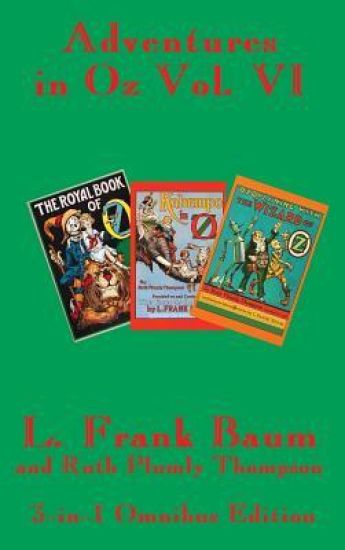
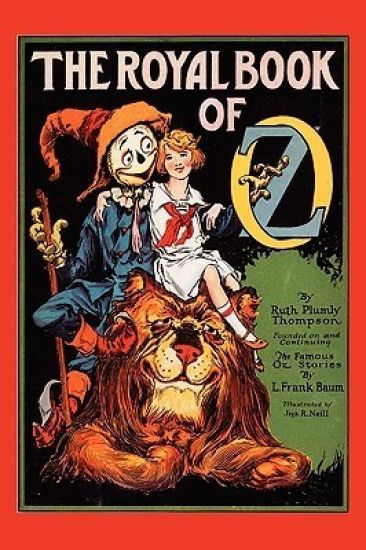
Ruth Plumly Thompson was hand picked by L. Frank Baum's estate to continue on the wonderful stories from the Land of Oz because of her delightful and lively writing style. Collected here together are three of her best Oz books carrying on Baum's delightful series. Journey with the Scarecrow and discover his royal past in The Royal Book of Oz. Adventure with Kabumpo the elephant and Ruggedo the Nome King in Kabumpo in Oz. And in Ozoplaning with the Wizard of Oz the Wizard builds two spaceships. Magical adventure awaits


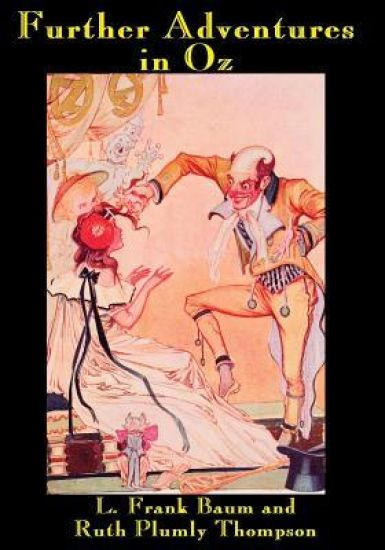
The book, Captain Salt in Oz, has been considered important throughout the human history, and so that this work is never forgotten we have made efforts in its preservation by republishing this book in a modern format for present and future generations. This whole book has been reformatted, retyped and designed. These books are not made of scanned copies of their original work and hence the text is clear and readable.

This core adoptable textbook equips students with the tools needed to create and manage a successful social enterprise and provides an excellent balance between theory and practice. Taking a highly engaging and focused approach, Social Entrepreneurs explores what it takes for entrepreneurs to translate their ambition and vision into an organisation that is targeted and socially meaningful. This new second edition shows how theories, models and concepts within entrepreneurship, business strategy and international marketing can be adapted to create high-impact social ventures that will deliver both positive impact and commercial success.Written by a team of experienced instructors and researchers, Social Entrepreneurs is ideal for students taking social entrepreneurship and social enterprise modules at undergraduate, postgraduate and MBA level. This textbook is also an essential companion for existing ventures to scale up and increase social impact locally, nationally or internationally.New to this Edition:- Revised and updated throughout to take into account new developments in social enterprise- Newly expanded coverage of interdisciplinary critical perspectives- Revised focus on how to achieve significant social impact in addition to organisational success
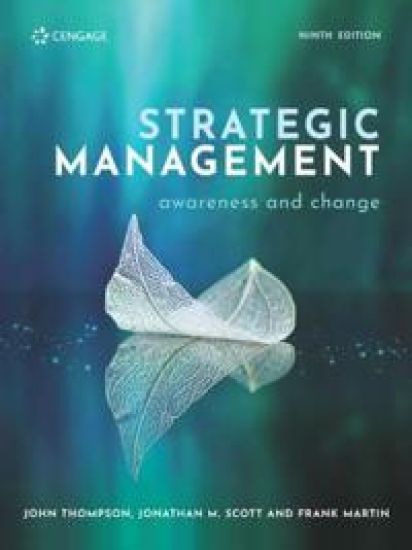
Strategic Management Awareness and Change
John Thompson; Jonathan Scott; Frank Martin
Cengage Learning EMEA
2019
nidottu
The ninth edition of Strategic Management: Awareness and Change guides students through the maze of modern strategy and offers a comprehensive introduction for future managers as well as professionals. Learners explore strategic concepts and strategy implementation to find out how organizations deal with the changes, opportunities, threats, challenges and surprises in their external and internal environments. This title is available with MindTap, a flexible online learning solution that you can customize to suit your specific course needs and that provides students with all the tools they need to succeed. These include an interactive eReader, engaging multimedia, a broad range of assignments and practice tests, scenario-based questions and video cases, which further entrench key concepts, boost confidence, develop critical thinking skills and prepare students for the workplace.

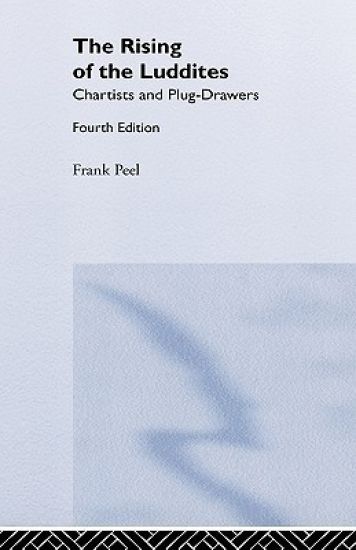
First Published in 1968. Frank Peel’s The Risings of the Luddites went through at least three stages before it arrived at the present form. It commenced as a series of articles in the Heckmondwike Herald and Liver sedge Weekly Courier, running from 25th January to 6th August 1878.These were reprinted, with some re-arrangement and additions, in book-form in 1880.

Kabumpo in Oz
Ruth Plumly Thompson; John R (John Rea) Neill; L Frank Baum
Anson Street Press
2025
pokkari

Kabumpo in Oz
Ruth Plumly Thompson; John R (John Rea) Neill; L Frank Baum
Anson Street Press
2025
sidottu
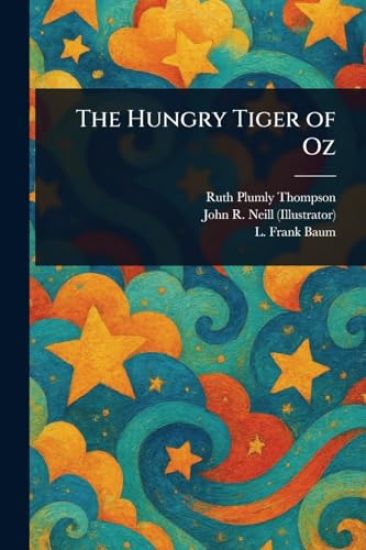
The Hungry Tiger of Oz
Ruth Plumly Thompson; John R (John Rea) Neill; L Frank Baum
Anson Street Press
2025
pokkari

The Hungry Tiger of Oz
Ruth Plumly Thompson; John R (John Rea) Neill; L Frank Baum
Anson Street Press
2025
sidottu

The Lost King of Oz
Ruth Plumly Thompson; John R (John Rea) Neill; L Frank Baum
Anson Street Press
2025
pokkari

The Lost King of Oz
Ruth Plumly Thompson; John R (John Rea) Neill; L Frank Baum
Anson Street Press
2025
sidottu

Ozoplaning With the Wizard of Oz
Ruth Plumly Thompson; John R (John Rea) Neill; L Frank Baum
Anson Street Press
2025
pokkari