This book presents the findings of a five-year, federally funded study that examined the connection between school restructuring and student achievement. Using a wealth of examples, the authors provide a vivid picture of the conditions under which innovations in a school's organization contribute to achievement. They recommend standards for reaching student intellectual quality and offer evidence of how these standards work.
Learn how other libraries are using LibQUAL+ data to improve their services and programsThis book focuses on the value of the 2002 LibQUAL+ survey data to help librarians provide better services for users. This unique work highlights the continued efforts of participating libraries that used this Web-based marketing instrument to assess and evaluate their service quality, resource allocations, staffing, technology, and policies. Library professionals dealing withor interested inlibrary service quality assessment will benefit from the practical examples and graphical representations found in this vital book.With Libraries Act on Their LibQUAL+ Findings, you will gain a better understanding of how to use your LibQUAL+ data to identify opportunities to improve your services and programs, initiate further data exploration, and identify those areas of your library which need change. In times of budget reductions, the information in this book will show you how to better demonstrate to your patrons, community, and government agencies the value of the investment in library staff and resources. Enhanced with charts, graphs, tables, and figures, this text will help your library smoothly evolve with your patrons’ expectations and needs.Libraries Act on Their LibQUAL+ Findings: From Data to Action covers several important topics, including: the LibQUAL+ survey instrumentwhat it is and how it works library service quality and user perceptions of library service quality peer comparisons and benchmarking qualitative and quantitative data analysishow to read your findings strategic planninghow to use your findings This resource is of national importance, presenting varying perspectives from different library contexts, such as library consortia, library types, and individual library case studies. The book also provides ideas for using LibQUAL+ to develop better library services for diverse usersfaculty as opposed to students or the general public rather than specialists. From identifying and reaching patrons for conducting the LibQUAL+ survey to identifying gaps between desired, perceived, and minimum expectations of services, this book will guide you in continuously meeting the needs of your community.
Learn how other libraries are using LibQUAL+ data to improve their services and programsThis book focuses on the value of the 2002 LibQUAL+ survey data to help librarians provide better services for users. This unique work highlights the continued efforts of participating libraries that used this Web-based marketing instrument to assess and evaluate their service quality, resource allocations, staffing, technology, and policies. Library professionals dealing withor interested inlibrary service quality assessment will benefit from the practical examples and graphical representations found in this vital book.With Libraries Act on Their LibQUAL+ Findings, you will gain a better understanding of how to use your LibQUAL+ data to identify opportunities to improve your services and programs, initiate further data exploration, and identify those areas of your library which need change. In times of budget reductions, the information in this book will show you how to better demonstrate to your patrons, community, and government agencies the value of the investment in library staff and resources. Enhanced with charts, graphs, tables, and figures, this text will help your library smoothly evolve with your patrons’ expectations and needs.Libraries Act on Their LibQUAL+ Findings: From Data to Action covers several important topics, including: the LibQUAL+ survey instrumentwhat it is and how it works library service quality and user perceptions of library service quality peer comparisons and benchmarking qualitative and quantitative data analysishow to read your findings strategic planninghow to use your findings This resource is of national importance, presenting varying perspectives from different library contexts, such as library consortia, library types, and individual library case studies. The book also provides ideas for using LibQUAL+ to develop better library services for diverse usersfaculty as opposed to students or the general public rather than specialists. From identifying and reaching patrons for conducting the LibQUAL+ survey to identifying gaps between desired, perceived, and minimum expectations of services, this book will guide you in continuously meeting the needs of your community.
The rapidly deteriorating situation in Israel/Palestine has dashed hopes of any imminent peace or even accommodation between the Israeli people and the Palestinian people. A leader in Palestinian Christianity, and an outspoken advocate of nonviolence and of Palestinian rights, Bishop Munib Younan directly addresses this situation and its imperatives. Born of Palestinian refugee parents and raised in Jerusalem, Younan has spent his life pastoring Palestinian Christians and searching for nonviolent solutions in this complex and volatile religious and political scene. In this volume, Younan presents first the historical and social context of the Palestinian situation, beginning with the not-well-known story of Arab Christianity and his own background. He elaborates his own theology of nonviolence, centered in the idea of martyria-heeding a call to justice, inclusion, and forgiveness. He illustrates the notion with dramatic and often tragic episodes and shows how it can address key issues in the current struggle with Israel over statehood, land, and refugees. Younan's model of Christian nonviolence also has demonstrable benefits in addressing terrorism, interreligious strife, and global peacemaking. Younan's is a voice all Christians of conscience should hear.
Utilizing the various methods already established by recognized authorities in the field, Mr. Clark studies ten doubtful plays long attributed to Lope. Contrasting subjective impressions of literary historians and the results of the objective tests applied to the comedias, the author discounts Lope's authorship of the ten works.
Fred M. Clark offers a semiotic analysis of three plays by Nelson Rodrigues, based in Charles S. Pierce's triadic concept of the sign: as sign, interpretant, and object, in regards to its production as perception and consciousness. Clark's use of this triad approach demonstrates the self-conscious plays of icons in Vestido de noiva, Album de familia, and Anjo negro, and offers a basis for the relevance of his conclusions to theatre at large. Based on this semiotic theory, Clark demonstrates the particular modes in which Nelson's theatre builds up fictional situations that transcend the pretense of the vanguard to become radically innovative and achieve a first-rate literary realization, equal of any occidental writer of the period. The author demonstrates the way in which Rodrigues dissects the difference between seeming and being, questioning the very notion of permanence and order.
The Rio Grande was ancient long before the first humans reached its banks. These days, the highly regulated river looks nothing like it did to those early settlers. Alternately viewed as a valuable ecosystem and life-sustaining foundation of community welfare or a commodity to be engineered to yield maximum economic benefit, the Rio Grande has brought many advantages to those who live in its valley, but the benefits have come at a price.This study examines human interactions with the Rio Grande from prehistoric time to the present day and explores what possibilities remain for the desert river. From the perspectives of law, development, tradition, and geology, the authors weigh what has been gained and lost by reining in the Rio Grande.
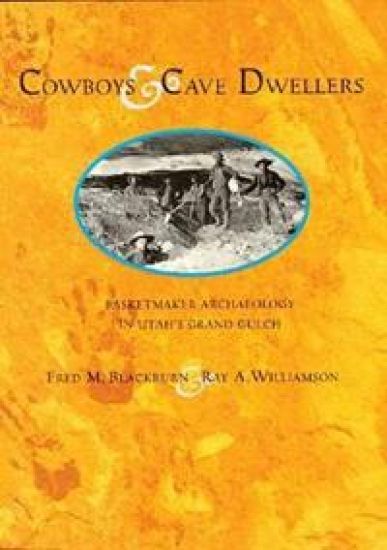
The tortuous canyon country of southeastern Utah conceals thousands of archaeological sites, ancient homes of the ancestors of today's Southwest Indian peoples. Late in the nineteenth century, adventurous cowboy-archaeologists made the first forays into the canyons in search of the material remains of these prehistoric cultures. Rancher Richard Wetherill (best known as the "discoverer" of Mesa Verde's Cliff Palace) and his brothers; entrepreneurs Charles McLoyd and Charles Cary Graham; and numerous other adventurers, scholars, preachers, and businessmen mounted expeditions into the area now known as Grand Gulch. With varying degrees of scientific rigor, they mapped and dug the canyon's rich archaeological sites, removing large numbers of artifacts and burial goods to exhibit or sell back home-whether "home" was Durango, Chicago, New York, or Helsinki. During a trip in the winter of 1893-94, Richard Wetherill unearthed convincing proof that a previously unrecognized group of people had lived in Grand Gulch before the so-called Anasazi, or Cliff Dwellers. Wetherill named these people the "Basket Makers" and inaugurated a new era of understanding of the region's prehistoric past. Almost one hundred years later, the modern-day adventure that became known as the Wetherill-Grand Gulch Research Project began. Intrigued by the poorly documented history of the Gulch, a group of avocational archaeologists launched a grassroots effort to recover that history and locate the many artifacts that had been extracted from southeastern Utah's arid soil. The Gulch, they found, contained its own invaluable clues in the form of dated signatures left on canyon walls by the Wetherills and others as they made their way from site to site. An effort to track the original explorers in the Gulch ultimately led the team to Chicago's Field Museum and the American Museum of Natural History in New York.In this book, Fred M. Blackburn and Ray A. Williamson tell the two intertwined stories of the early archaeological expeditions into Grand Gulch and the Wetherill-Grand Gulch Research Project. In the process, they describe what we now know about Basketmaker culture and present a stirring plea for the preservation of our nation's priceless archaeological heritage. Lavishly illustrated with color and black-and-white photographs.
Fred Merrick White (1859-1935) wrote a number of novels and short stories under the name "Fred M. White" including the six "Doom of London" science-fiction stories, in which various catastrophes beset London. These include The Four Days' Night (1903), in which London is beset by a massive killer smog; The Dust of Death (1903), in which diphtheria infects the city, spreading from refuse tips and sewers; and The Four White Days (1903), in which a sudden and deep winter paralyses the city under snow and ice. These six stories all first appeared in Pearson's Magazine, and were illustrated by Warwick Goble. He was also a pioneer of the spy story, and in 2003, his series The Romance of the Secret Service Fund (written in 1899) was edited by Douglas G. Greene and published by Battered Silicon Dispatch Box.
Fred Merrick White (1859-1935) wrote a number of novels and short stories under the name "Fred M. White" including the six "Doom of London" science-fiction stories, in which various catastrophes beset London. These include The Four Days' Night (1903), in which London is beset by a massive killer smog; The Dust of Death (1903), in which diphtheria infects the city, spreading from refuse tips and sewers; and The Four White Days (1903), in which a sudden and deep winter paralyses the city under snow and ice. These six stories all first appeared in Pearson's Magazine, and were illustrated by Warwick Goble. He was also a pioneer of the spy story, and in 2003, his series The Romance of the Secret Service Fund (written in 1899) was edited by Douglas G. Greene and published by Battered Silicon Dispatch Box.
This work has been selected by scholars as being culturally important and is part of the knowledge base of civilization as we know it.This work is in the public domain in the United States of America, and possibly other nations. Within the United States, you may freely copy and distribute this work, as no entity (individual or corporate) has a copyright on the body of the work.Scholars believe, and we concur, that this work is important enough to be preserved, reproduced, and made generally available to the public. To ensure a quality reading experience, this work has been proofread and republished using a format that seamlessly blends the original graphical elements with text in an easy-to-read typeface.We appreciate your support of the preservation process, and thank you for being an important part of keeping this knowledge alive and relevant.
This work has been selected by scholars as being culturally important and is part of the knowledge base of civilization as we know it.This work is in the public domain in the United States of America, and possibly other nations. Within the United States, you may freely copy and distribute this work, as no entity (individual or corporate) has a copyright on the body of the work.Scholars believe, and we concur, that this work is important enough to be preserved, reproduced, and made generally available to the public. To ensure a quality reading experience, this work has been proofread and republished using a format that seamlessly blends the original graphical elements with text in an easy-to-read typeface.We appreciate your support of the preservation process, and thank you for being an important part of keeping this knowledge alive and relevant.
This work has been selected by scholars as being culturally important and is part of the knowledge base of civilization as we know it.This work is in the public domain in the United States of America, and possibly other nations. Within the United States, you may freely copy and distribute this work, as no entity (individual or corporate) has a copyright on the body of the work.Scholars believe, and we concur, that this work is important enough to be preserved, reproduced, and made generally available to the public. To ensure a quality reading experience, this work has been proofread and republished using a format that seamlessly blends the original graphical elements with text in an easy-to-read typeface.We appreciate your support of the preservation process, and thank you for being an important part of keeping this knowledge alive and relevant.